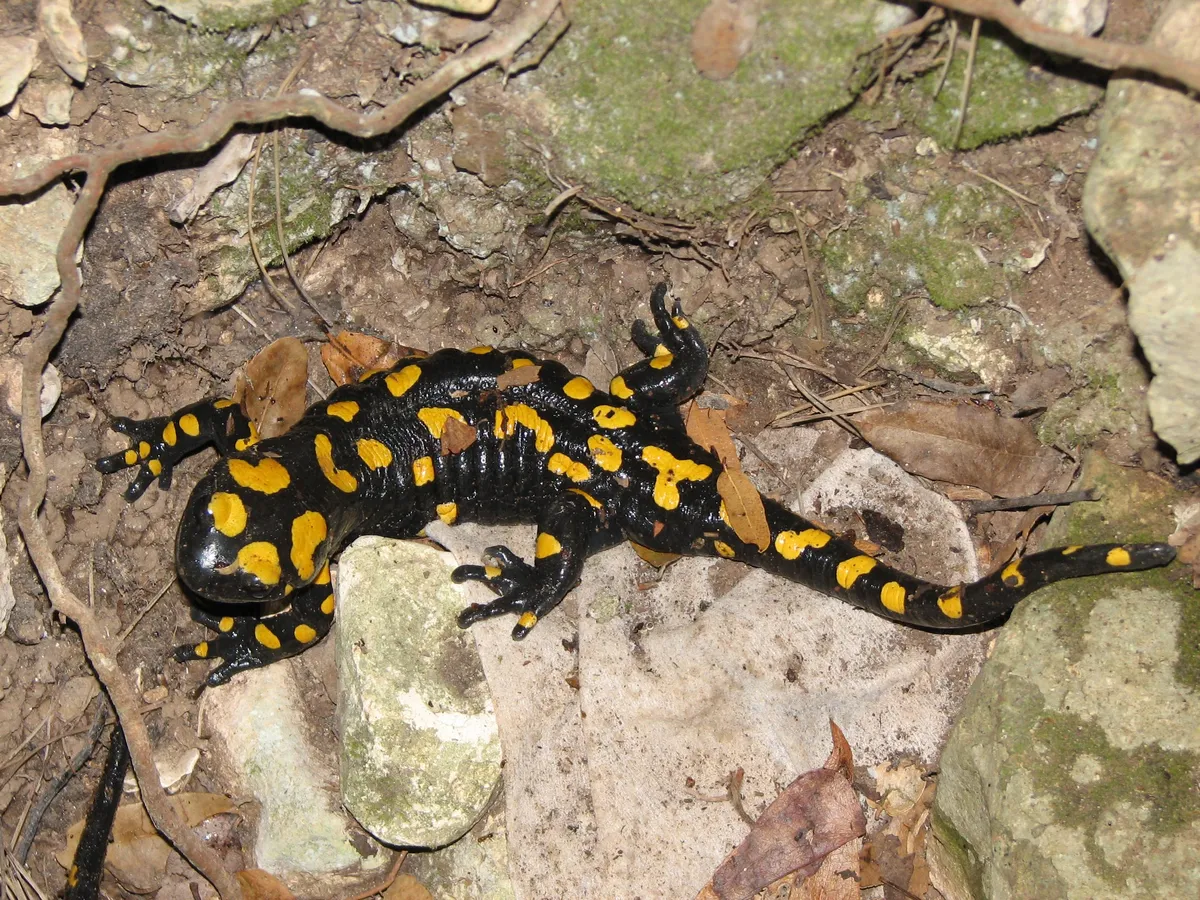
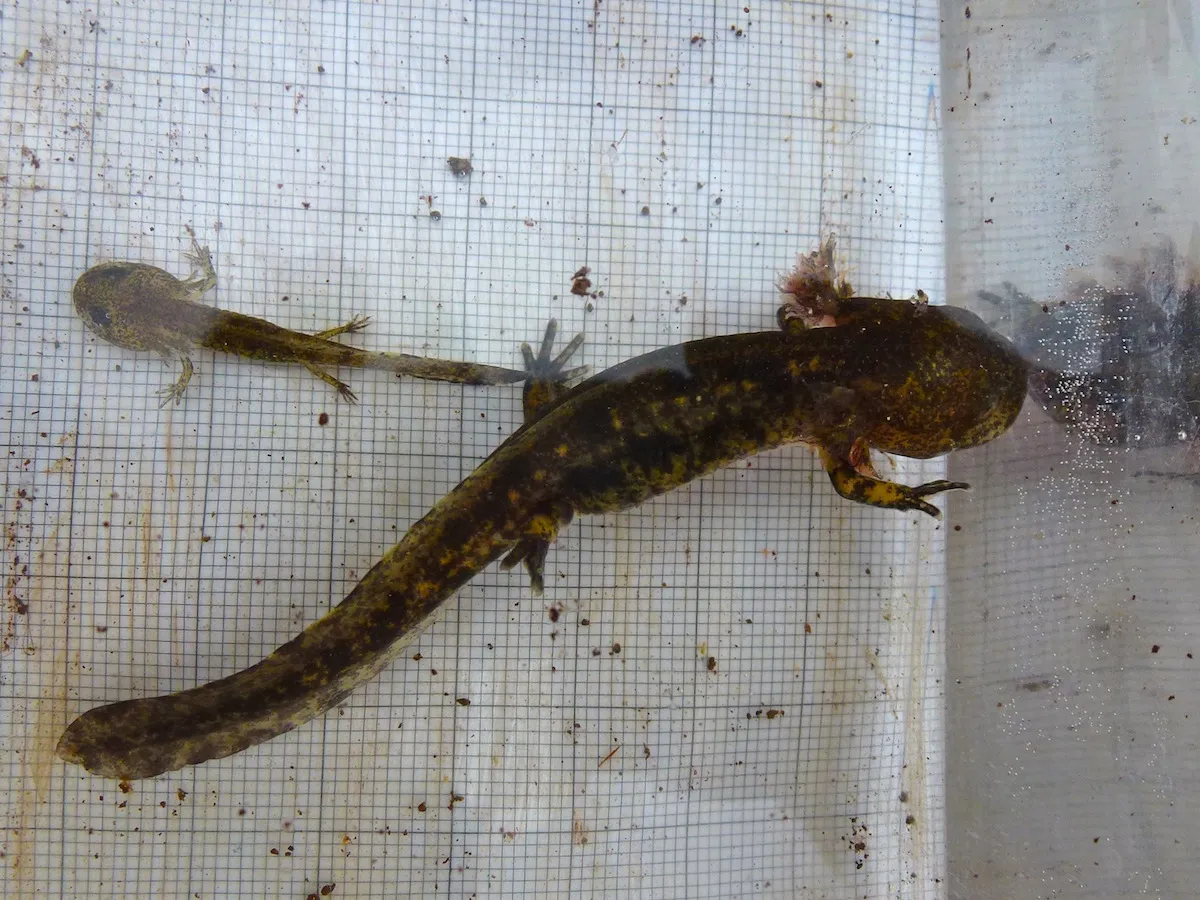
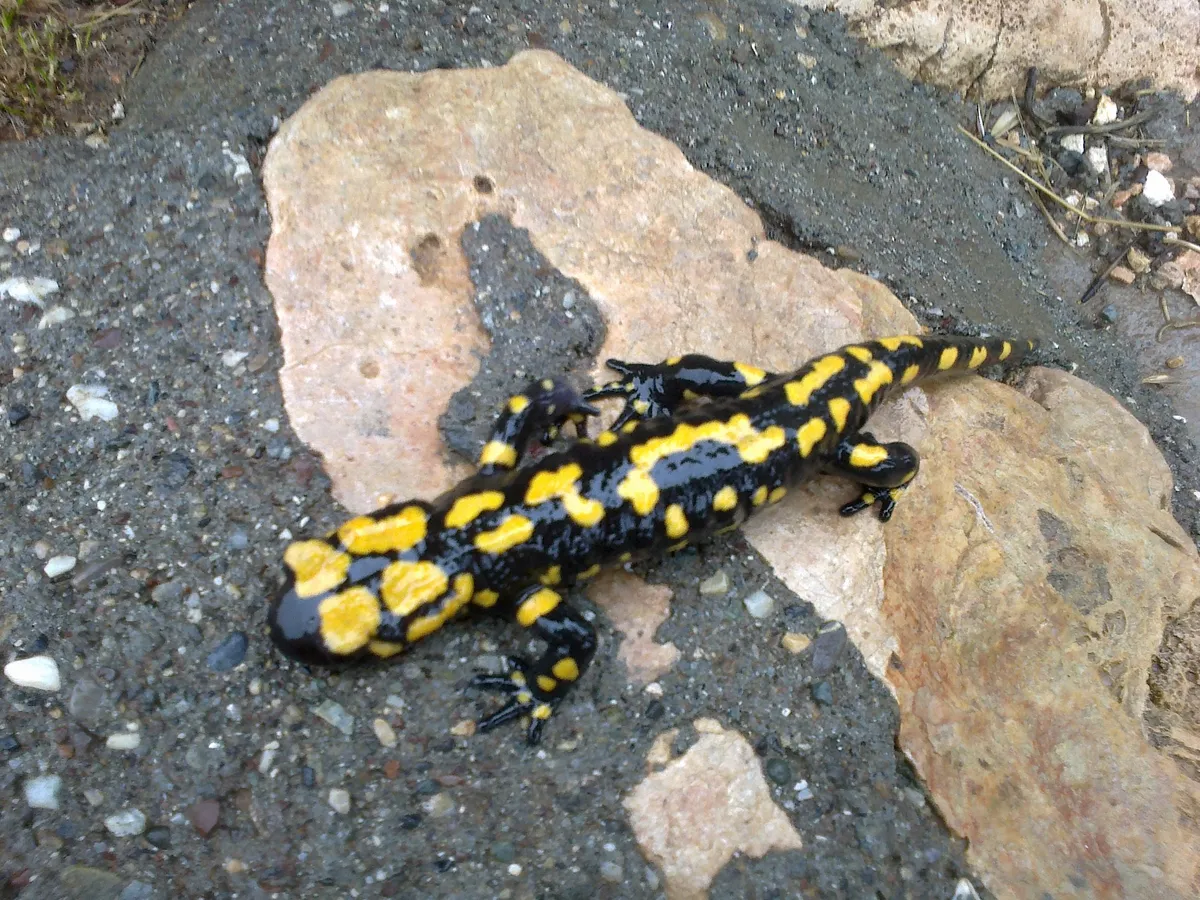
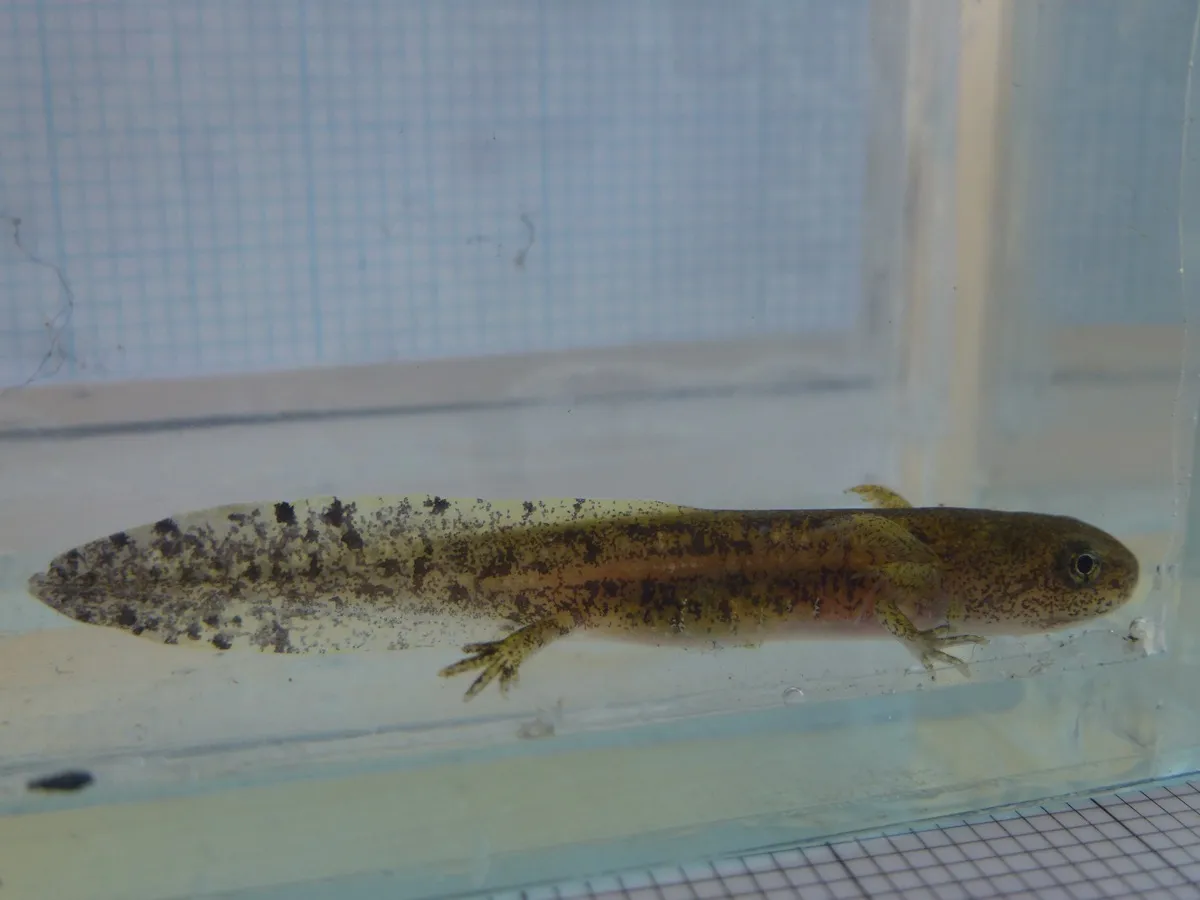
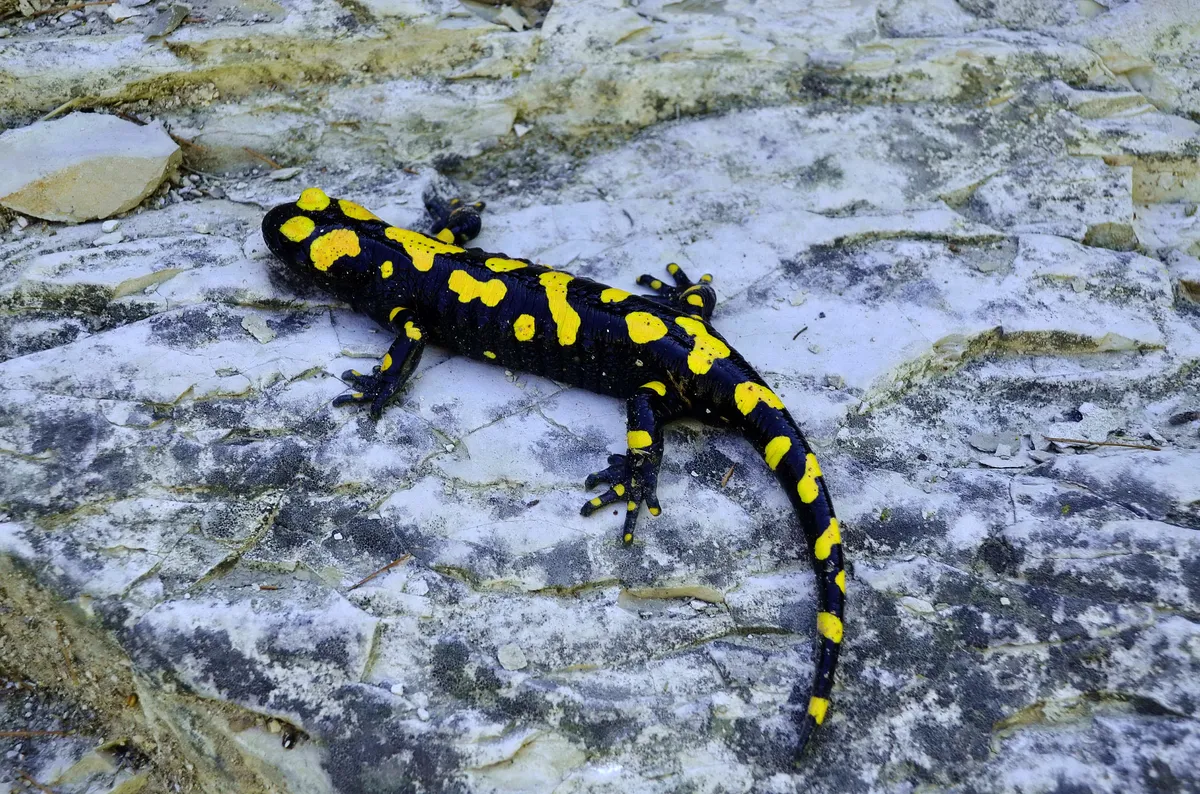
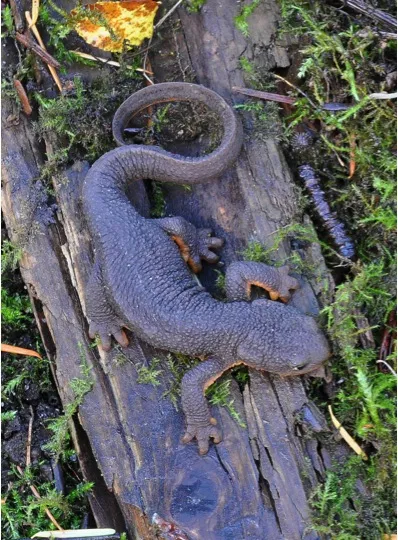
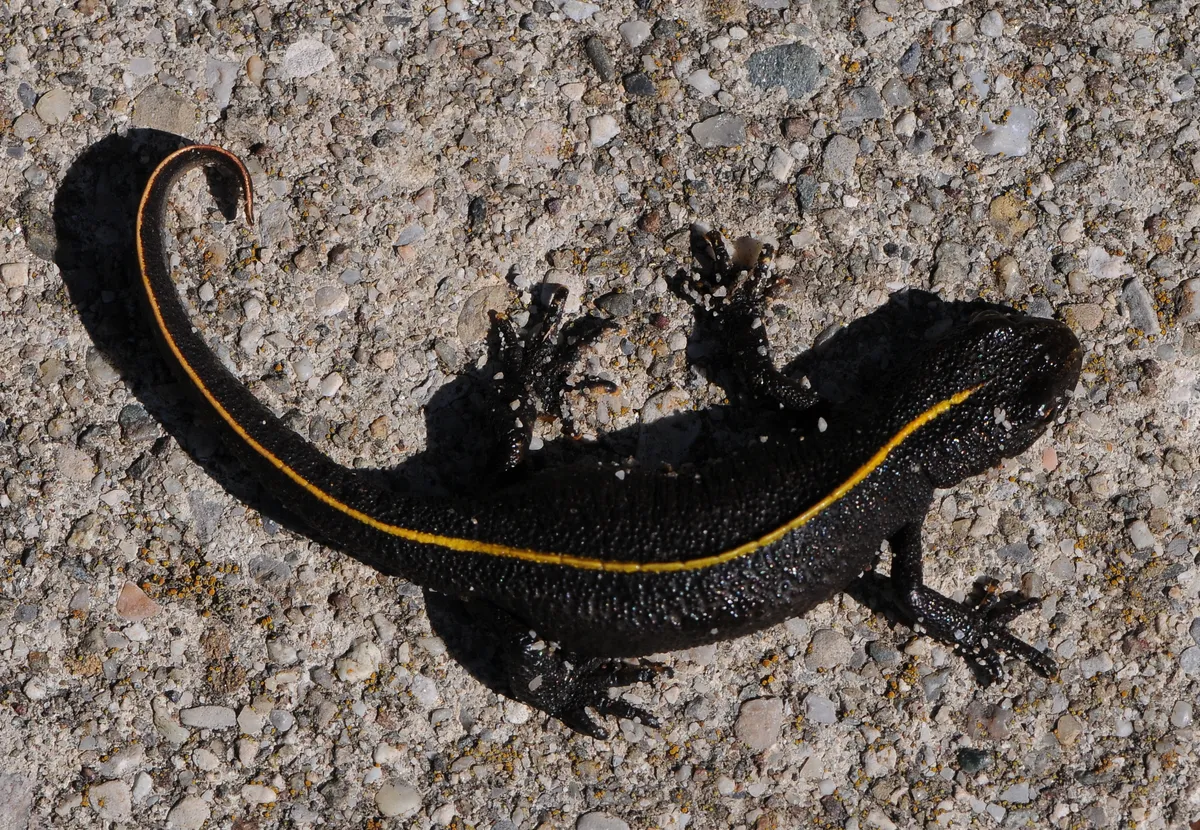
A terrestrial salamander species endemic to the Near Eastern region, characterized by its distinctive black and yellow coloration and unique adaptations to montane forest ecosystems.
Image Gallery
ADSENSE SLOT
Ecology & Habitat
Habitat
Temperate deciduous and mixed forests at elevations between 500-1,800 meters, primarily in mountainous regions of Turkey, Syria, Lebanon, and adjacent territories with high humidity and dense understory vegetation.
Ecological Role
Critical role in forest ecosystem as a predator of invertebrates, indicator species for forest health, and part of complex food web interactions in mountain forest biomes.
Morphology
SKIN COATSmooth, moist skin with distinctive black base coloration and bright yellow/orange irregular markings; skin serves thermoregulatory and respiratory functions
LIMBS WINGSFour robust limbs with five digits each; muscular appendages adapted for terrestrial locomotion and climbing in forest environments
HEAD SENSORYBroad, flattened head with prominent eyes; well-developed chemosensory capabilities; specialized olfactory organs for detecting prey and environmental cues
BODY STRUCTUREElongated body, typical salamander form; average length 15-22 cm, body weight 30-60 g; robust build with muscular limbs
Data Source: TaxonHub Database
Image Credit: Lior Fainshil