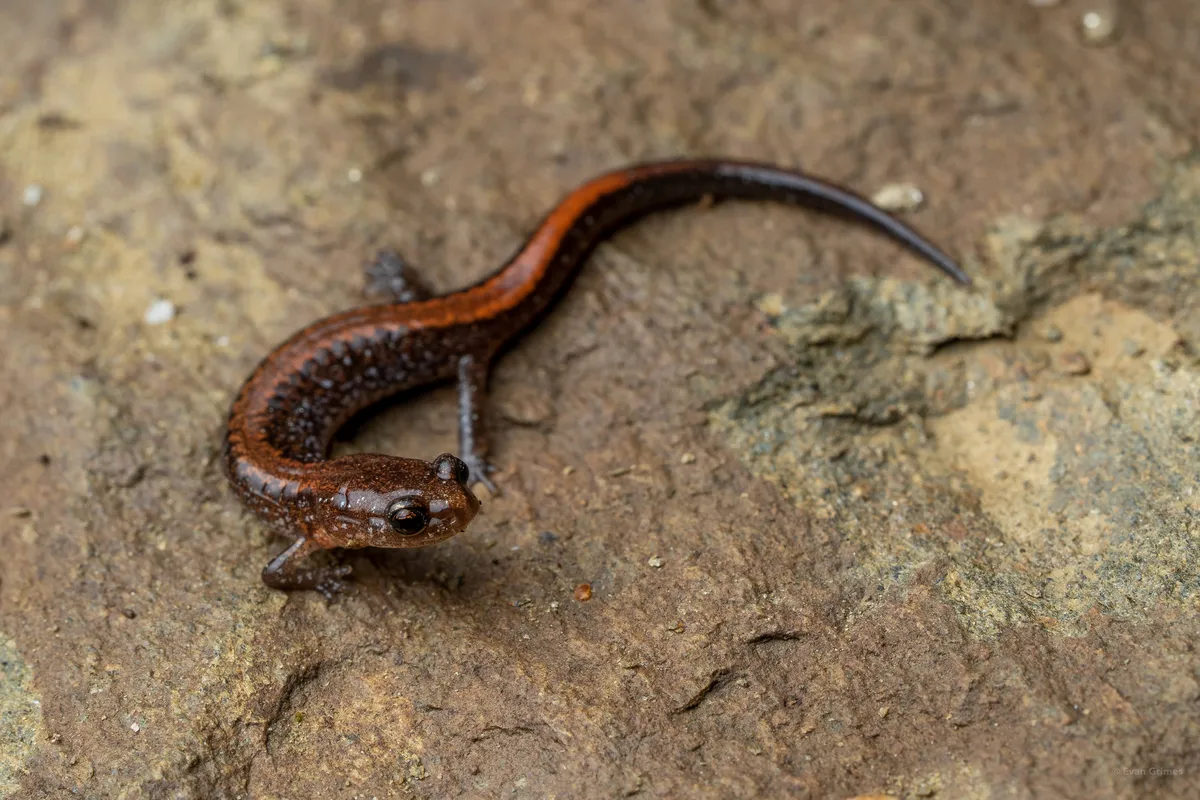
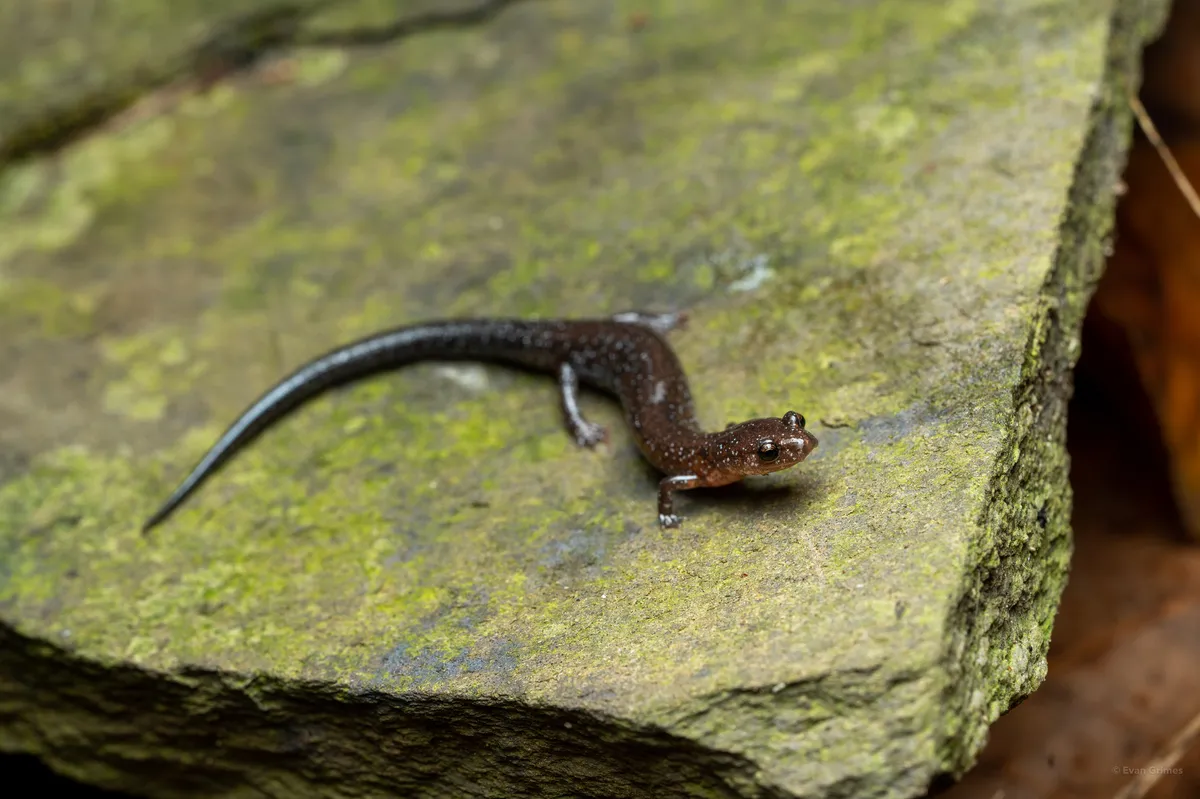
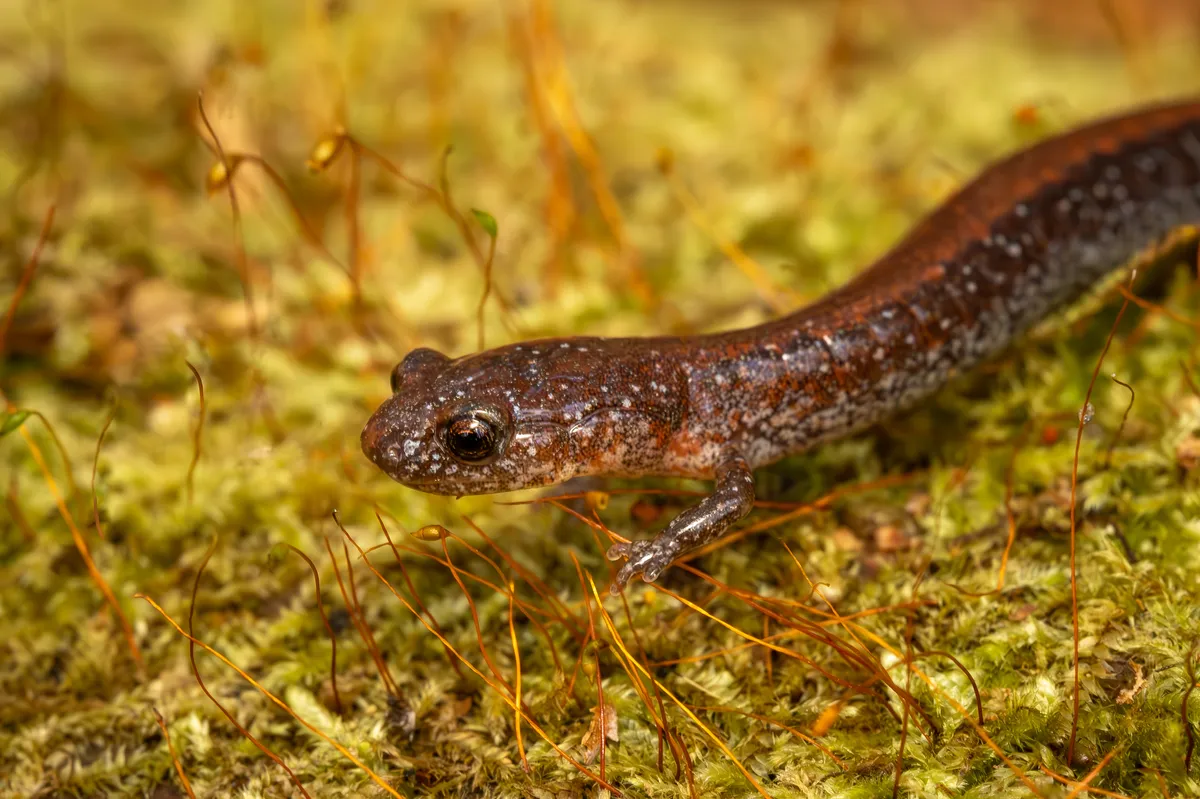
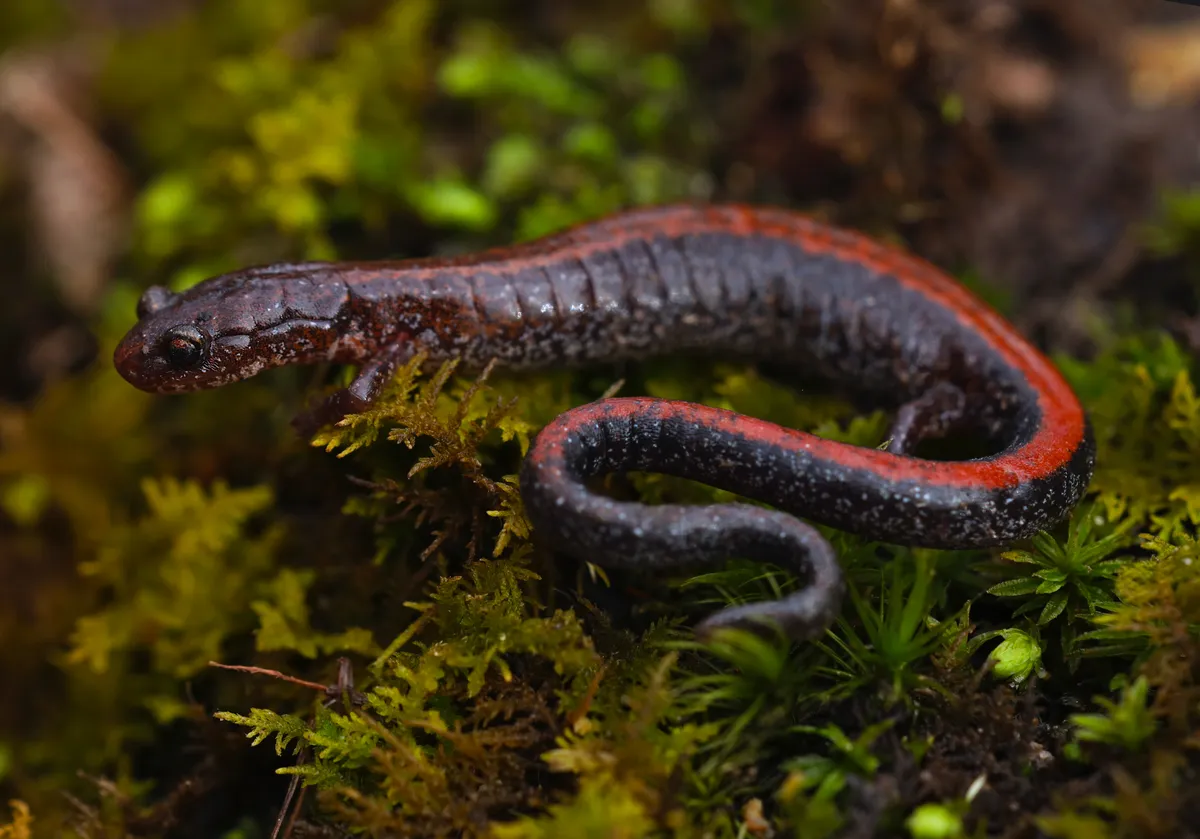
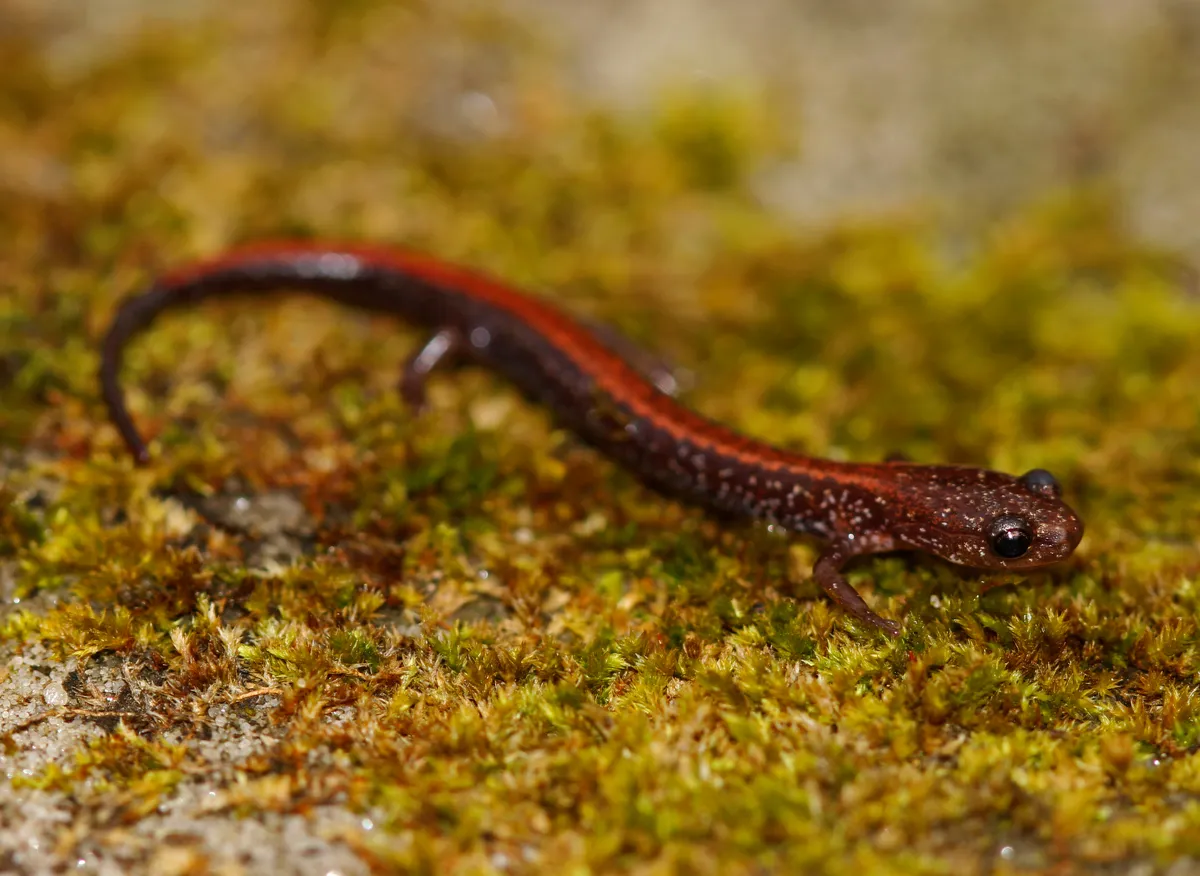
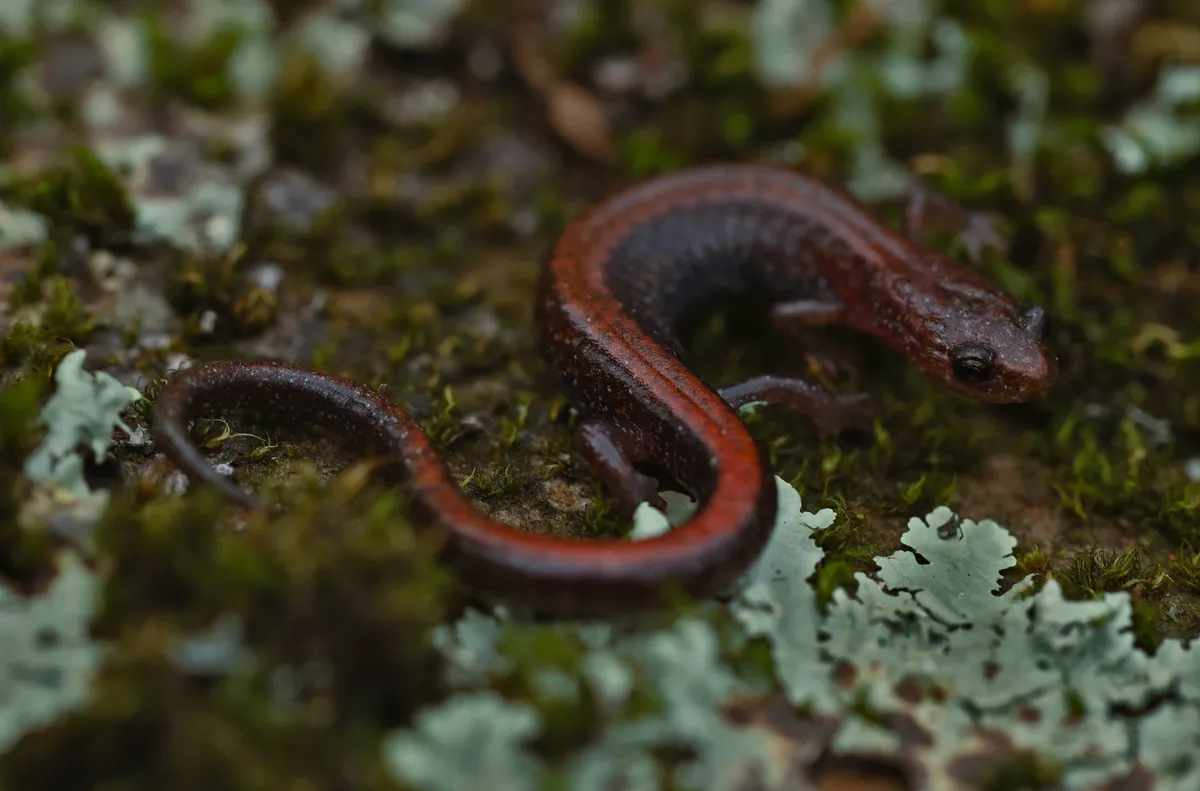
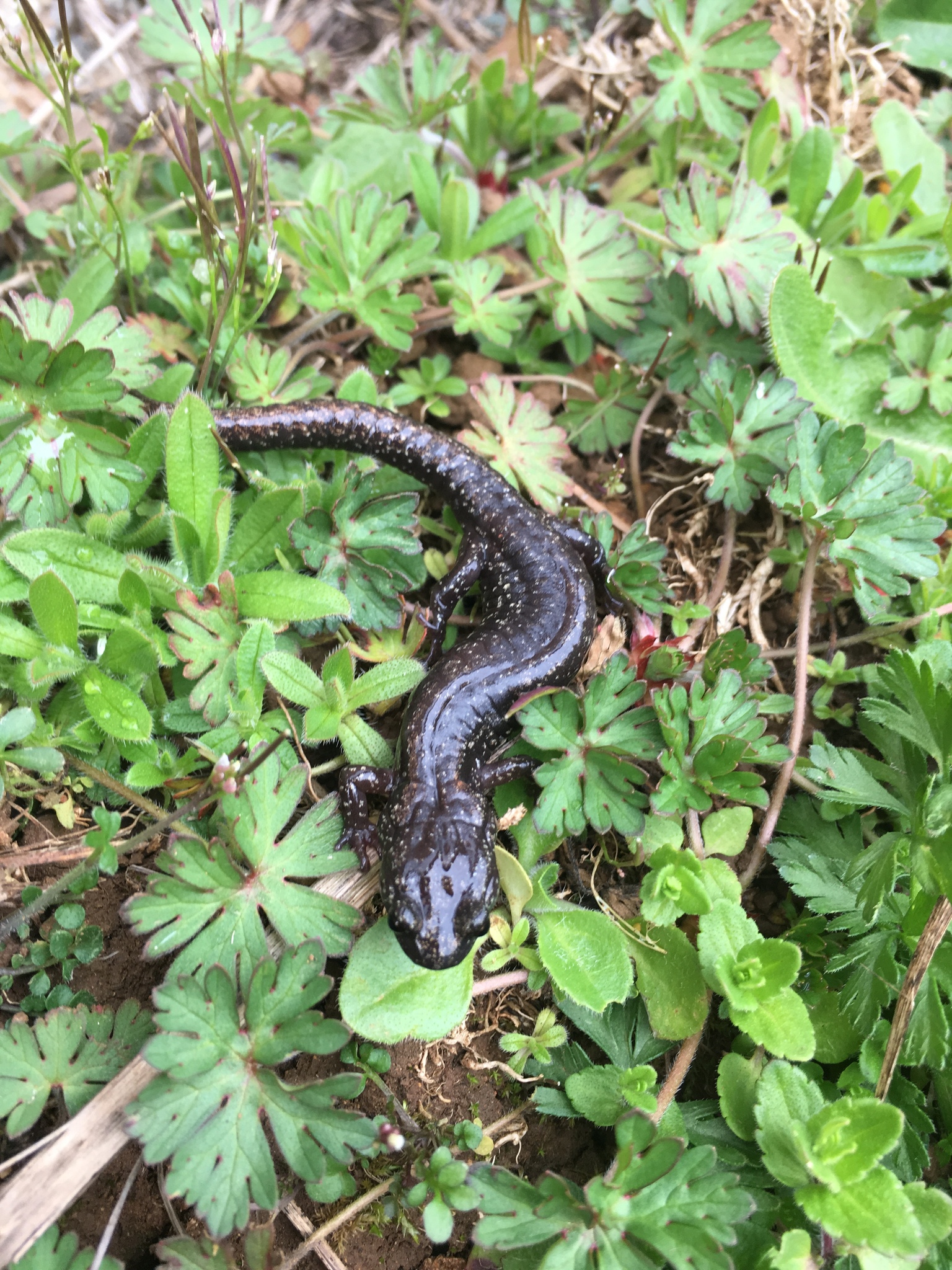
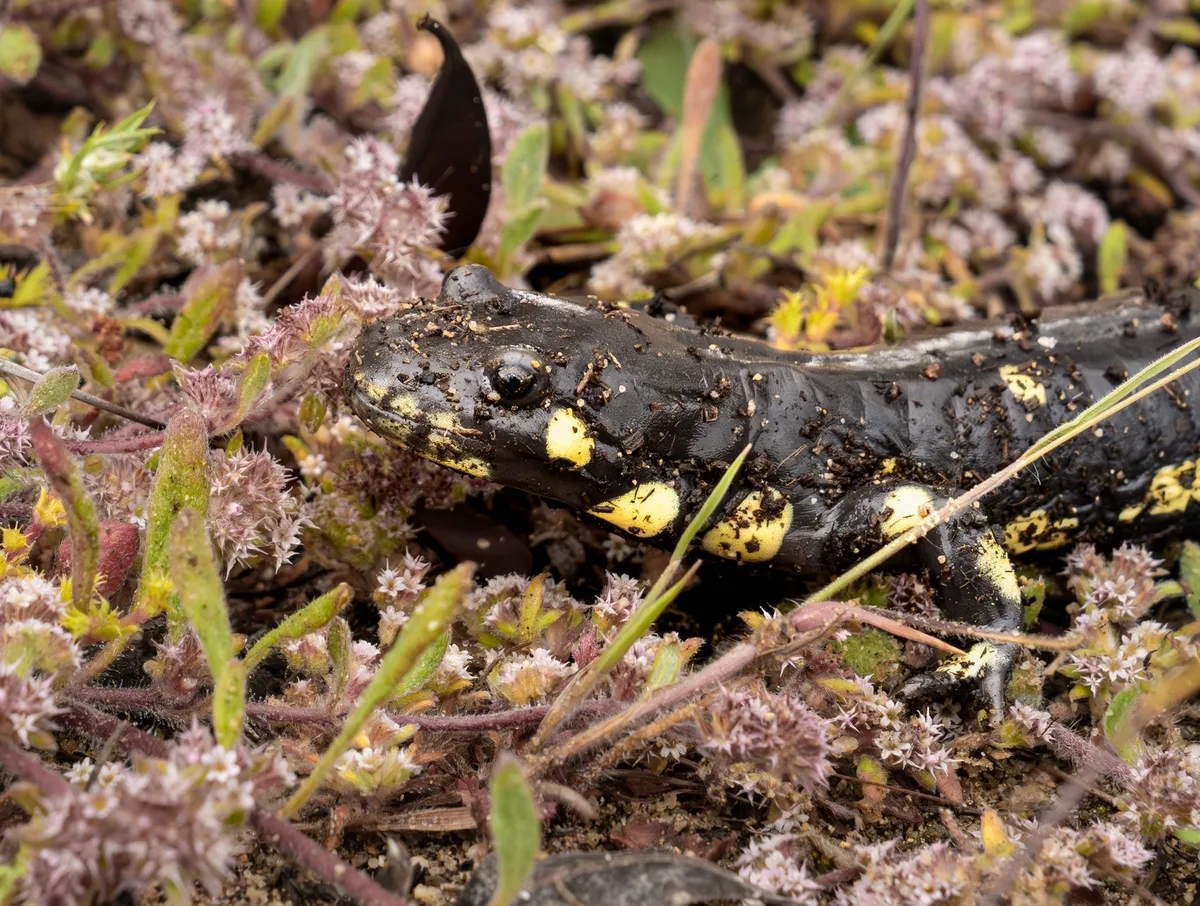
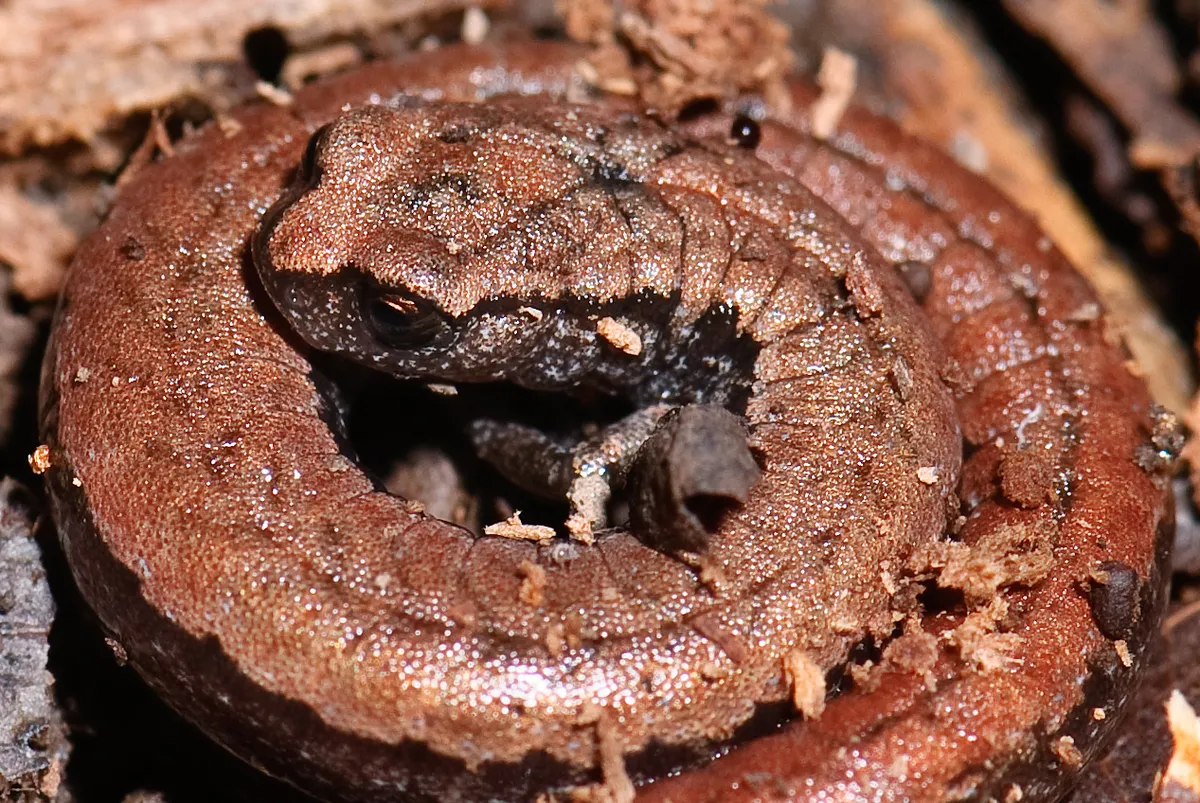
A small, terrestrial woodland salamander endemic to the southeastern United States, characterized by a distinctive reddish dorsal stripe and lungless respiratory system.
Image Gallery
ADSENSE SLOT
Ecology & Habitat
Habitat
Deciduous and mixed forests in the Appalachian Mountain region, preferring moist woodland floors with abundant leaf litter, fallen logs, and rocky substrates in elevations between 300-1,500 meters.
Ecological Role
Key predator of small invertebrates, critical for forest floor ecosystem balance, and serves as an important indicator species for forest health and environmental quality.
Morphology
SKIN COATSmooth, permeable skin with distinctive color pattern: dark gray or black body with bright reddish-orange dorsal stripe
LIMBS WINGSFour relatively short limbs with five digits on each, adapted for terrestrial locomotion and climbing
HEAD SENSORYRounded snout, prominent eyes, and well-developed chemosensory abilities for navigation and communication
BODY STRUCTURESmall, slender body measuring 6-10 cm in total length, with a compressed tail and smooth, moist skin
Data Source: TaxonHub Database
Image Credit: evangrimes