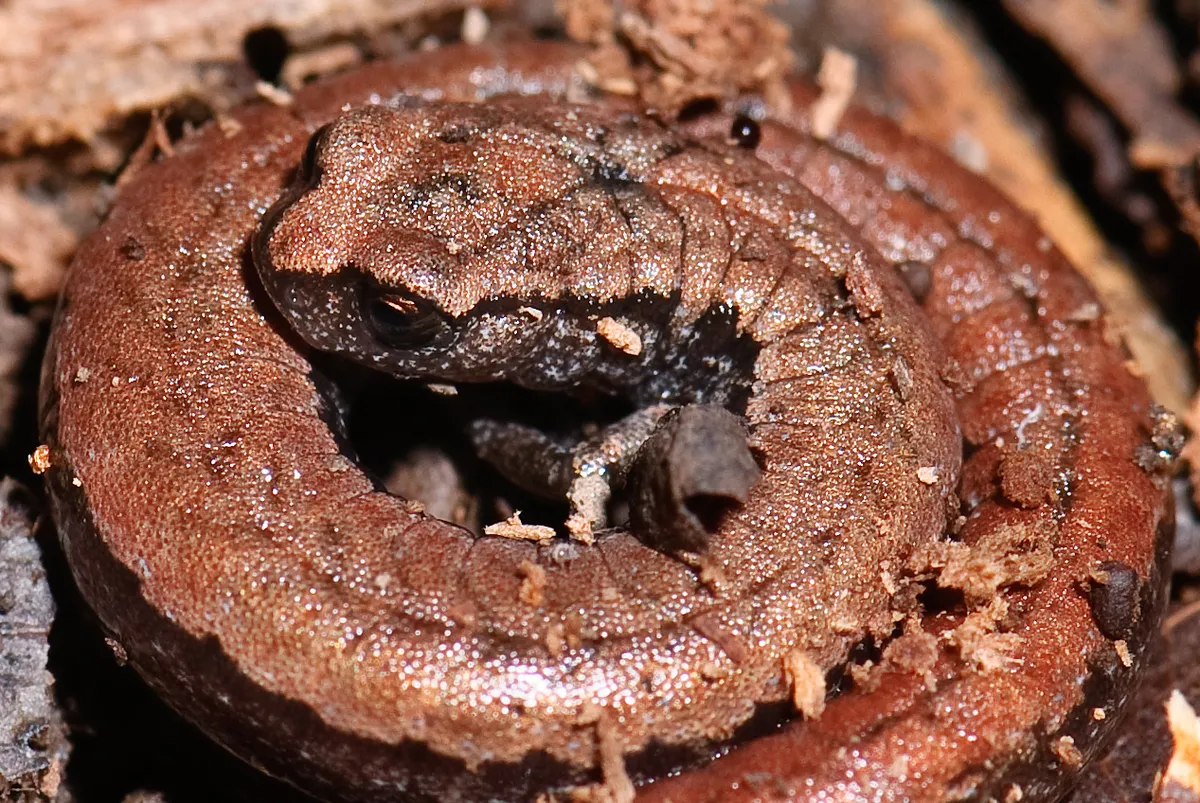
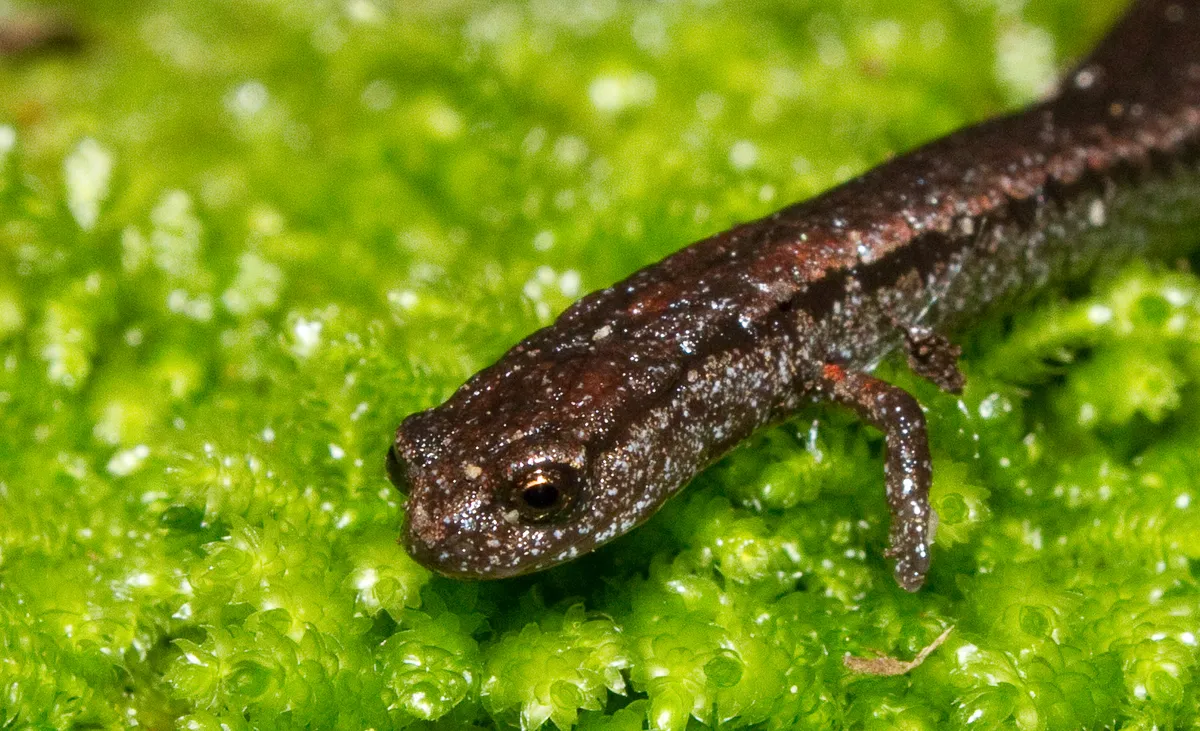
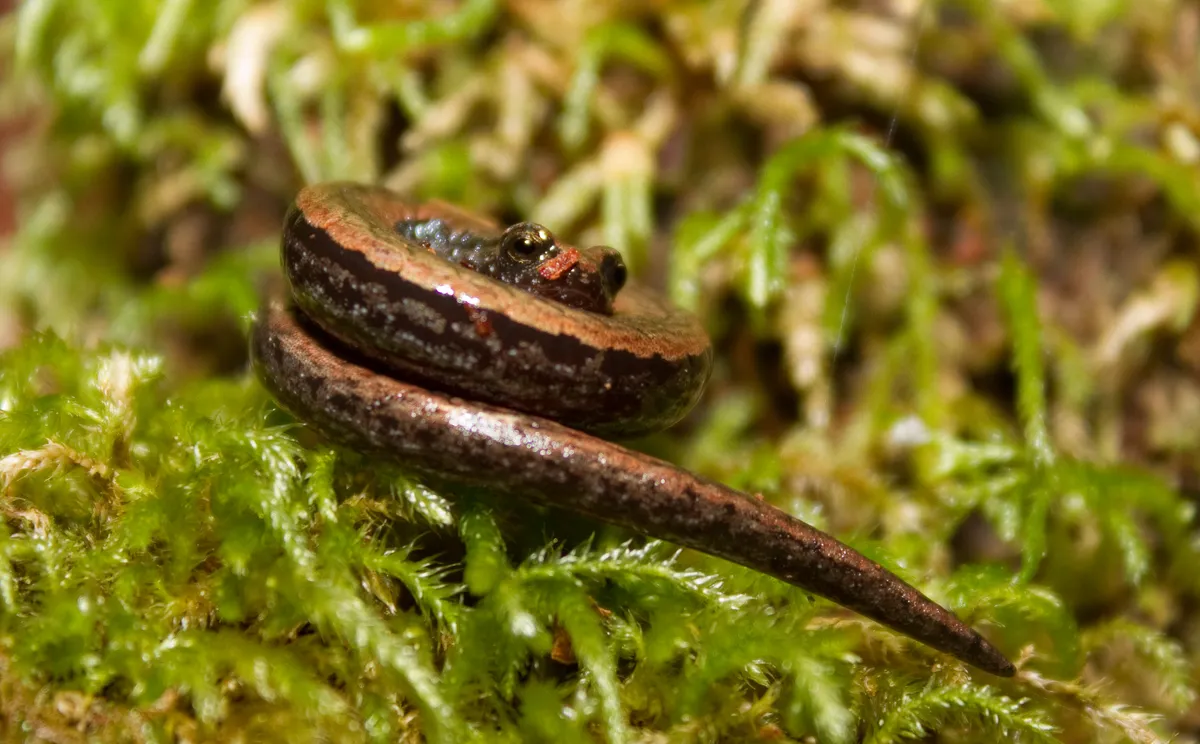
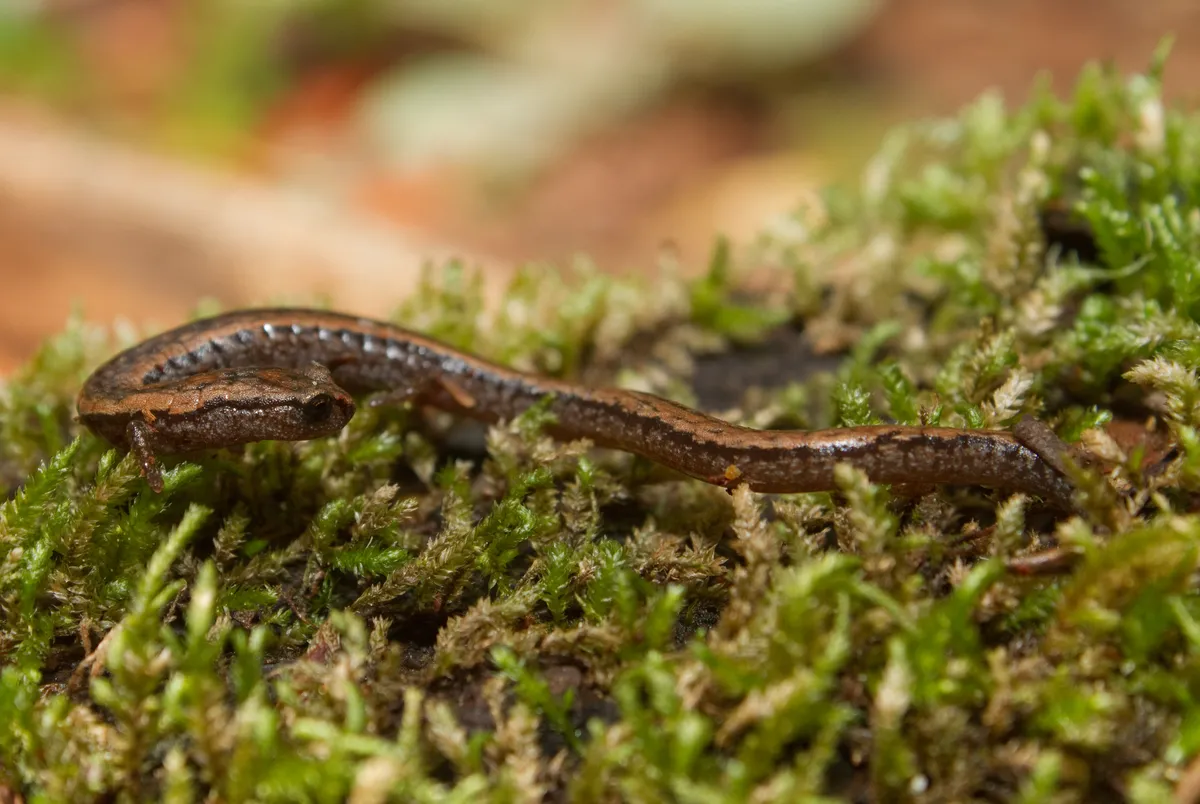
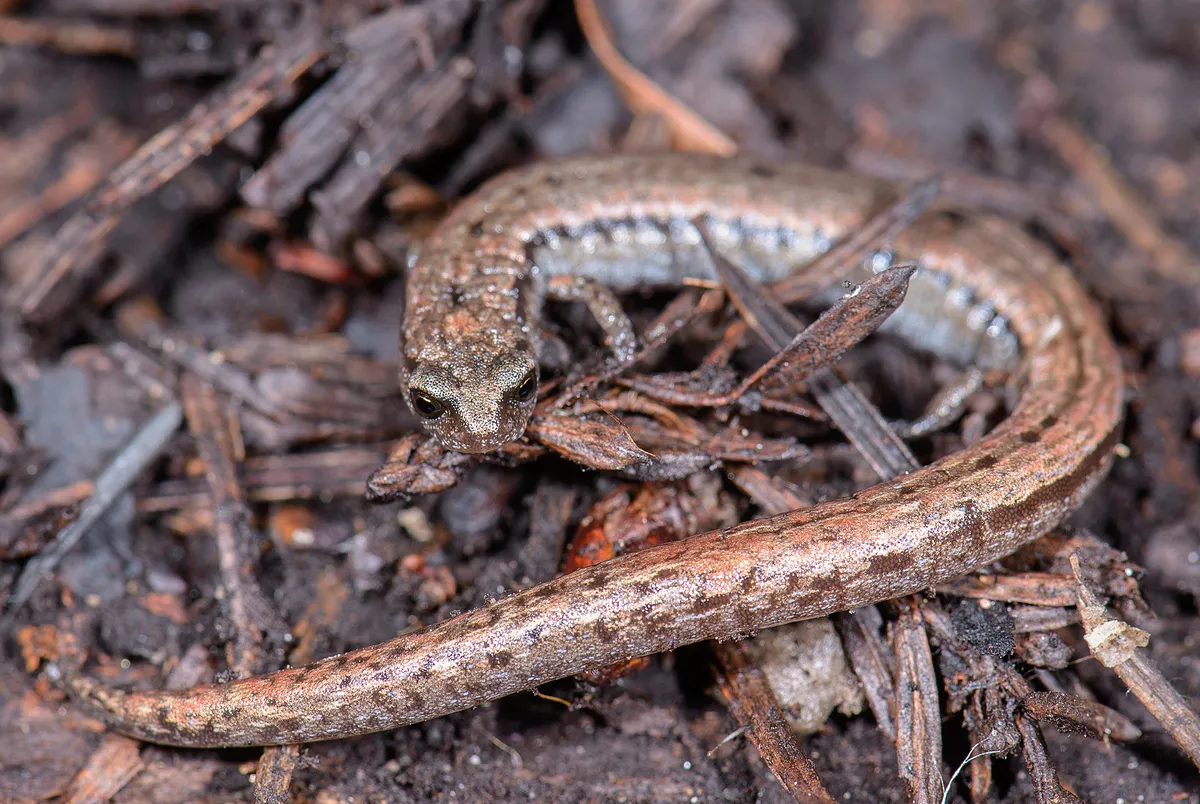
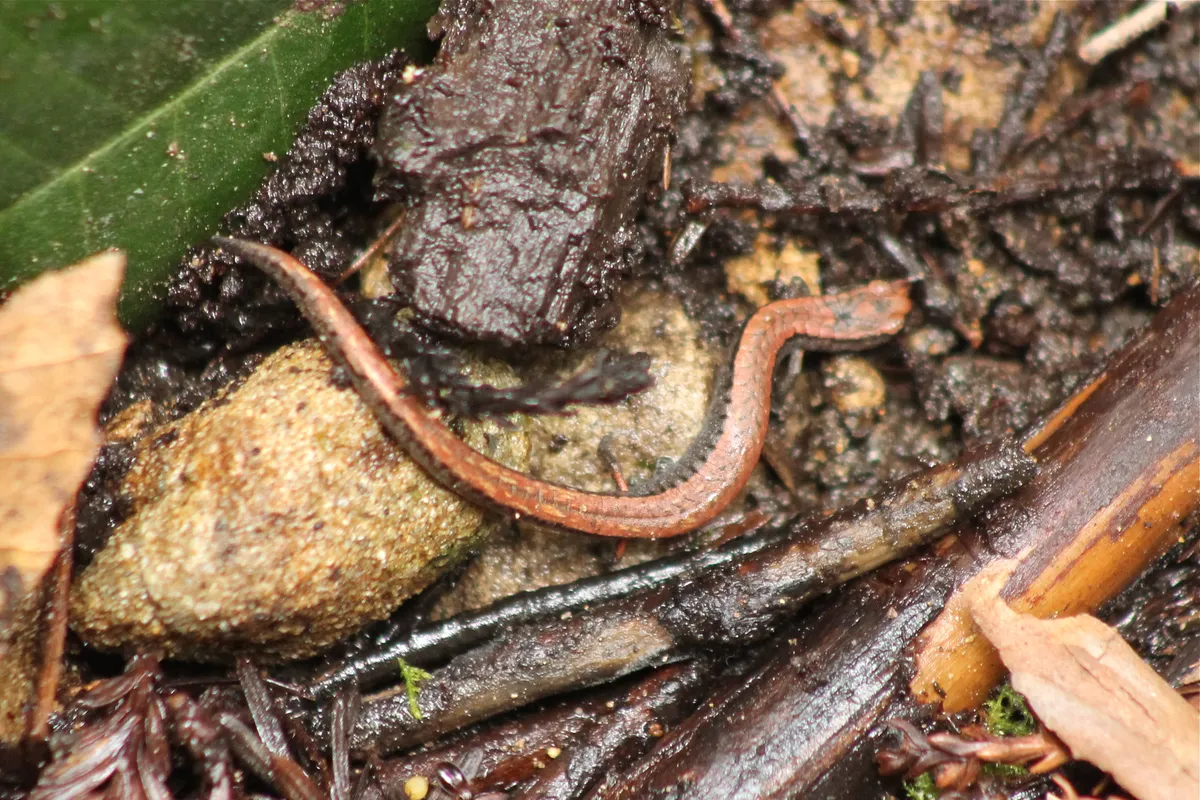
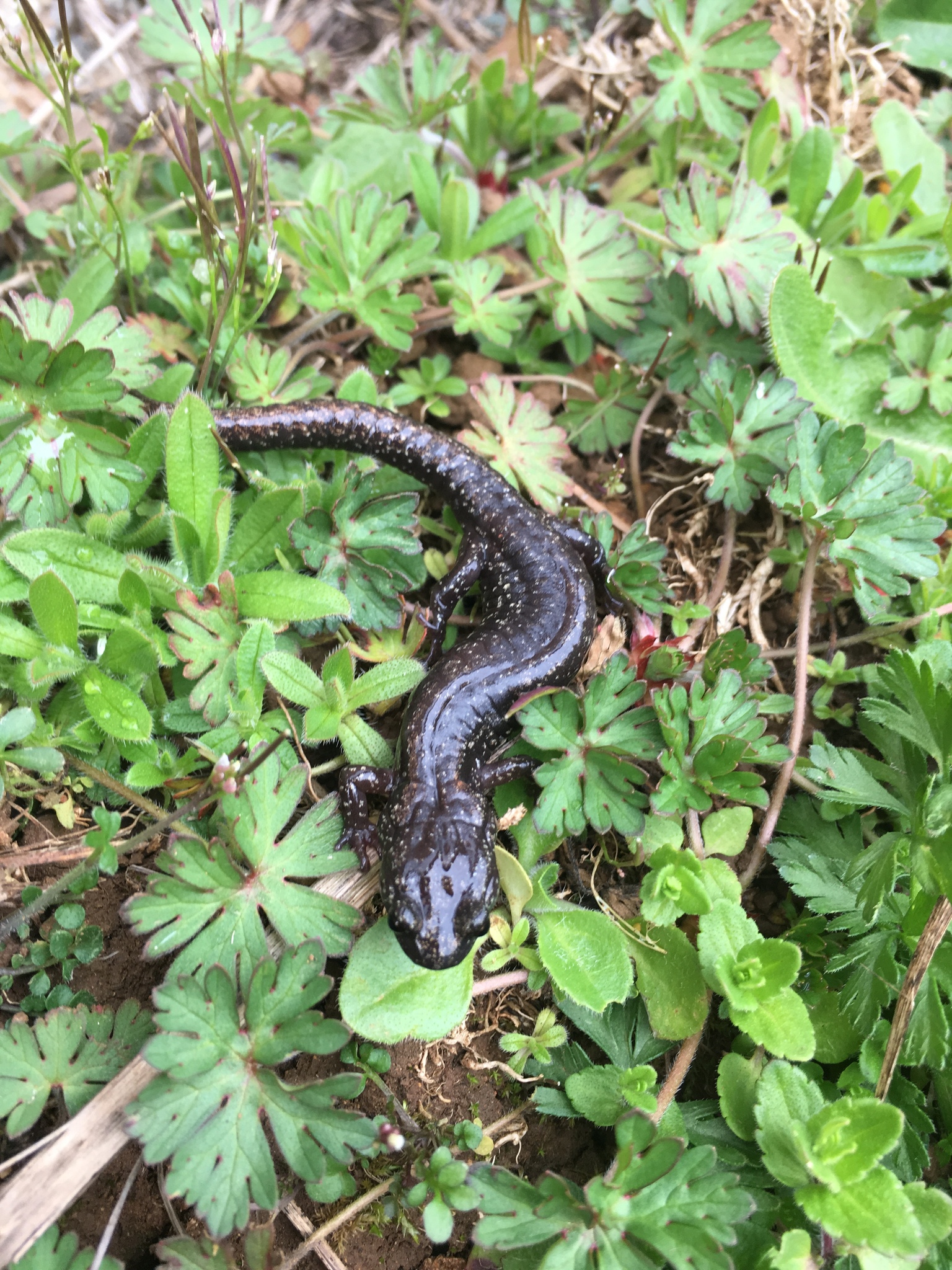
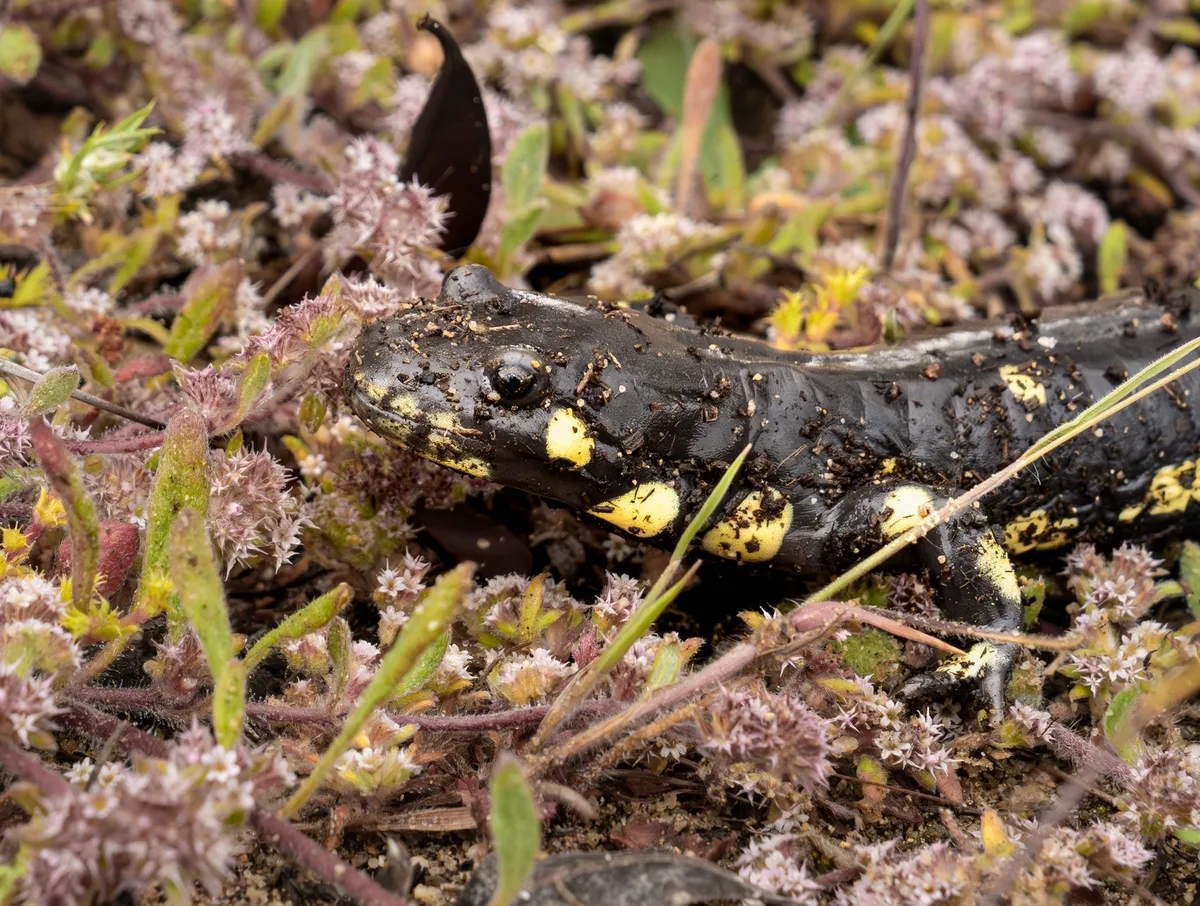
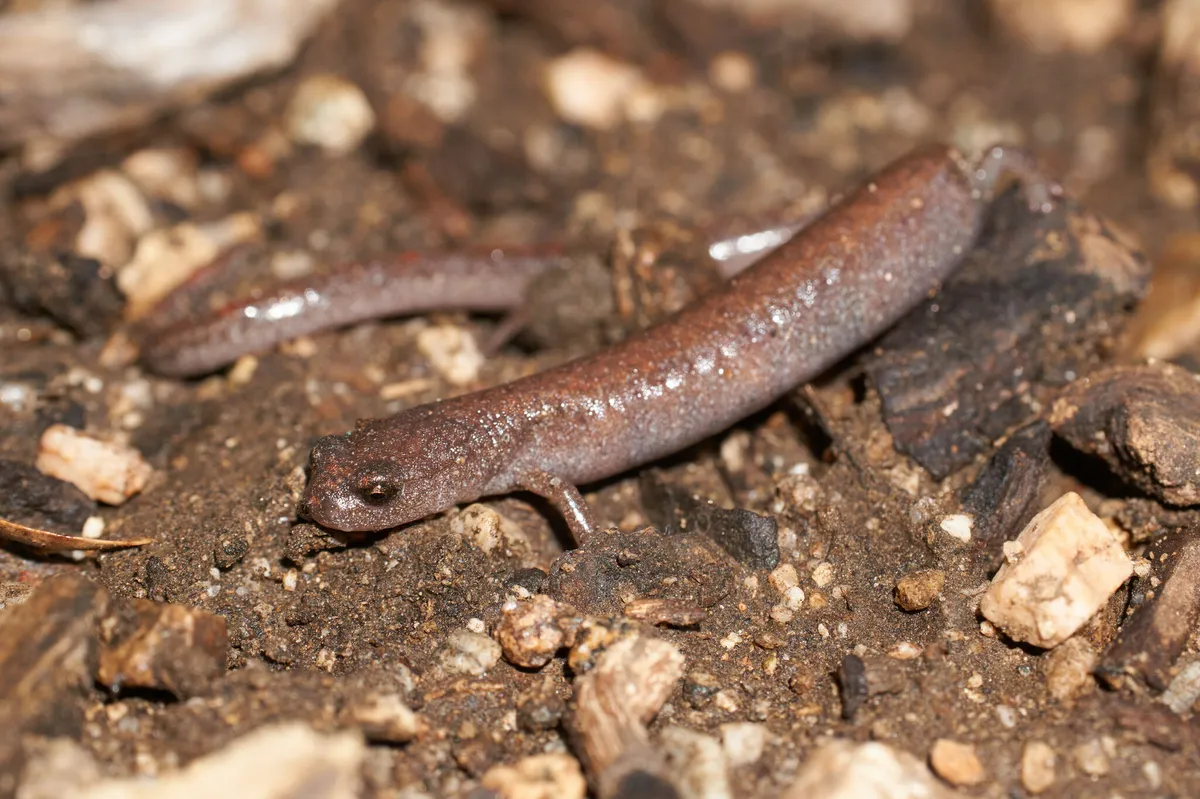
A small, elongated terrestrial salamander endemic to the coastal regions of western California, characterized by its extremely thin body and reduced limb size. Belongs to the family Plethodontidae, which are lungless salamanders that respire through their skin and mucous membranes.
Image Gallery
ADSENSE SLOT
Ecology & Habitat
Habitat
Primarily found in moist woodland areas, forest floors, under logs, rocks, and leaf litter in coastal ranges from southern Oregon to central California, typically at elevations between 0-1,500 meters
Ecological Role
Critical component of forest floor ecosystem, serving as both predator of small invertebrates and prey for larger animals. Plays significant role in nutrient cycling and maintaining ecological balance in forest habitats.
Morphology
SKIN COATSmooth, moist skin with dark brown to black coloration, often with lighter mottling or streaks
LIMBS WINGSShort, thin limbs with four toes on front and rear feet, adapted for moving through dense forest floor vegetation
HEAD SENSORYSmall head with well-developed eyes, smooth skin, and chemosensory abilities for navigation and prey detection
BODY STRUCTUREExtremely slender, elongated body with reduced limbs, typically 5-10 cm in total length. Tail comprises approximately 50-60% of total body length.
Data Source: TaxonHub Database
Image Credit: Marshal Hedin