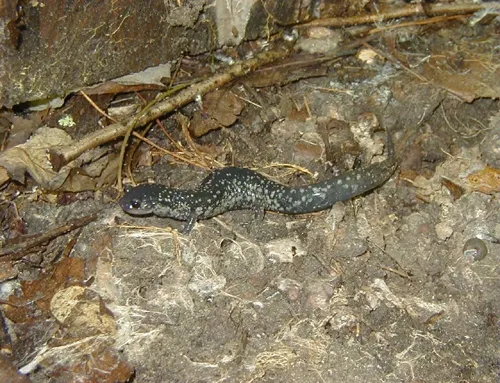
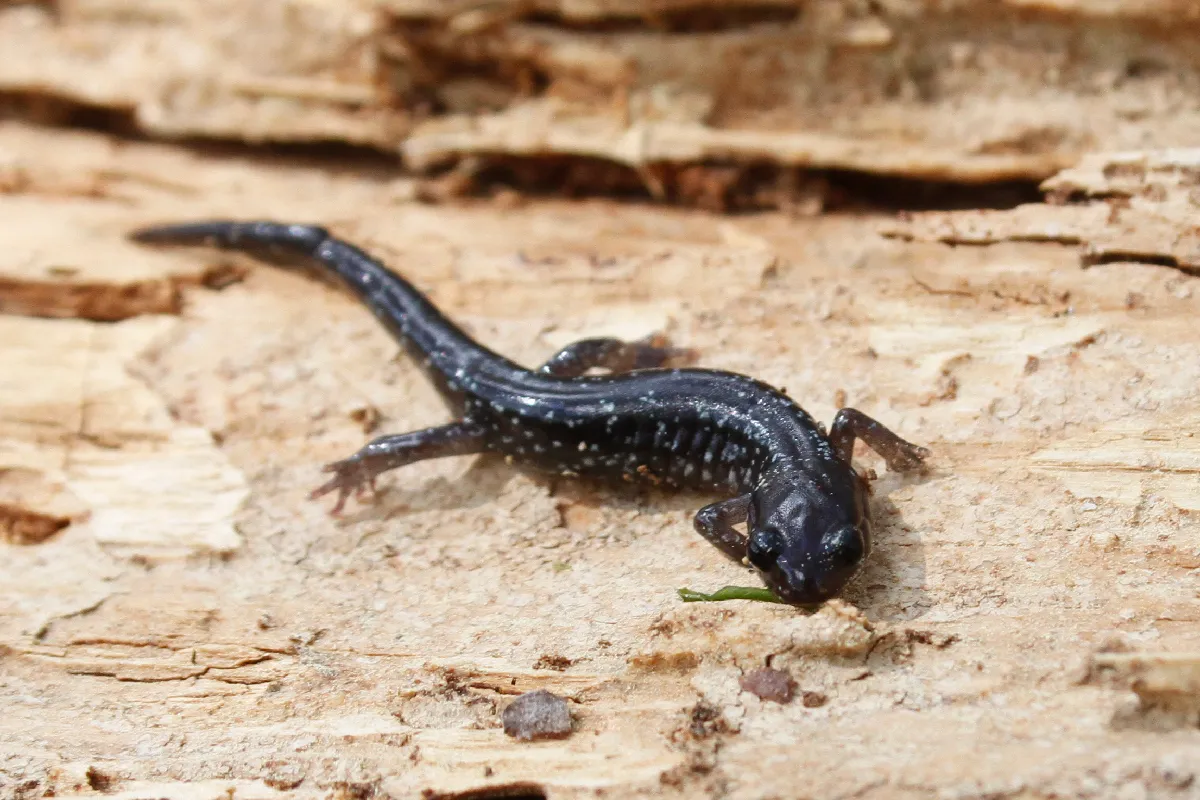
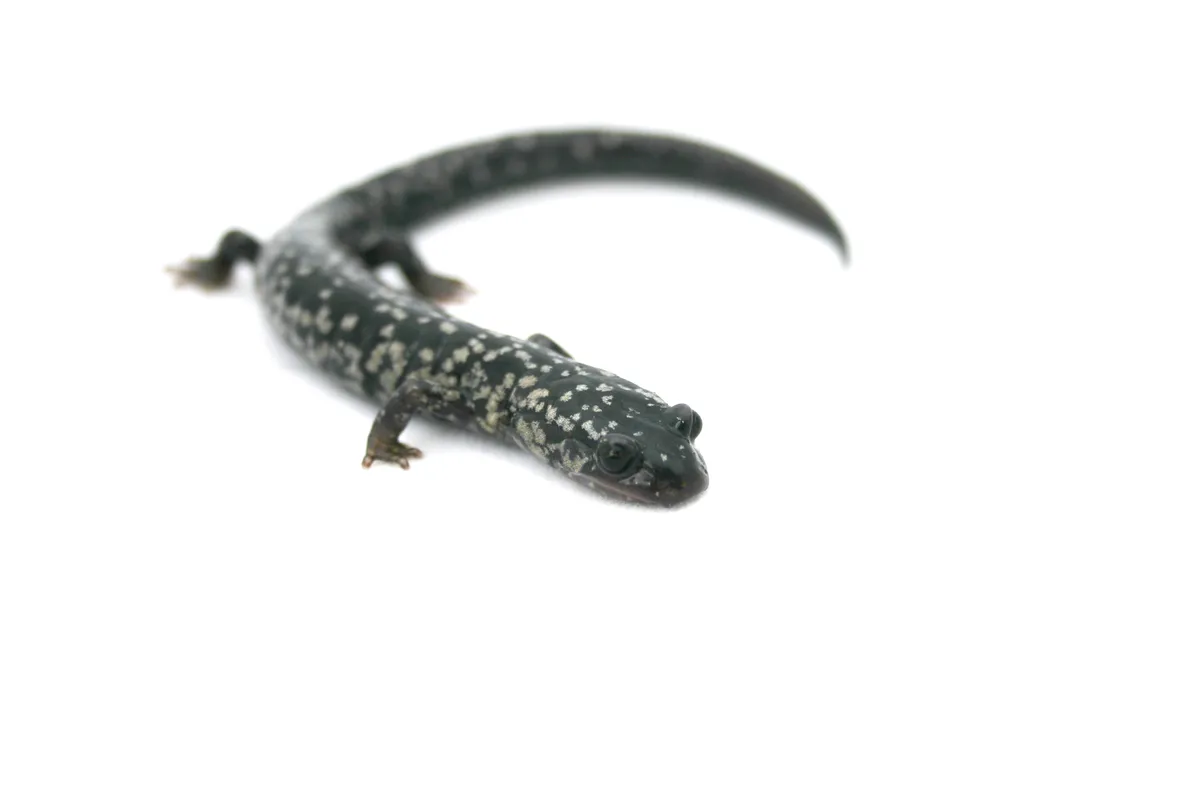
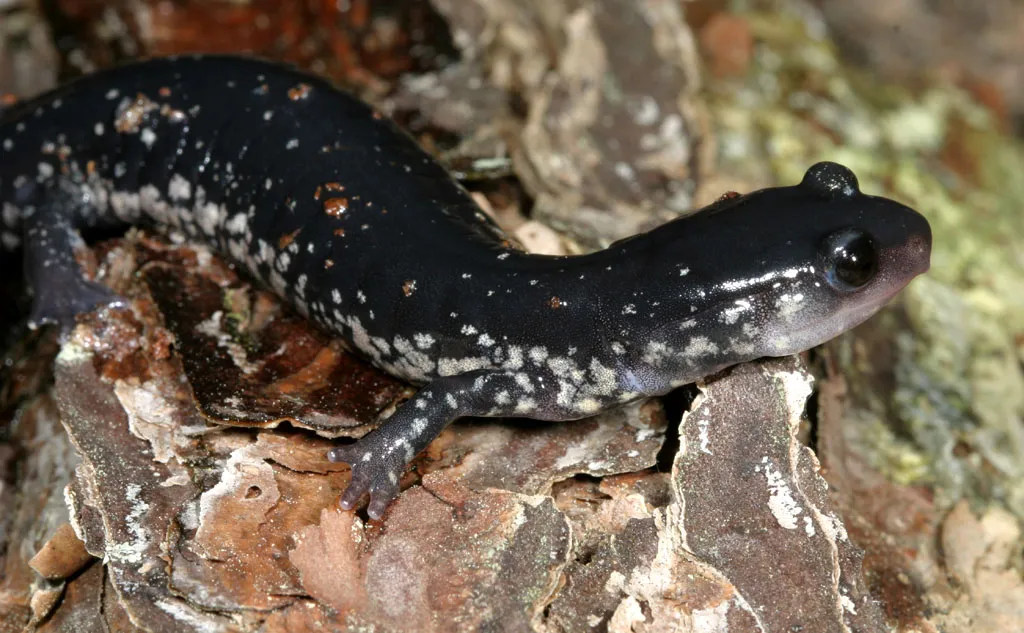
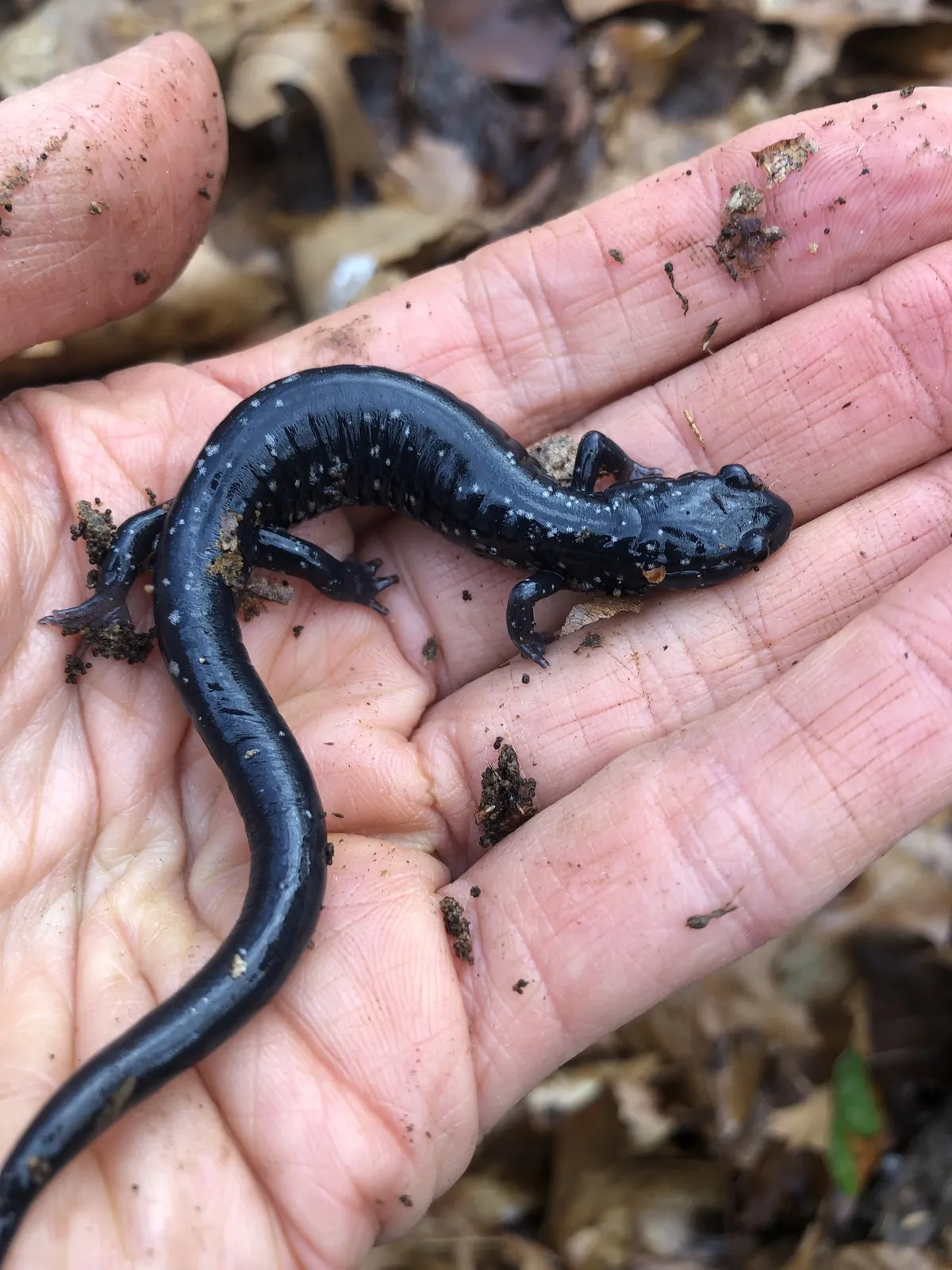
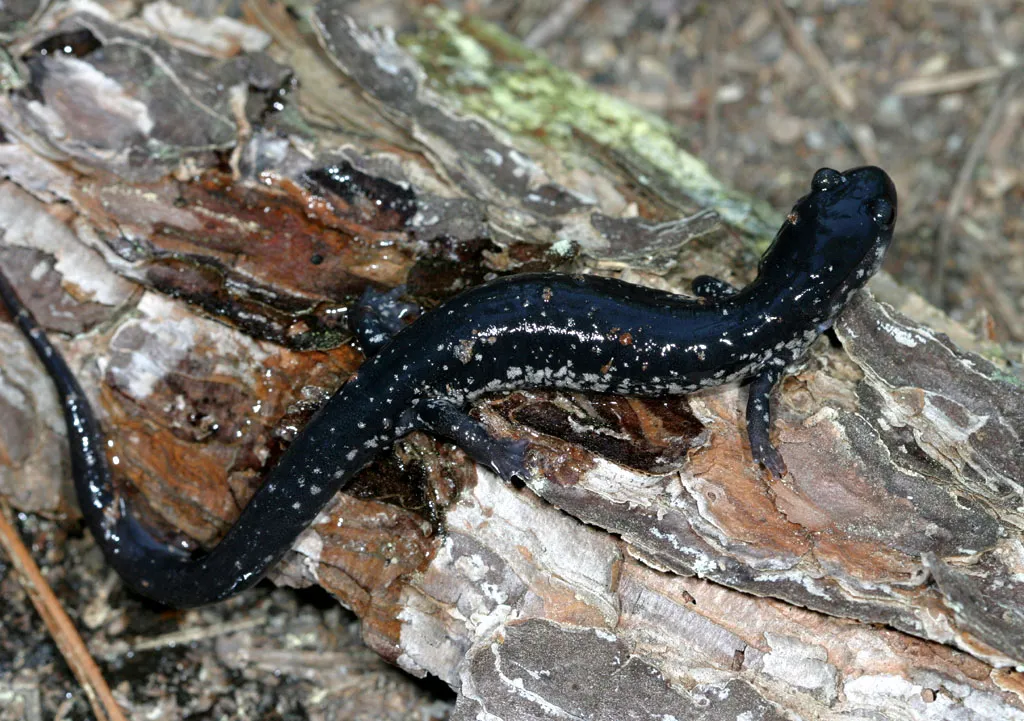
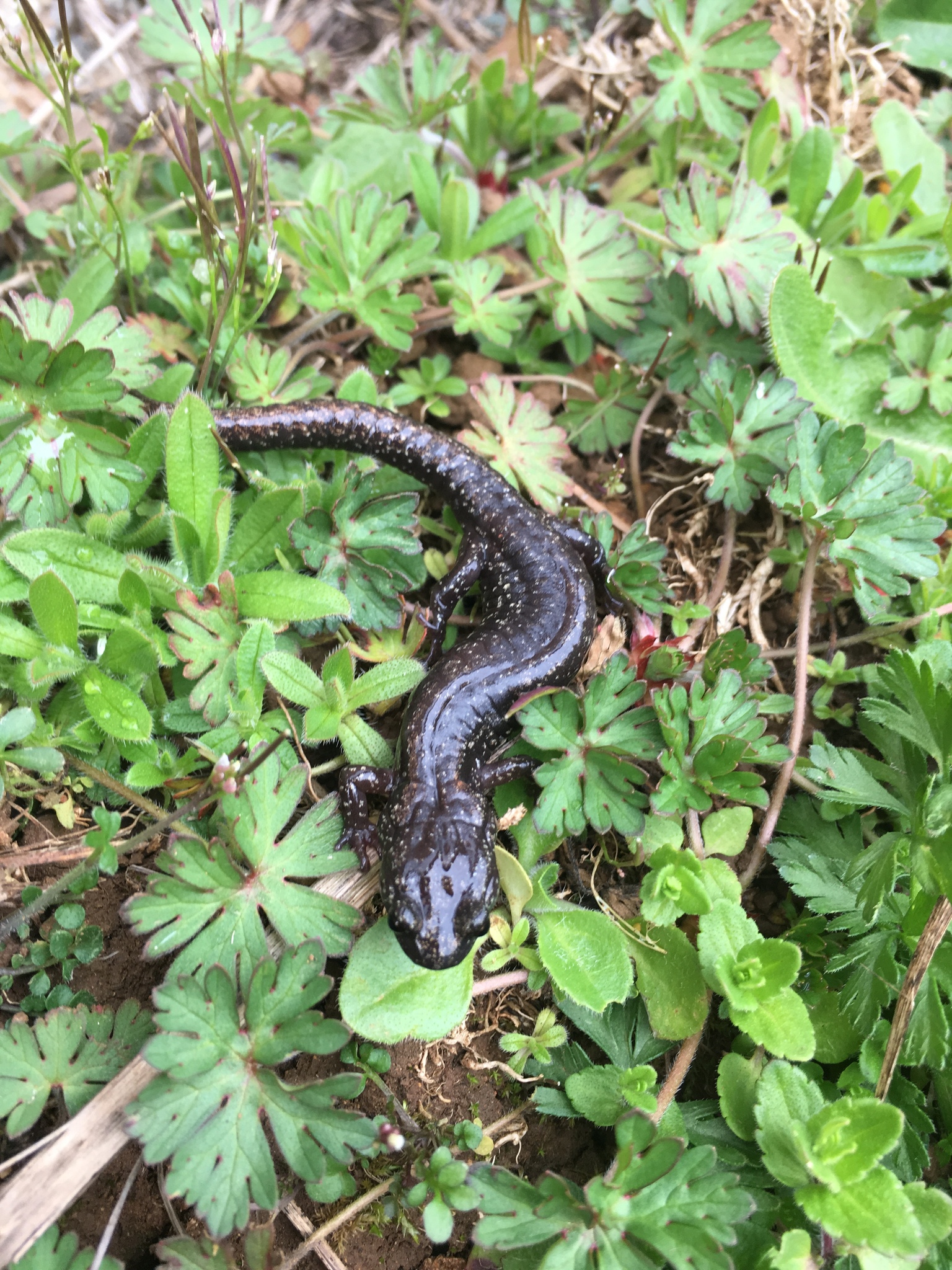
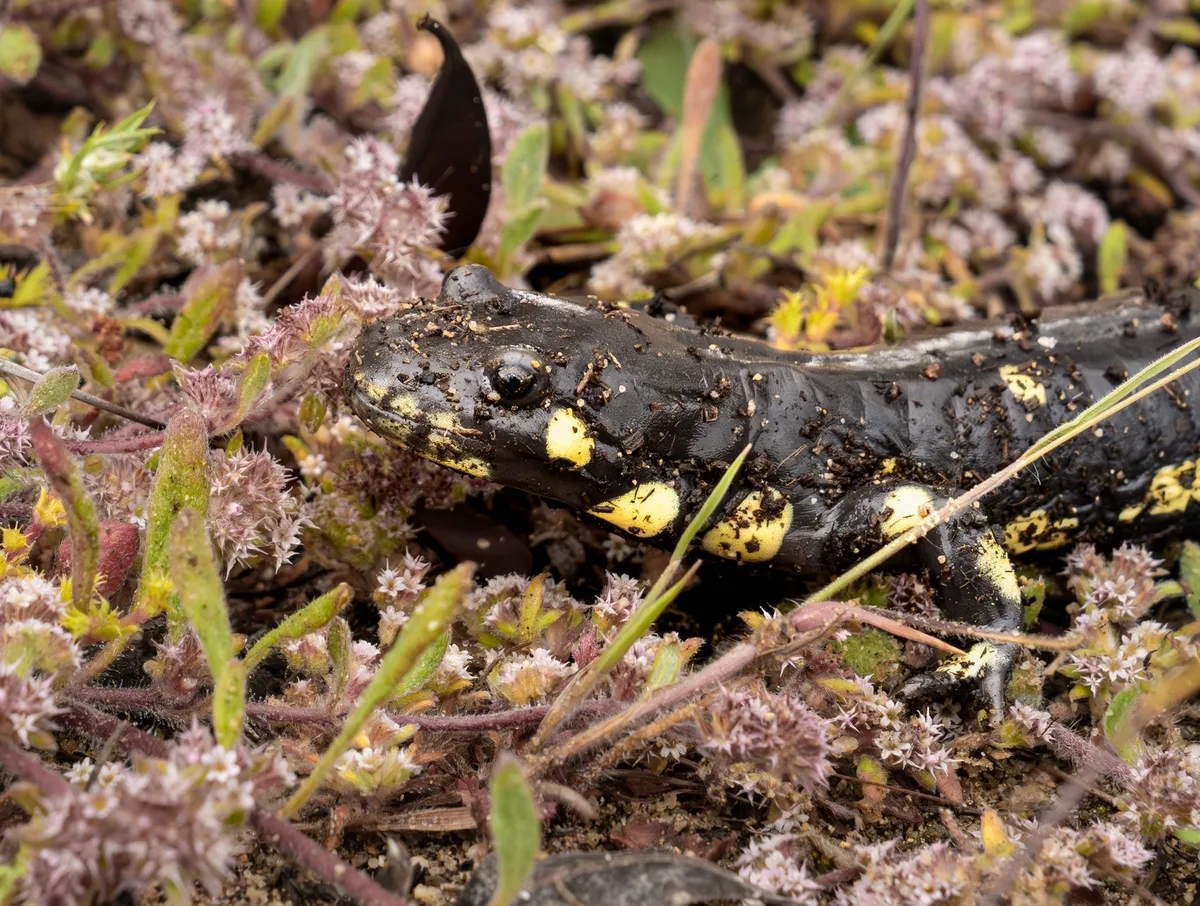
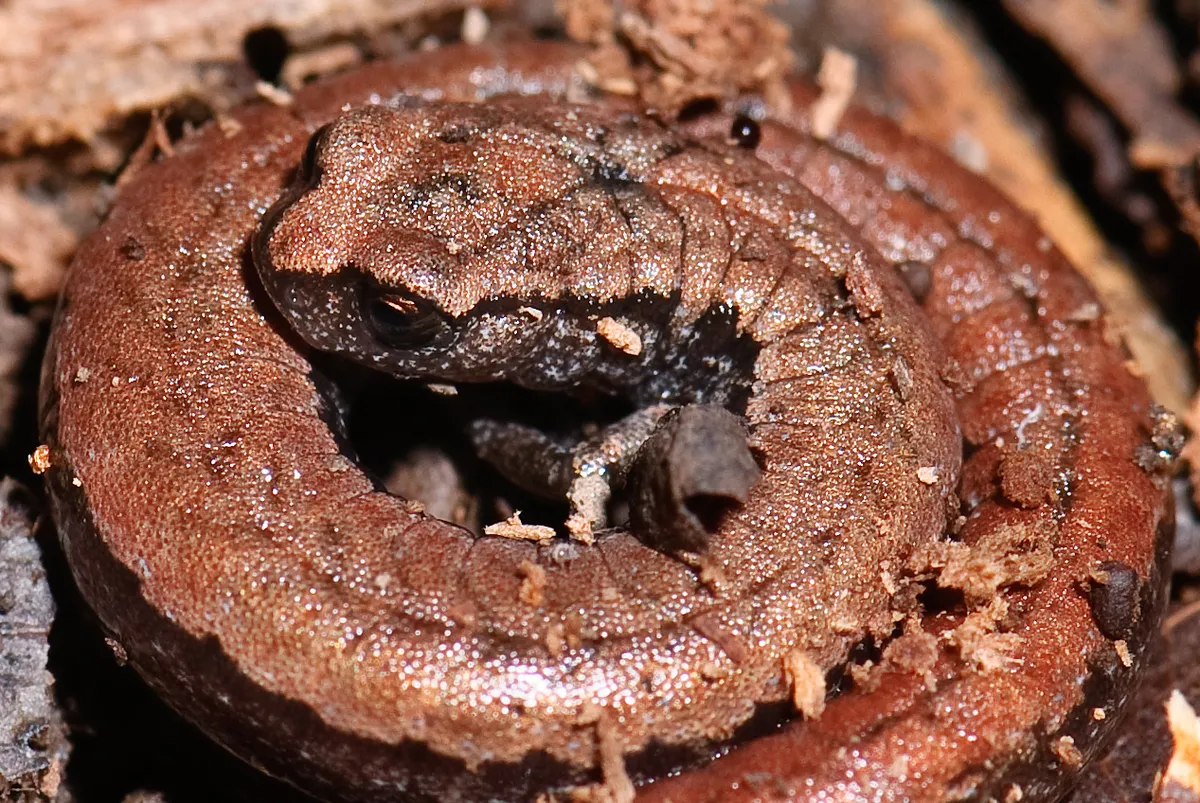
A terrestrial salamander species native to the southeastern United States, characterized by its cylindrical body and distinctive white spotting pattern.
Image Gallery
ADSENSE SLOT
Ecology & Habitat
Habitat
Inhabits moist woodland areas, forest floors with abundant leaf litter, rocky slopes, and humid microenvironments in Appalachian mountain regions from Virginia to Georgia.
Ecological Role
Essential component of forest floor ecosystem, controlling insect populations and serving as prey for small predators; indicator species for forest ecosystem health.
Morphology
SKIN COATMucus-covered skin with distinctive white or silvery spots against dark background, providing camouflage and protection
LIMBS WINGSFour relatively short limbs with five distinct digits, adapted for terrestrial locomotion and burrowing
HEAD SENSORYBroad, flattened head with large eyes, well-developed olfactory sensory mechanisms for navigation and prey detection
BODY STRUCTUREElongated cylindrical body, typically 11-17 cm in total length, robust and muscular build with smooth, slightly glossy skin
Data Source: TaxonHub Database
Image Credit: John D. Wilson