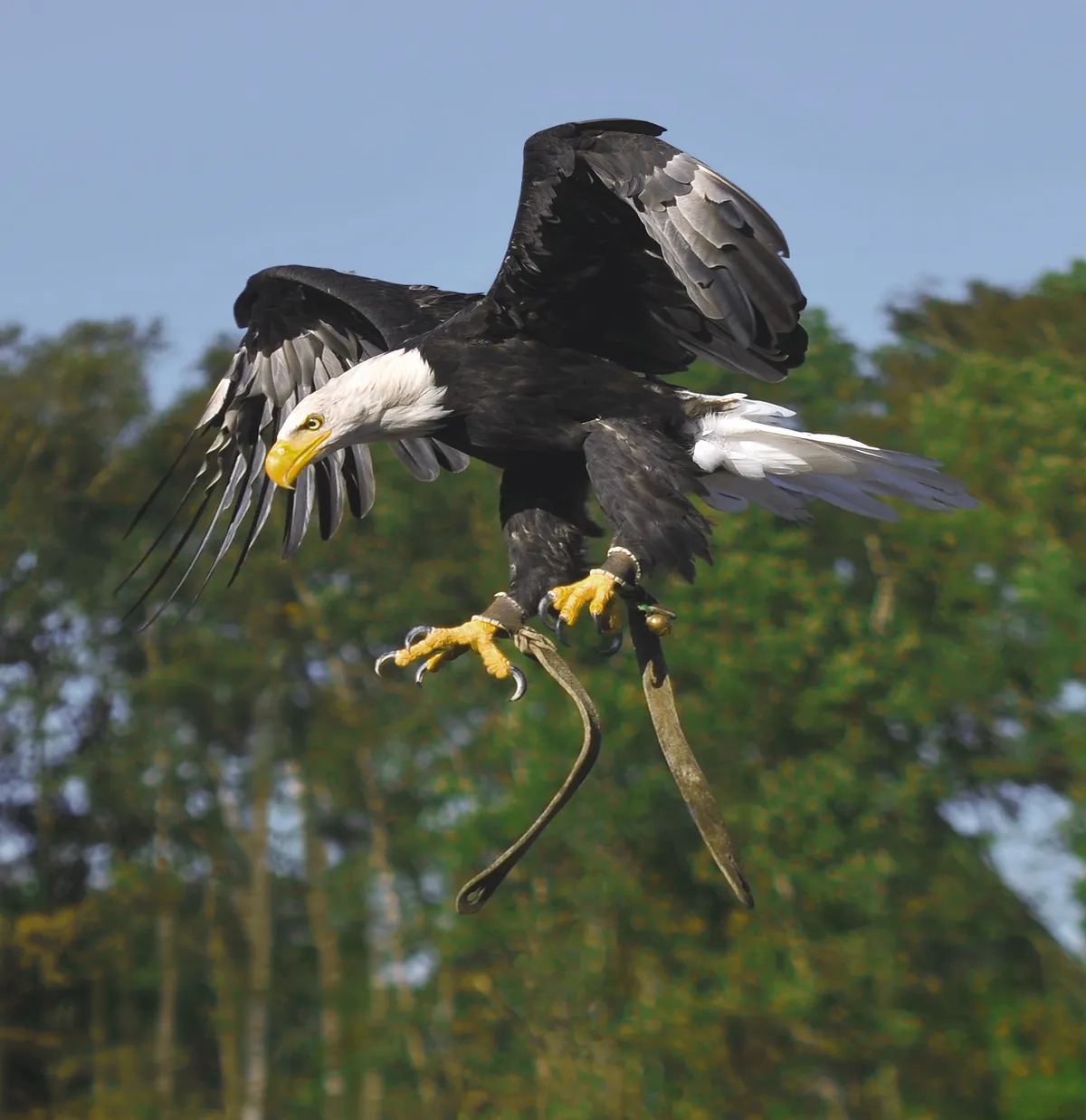
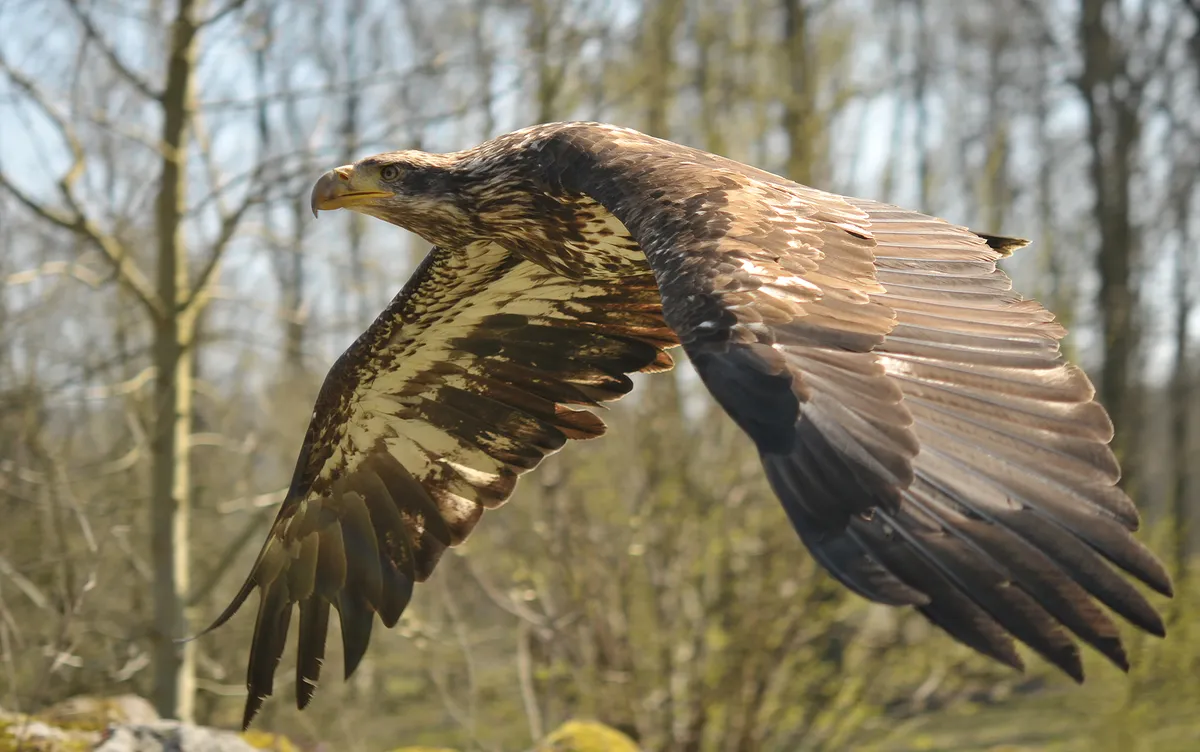
Large North American raptor species native to the continent, characterized by distinctive white head and tail contrasting with dark brown body plumage. Apex predator and national symbol of the United States.
Image Gallery
ADSENSE SLOT
Ecology & Habitat
Habitat
Coastal regions, large lakes, rivers with abundant fish populations, ranging from Alaska and Canada to the southern United States, preferring areas with tall trees for nesting and hunting perches.
Ecological Role
Critical keystone species in North American ecosystems, controlling fish and small mammal populations, and serving as indicator species for environmental health and ecosystem stability.
Morphology
SKIN COATDense waterproof plumage, white head and tail feathers develop at 4-5 years of age, dark brown body and wing feathers
LIMBS WINGSBroad, long wings for soaring, powerful legs with sharp, curved talons for catching prey, dark brown flight feathers
HEAD SENSORYKeen binocular vision with 4-8x greater visual acuity than humans, white feathered head with sharp, curved yellow beak
BODY STRUCTURELarge wingspan of 1.8-2.3 meters, body length 70-102 cm, weight 3-6.3 kg, robust build with powerful hooked beak and strong talons
Data Source: TaxonHub Database
Image Credit: Paul Friel