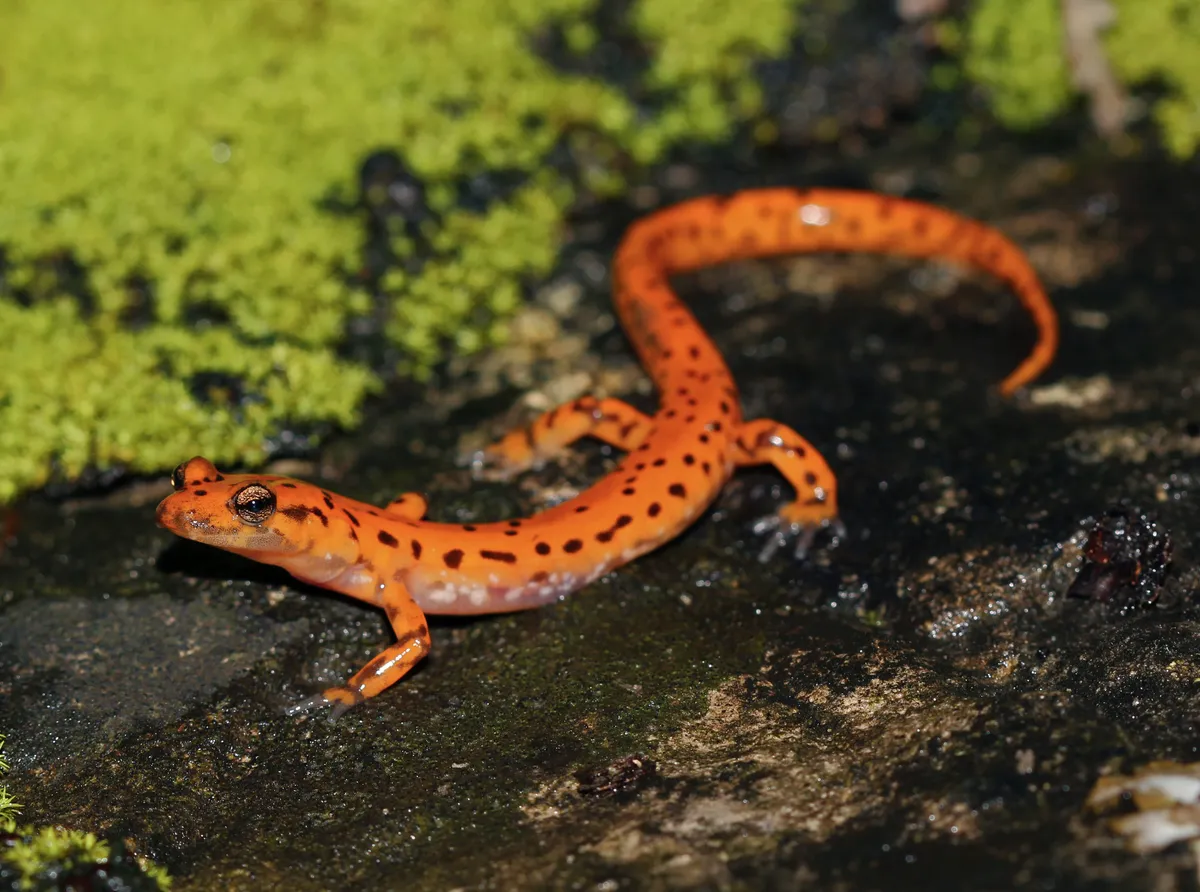
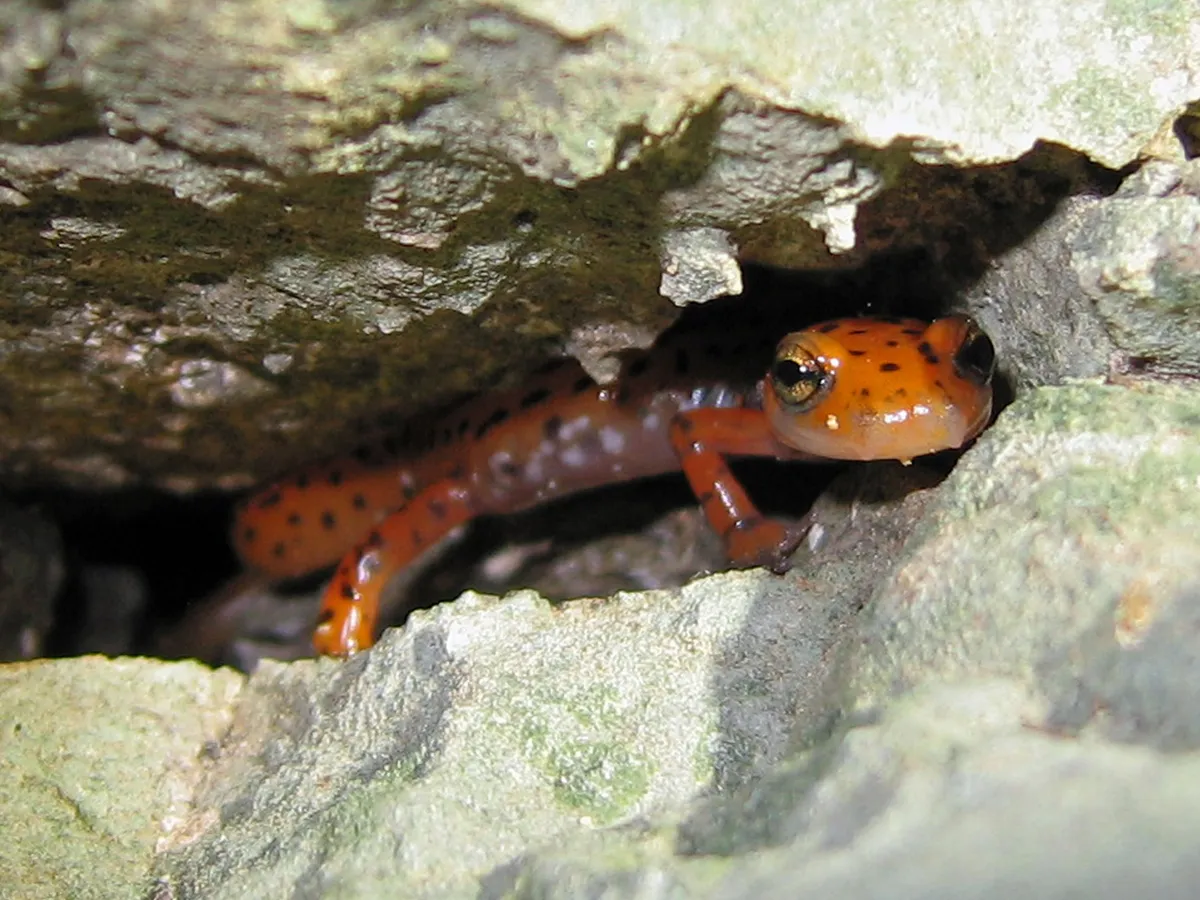
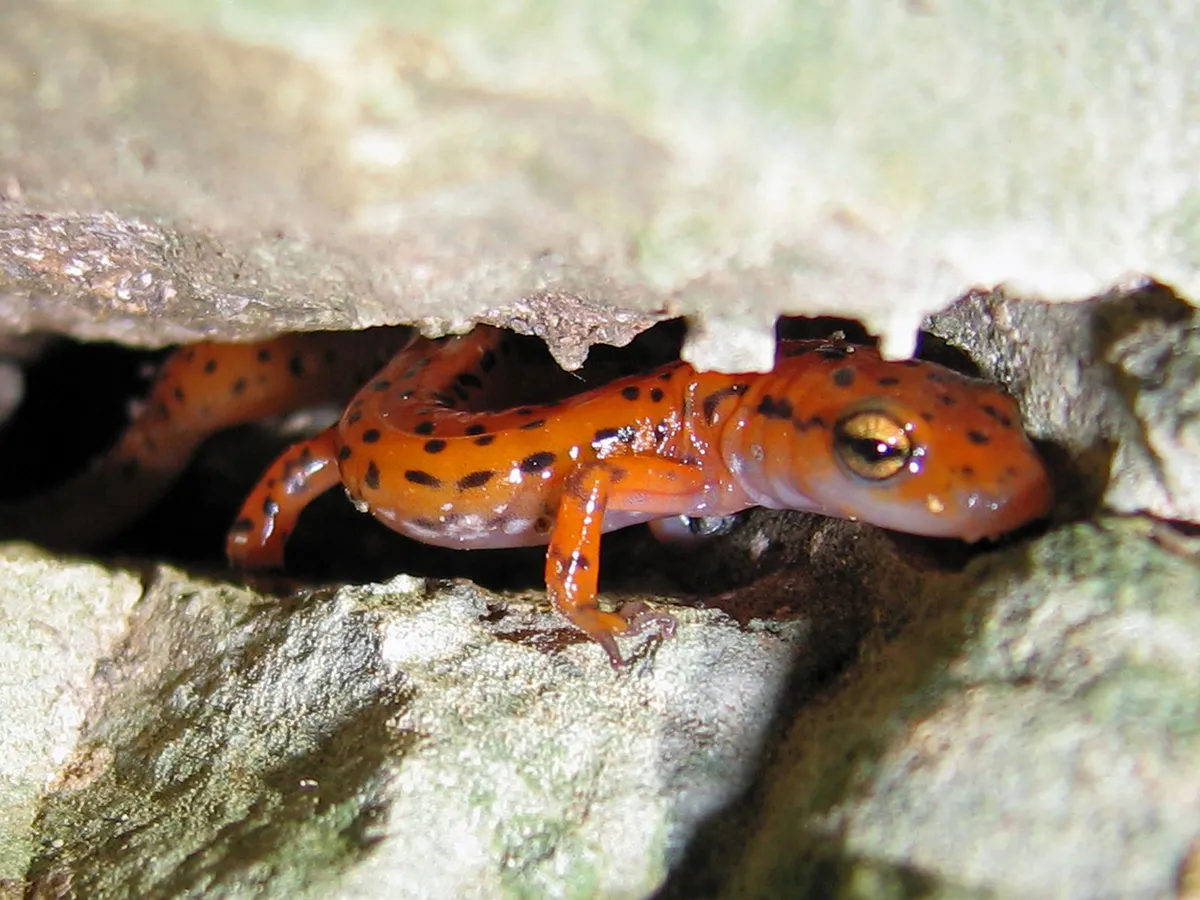
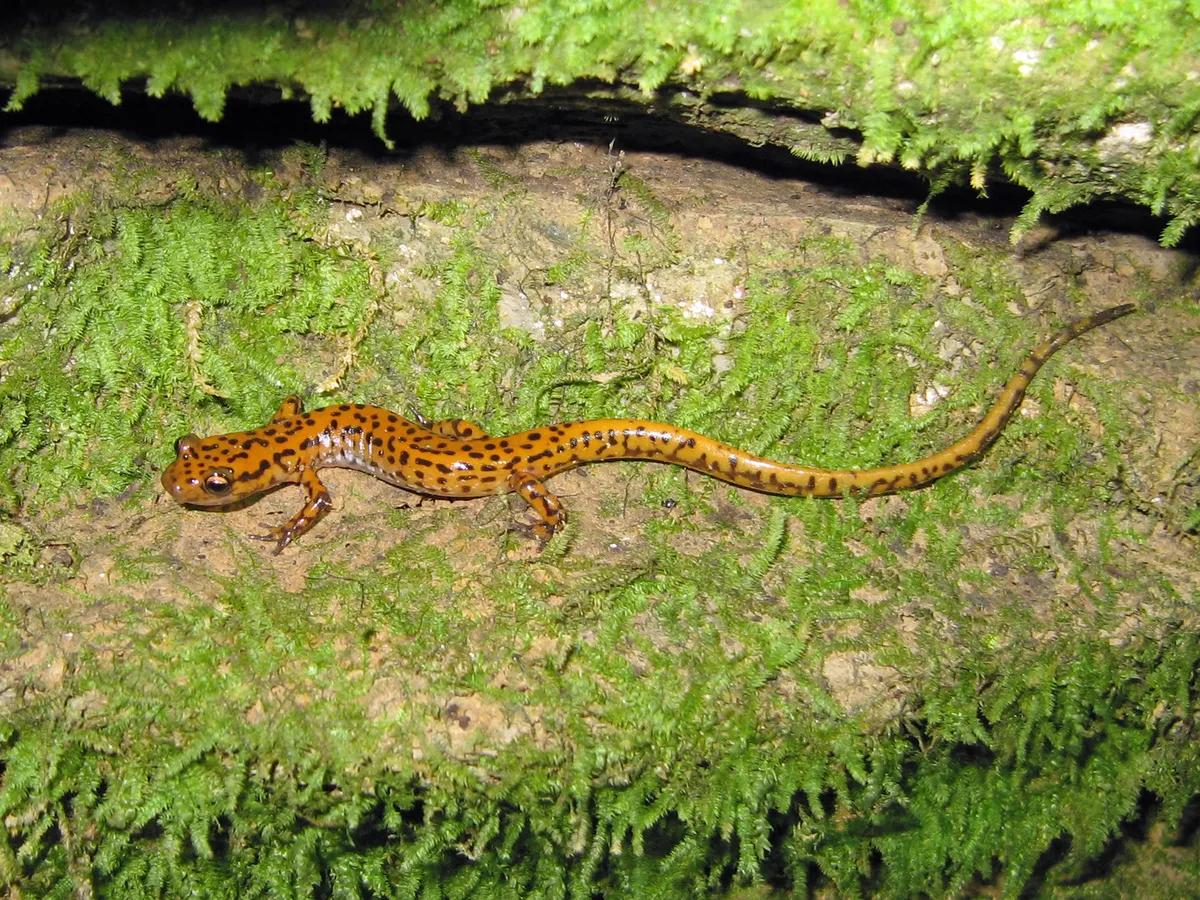
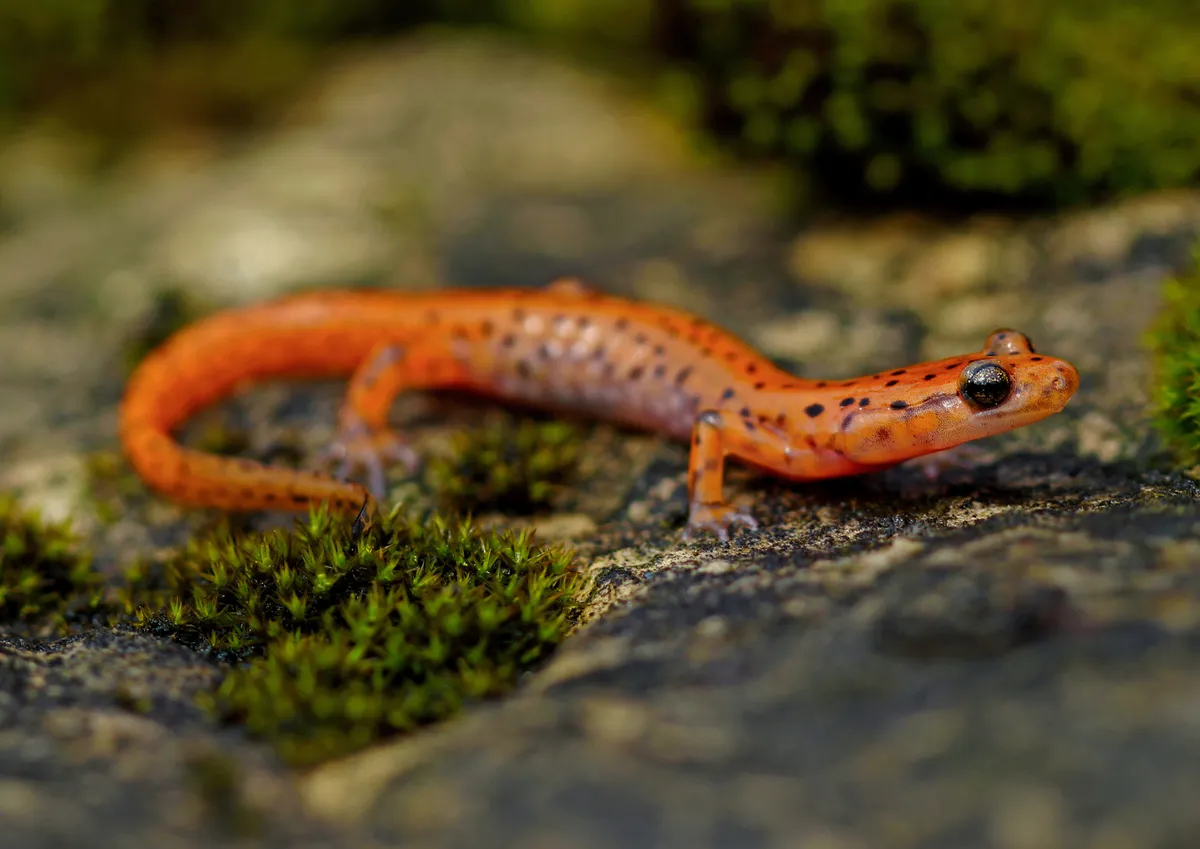
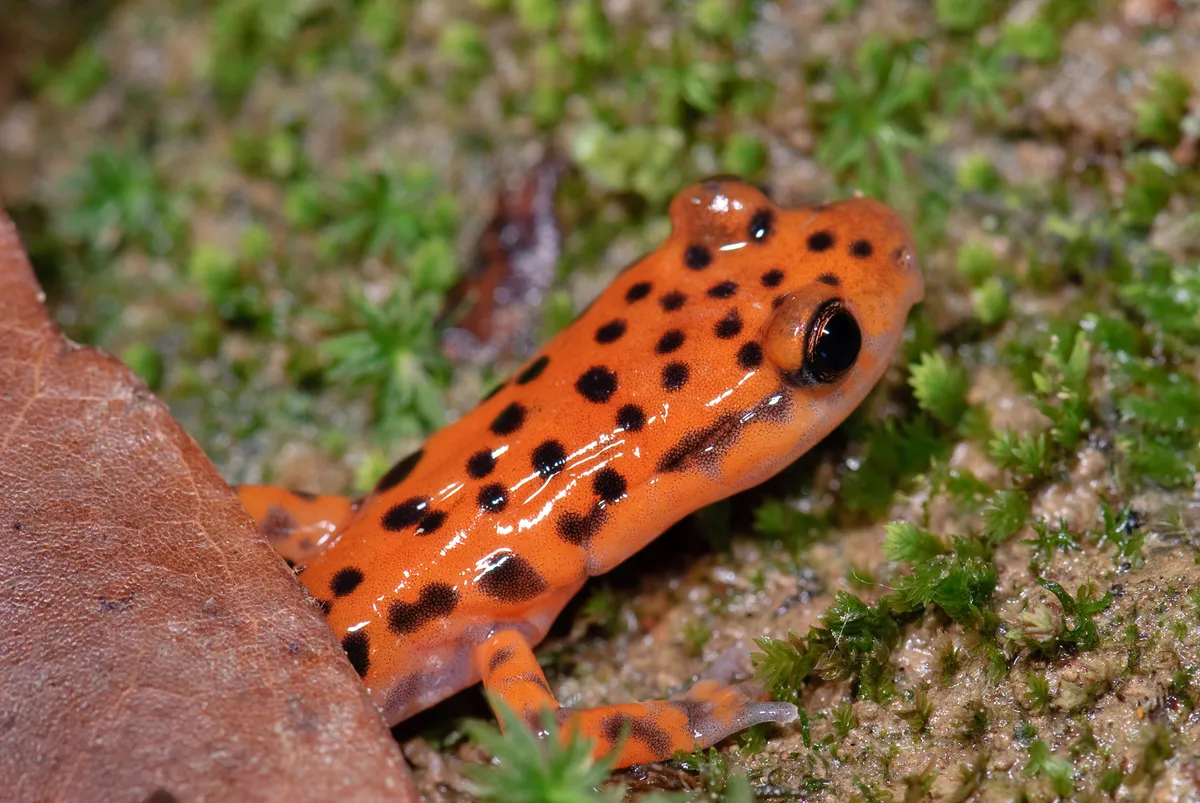
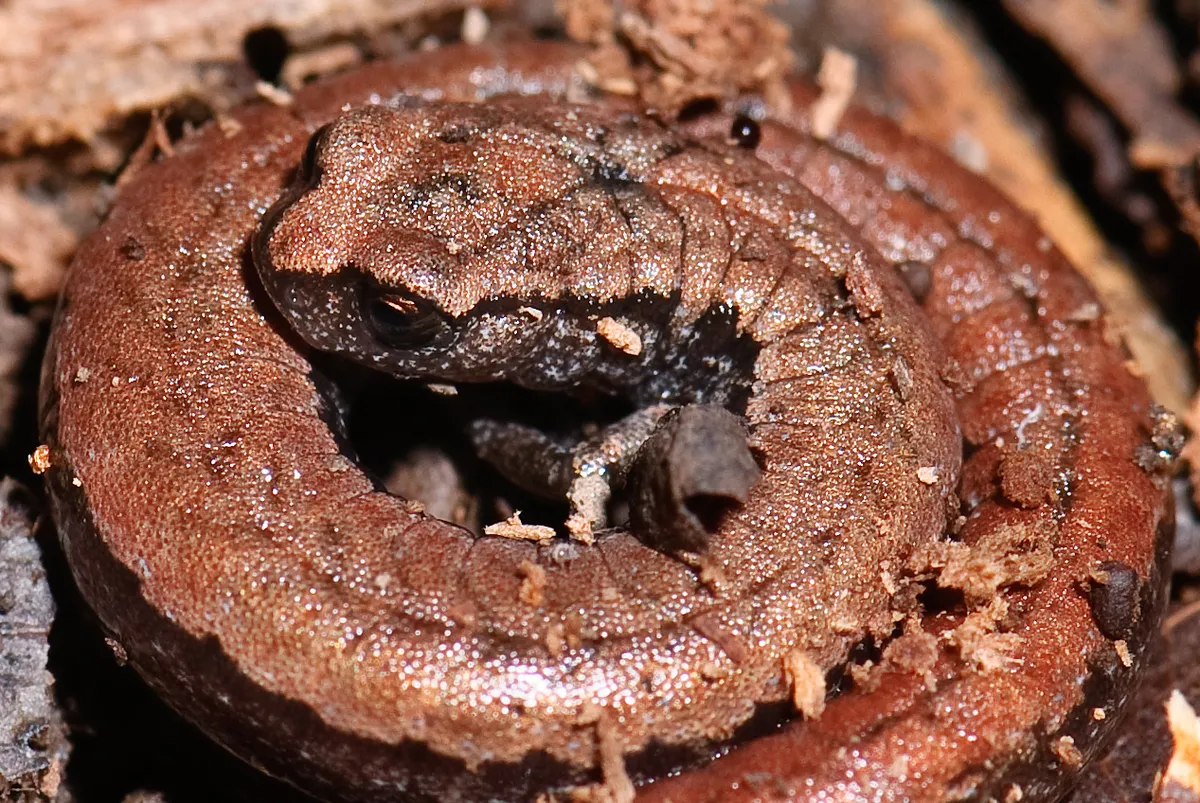
A slender, orange-red salamander endemic to cave systems and karst regions of the eastern United States, known for its exceptional adaptability to subterranean environments.
Image Gallery
ADSENSE SLOT
Ecology & Habitat
Habitat
Predominantly inhabits limestone cave systems, underground passages, and moist rocky areas in regions of Kentucky, Tennessee, Missouri, and surrounding states, with elevations ranging from 100-800 meters above sea level.
Ecological Role
Critical indicator species for cave ecosystem health, serving as a bioindicator of environmental changes and playing a significant role in underground food web dynamics as both predator and prey.
Morphology
SKIN COATSmooth, moist skin with high permeability, lacking scales, enabling cutaneous respiration in oxygen-limited cave environments
LIMBS WINGSFour relatively short limbs with four digits on forelimbs and five digits on hindlimbs, adapted for climbing and maneuvering in rocky, uneven surfaces
HEAD SENSORYTriangular head with prominent eyes, well-developed chemosensory capabilities, and sensitive lateral line system for navigating dark cave environments
BODY STRUCTUREElongated, slender body with total length ranging from 10-18 cm, featuring bright orange-red coloration with dark irregular markings
Data Source: TaxonHub Database
Image Credit: Peter Paplanus