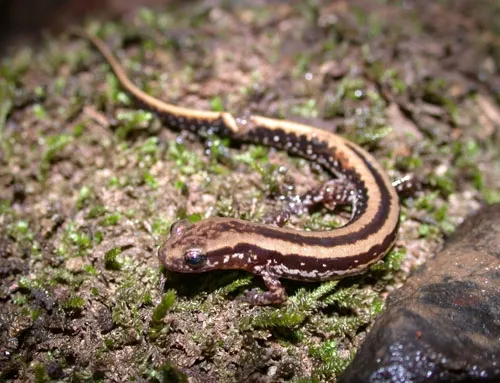
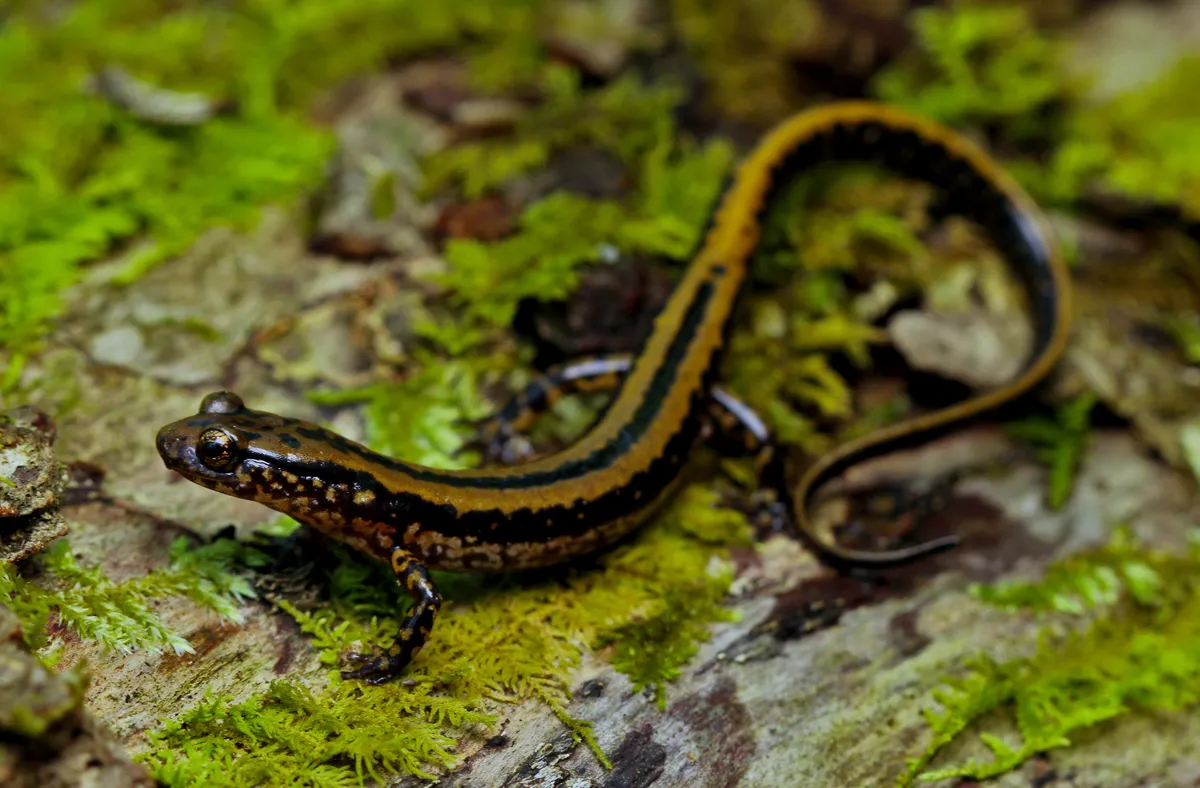
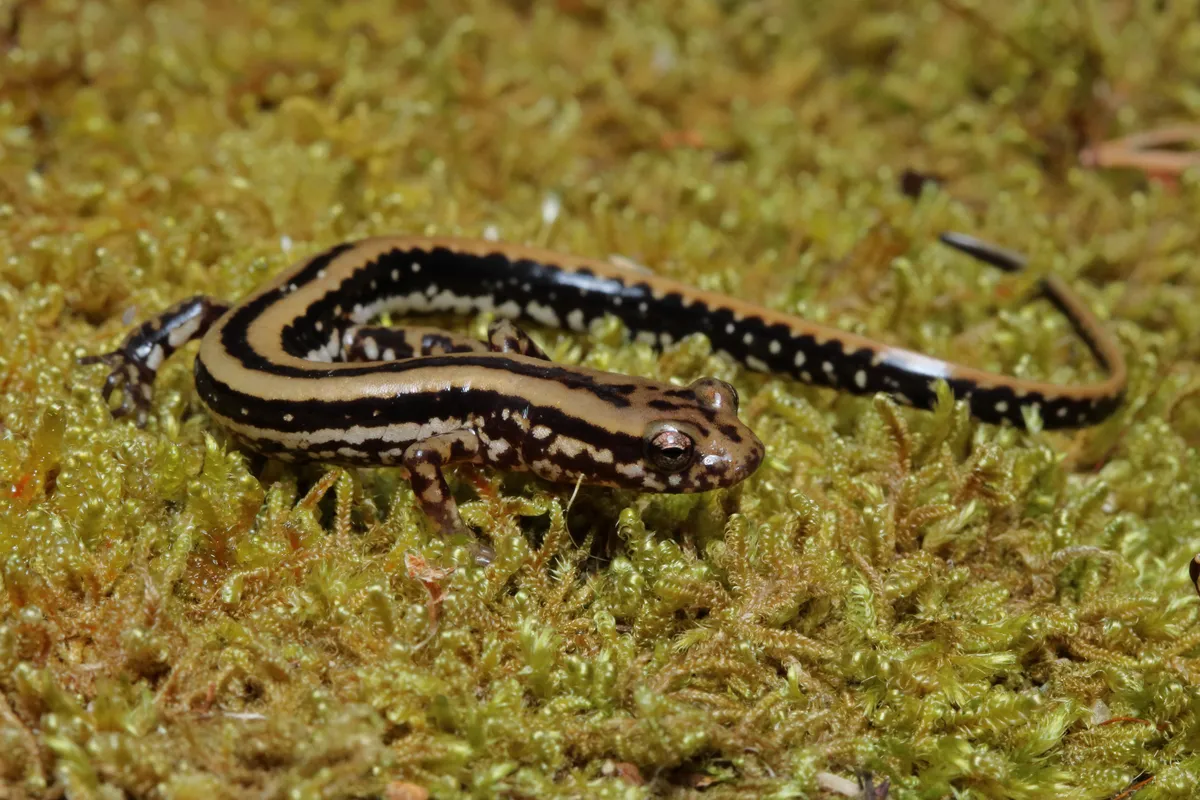
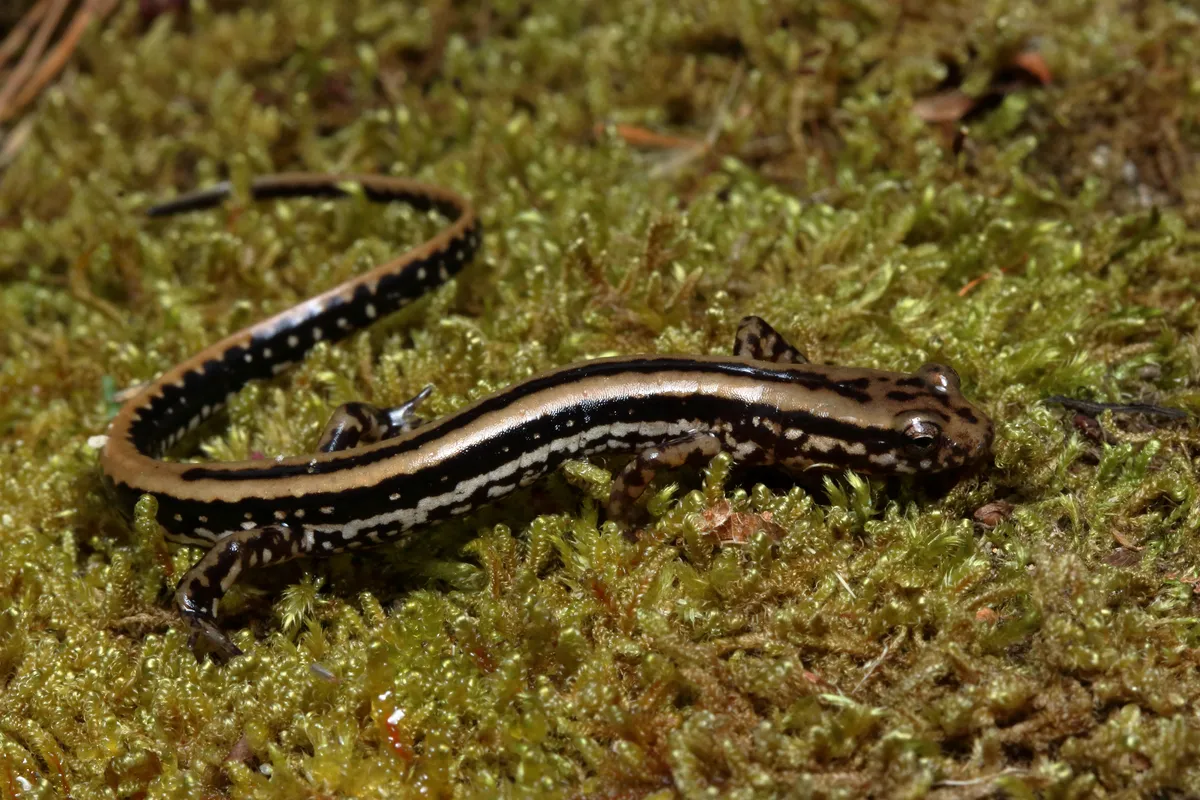
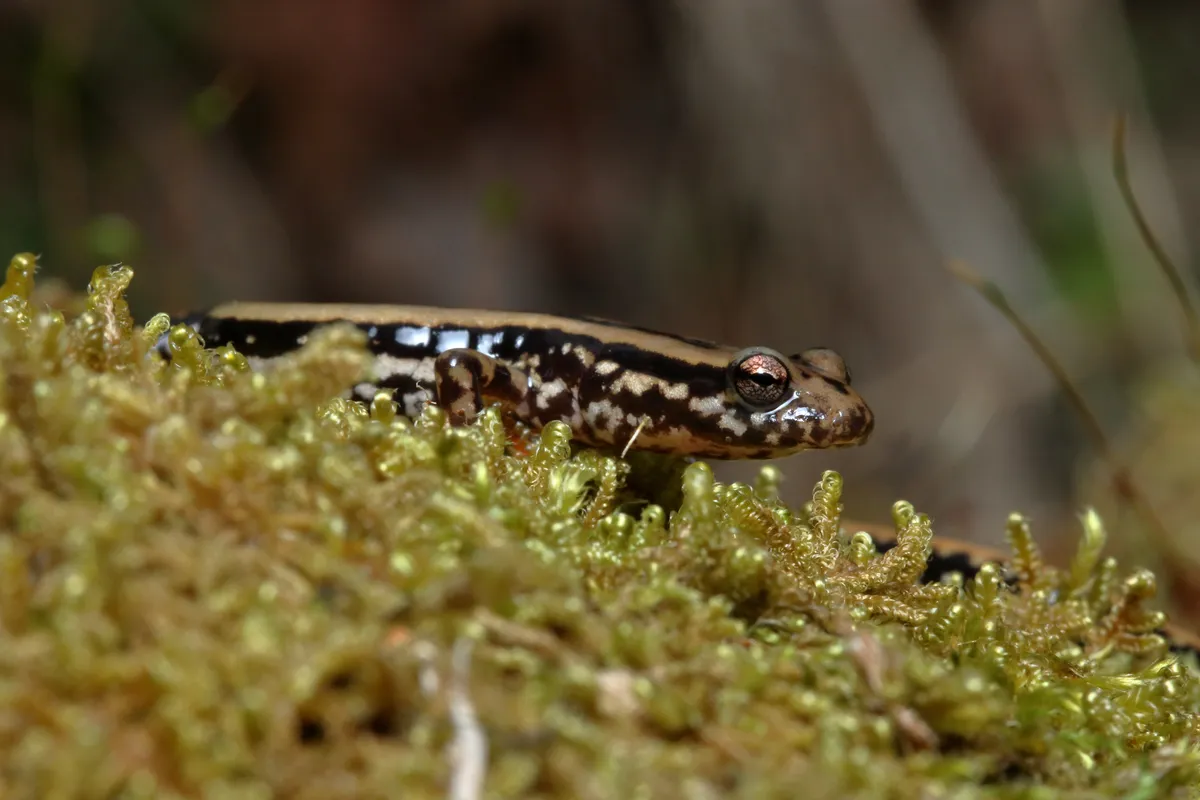
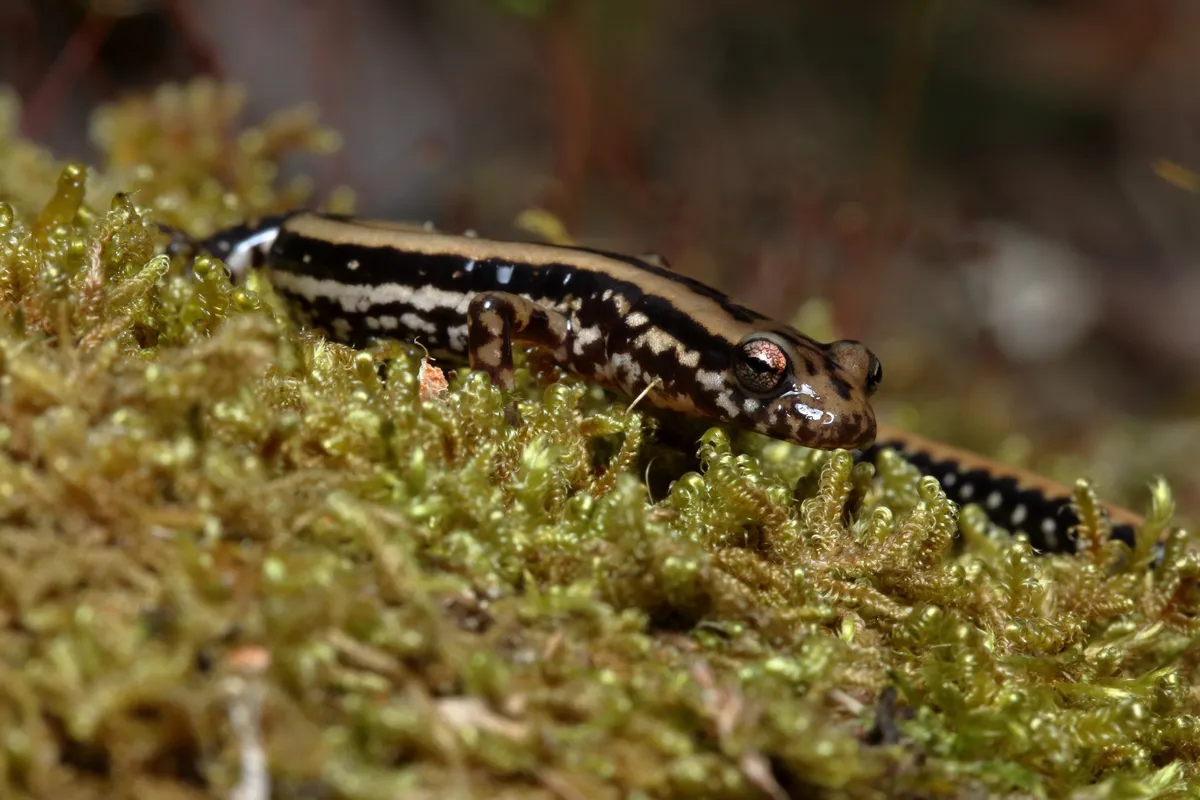
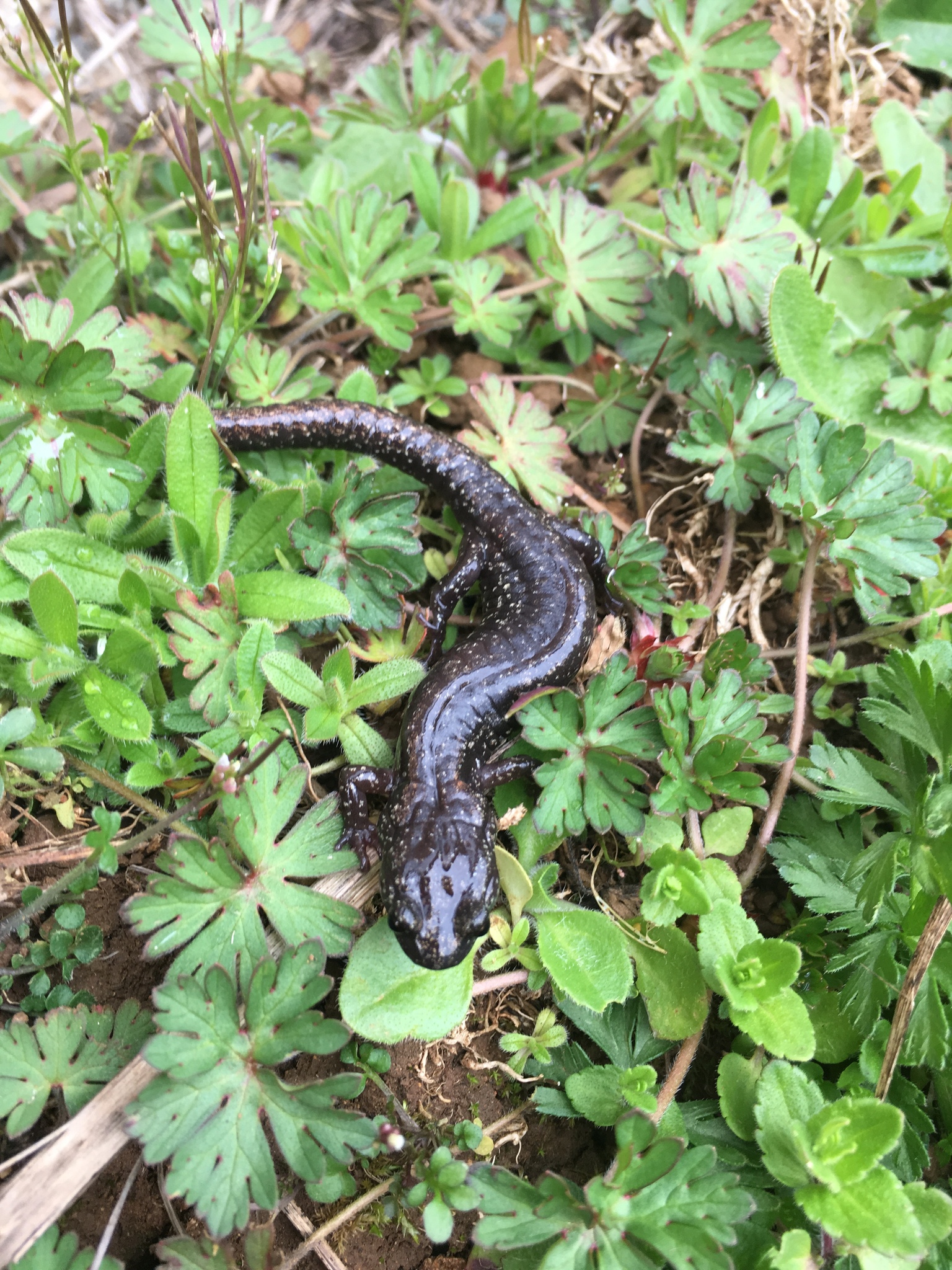
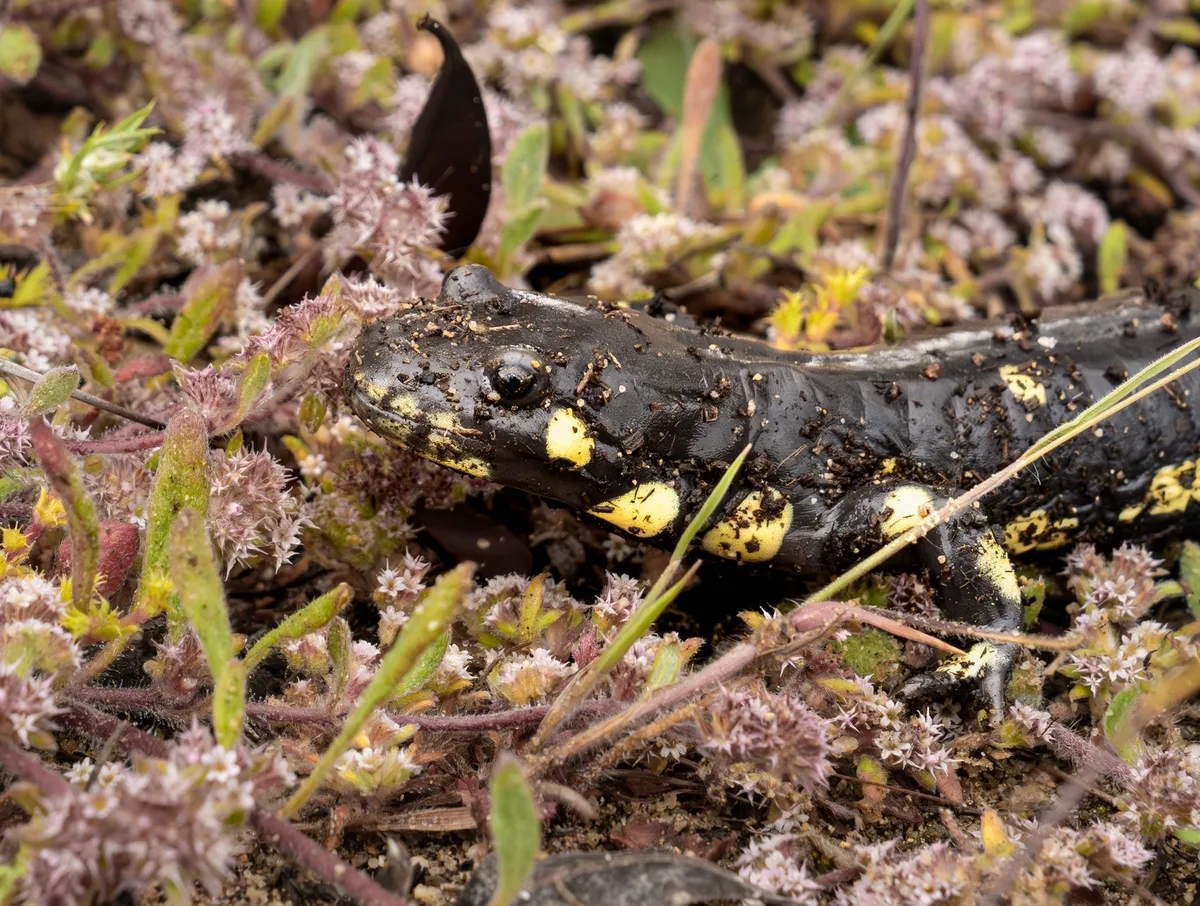
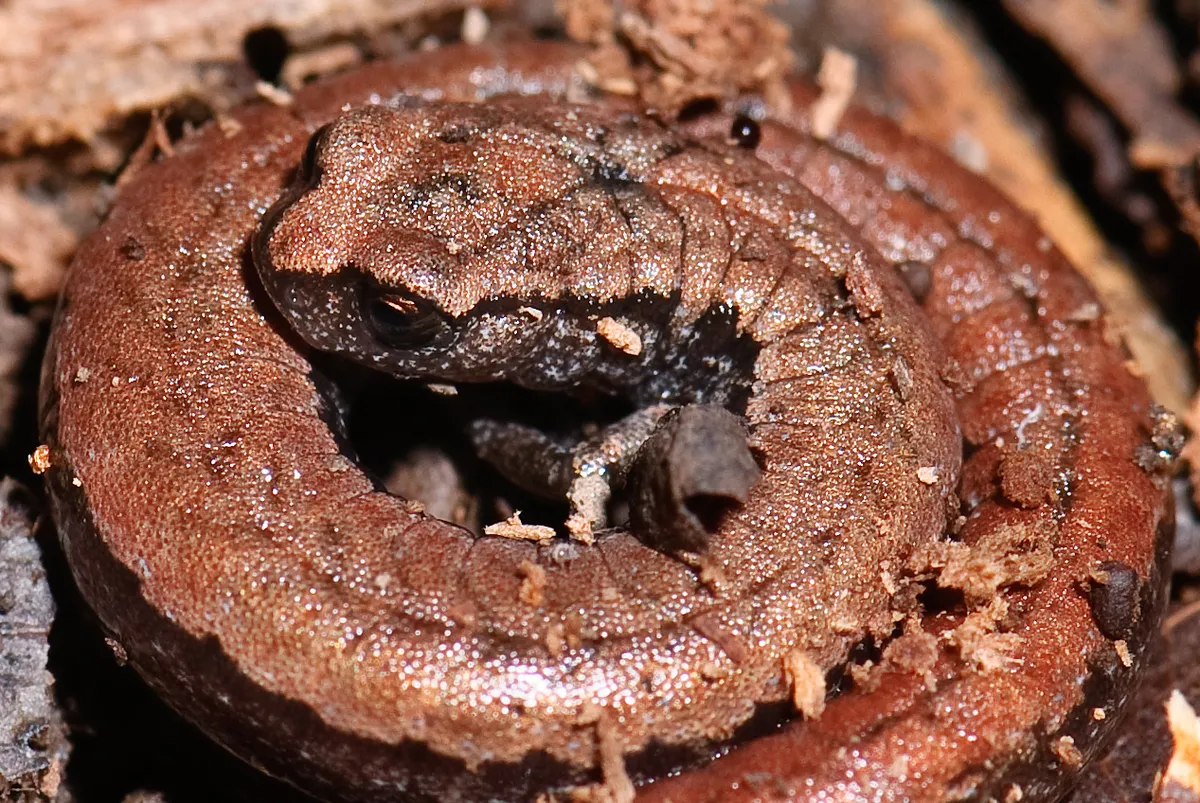
A small woodland salamander native to southeastern United States, characterized by distinctive linear markings and slender body structure within the lungless salamander family Plethodontidae.
Image Gallery
ADSENSE SLOT
Ecology & Habitat
Habitat
Moist forest environments, particularly near streams, leaf litter, and decaying logs in temperate deciduous and mixed forests of the southeastern United States, ranging from coastal plains to piedmont regions.
Ecological Role
Critical component of forest ecosystem food webs, consuming small invertebrates and serving as prey for larger predators, contributing to biological pest control and nutrient cycling in forest ecosystems.
Morphology
SKIN COATSmooth, moist skin with dorsal surface featuring distinct longitudinal lines alternating between dark brown and lighter yellow or tan coloration
LIMBS WINGSFour relatively small limbs with four digits on each hand and foot, adapted for terrestrial and subsurface movement
HEAD SENSORYSmall, triangular head with prominent eyes, well-developed chemosensory capabilities through nasolabial grooves
BODY STRUCTURESlender, elongated body measuring approximately 7.5-13 cm in total length, with a relatively long tail comprising nearly 60% of total body length
Data Source: TaxonHub Database
Image Credit: John D. Wilson