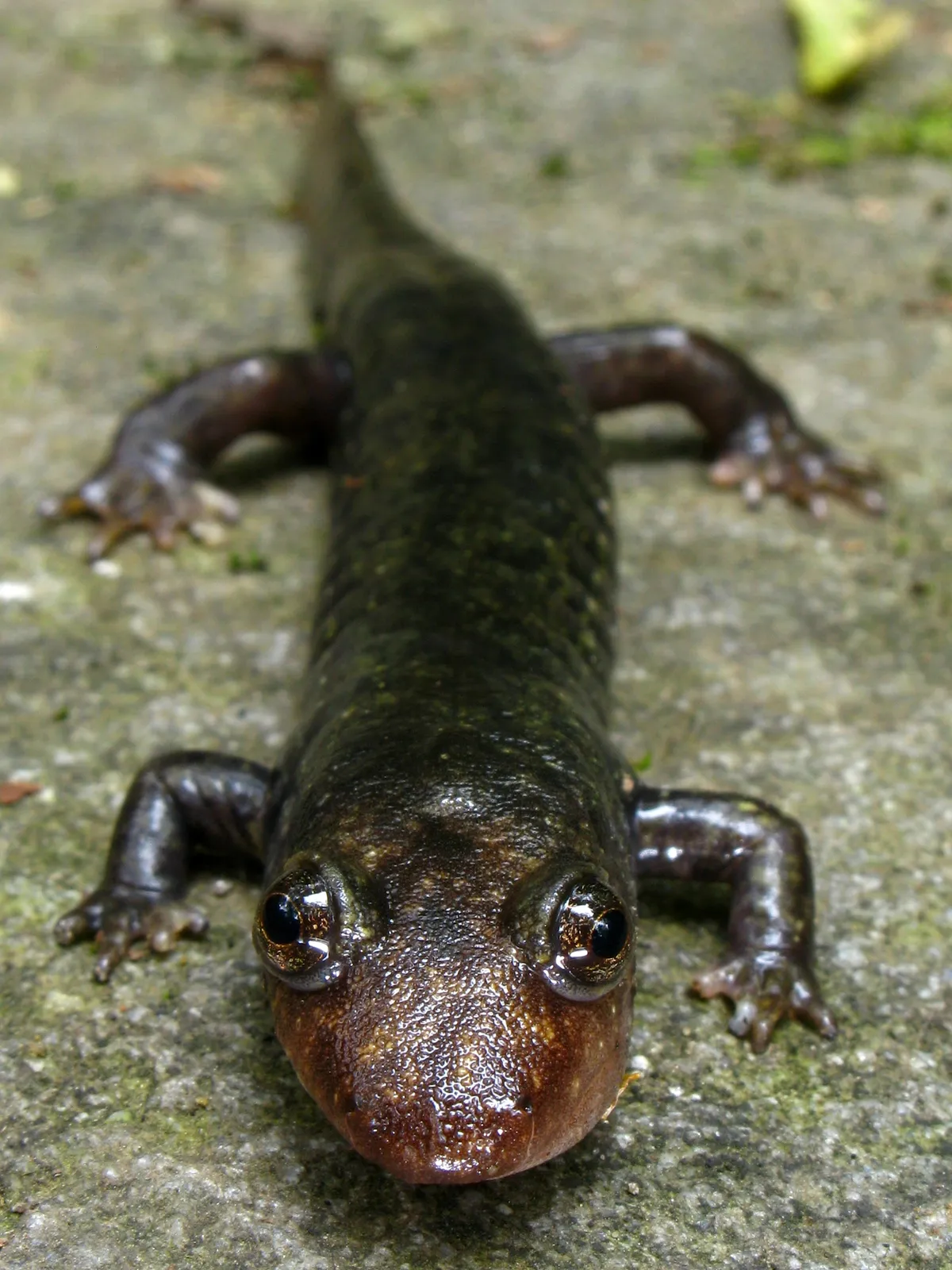
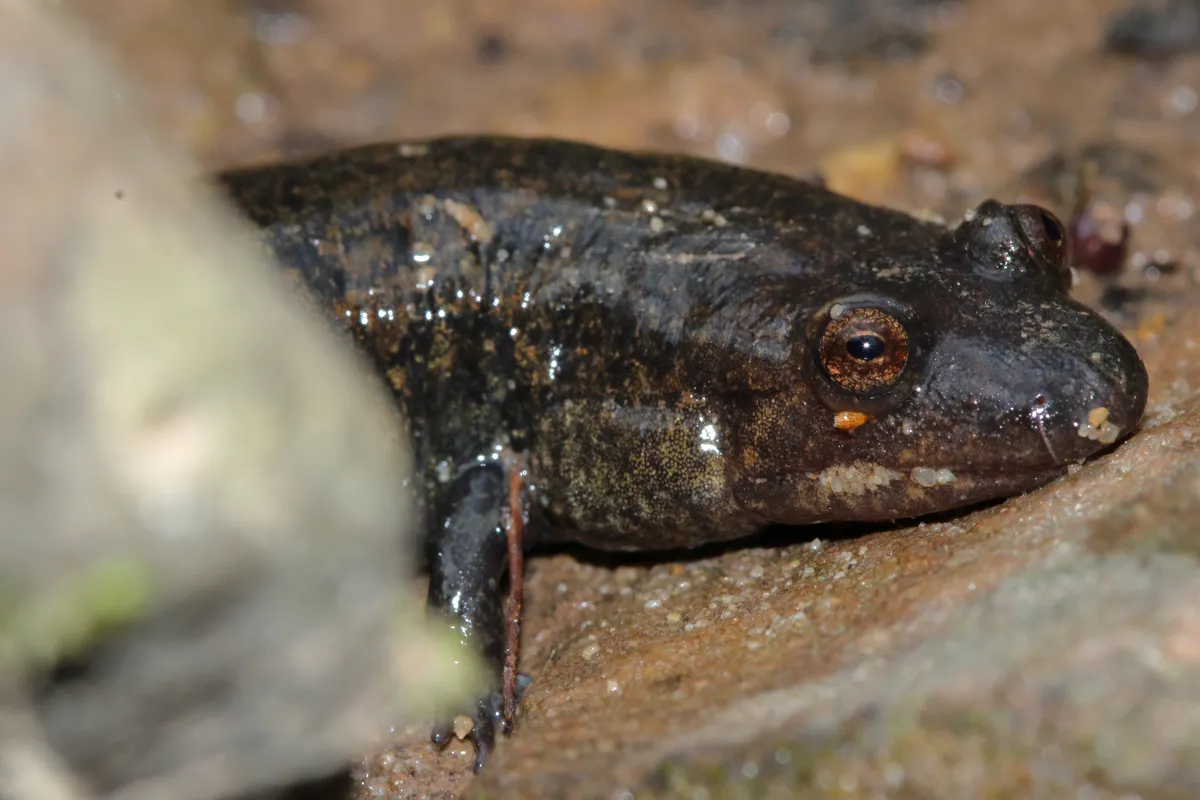
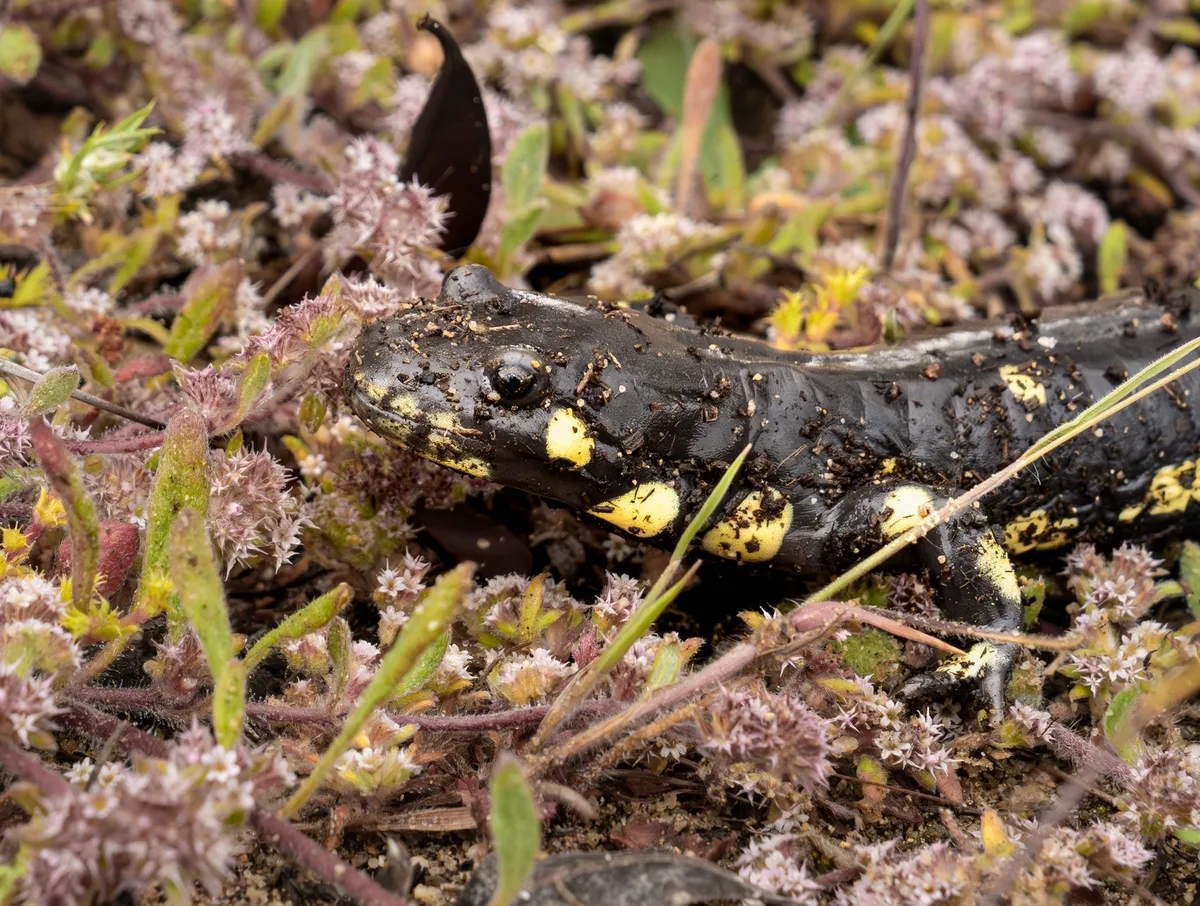
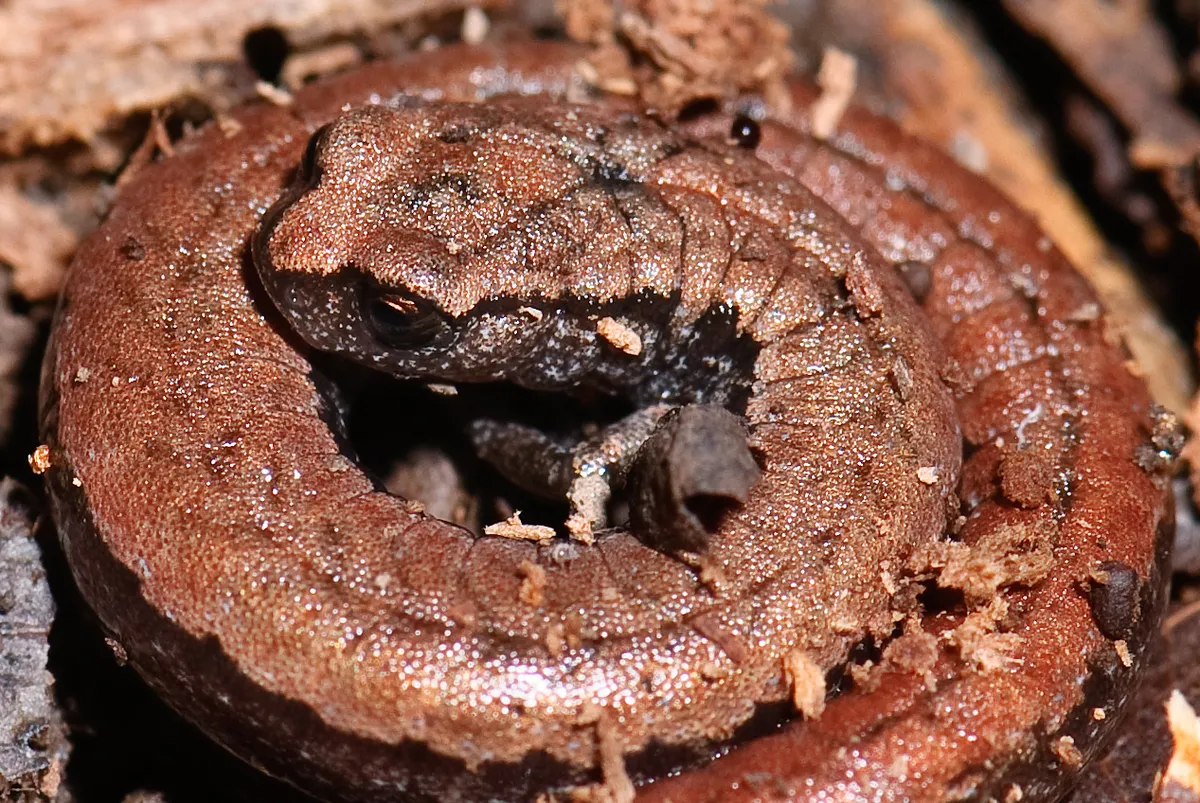
A large terrestrial salamander native to the Appalachian mountain regions of southeastern United States, characterized by its robust body and distinctive coloration.
Image Gallery
ADSENSE SLOT
Ecology & Habitat
Habitat
Humid forest floors, rocky woodland areas, mountain streams, and cool, moist microhabitats in Appalachian mountain ranges from North Carolina to Georgia, typically at elevations between 600-1,500 meters.
Ecological Role
Key predator in forest ecosystems, controlling invertebrate populations; serves as bioindicator for environmental health and forest ecosystem stability.
Morphology
SKIN COATSmooth, moist skin with dark background coloration and distinctive quadramaculate (four-spotted) pattern
LIMBS WINGSStrong, muscular limbs adapted for terrestrial and semi-aquatic locomotion
HEAD SENSORYBroad, flattened head with well-developed eyes and sensitive chemosensory capabilities
BODY STRUCTURELarge salamander, reaching up to 20 cm total length; stout, muscular body with robust limb structure
Data Source: TaxonHub Database
Image Credit: U.S. Geological Survey from Reston, VA, USA