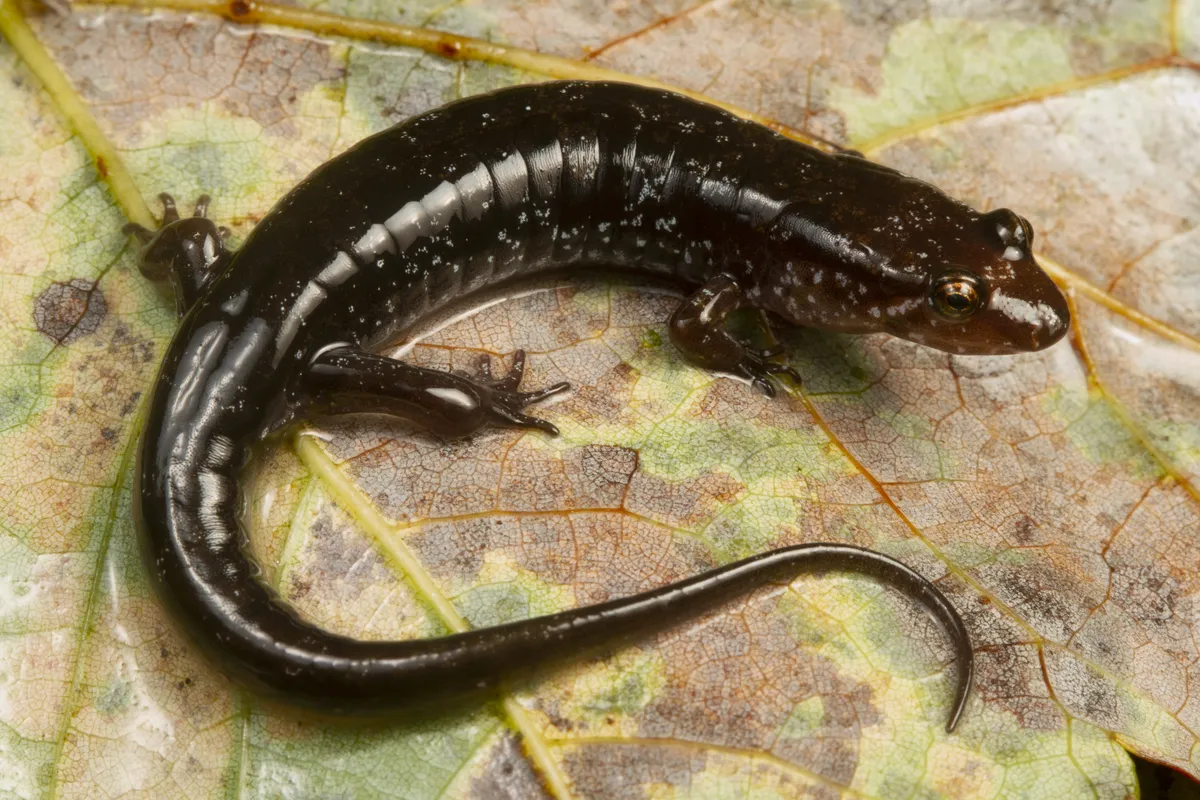
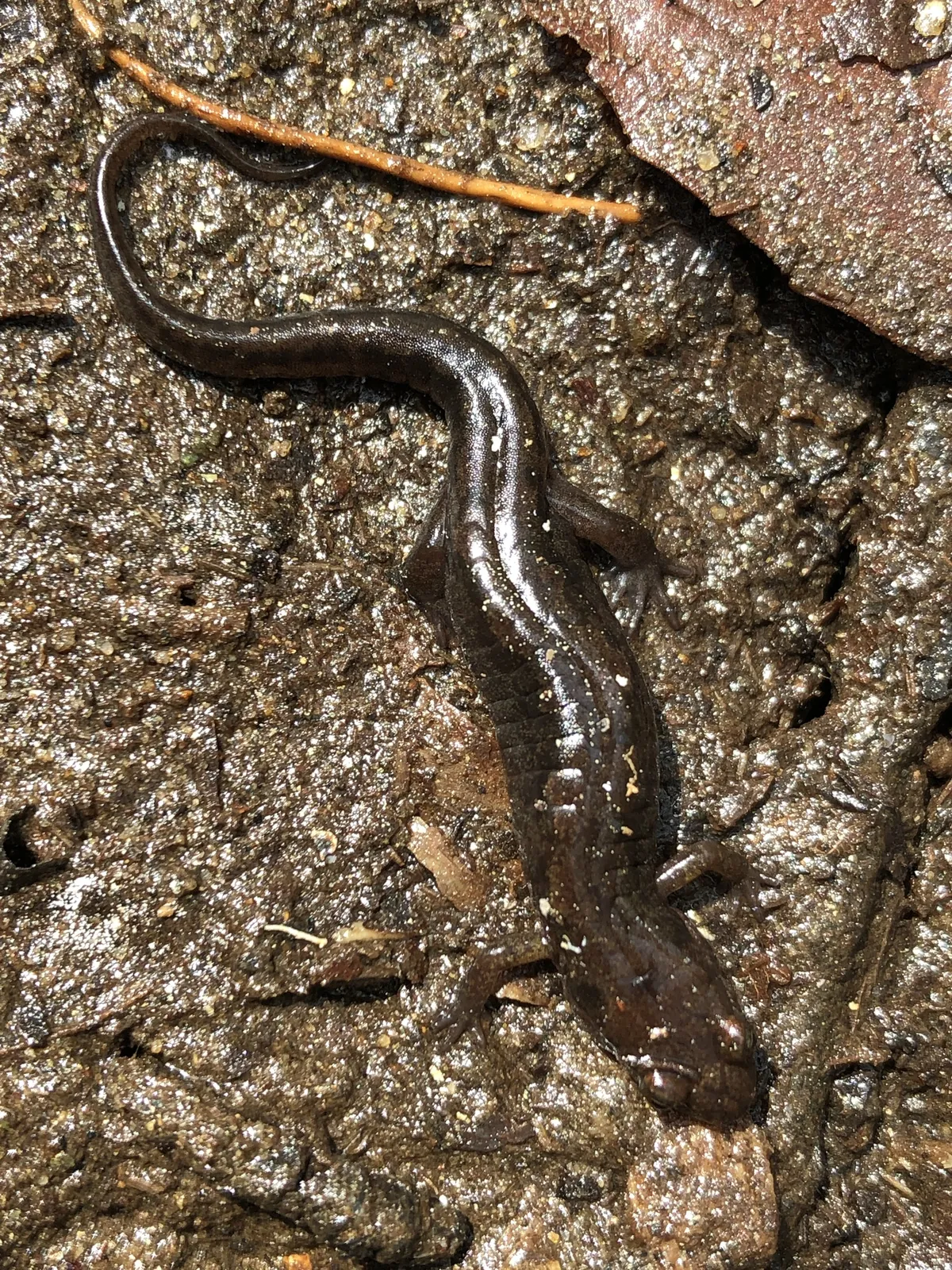
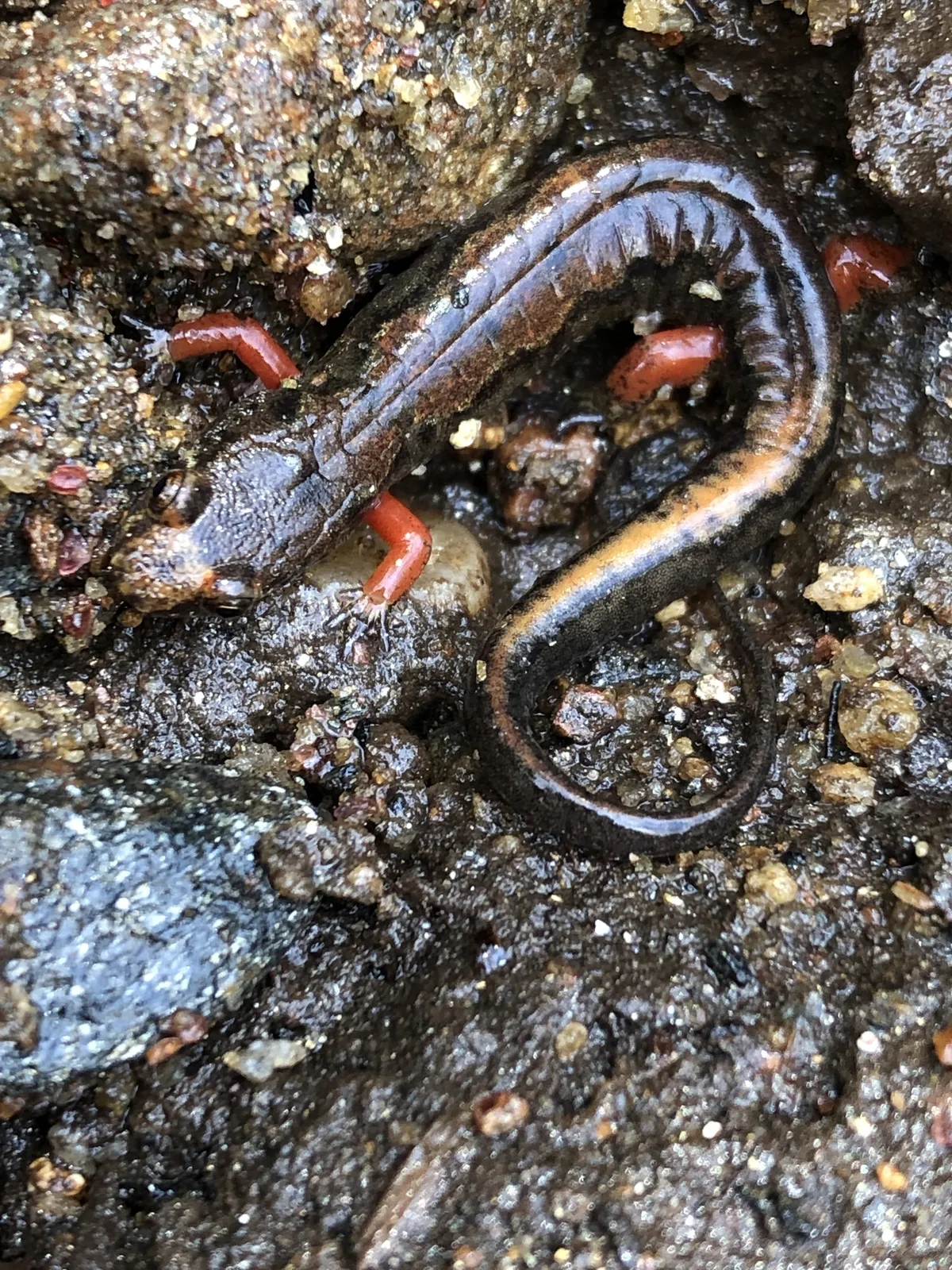
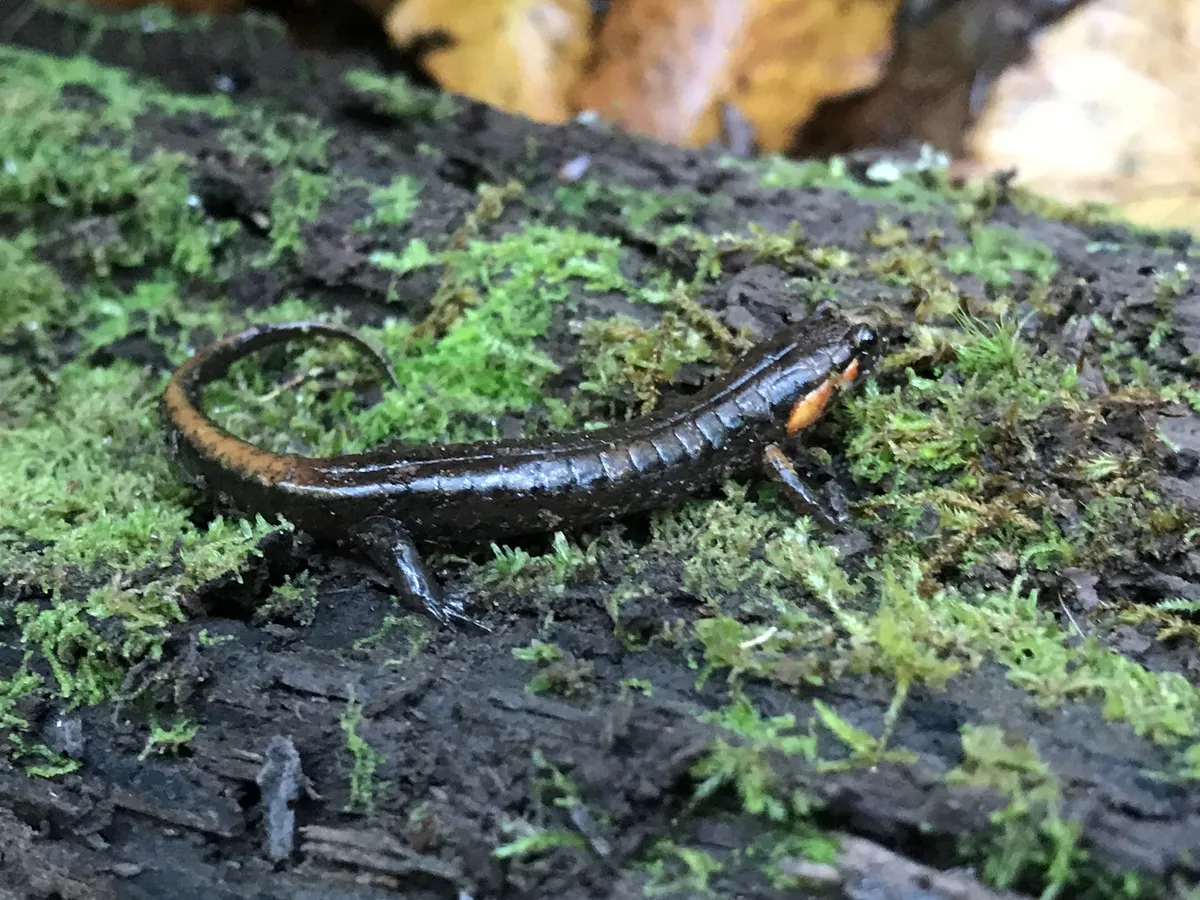
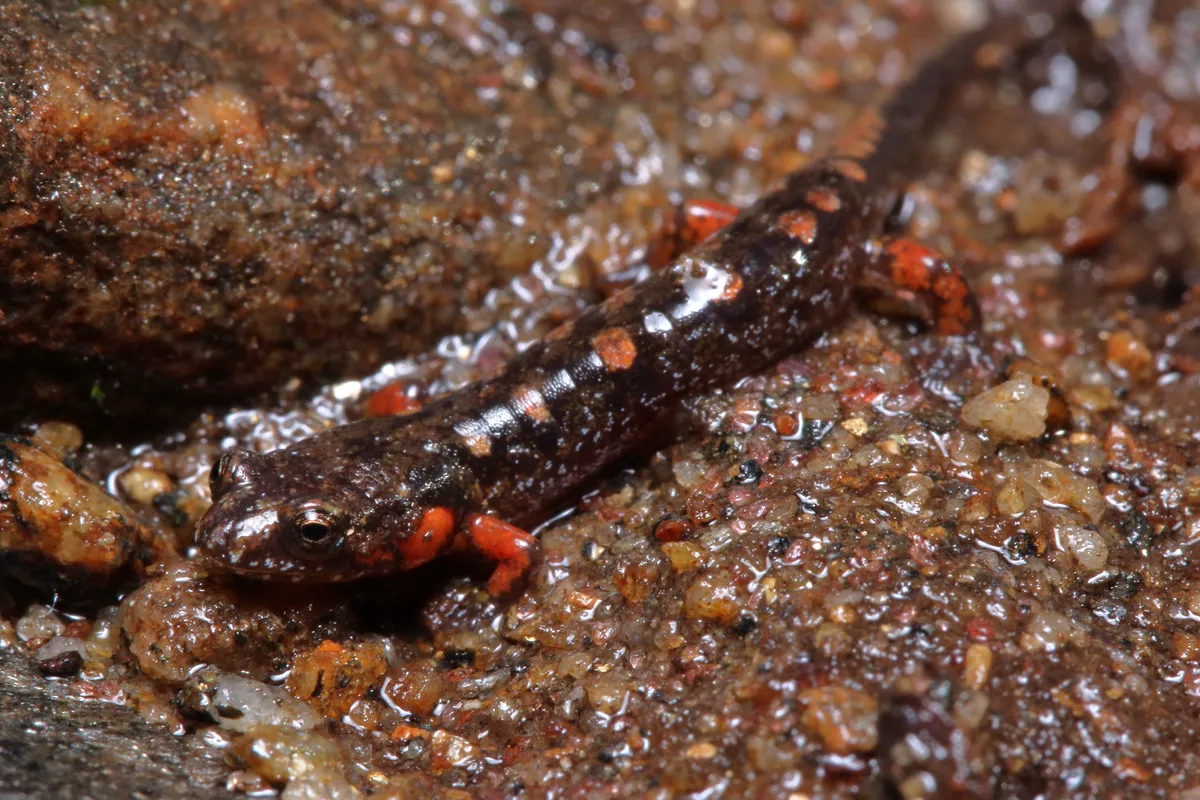
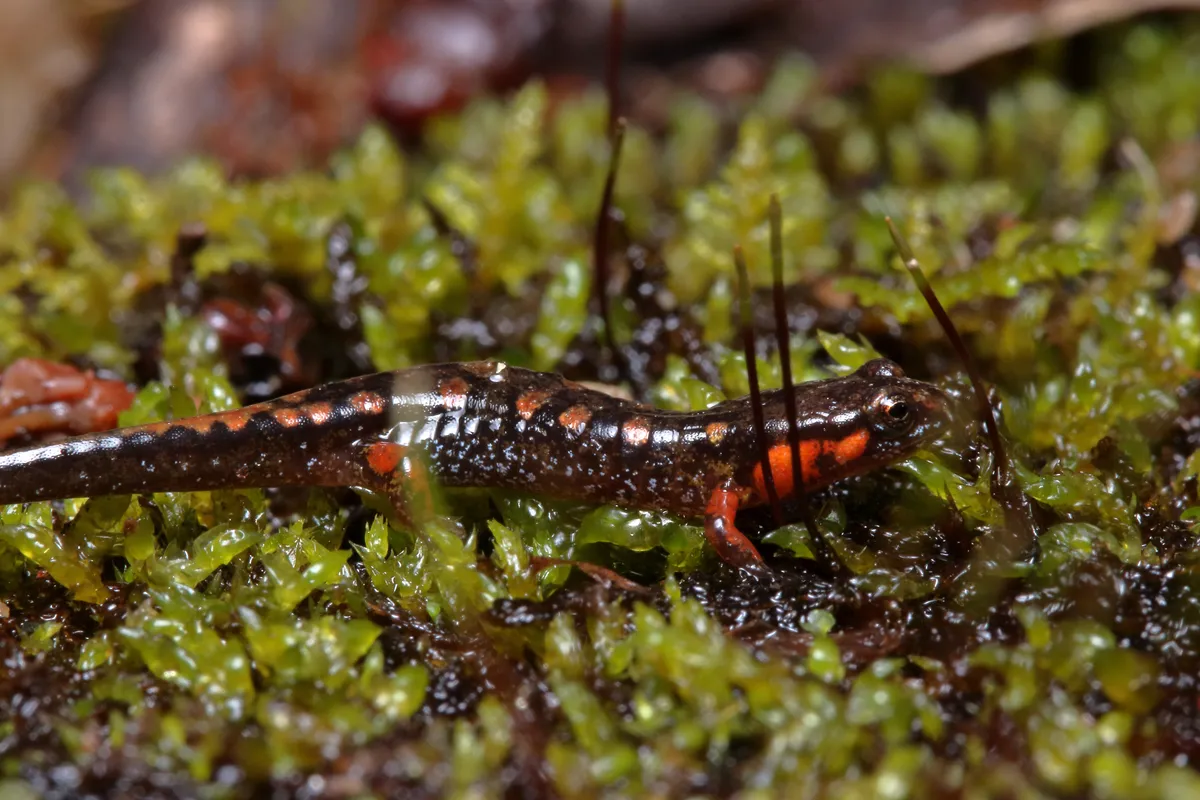
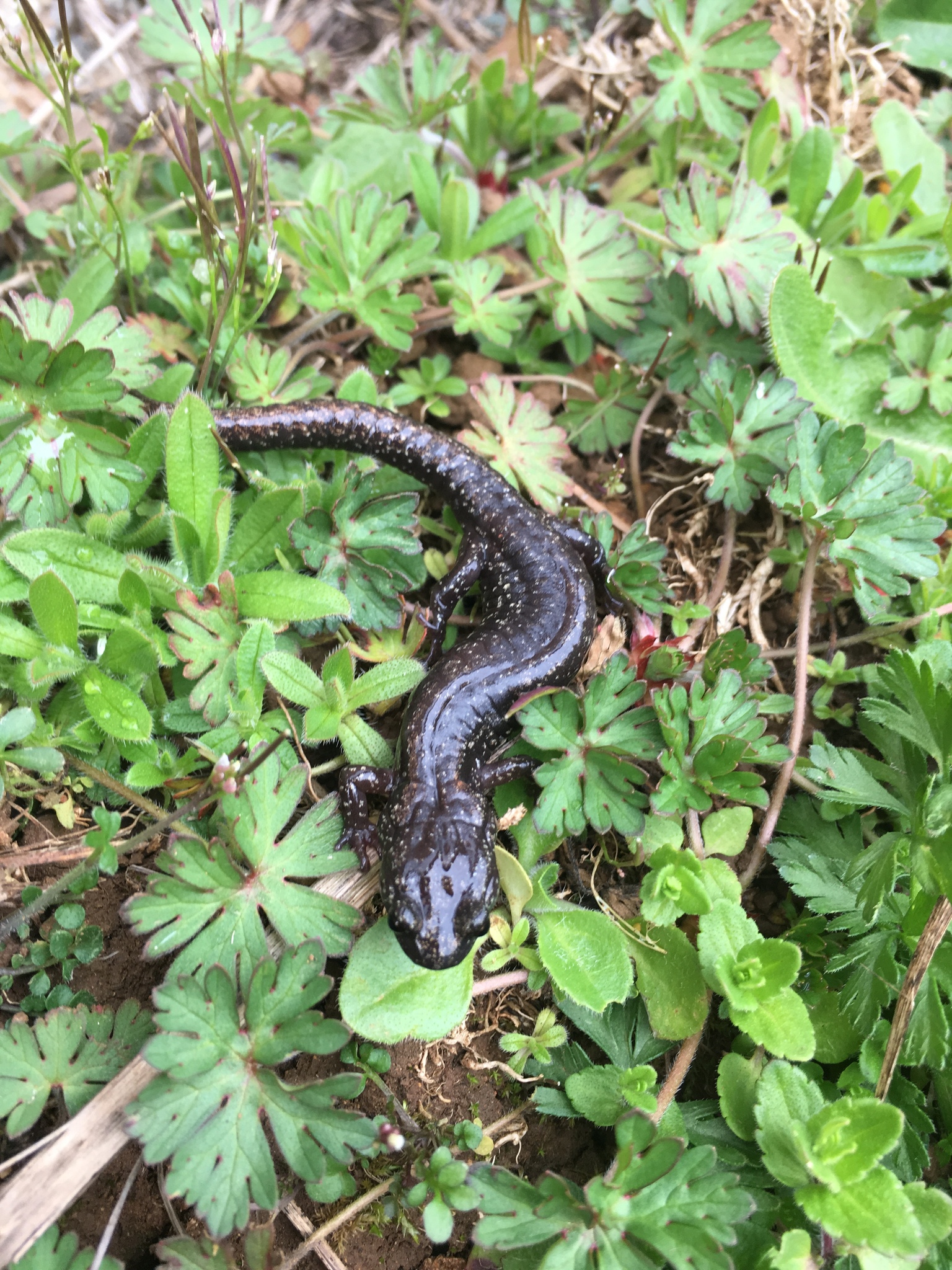
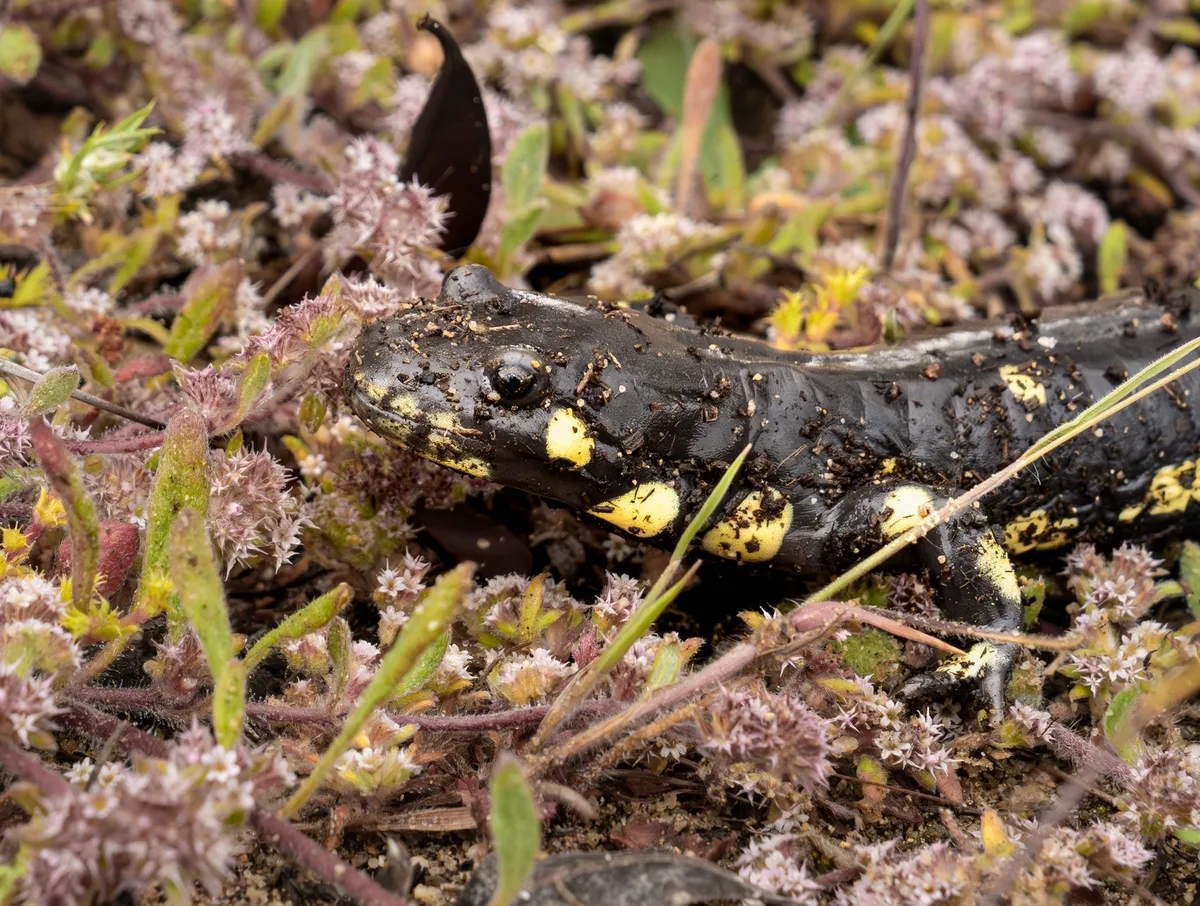
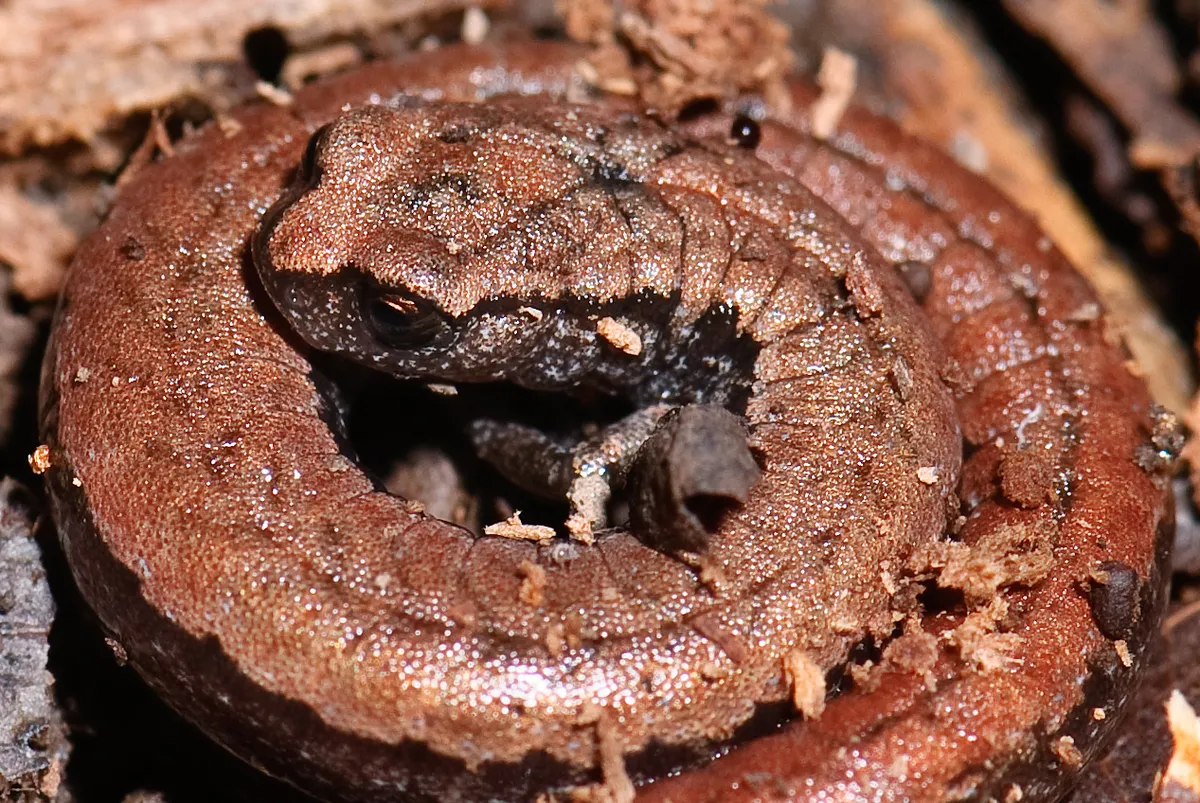
A small, terrestrial salamander species endemic to the southern Appalachian Mountains of the southeastern United States, characterized by its distinctive coloration and woodland habitat preferences.
Image Gallery
ADSENSE SLOT
Ecology & Habitat
Habitat
Moist forest environments, particularly in rocky areas near streams, seeps, and damp forest floors in mountainous regions of Tennessee, North Carolina, and Georgia at elevations between 300-1,500 meters.
Ecological Role
Key member of forest floor ecosystem, controlling invertebrate populations and serving as prey for small predators, contributing to biodiversity and nutrient cycling in montane forest ecosystems.
Morphology
SKIN COATSmooth, moist skin with dark brown to black base coloration, often with lighter mottling or striping patterns
LIMBS WINGSFour limbs with four digits each, specialized for climbing and moving through dense forest understory vegetation
HEAD SENSORYRelatively large eyes, broad head with well-developed chemosensory capabilities, short snout
BODY STRUCTURESmall, slender salamander with body length typically ranging 7-10 cm, robust limb structure adapted for terrestrial and semi-aquatic locomotion
Data Source: TaxonHub Database
Image Credit: Todd Pierson