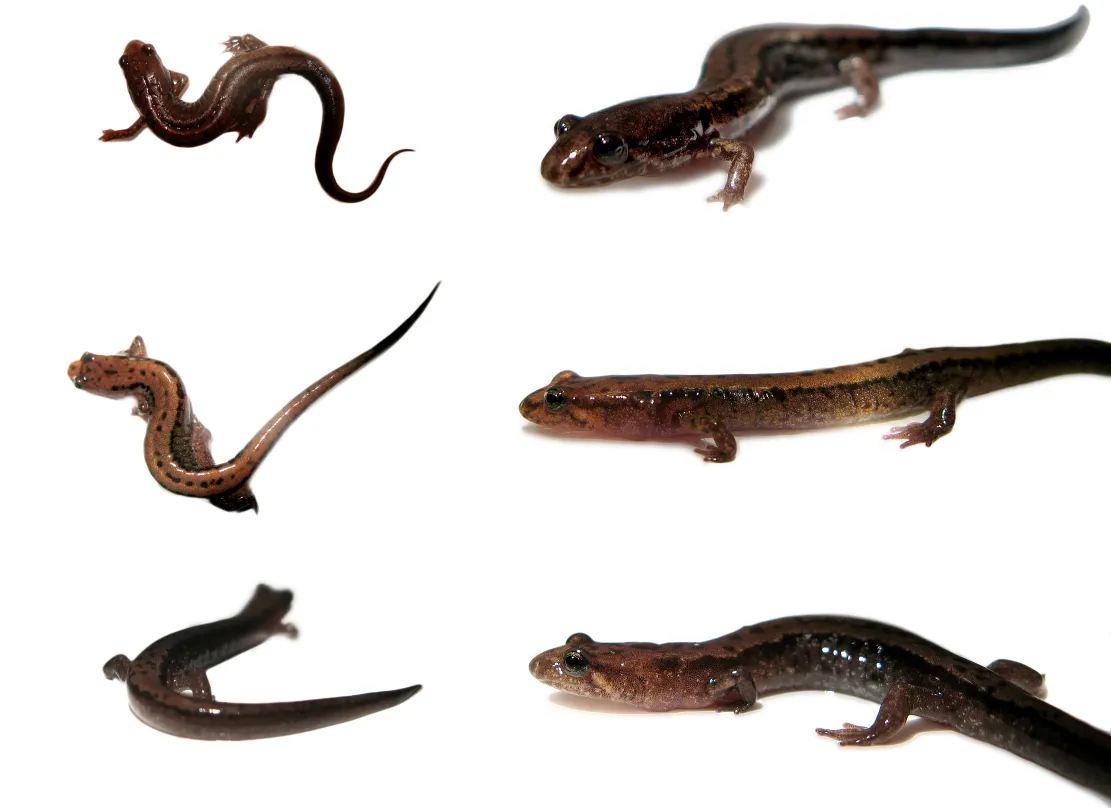
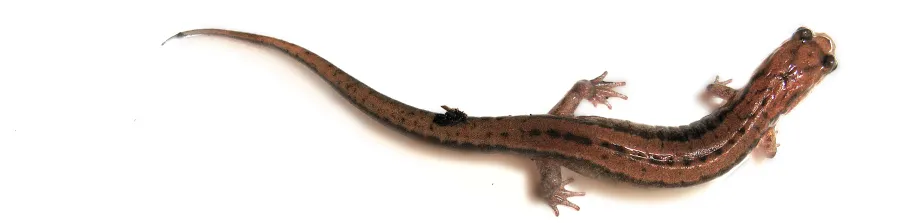
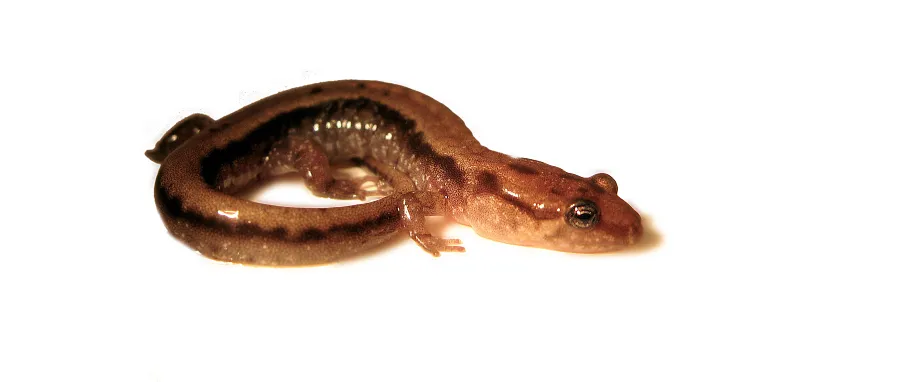
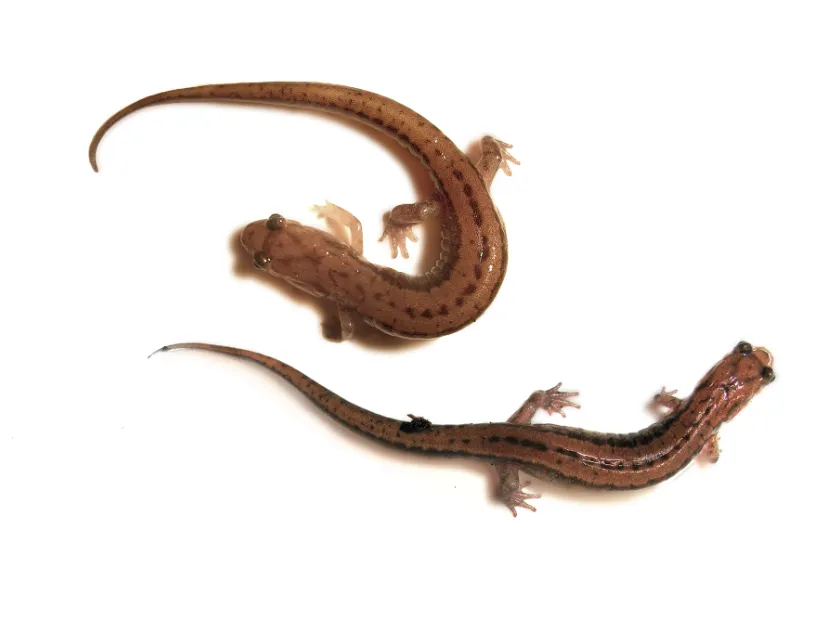
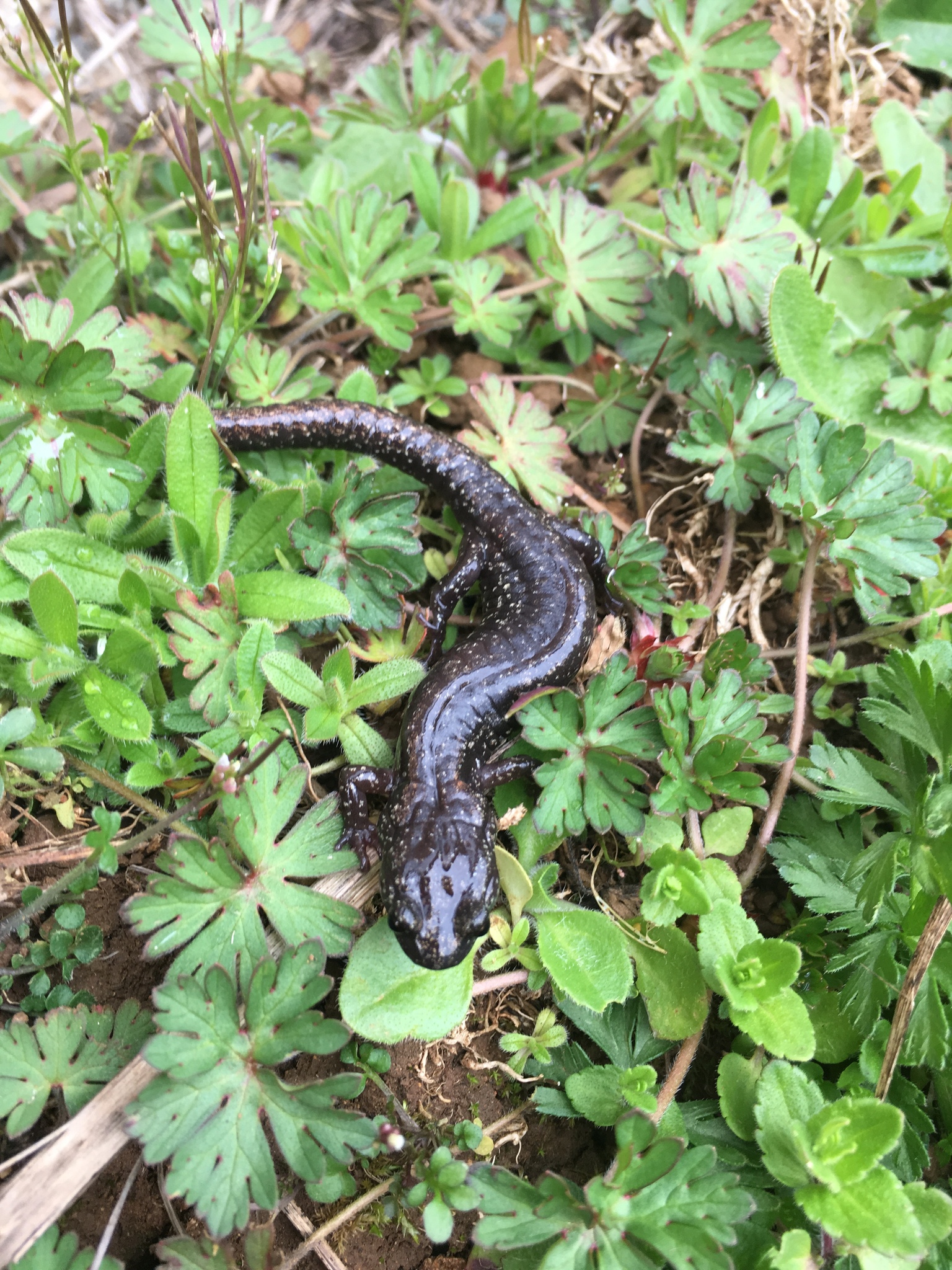
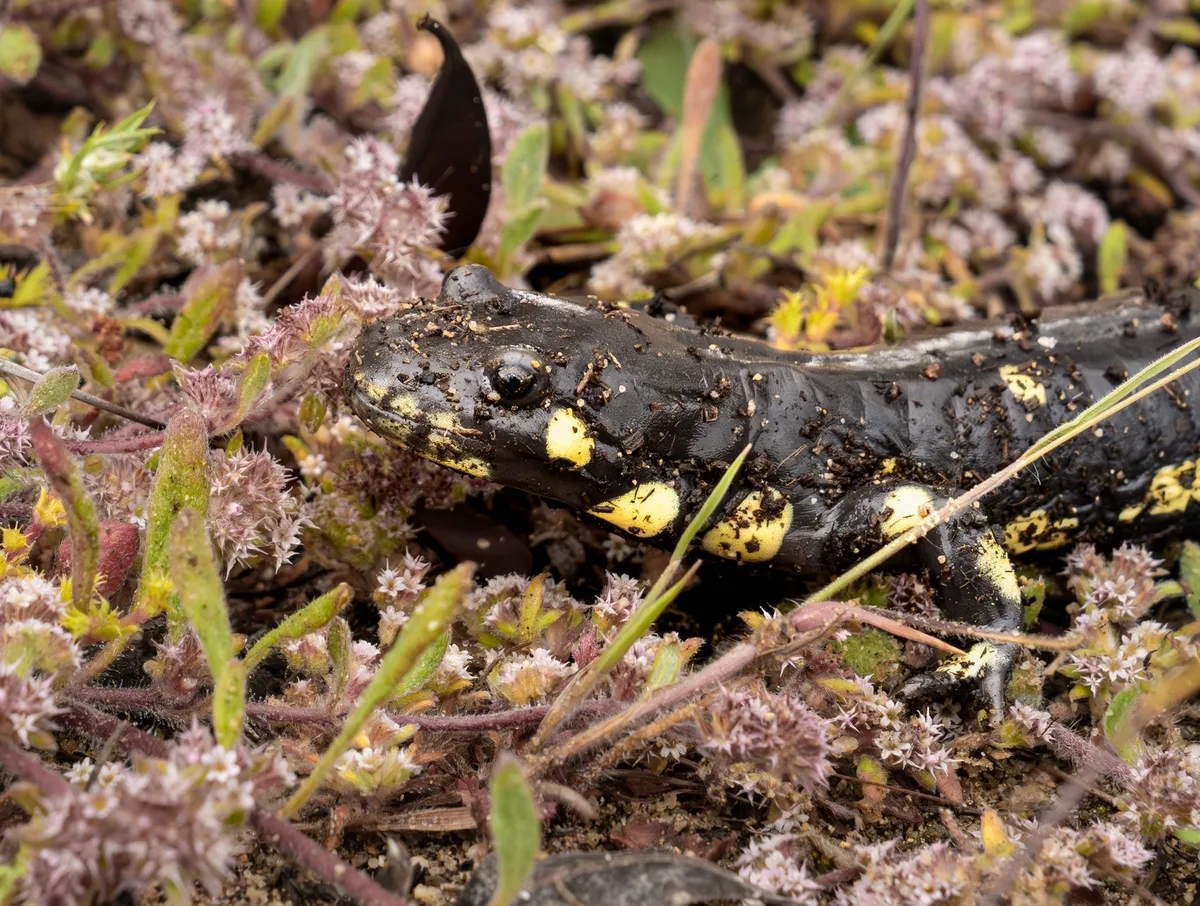
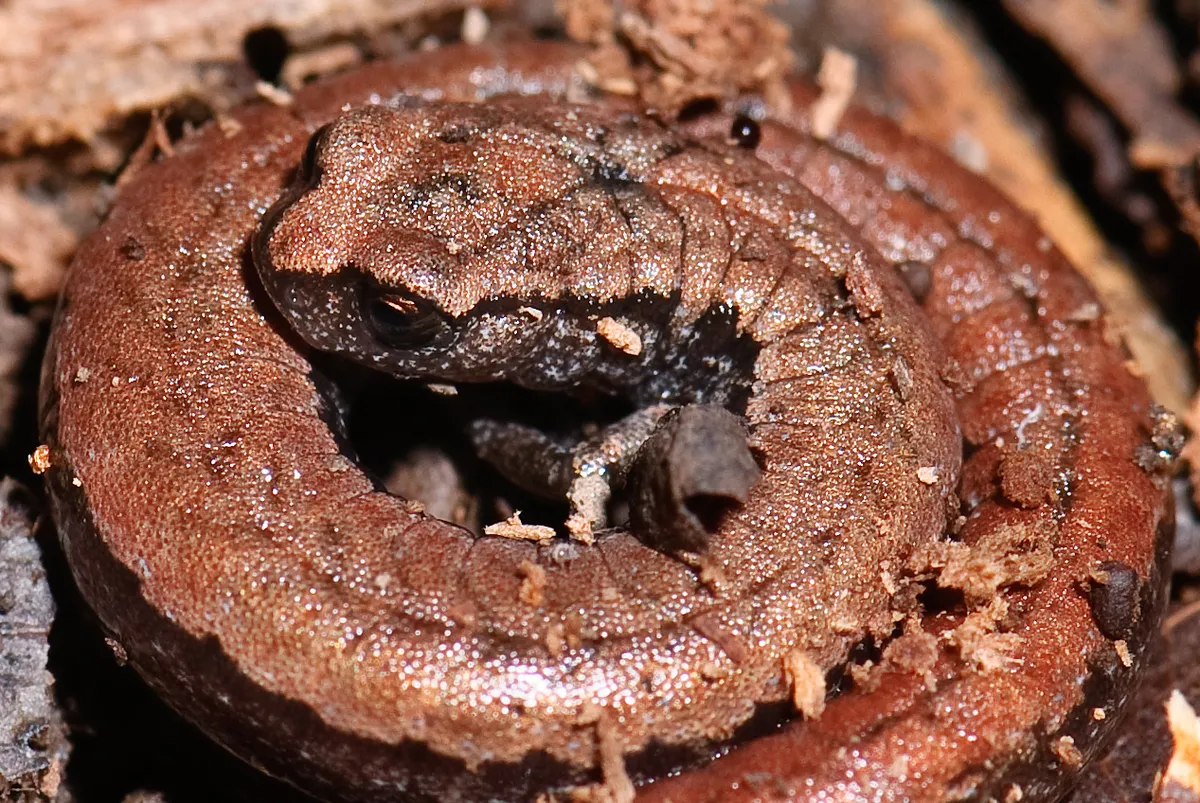
A small, terrestrial salamander species endemic to the Appalachian Mountain region of eastern North America, characterized by its distinctive brown to grayish coloration and complex ecological adaptations.
Image Gallery
ADSENSE SLOT
Ecology & Habitat
Habitat
Inhabits humid forest environments with dense leaf litter, rocky streams, and mountainous terrain in the Appalachian Mountain range, typically at elevations between 600-1,500 meters above sea level.
Ecological Role
Critical component of forest floor ecosystem, serving as both predator and prey, controlling invertebrate populations and functioning as a bioindicator species for forest ecosystem health.
Morphology
SKIN COATSmooth, moist skin with dark brown to grayish base coloration and variable dorsal pattern of lighter markings
LIMBS WINGSFour relatively short limbs with five digits on each, adapted for terrestrial and semi-aquatic locomotion
HEAD SENSORYBroad, slightly flattened head with prominent eyes and well-developed nasolabial grooves for chemical sensing
BODY STRUCTURESmall, slender salamander, typically 6-10 cm in total length, with a relatively robust body and relatively short limbs
Data Source: TaxonHub Database
Image Credit: Dave Huth from Allegany County, NY, USA