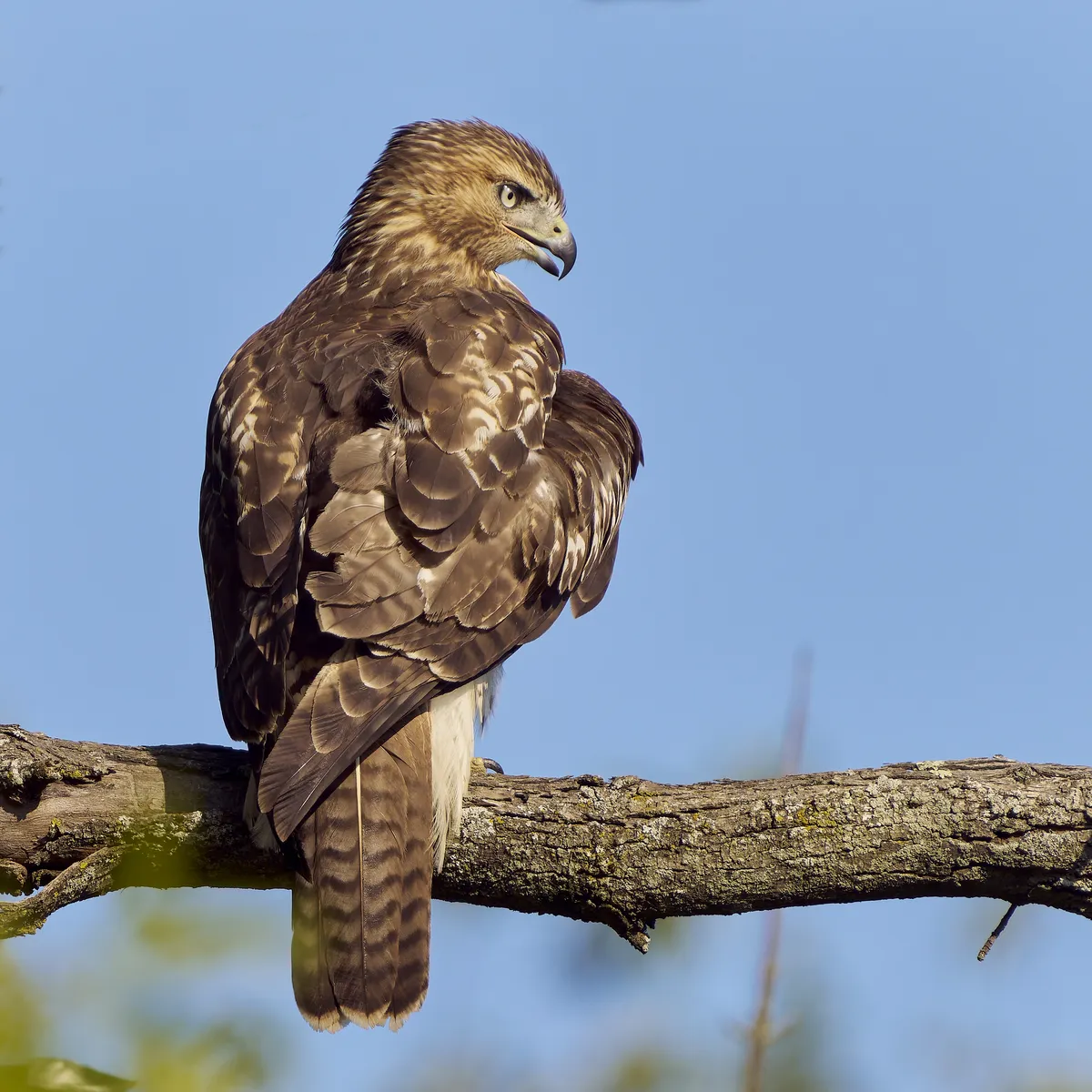
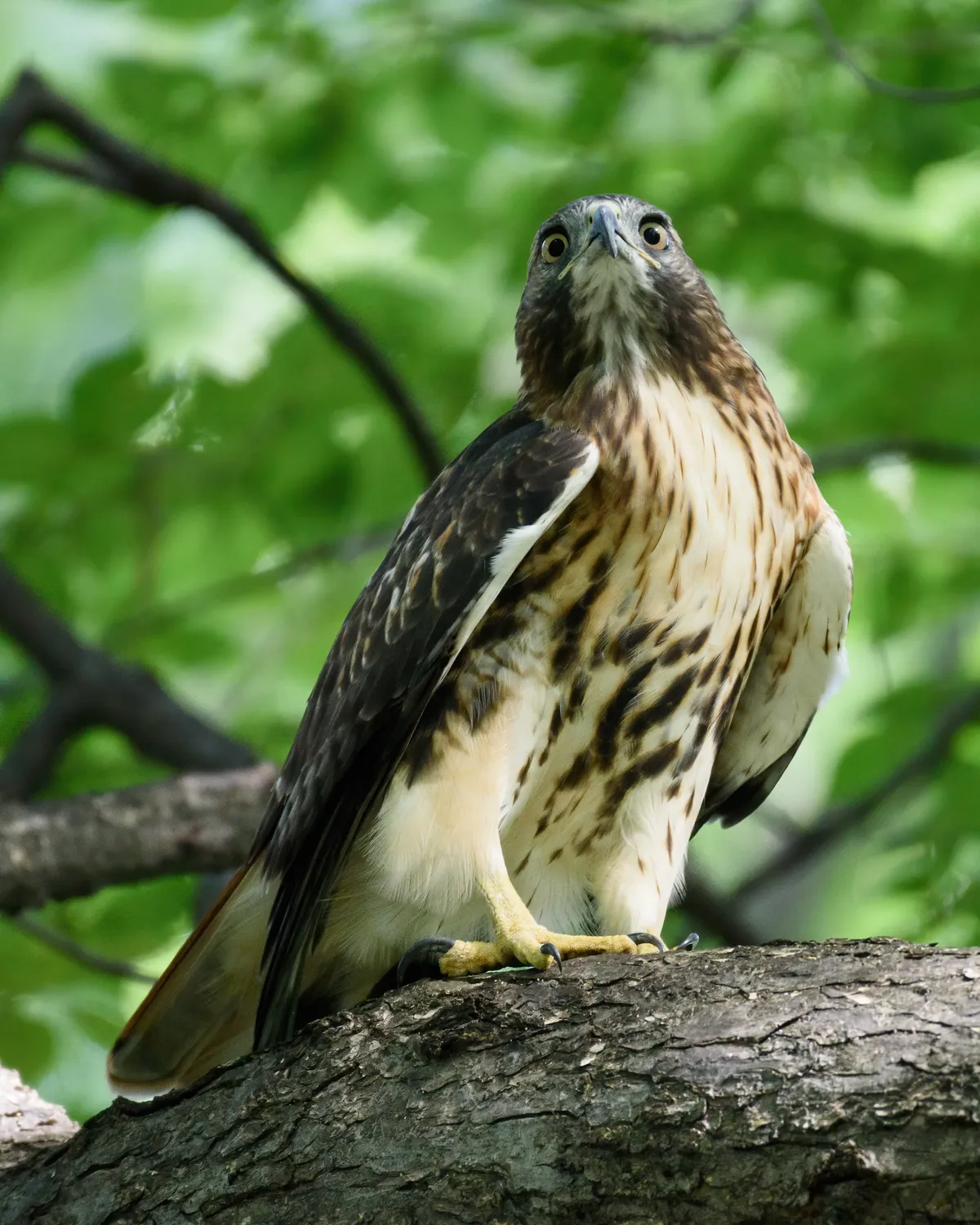
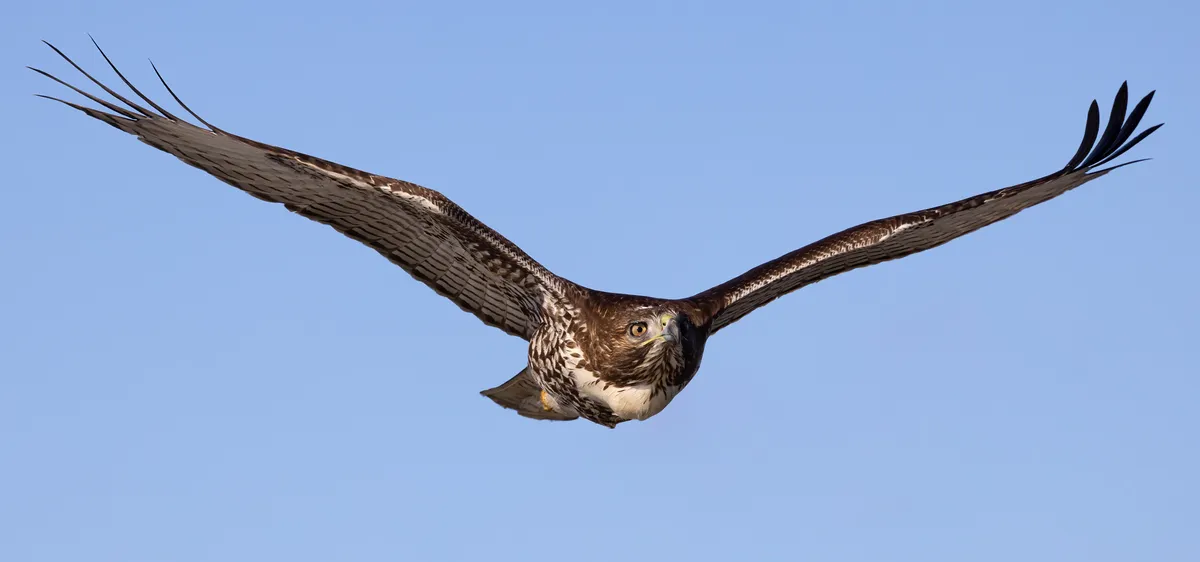
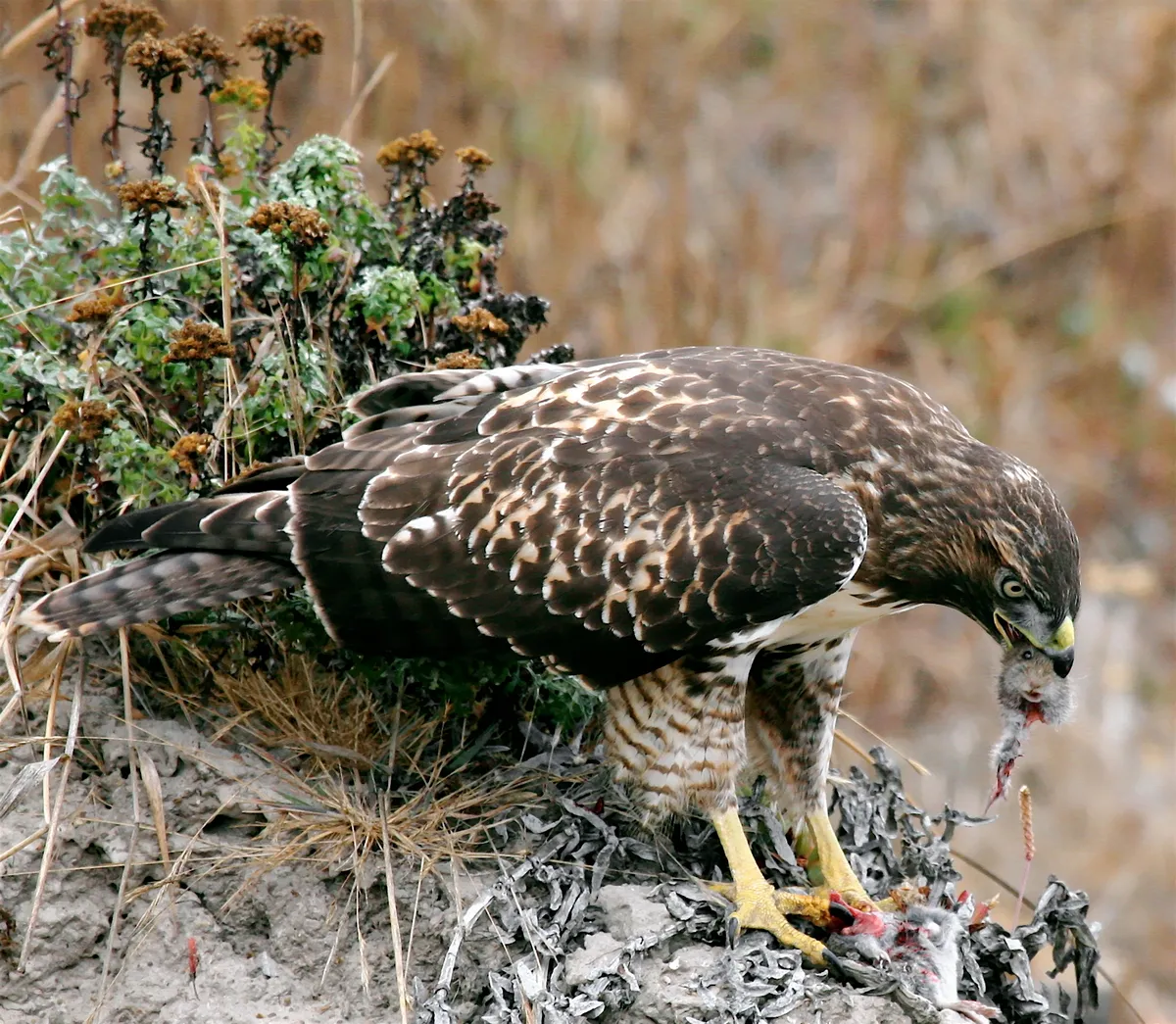
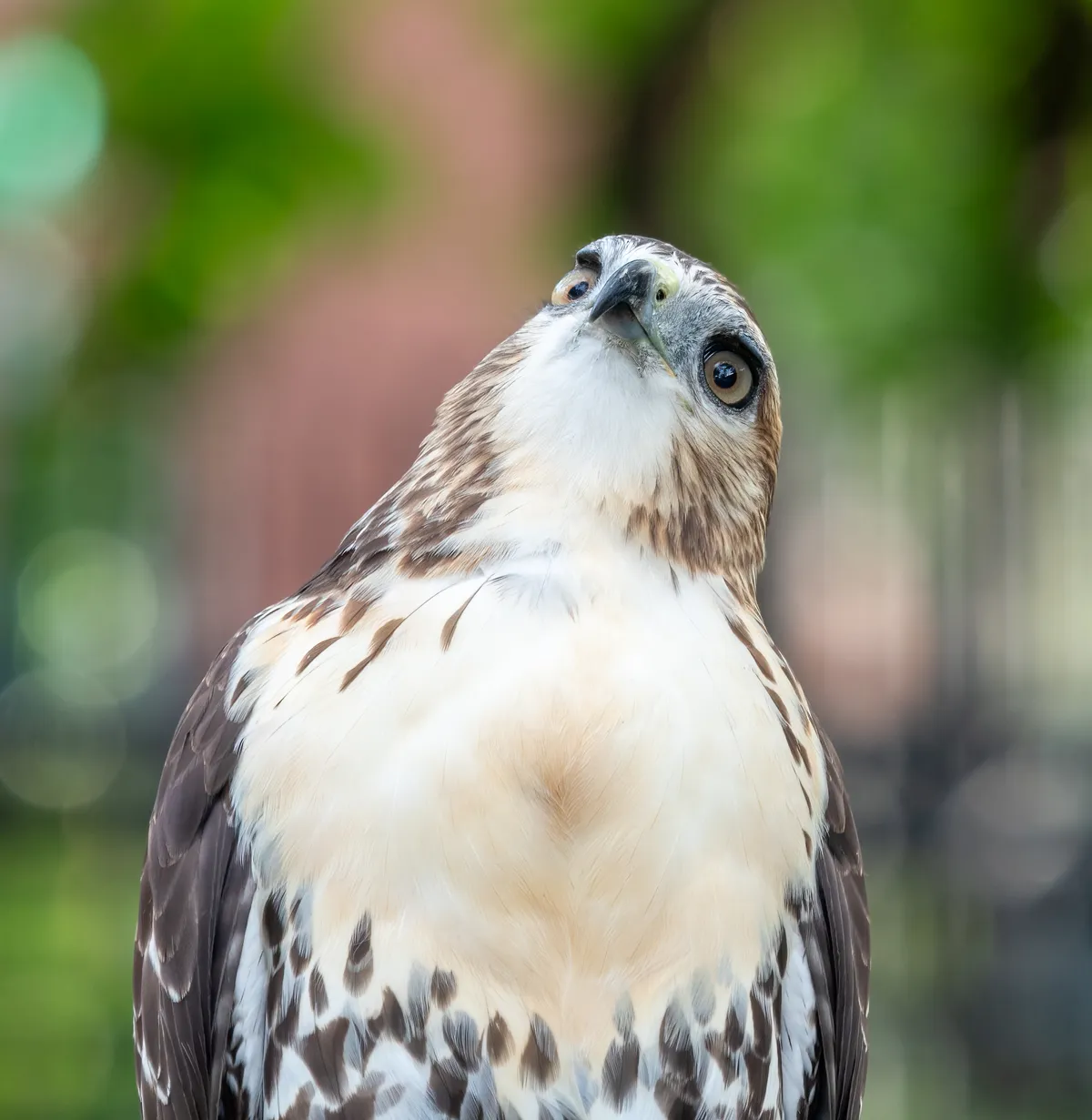
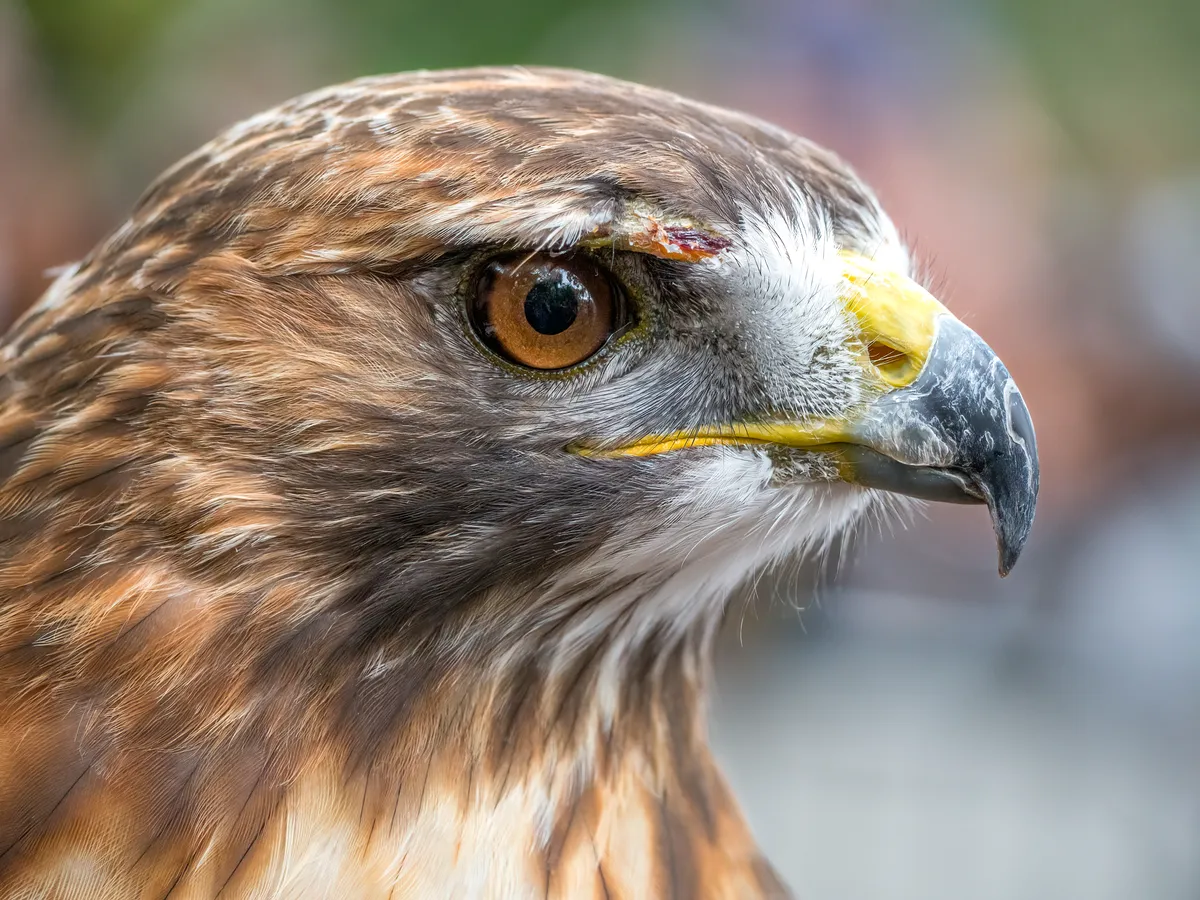
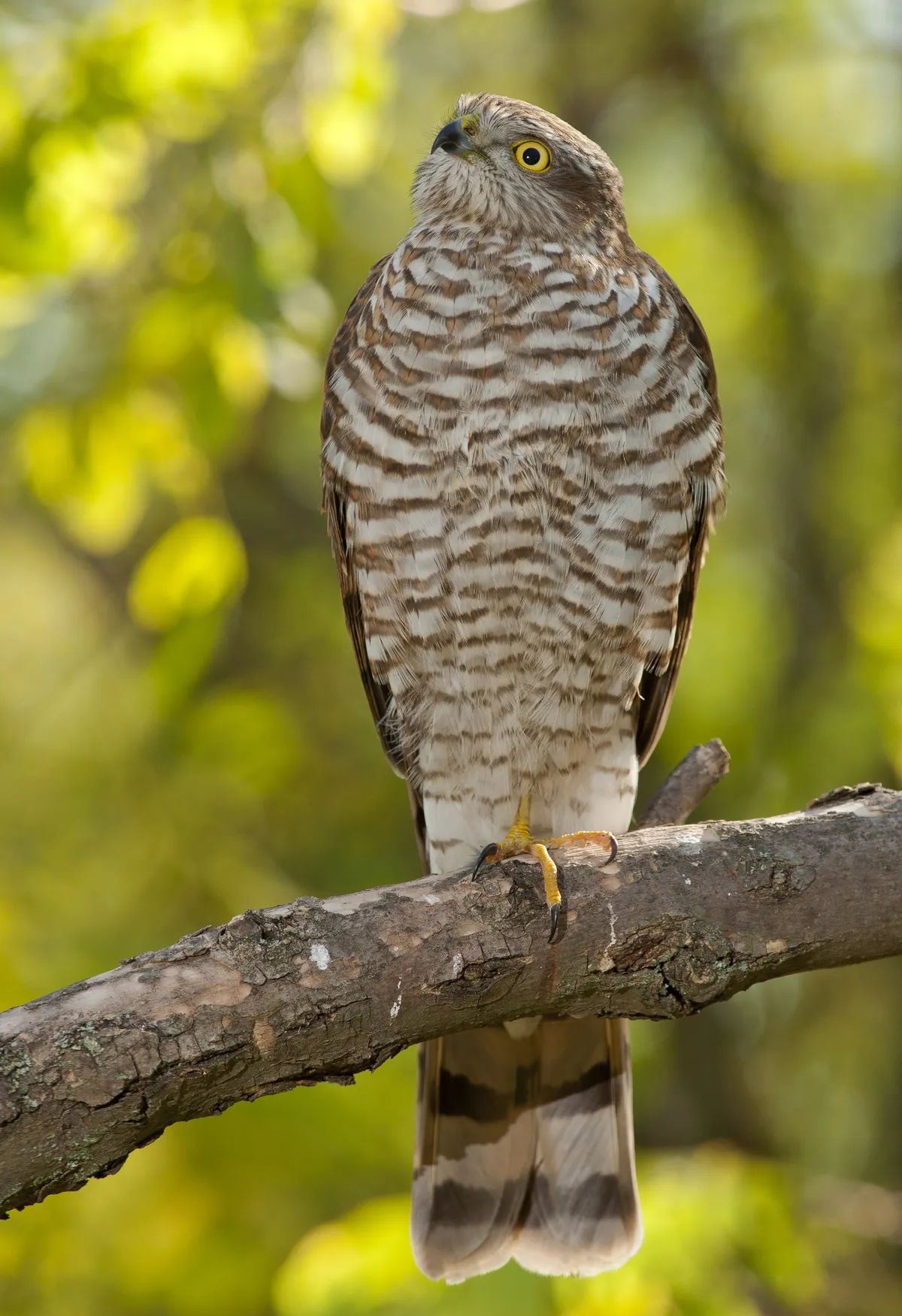
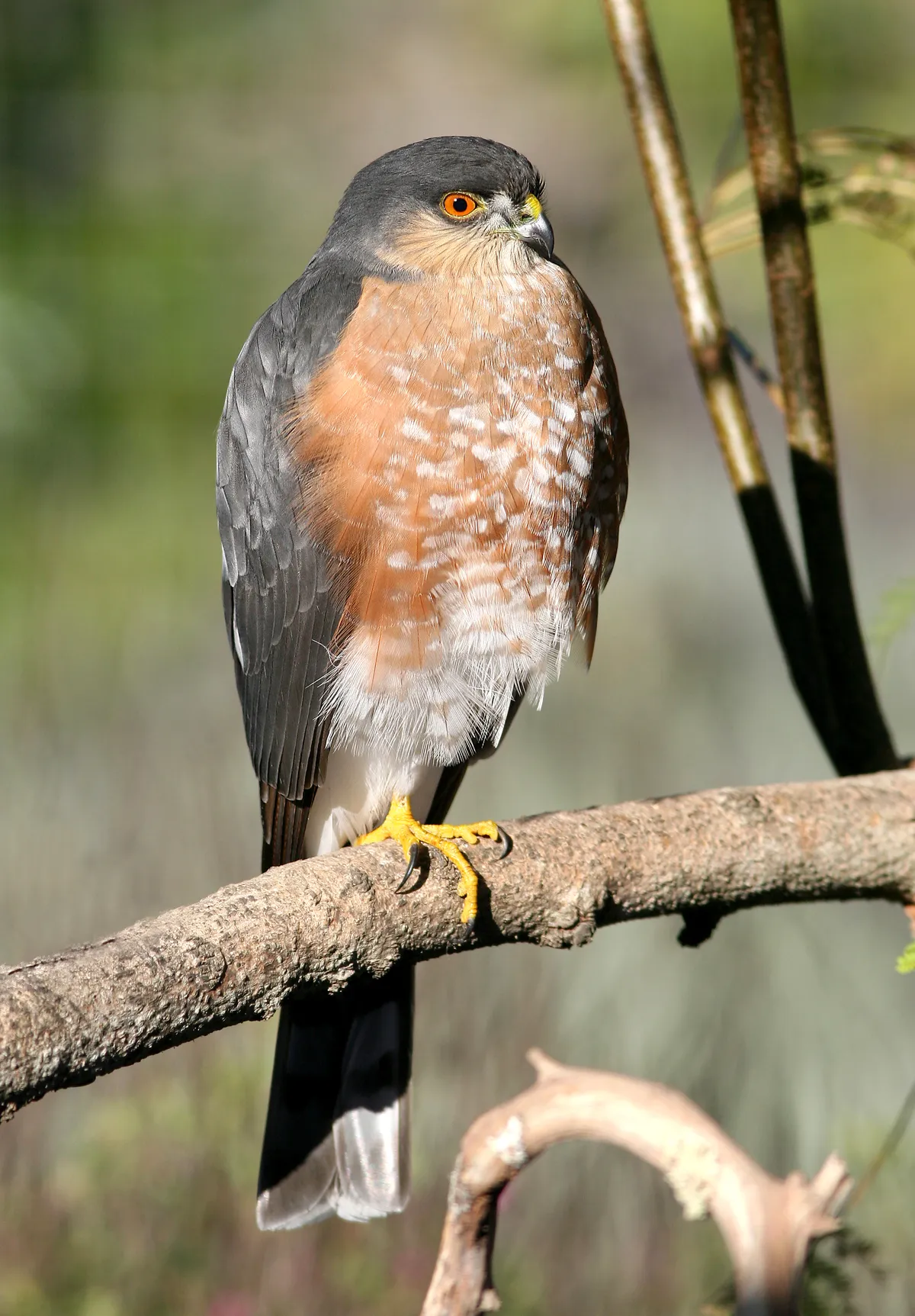
A widespread and adaptable raptor species native to North and Central America, characterized by its distinctive rust-red tail and powerful predatory behavior.
Image Gallery
ADSENSE SLOT
Ecology & Habitat
Habitat
Diverse ecosystems including forests, grasslands, deserts, agricultural areas, urban and suburban landscapes from southern Canada to Panama, typically inhabiting altitudes between 0-3,000 meters
Ecological Role
Critical apex predator regulating small mammal populations, maintaining ecological balance through prey control and serving as an indicator species for environmental health
Morphology
SKIN COATPlumage varies from light to dark morphs, typically brown dorsal surface with characteristic rust-red tail, light ventral coloration with darker barring
LIMBS WINGSStrong legs with sharp curved talons, broad wings optimized for soaring and gliding, capable of sustained aerial hunting and thermal riding
HEAD SENSORYLarge forward-facing eyes with exceptional visual acuity, hooked beak adapted for tearing prey, excellent peripheral and depth perception
BODY STRUCTUREMedium-large raptor, body length 45-65 cm, wingspan 110-140 cm, body mass 690-1460 grams, robust build with broad wings and powerful talons
Data Source: TaxonHub Database
Image Credit: Paul Danese