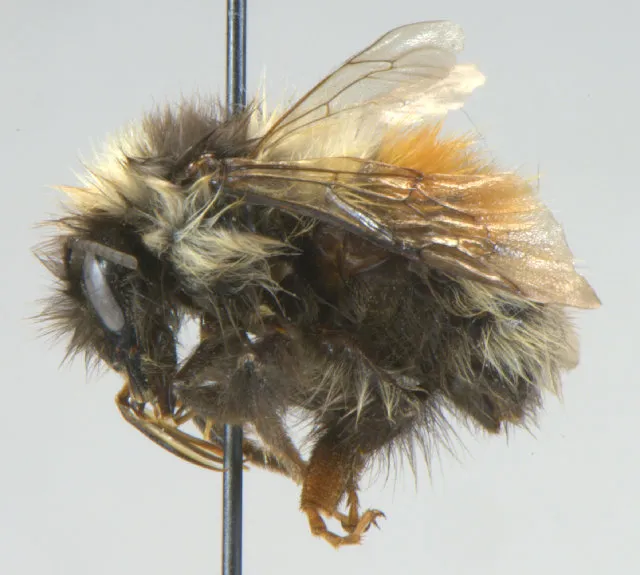
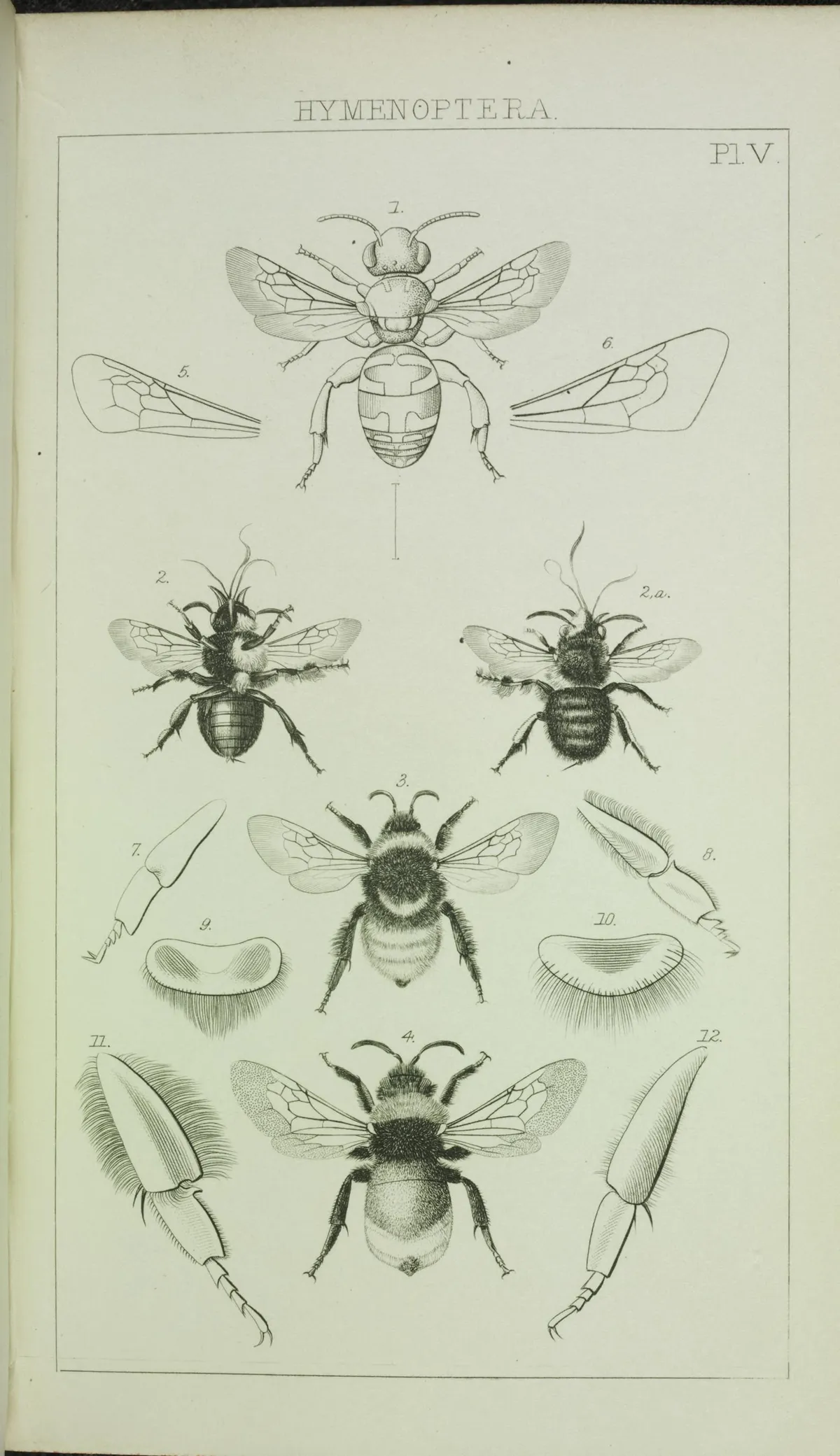
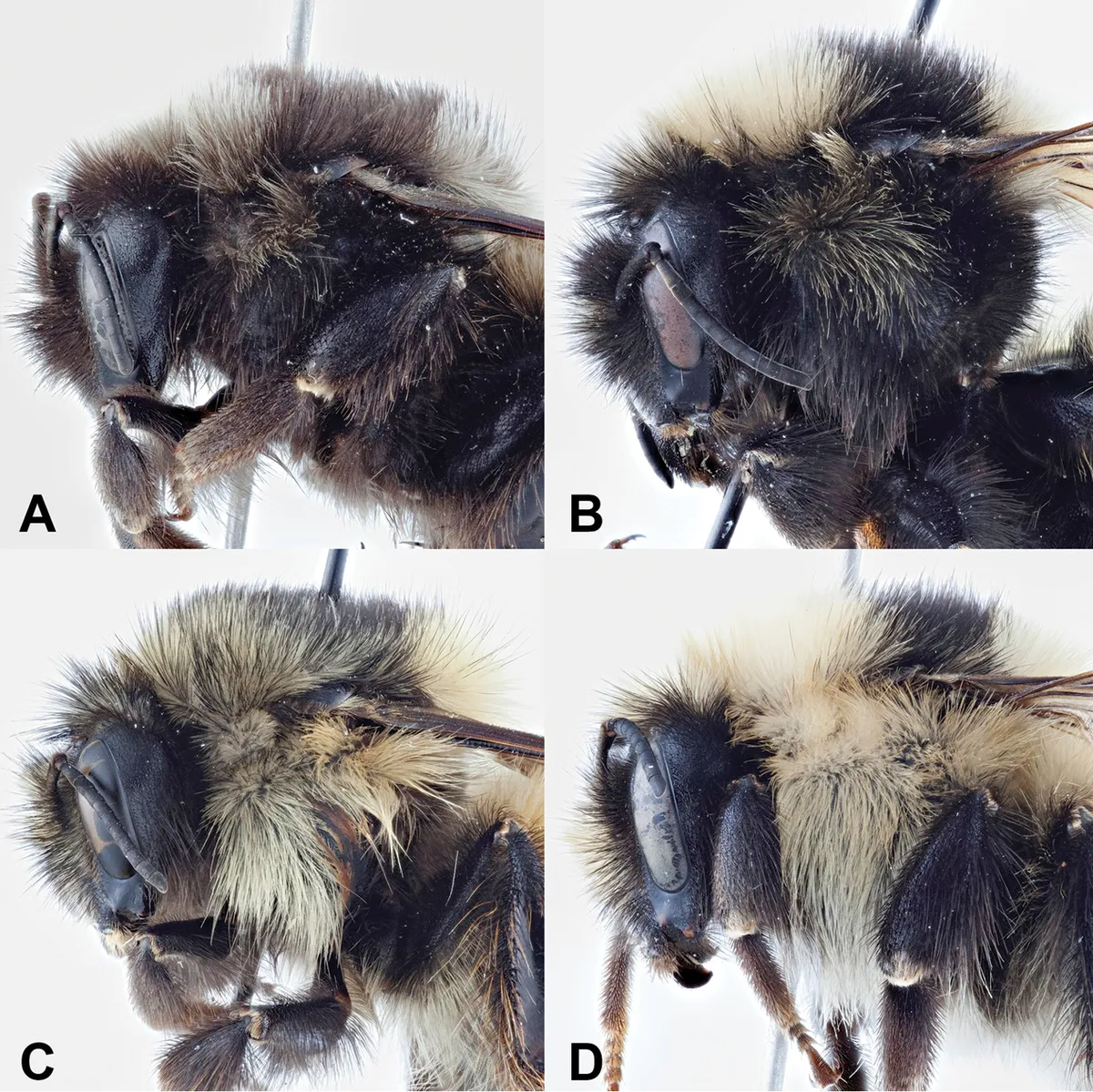
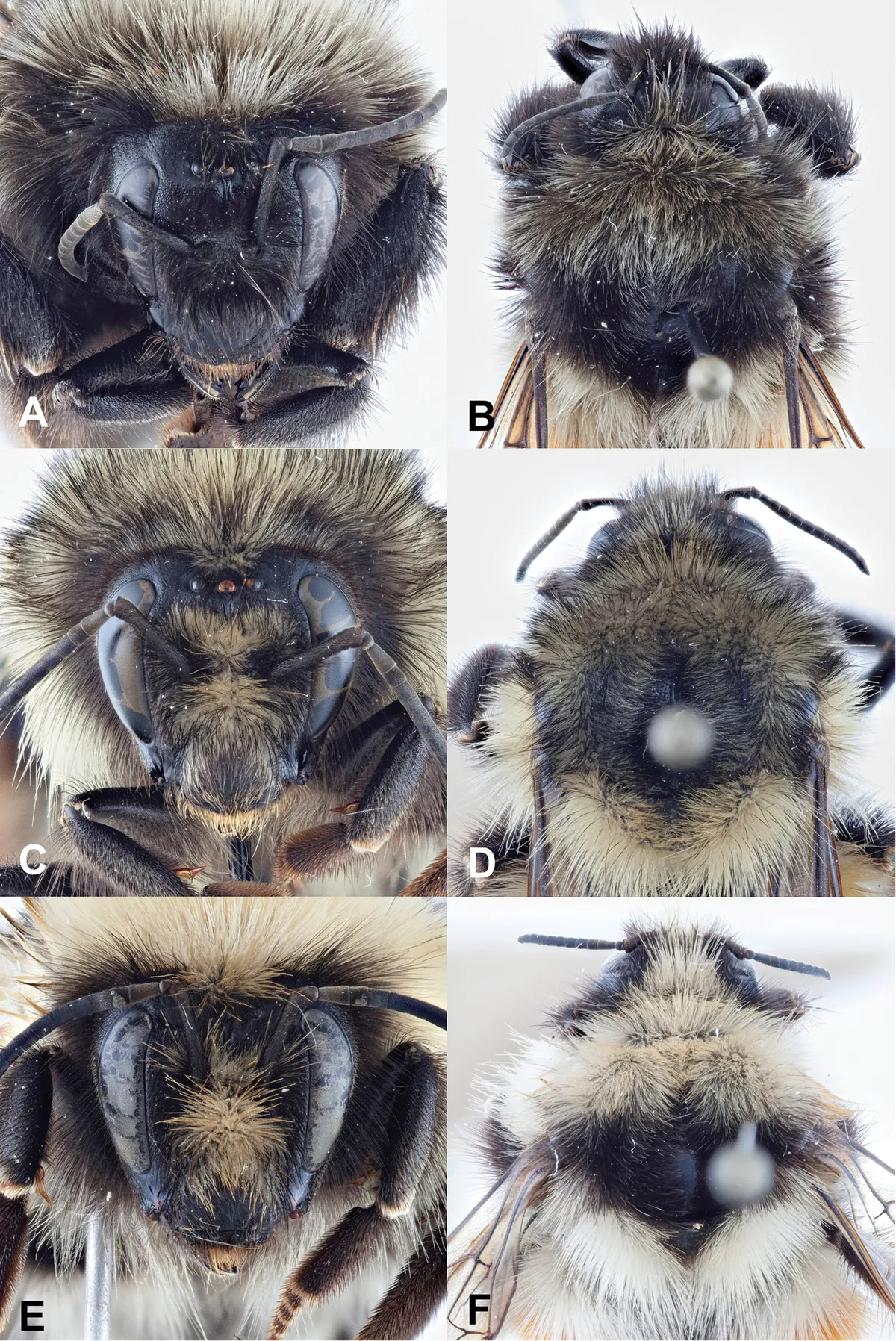
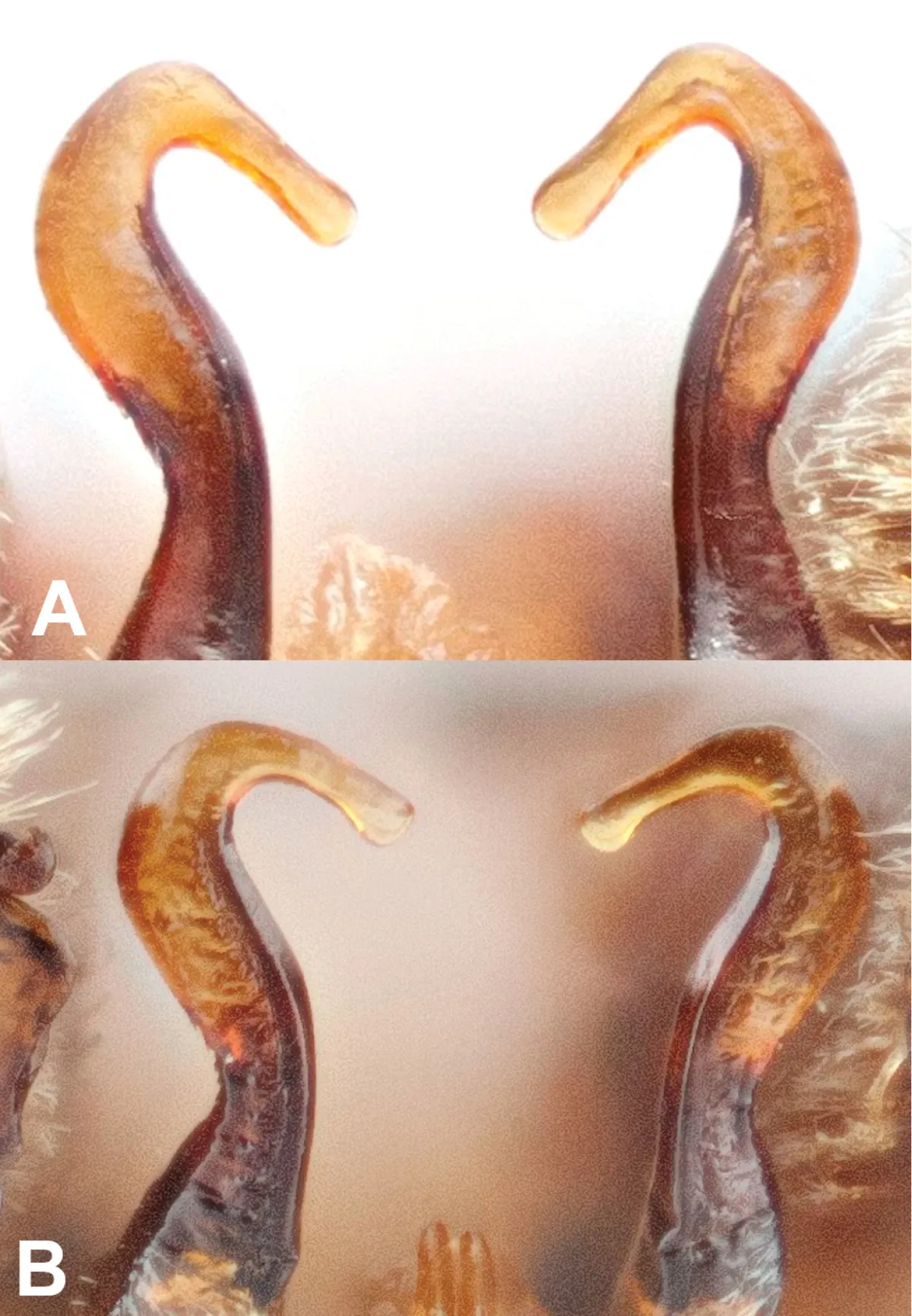
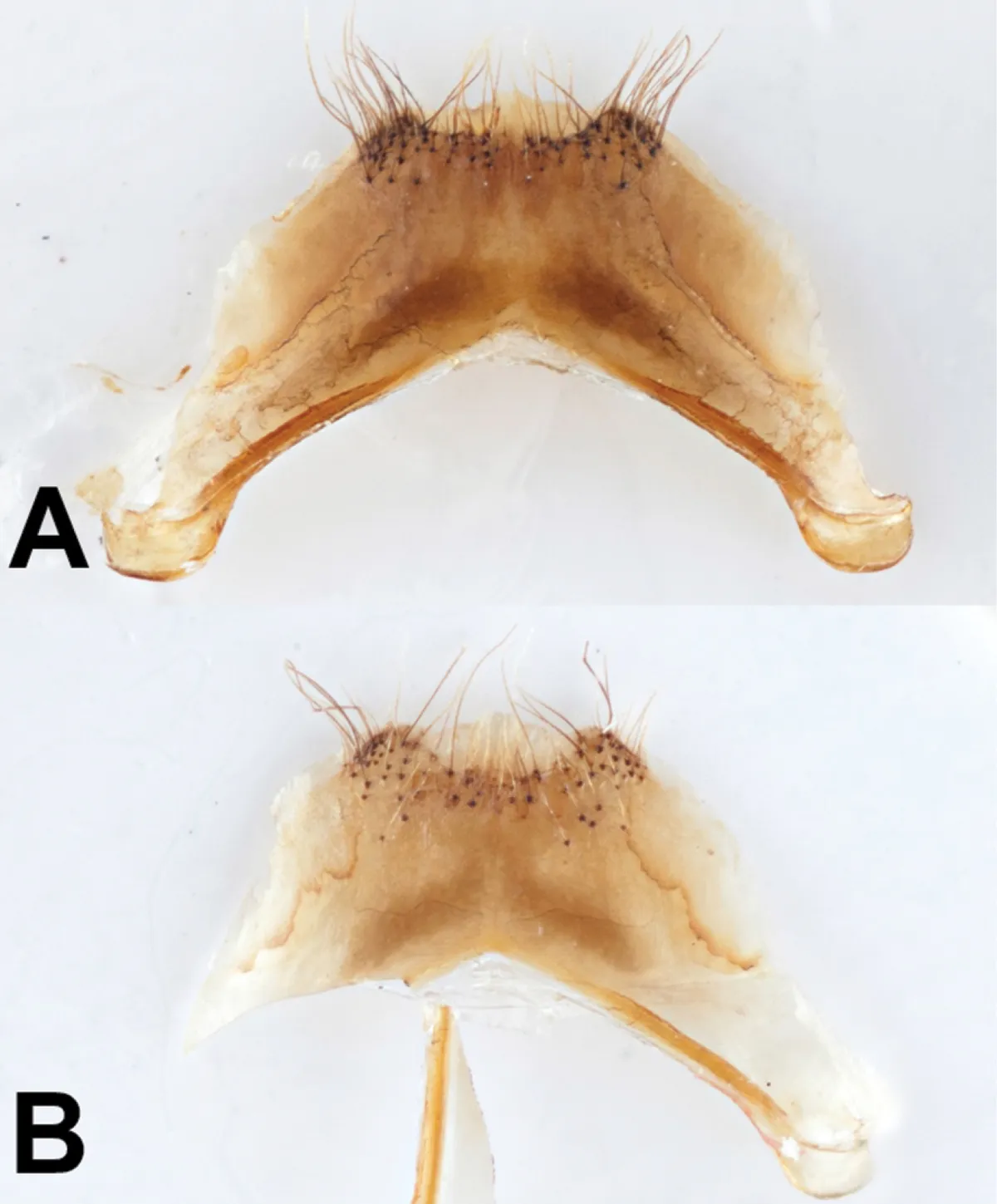
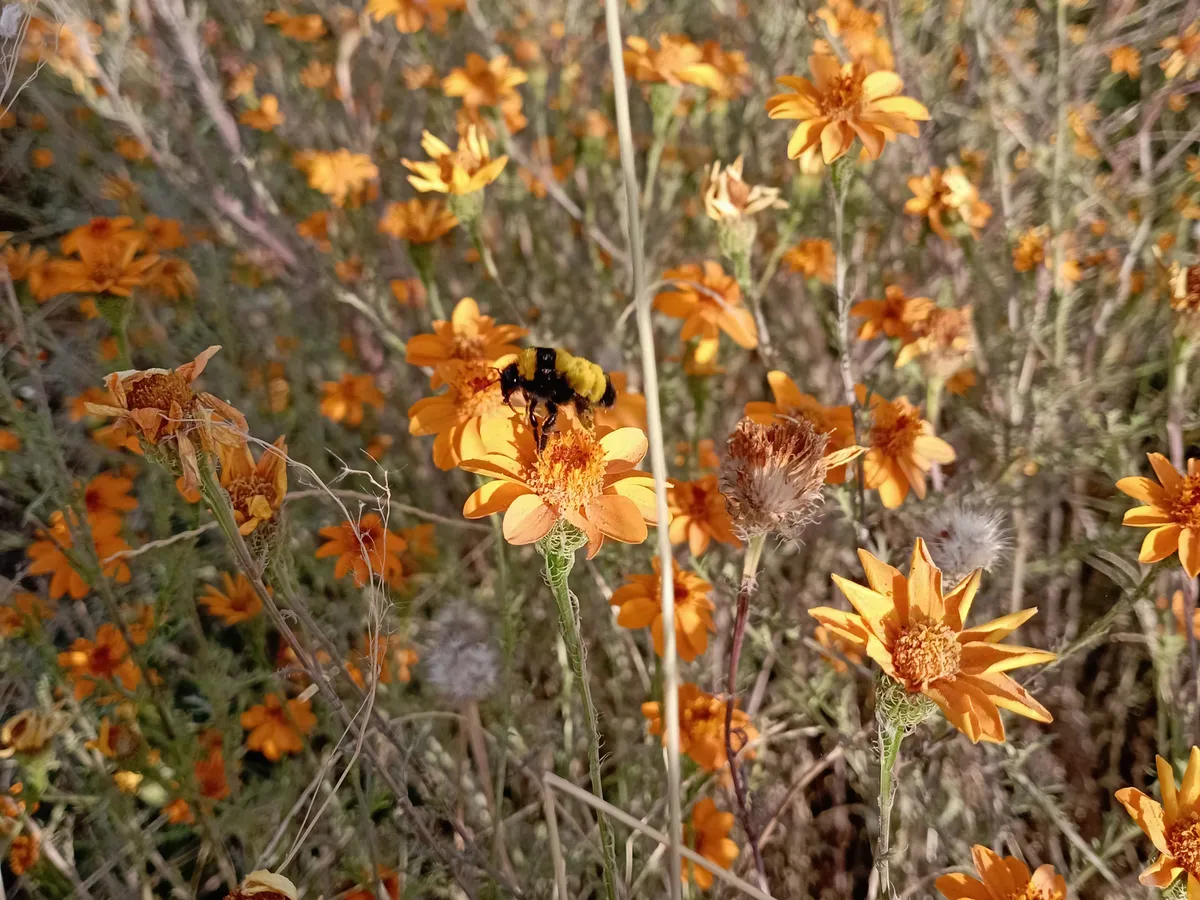
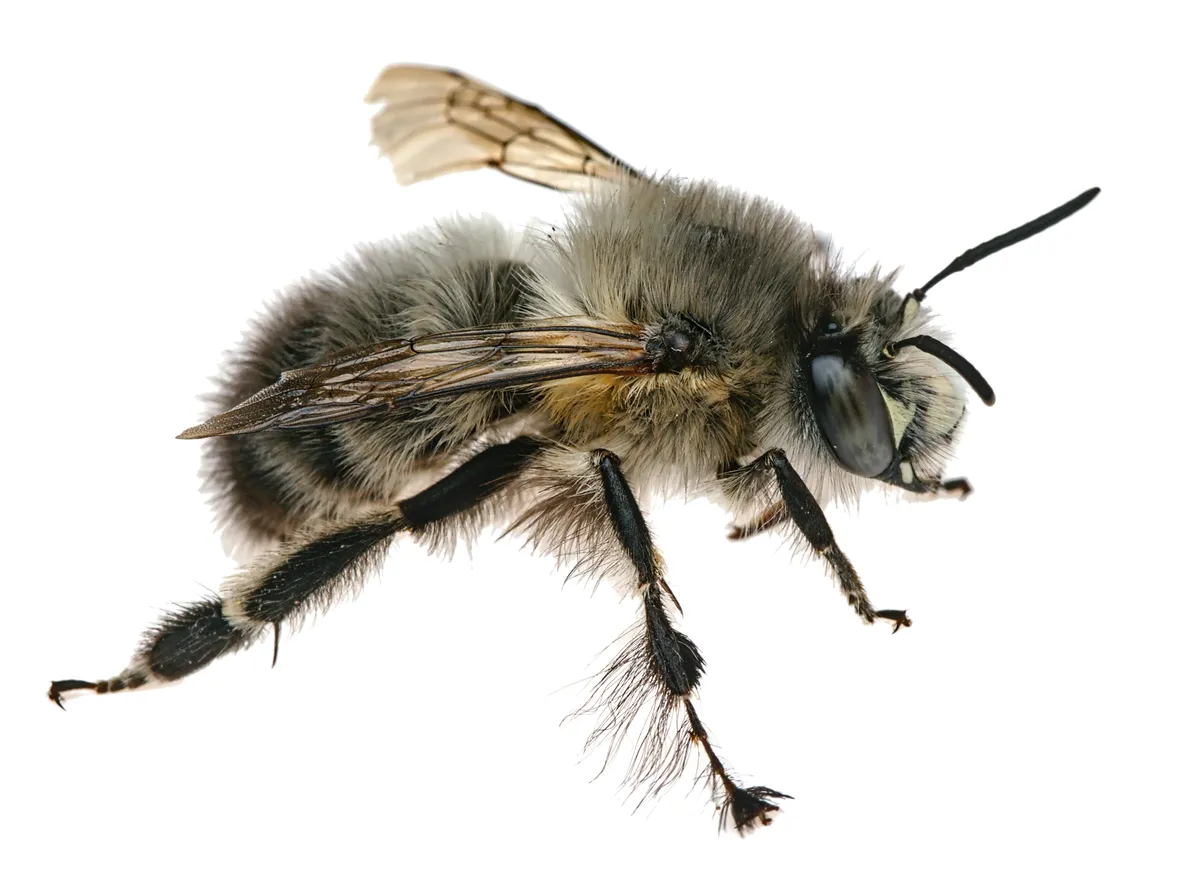
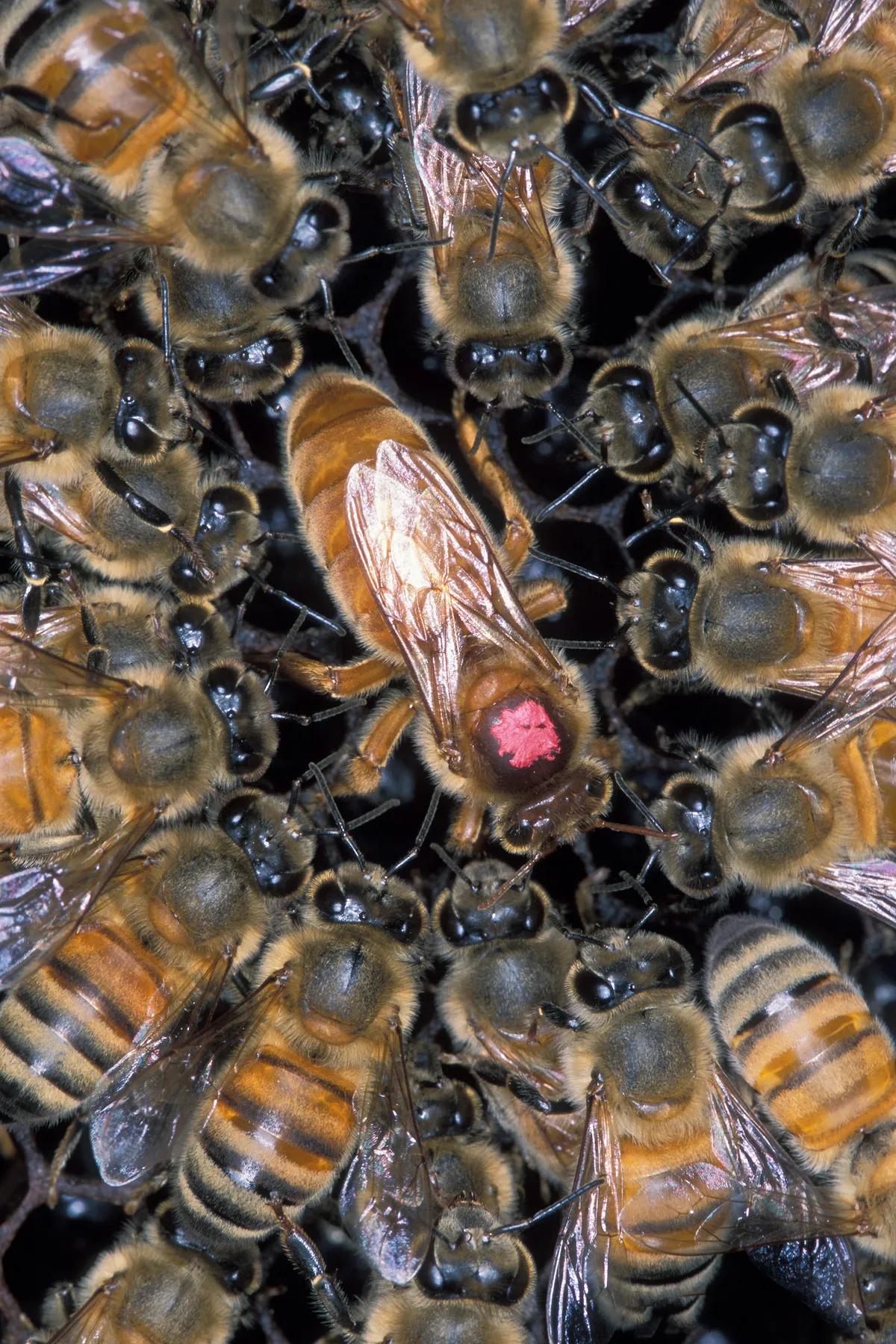
Bombus sylvicola is a wild bee species endemic to forested regions of North America, characterized by its distinctive black and yellow banded coloration and critical role in pollination ecosystems.
Image Gallery
ADSENSE SLOT
Ecology & Habitat
Habitat
Primarily inhabits coniferous and mixed forest environments across western North America, ranging from Alaska to California, typically at elevations between 500-2,500 meters above sea level.
Ecological Role
Essential pollinator for alpine and subalpine wildflowers, contributing to plant reproduction and maintaining biodiversity in forest and mountain ecosystems.
Morphology
SKIN COATDense, insulating hair covering with black base coloration and yellow banded pattern, providing thermal regulation
LIMBS WINGSTwo pairs of membranous wings, with hindwings smaller than forewings; strong legs with specialized pollen-collecting structures
HEAD SENSORYLarge compound eyes, well-developed antennae for chemical and spatial sensing, specialized mandibles for nectar and pollen collection
BODY STRUCTUREMedium-sized bumble bee, approximately 15-20 mm in length, with robust and densely-haired body adapted for cold mountain environments
Data Source: TaxonHub Database
Image Credit: KNWR Entomology Collection