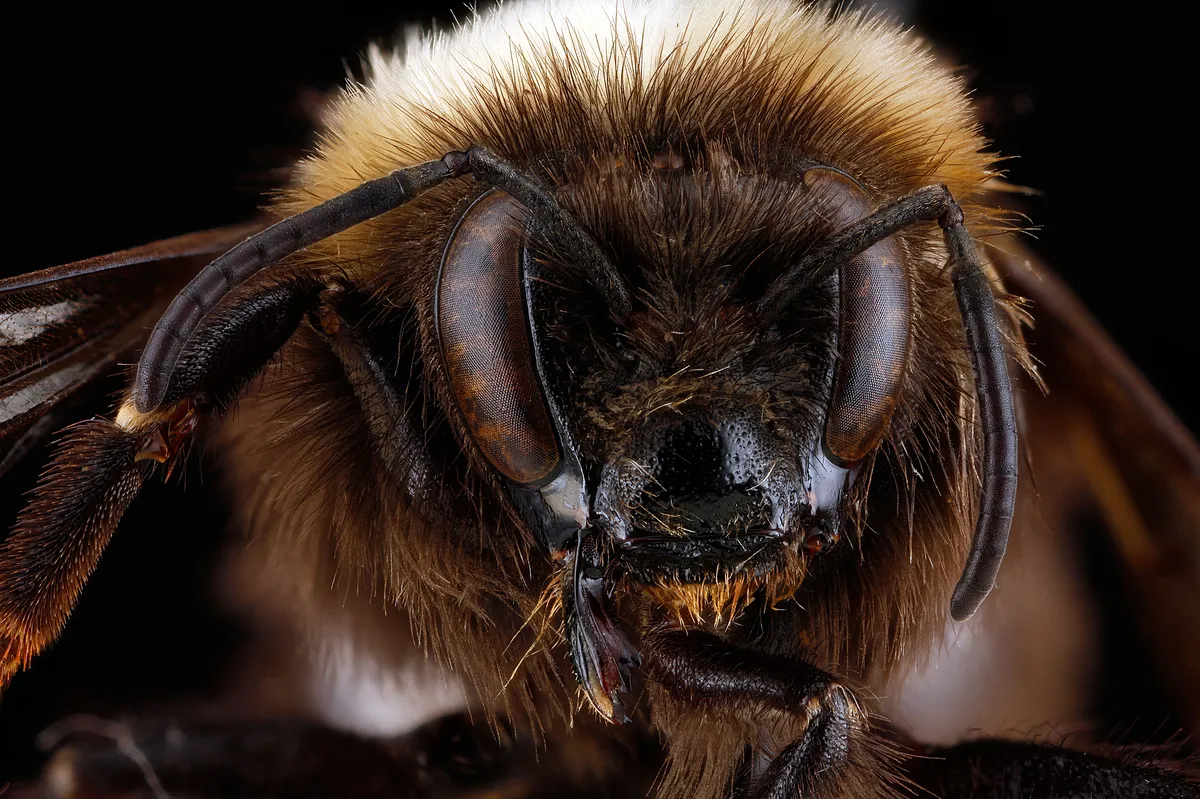
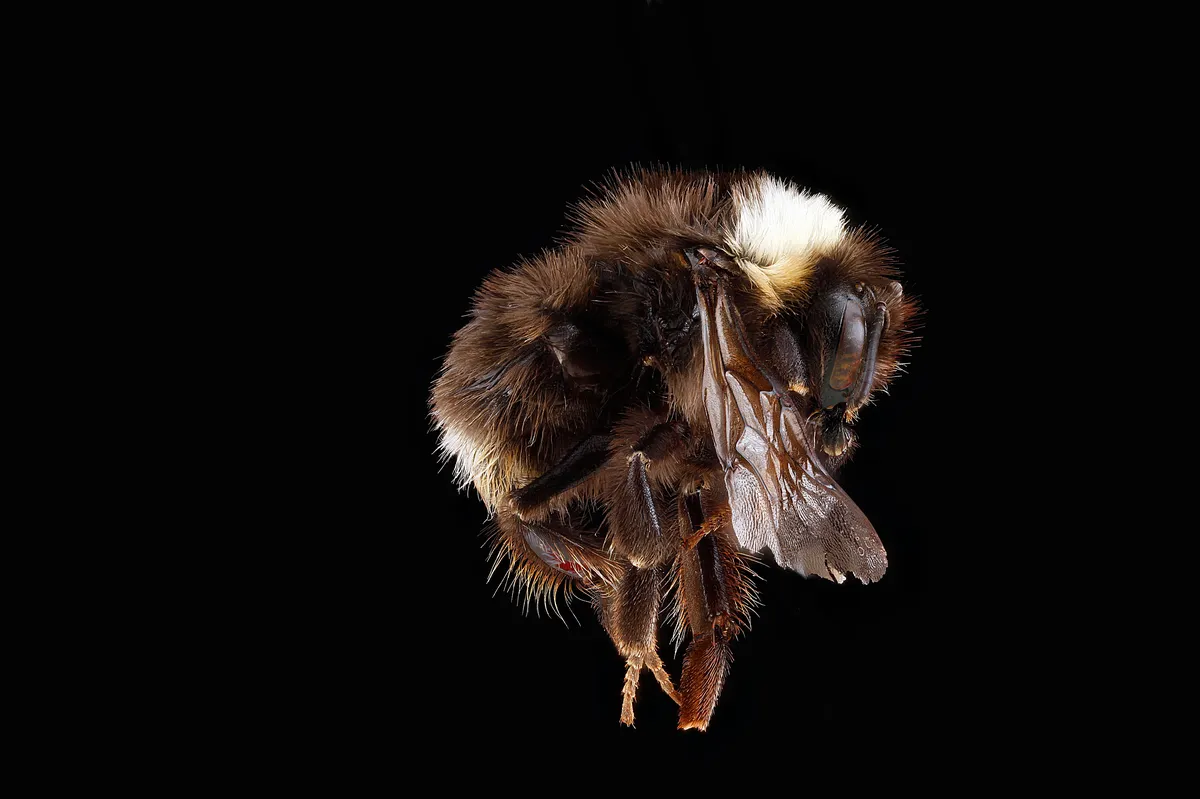
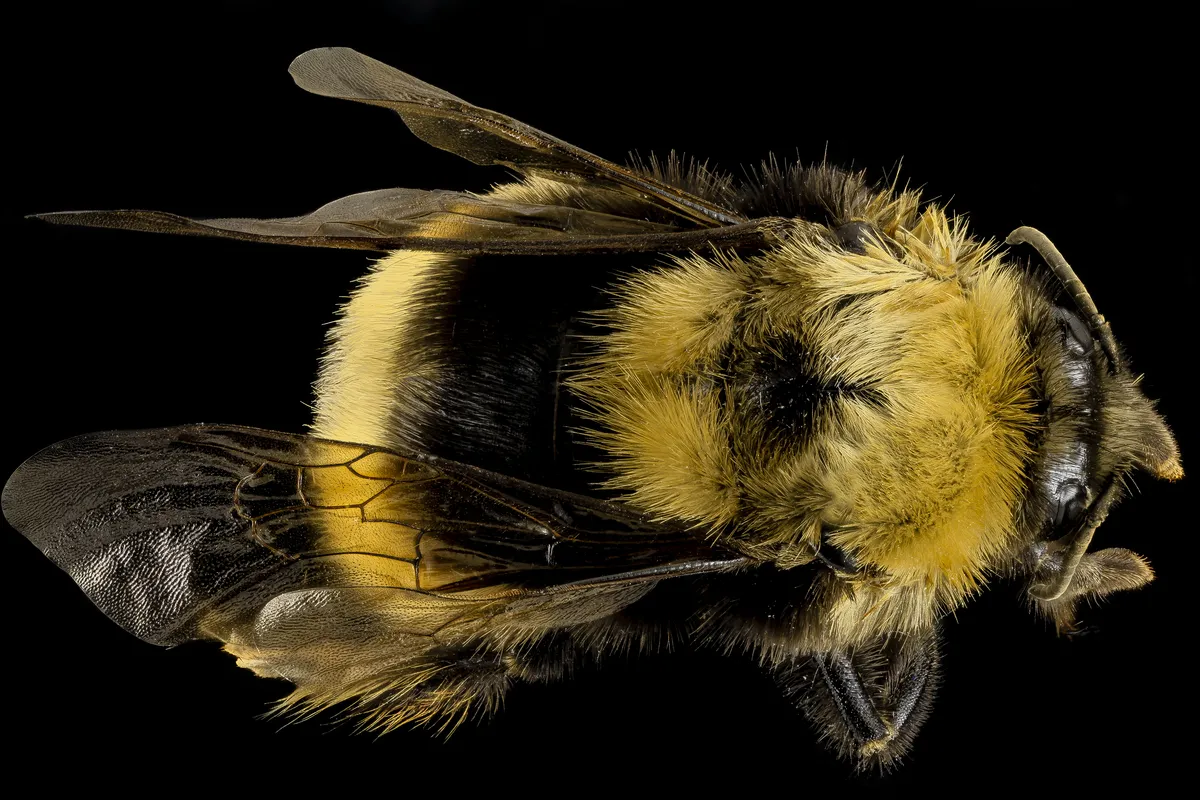
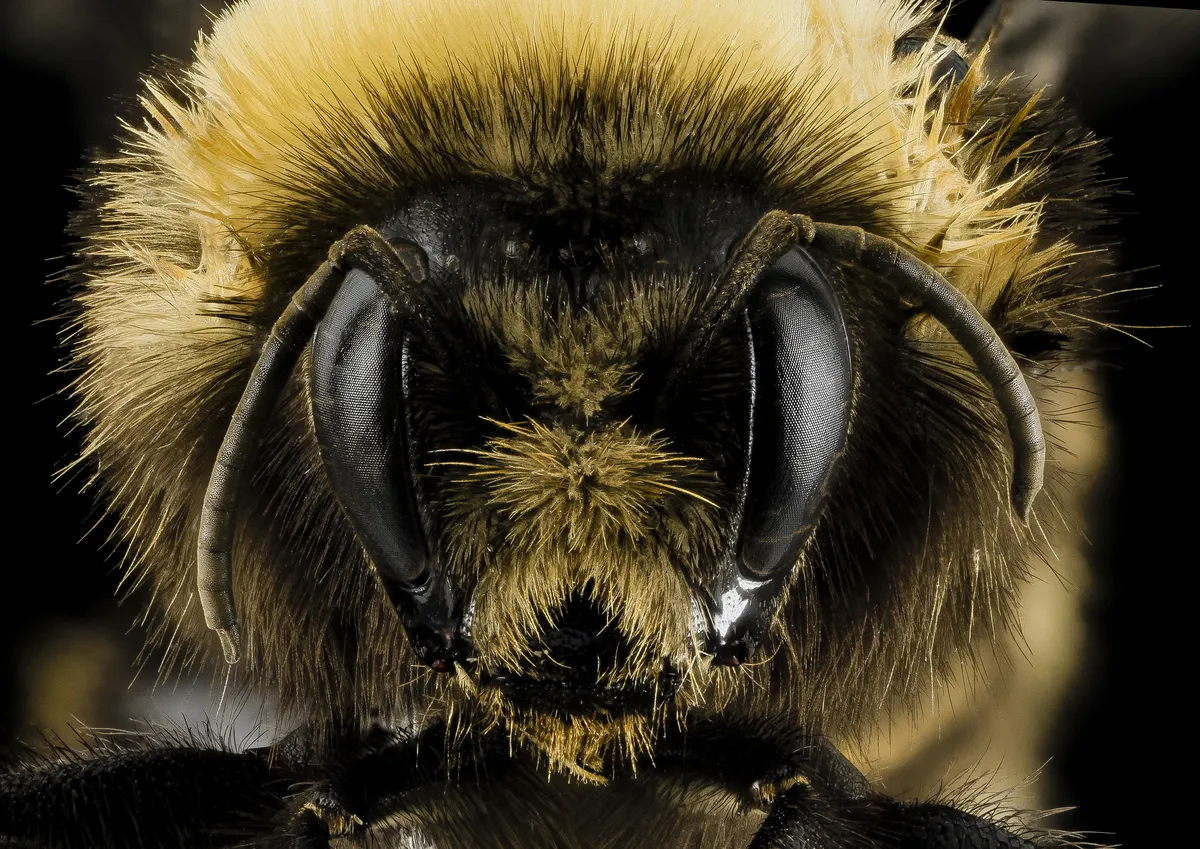
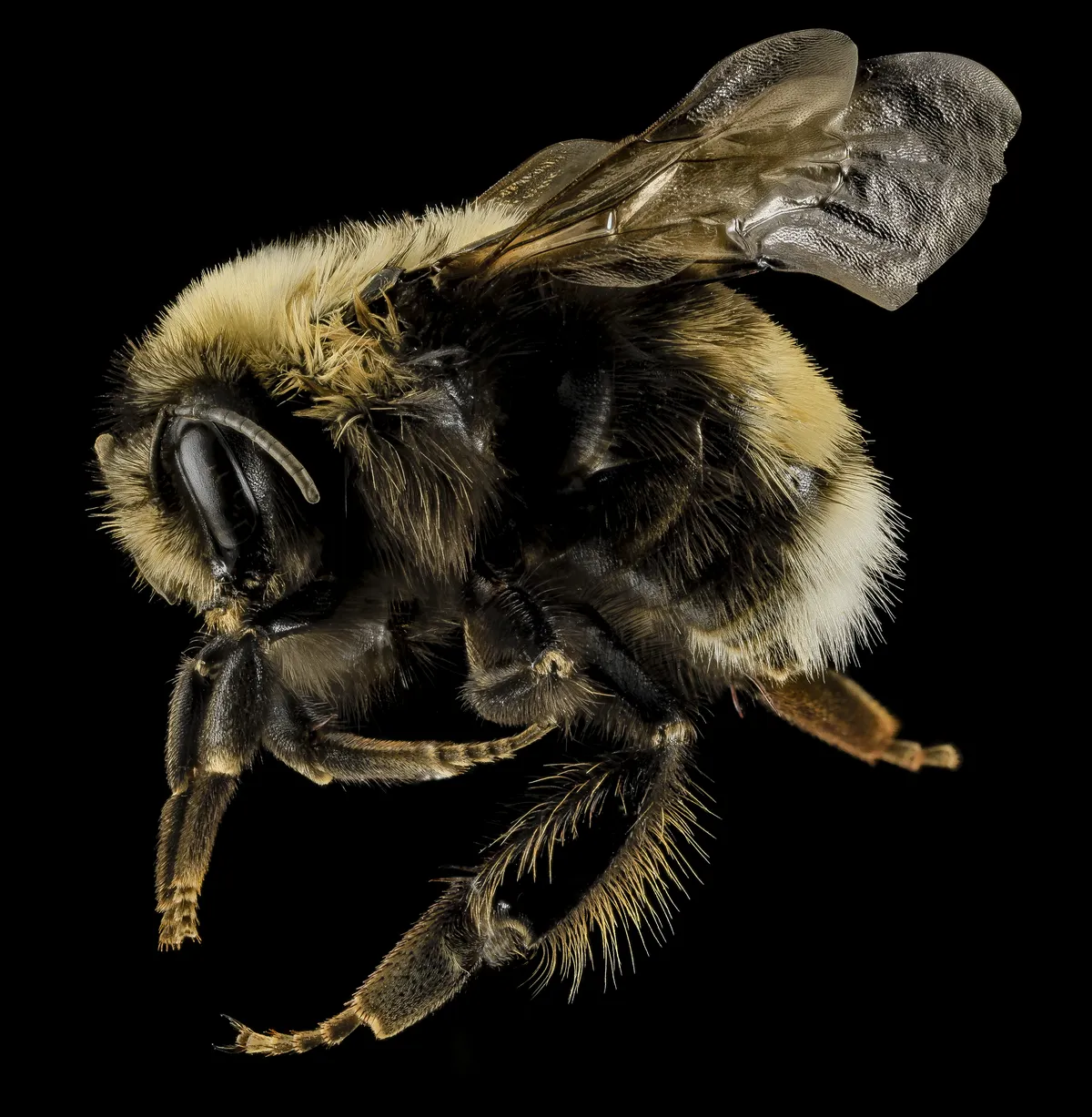
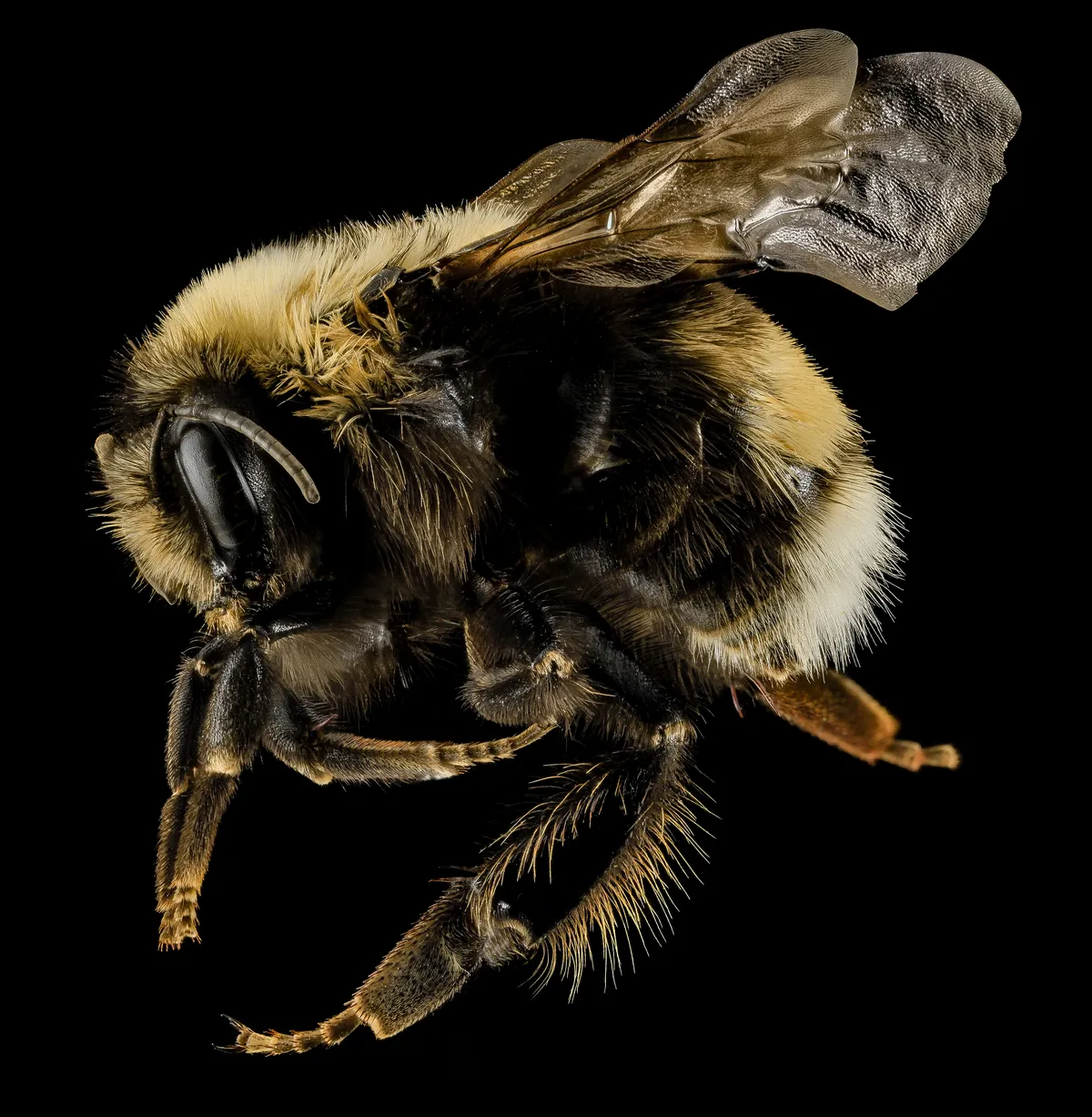
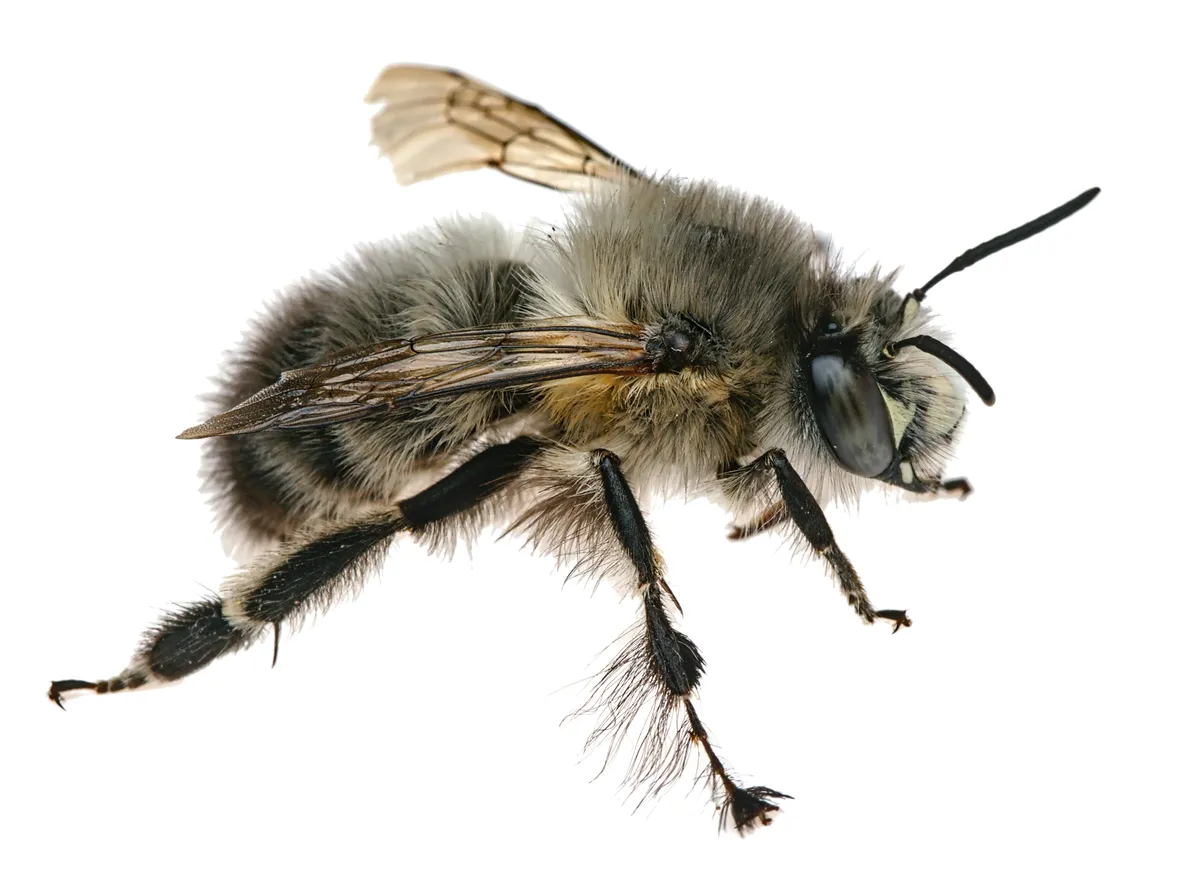
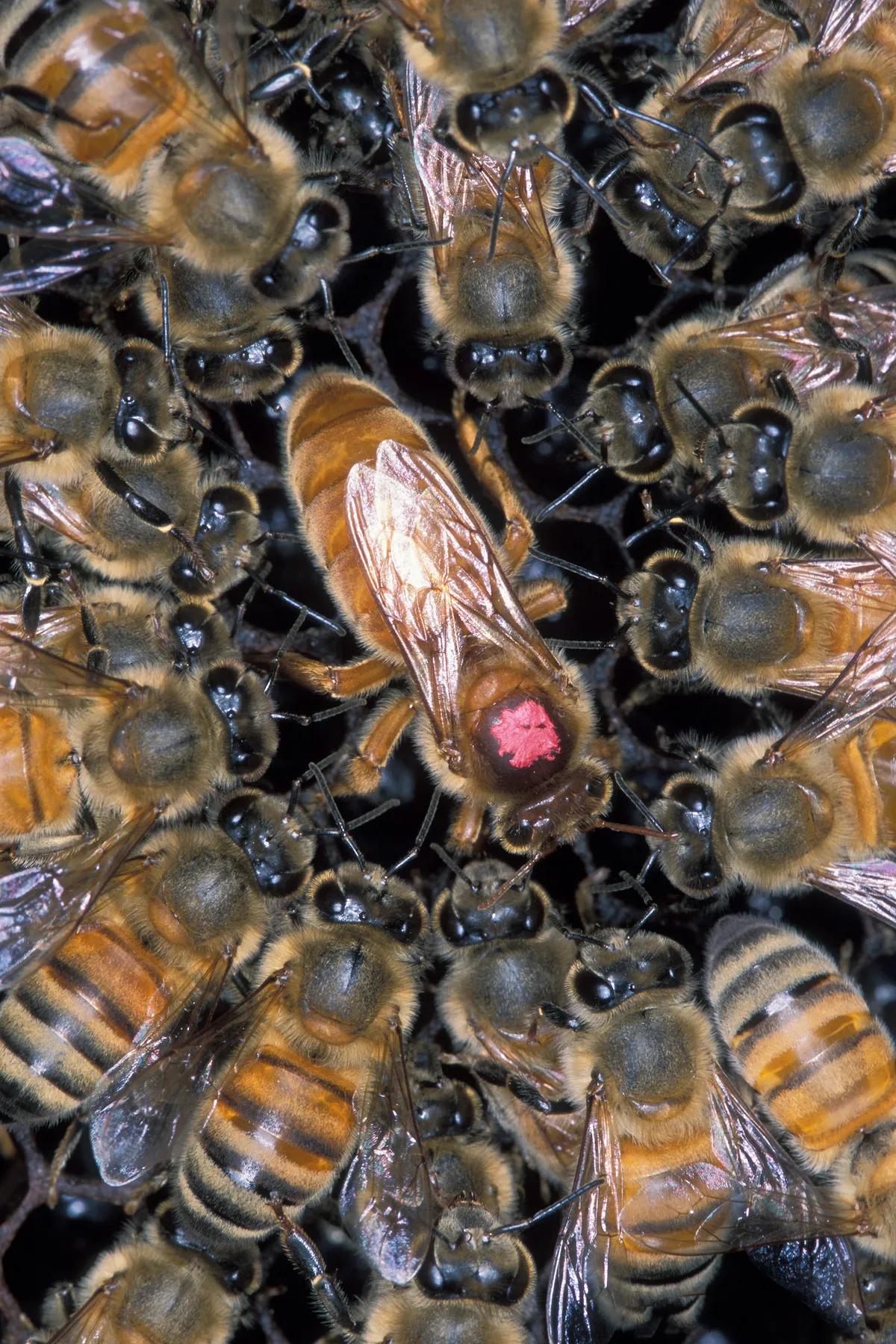
Bombus occidentalis is a robust, social bee species native to western North America, characterized by its distinctive black and yellow coloration and critical role in pollination ecosystems.
Image Gallery
ADSENSE SLOT
Ecology & Habitat
Habitat
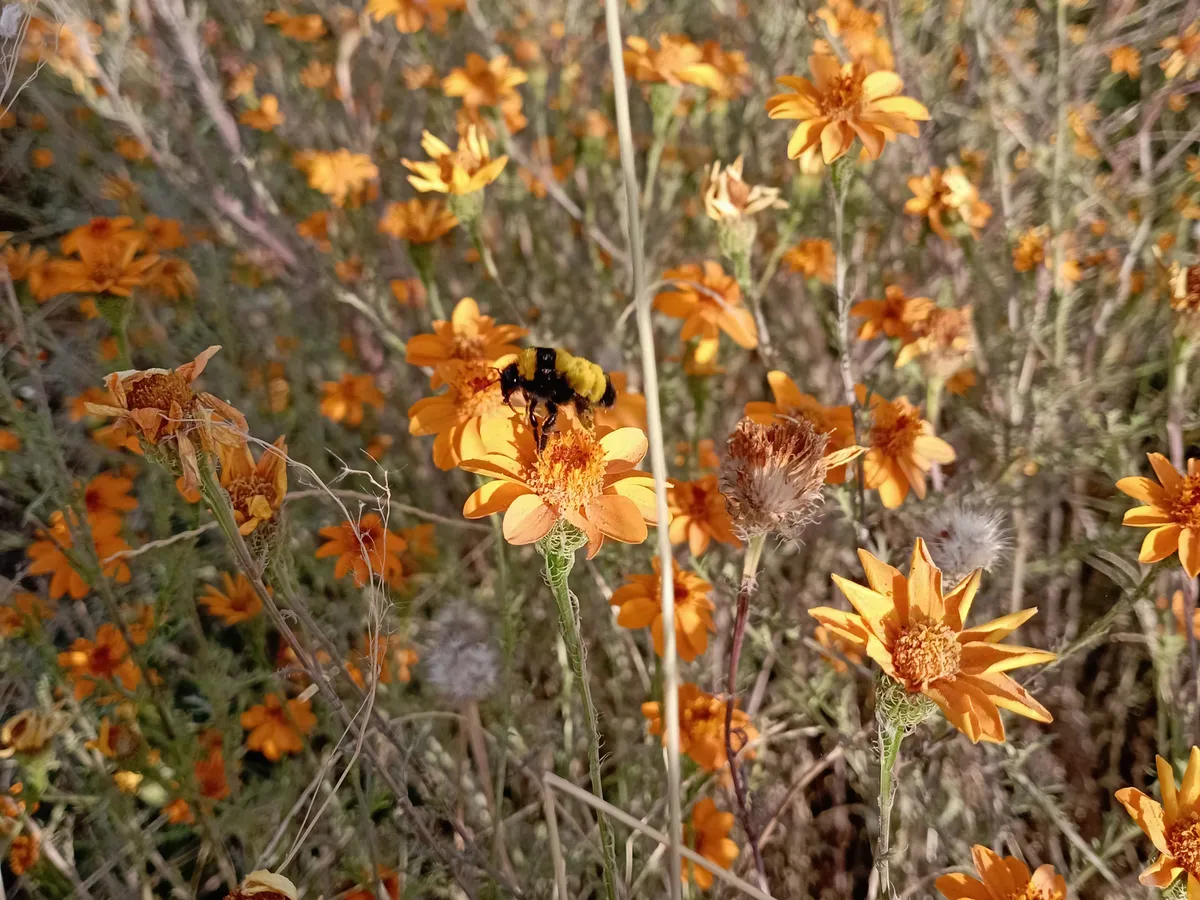
Found in diverse western North American landscapes including alpine meadows, forest edges, grasslands, and agricultural regions from British Columbia to California, ranging from sea level to 3,500 m elevation.
Ecological Role
Essential pollinator for wildflowers, crops, and native plant species. Plays a crucial role in maintaining biodiversity and supporting agricultural productivity through cross-pollination services.
Morphology
SKIN COATDense, insulating hair layer providing thermal regulation and water resistance
LIMBS WINGSTwo pairs of membranous wings, specialized pollen-collecting structures on hind legs called corbiculae
HEAD SENSORYLarge compound eyes, sensitive antennae for chemical and spatial perception, complex mandibular structure for nectar extraction
BODY STRUCTURELarge, robust bee with queens measuring 20-22 mm, workers 11-16 mm, distinct black and yellow striped pattern
Data Source: TaxonHub Database
Image Credit: USGS Native Bee Inventory and Monitoring Laboratory from Beltsville, USA