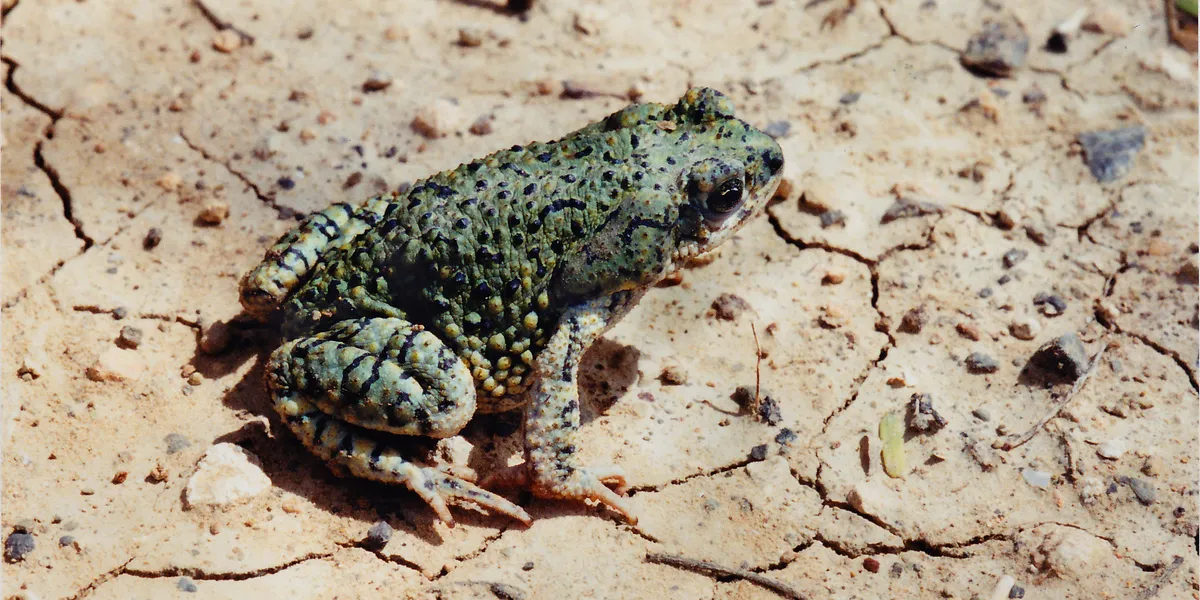
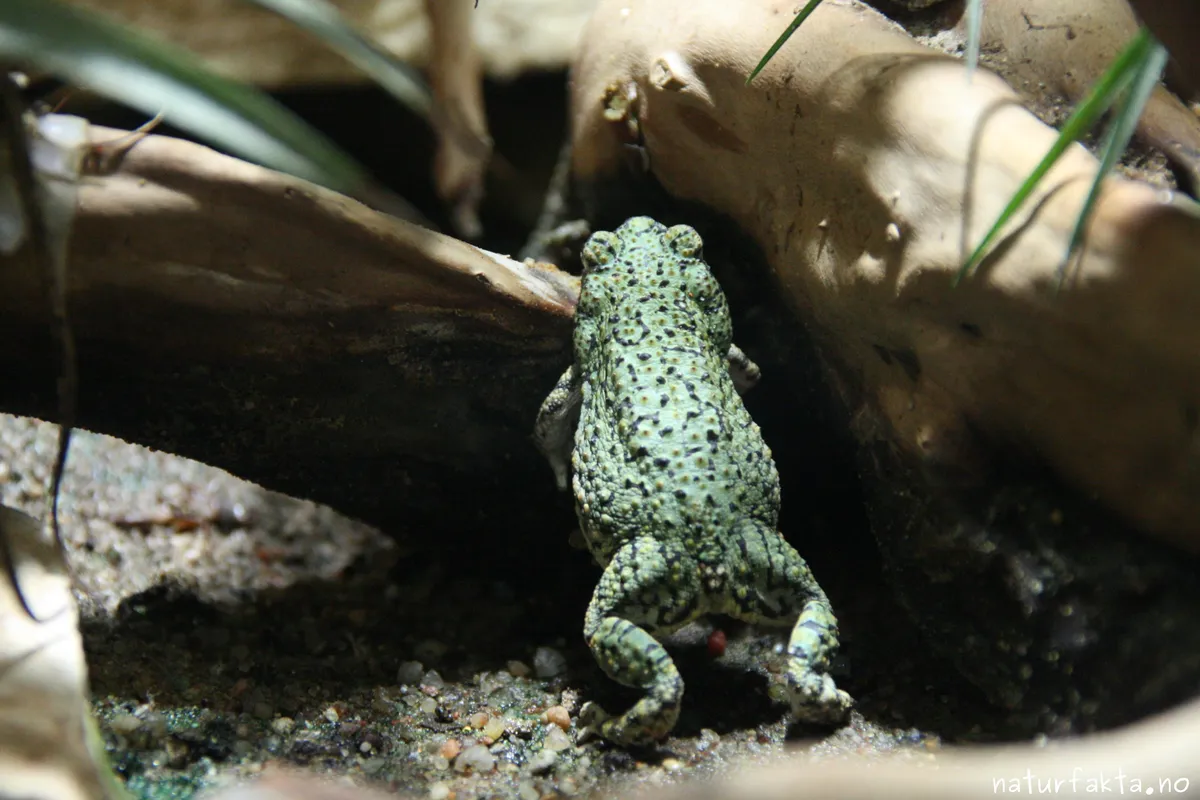
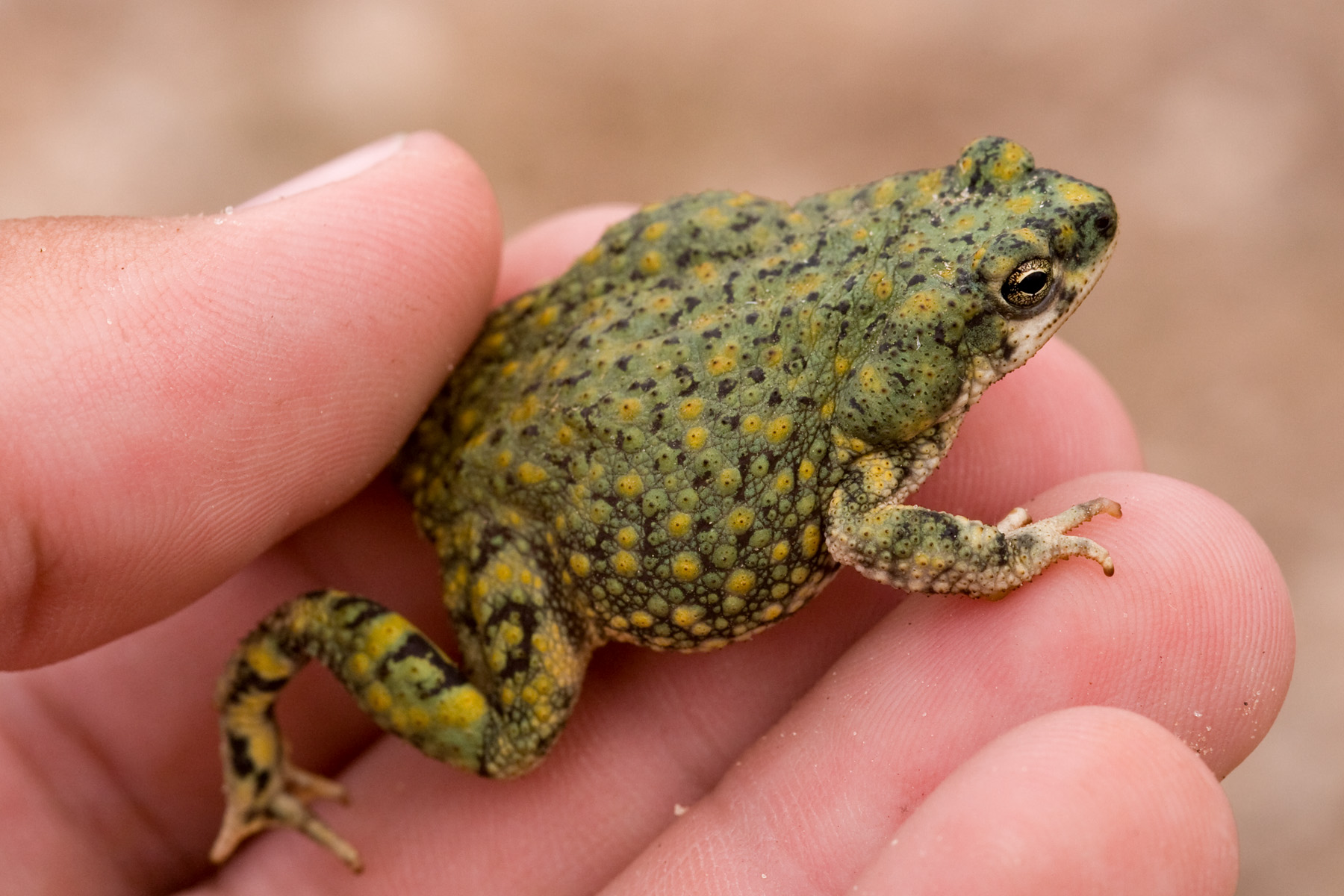
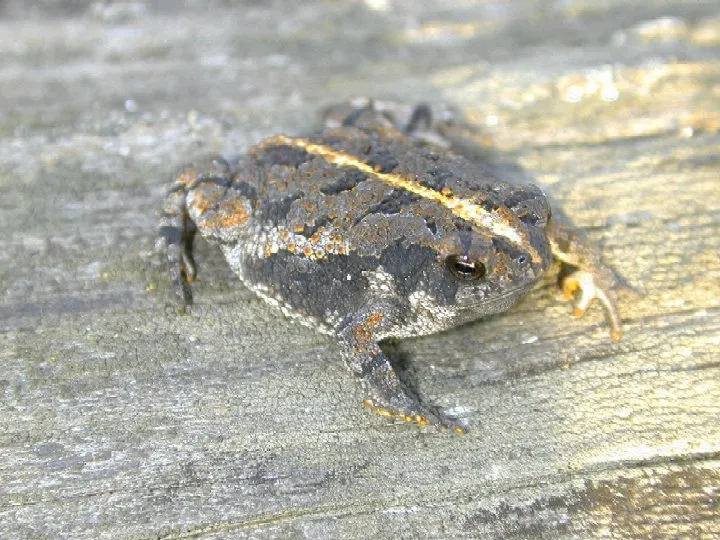
A small, ground-dwelling amphibian native to southwestern United States and northern Mexico, characterized by its distinctive green to olive coloration and adaptability to arid environments.
Image Gallery
ADSENSE SLOT
Ecology & Habitat
Habitat
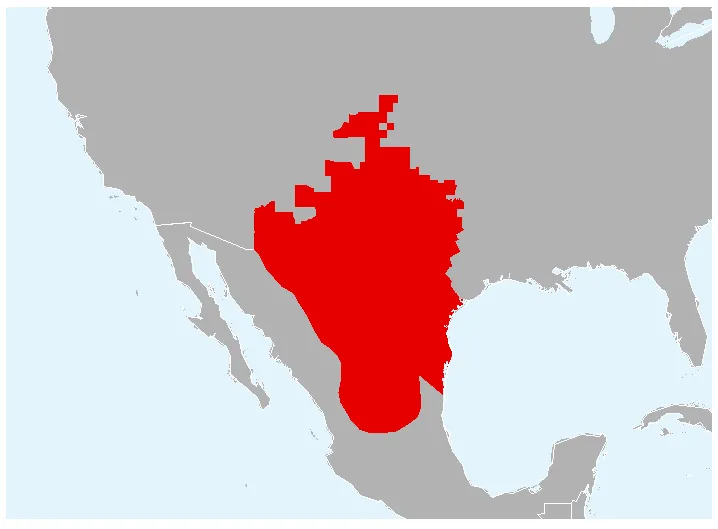
Primarily inhabits semi-arid grasslands, desert margins, and scrublands with sandy or rocky terrain in regions of Texas, New Mexico, Arizona, and northern Mexico. Prefers areas with sparse vegetation and underground burrows.
Ecological Role
Plays a critical role in insect population control, serving as a predator of small invertebrates. Acts as both prey and predator in desert and grassland ecosystems, contributing to biodiversity and food web dynamics.
Morphology
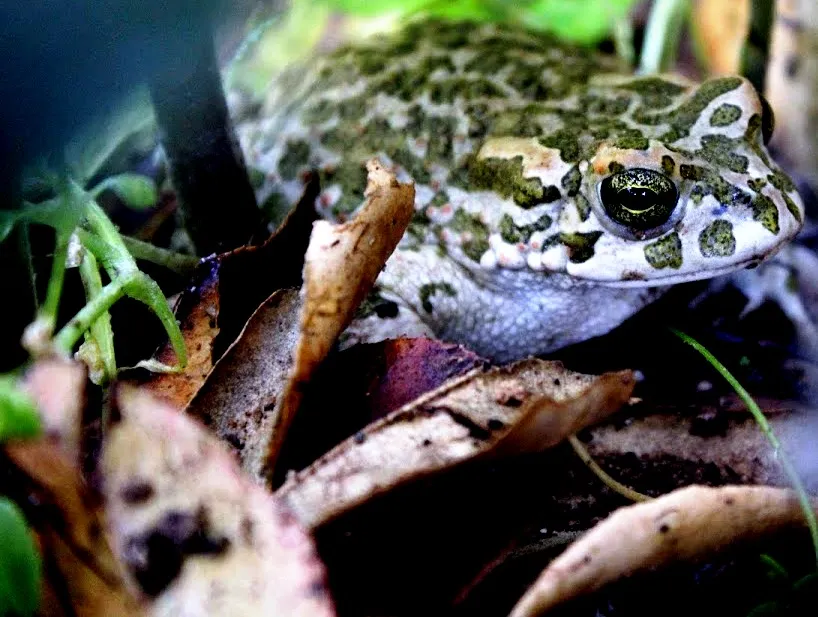
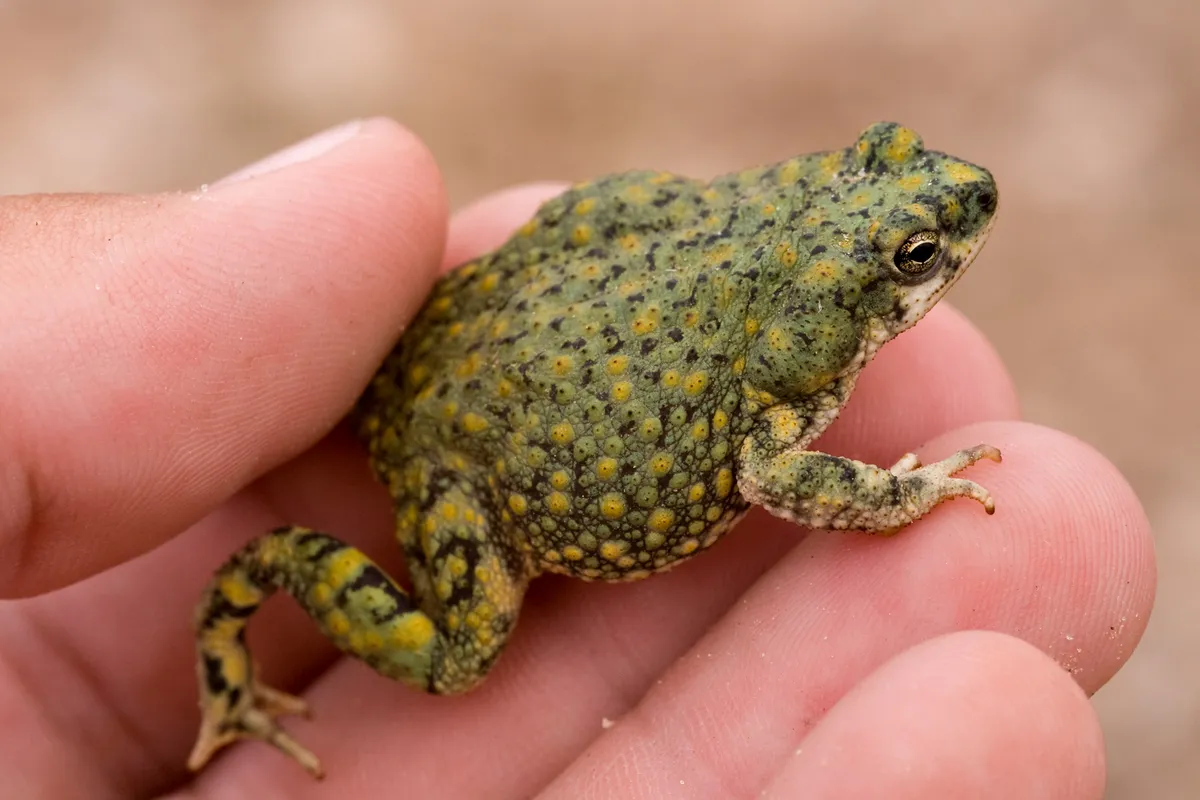
SKIN COATDry, warty skin with green to olive-green coloration, often with dark mottled patterns for camouflage. Skin contains mild toxins as defense mechanism.
LIMBS WINGSShort, muscular limbs adapted for terrestrial locomotion. Strong hind limbs enable short jumping movements. Toes with slight webbing for minimal aquatic movement.
HEAD SENSORYBroad, flat head with prominent parotoid glands. Large, protruding eyes with horizontal pupils. Well-developed tympanum for sound detection.
BODY STRUCTURESmall toad, typically 4-6 cm in total length, with a stout body and relatively short limbs. Weight ranges between 10-25 grams.
Data Source: TaxonHub Database
Image Credit: William L. Farr