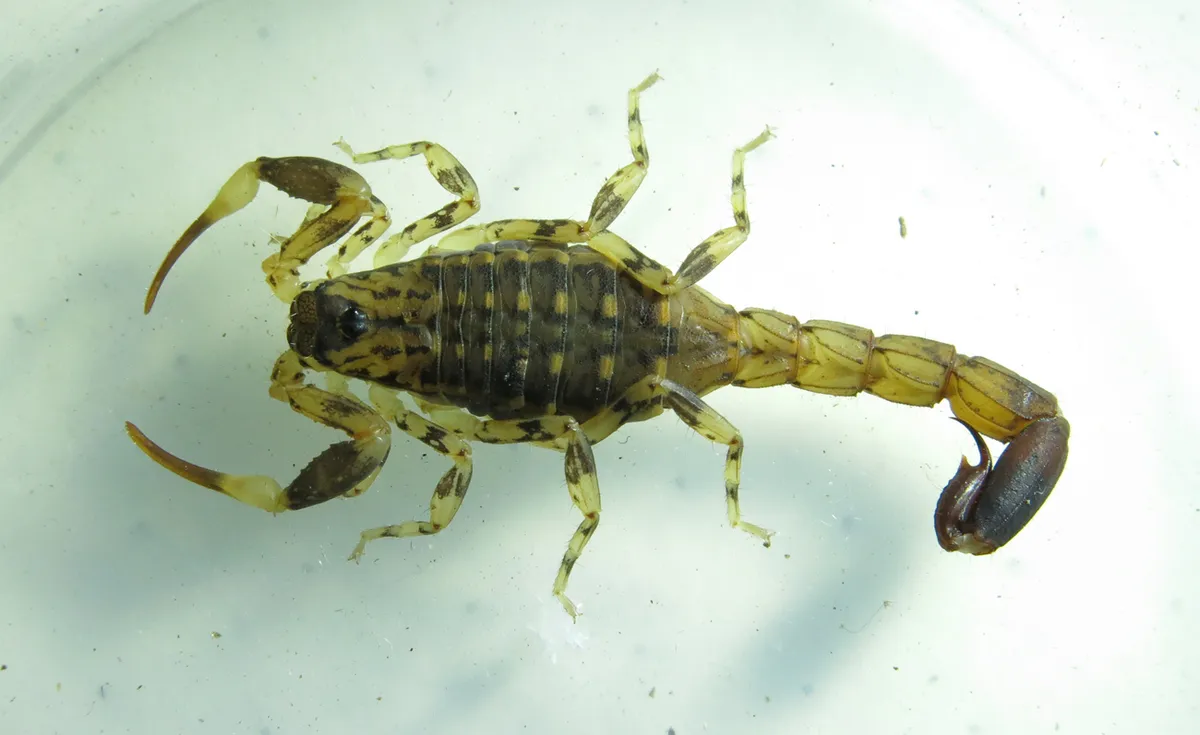
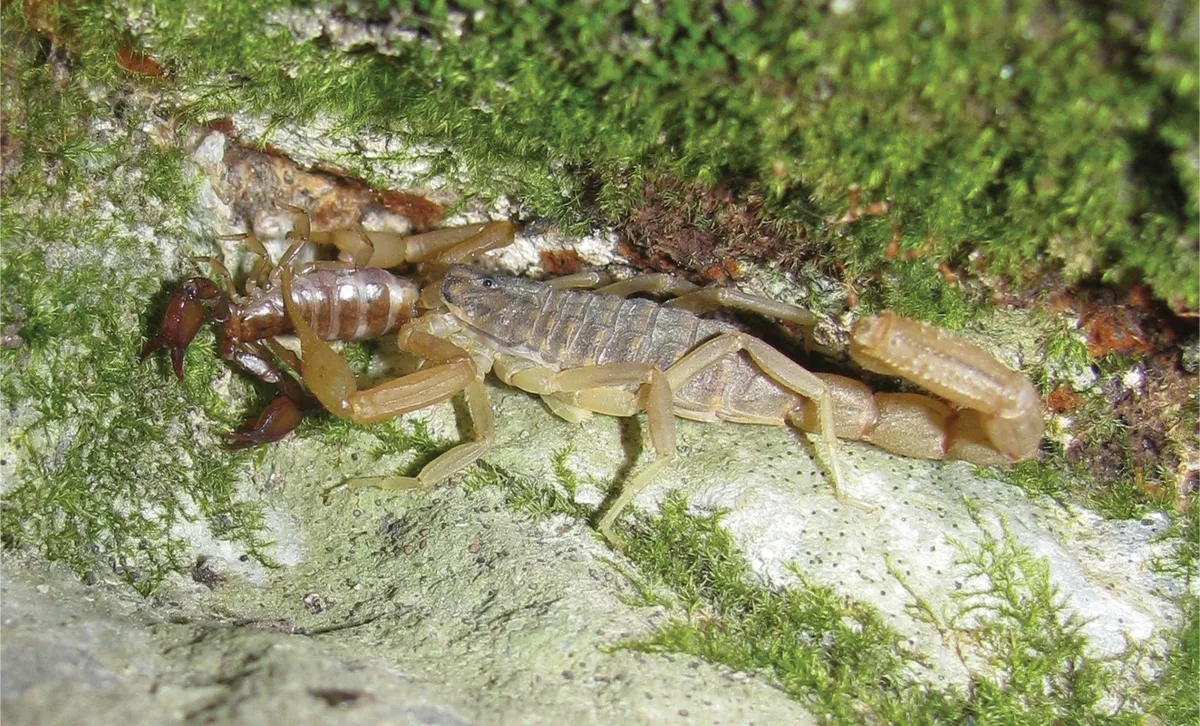
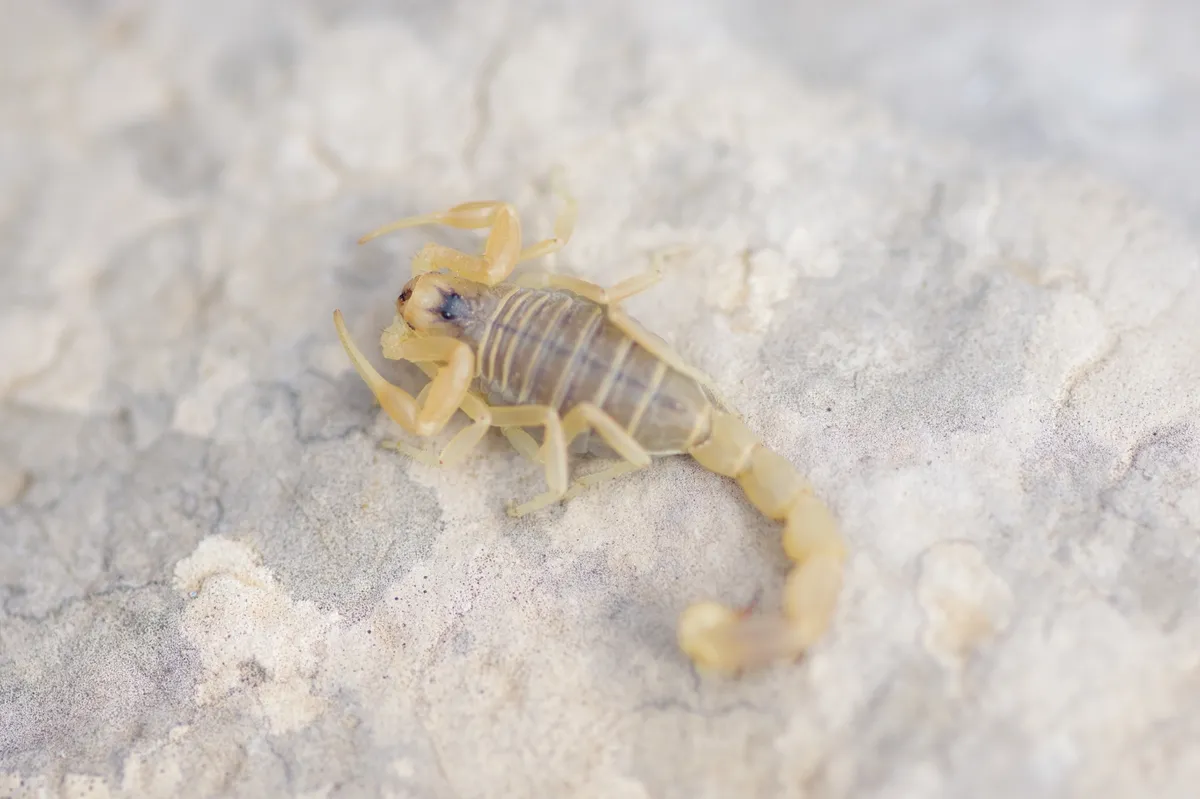
A buthid scorpion species native to South America, characterized by its distinctive wide tail segment. Belongs to the genus Rhopalurus, endemic to tropical and subtropical regions.
ADSENSE SLOT
Ecology & Habitat
Habitat
Typically found in rocky terrains, dry forests, and scrublands of South America, particularly in Brazil and surrounding regions. Prefers areas with abundant rocky crevices and low vegetation cover.
Ecological Role
Plays a crucial role as a predator in local ecosystems, controlling insect populations and serving as prey for larger predators. Contributes to ecological balance in its native habitats.
Morphology
- SKIN COAT Chitinous exoskeleton with thick cuticle, providing protection against desiccation and mechanical damage. Exhibits slight glossiness and dark pigmentation.
- LIMBS WINGS Eight legs with sharp, curved tarsal segments. Powerful pedipalps with large chelae (pincers) used for hunting and defense. Strong exoskeletal articulation enabling rapid movement.
- HEAD SENSORY Possesses multiple sensory setae and pectines for detecting environmental vibrations and chemical signals. Equipped with pair of compound eyes and numerous sensory hair-like structures.
- BODY STRUCTURE Medium-sized scorpion, approximately 6-8 cm in total length. Robust exoskeleton with dark brown to black coloration. Broad, flattened metasoma (tail) with a prominent telson containing venom gland.
Data Source: TaxonHub Database
Image Credit: Wikimedia Commons
Image Credit: Wikimedia Commons
ADSENSE VERTICAL