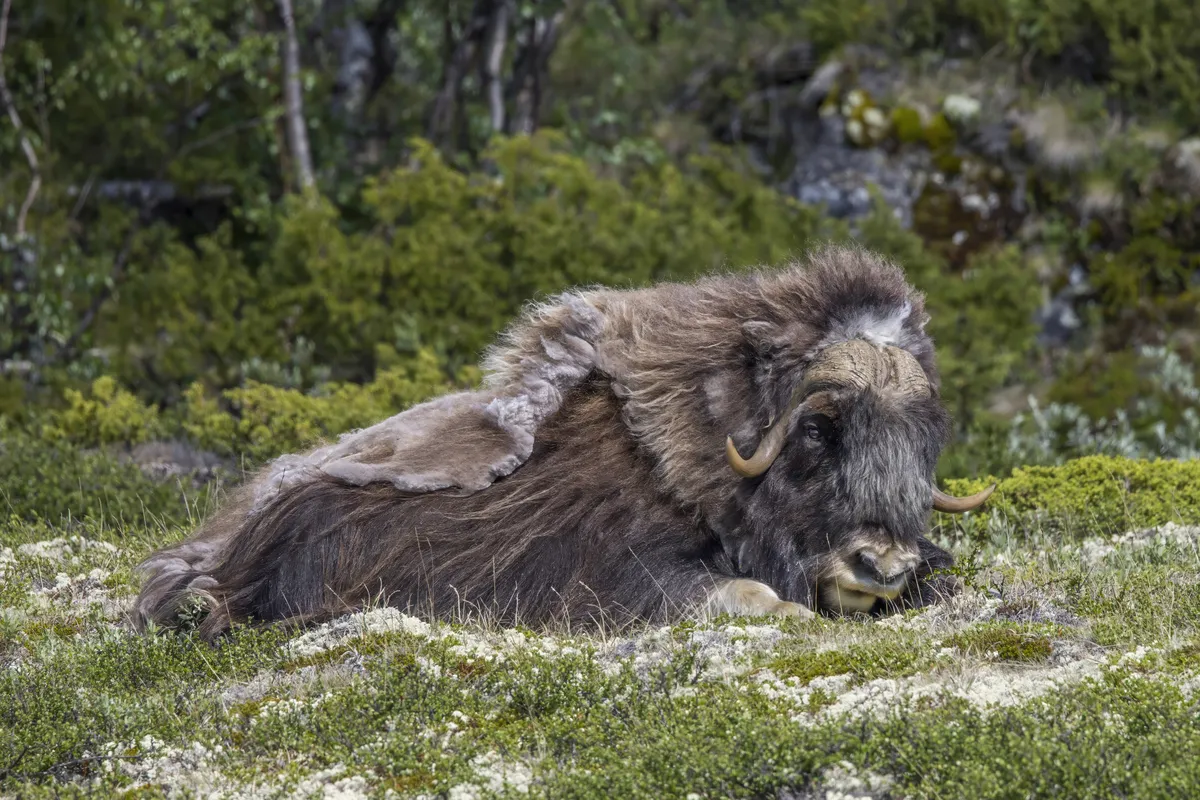
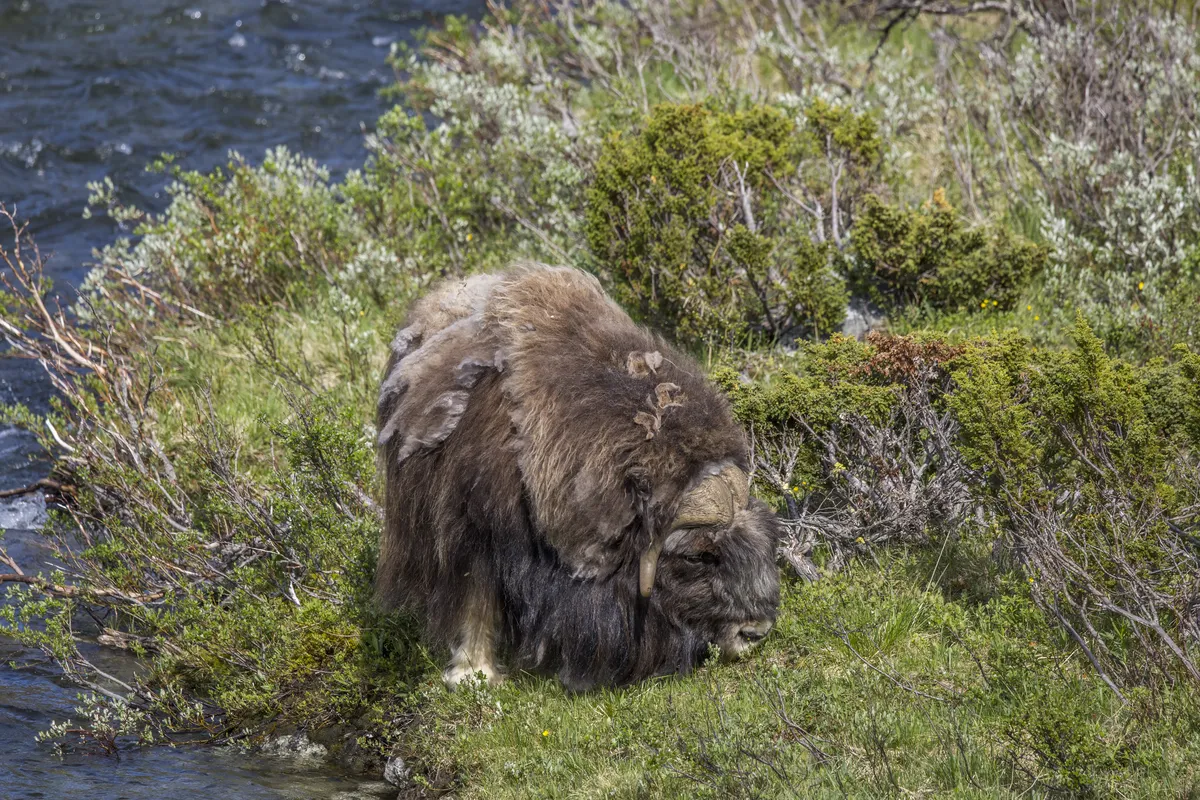
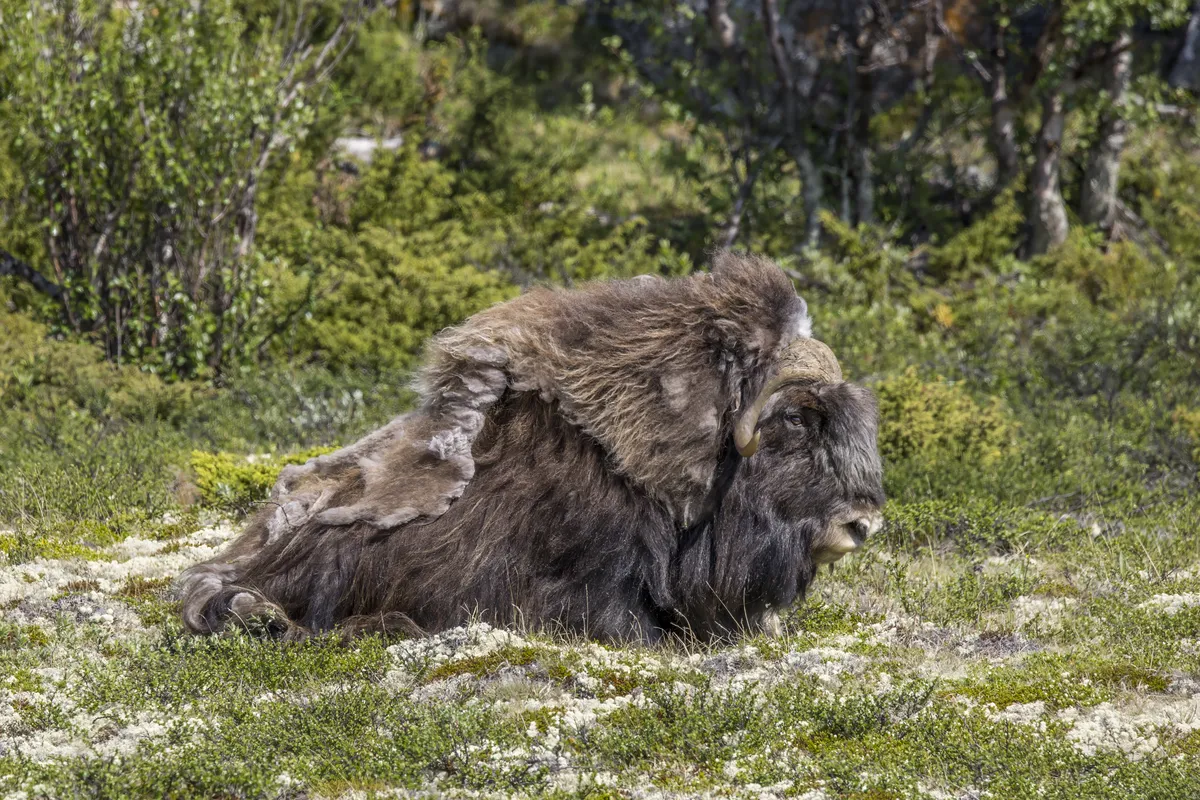
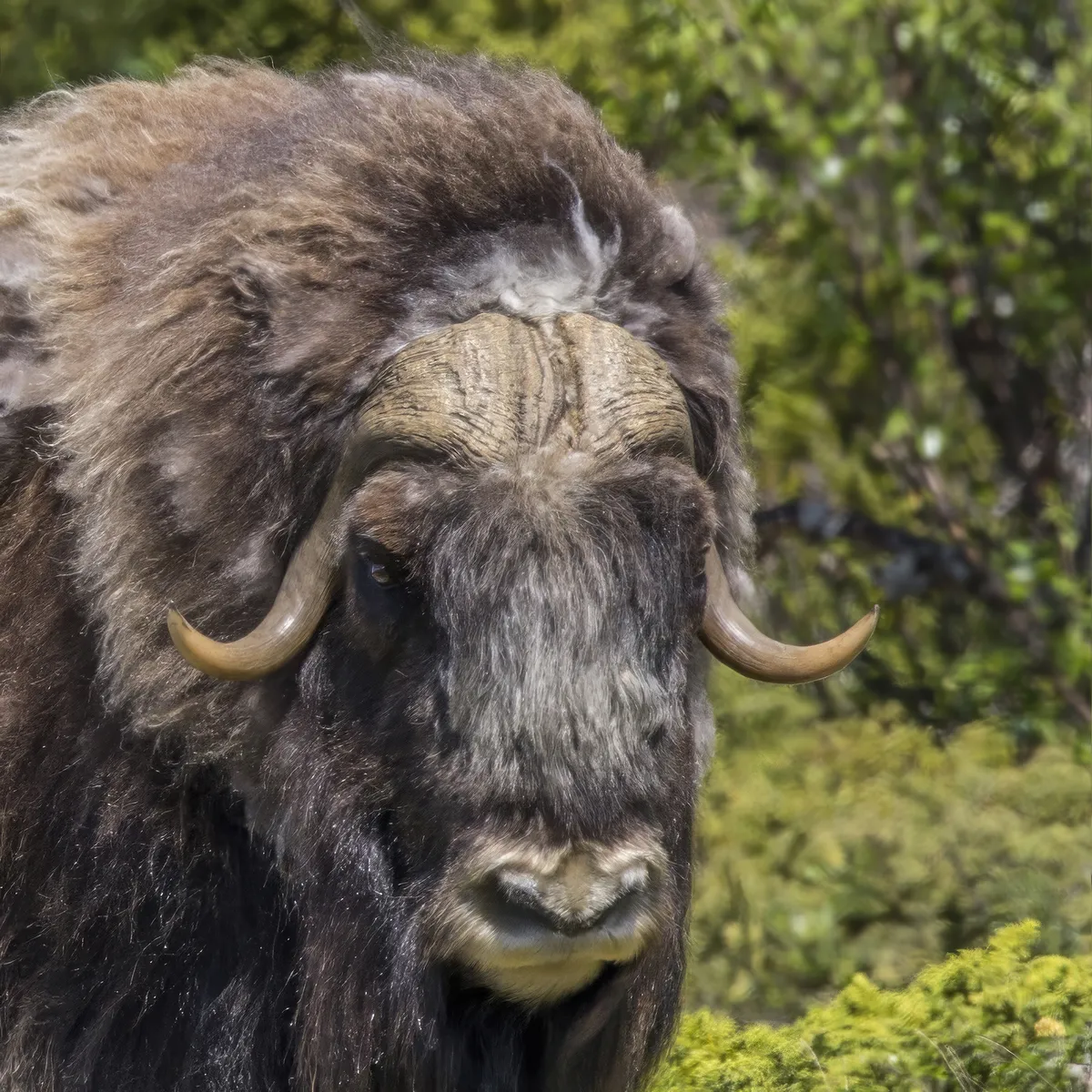
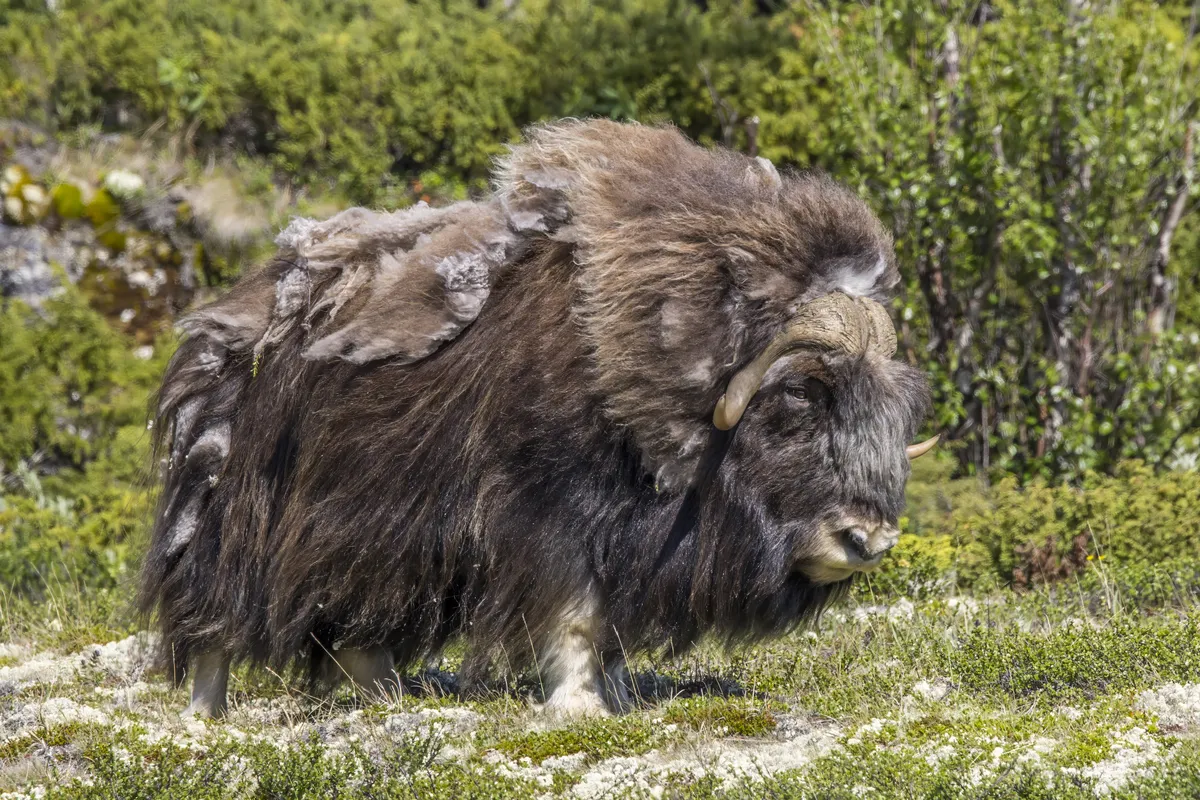
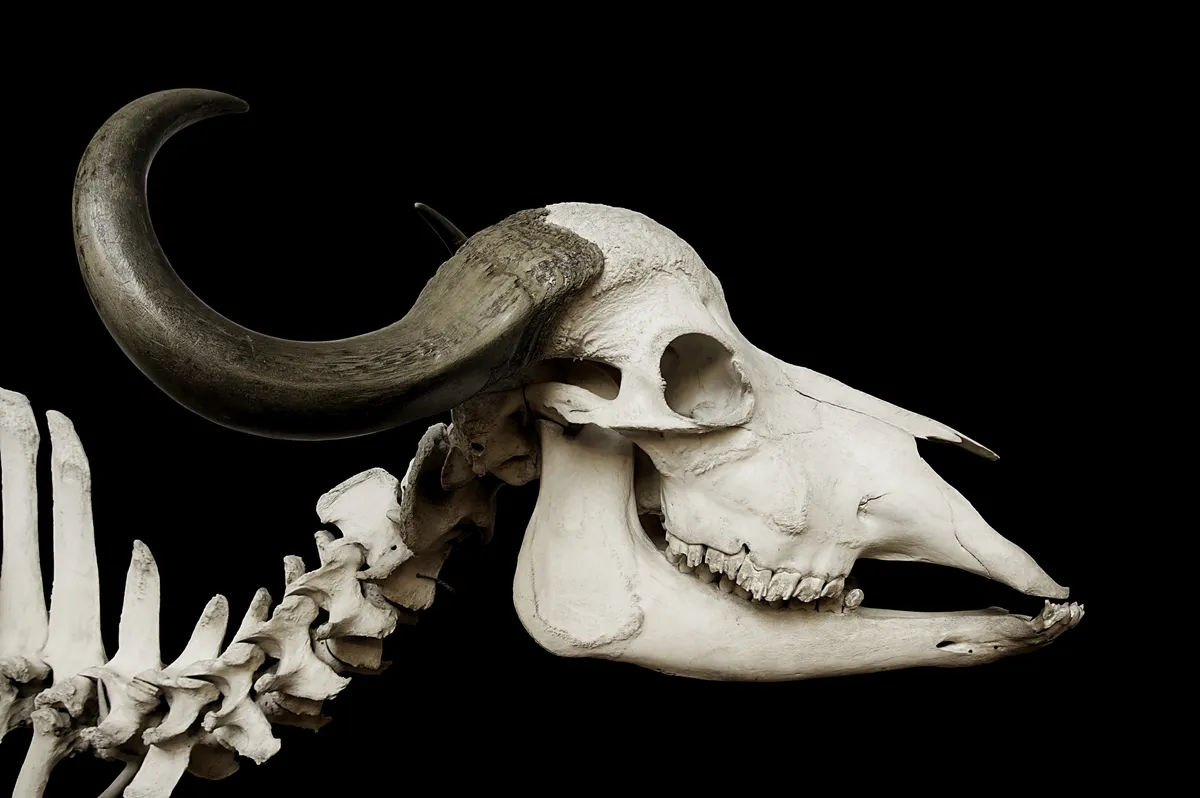
A robust arctic bovid adapted to extreme cold environments, native to the Arctic tundra regions of North America and Greenland. Known for its thick woolly coat and distinctive herd defense strategy.
Image Gallery
ADSENSE SLOT
Ecology & Habitat
Habitat
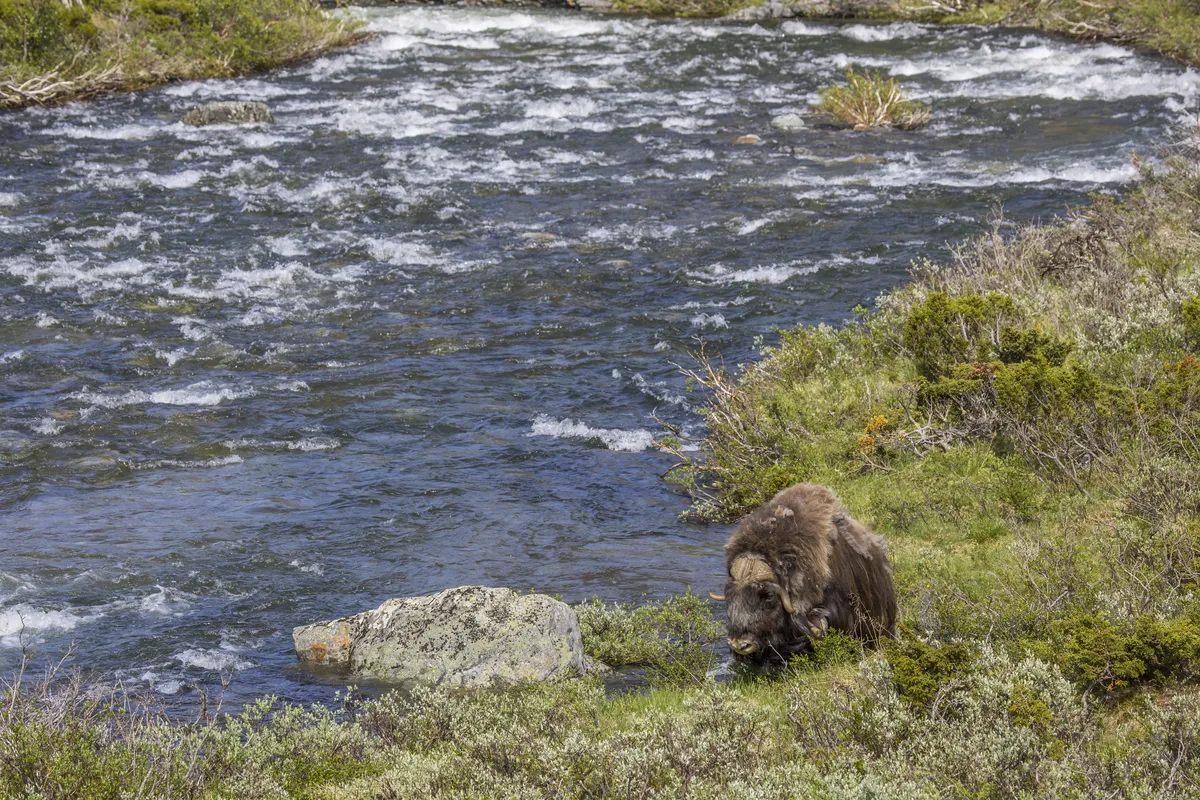
Arctic tundra and high-latitude grasslands, ranging from Alaska through northern Canada to Greenland, typically in temperatures between -40°C to 10°C
Ecological Role
Critical herbivore in arctic ecosystems, maintaining vegetation dynamics and serving as prey for predators like wolves. Helps prevent permafrost vegetation overgrowth and supports local indigenous communities' traditional hunting practices.
Morphology
SKIN COATDouble-layered coat with dense inner qiviut wool (8-10 cm thick) and coarse outer guard hairs, providing exceptional thermal insulation
LIMBS WINGSShort, powerful legs with split hooves for navigating rocky and icy terrain, excellent for digging through snow to access vegetation
HEAD SENSORYLarge, broad head with curved horns, keen vision and hearing adapted to open tundra landscapes
BODY STRUCTUREStocky, compact build with shoulder height of 1.1-1.5 m, body mass 180-400 kg. Thick, muscular body designed for thermal conservation and mobility in snow