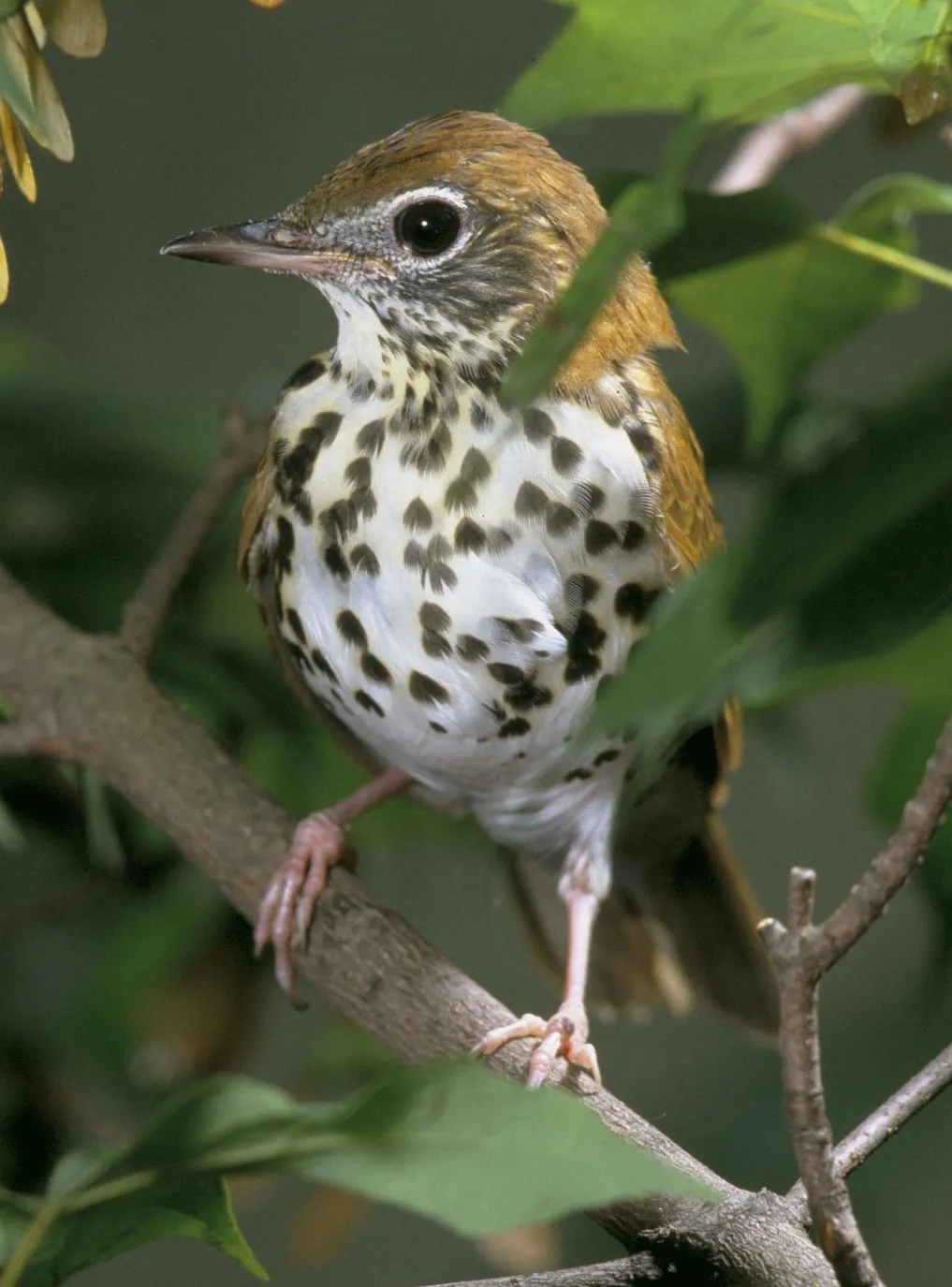
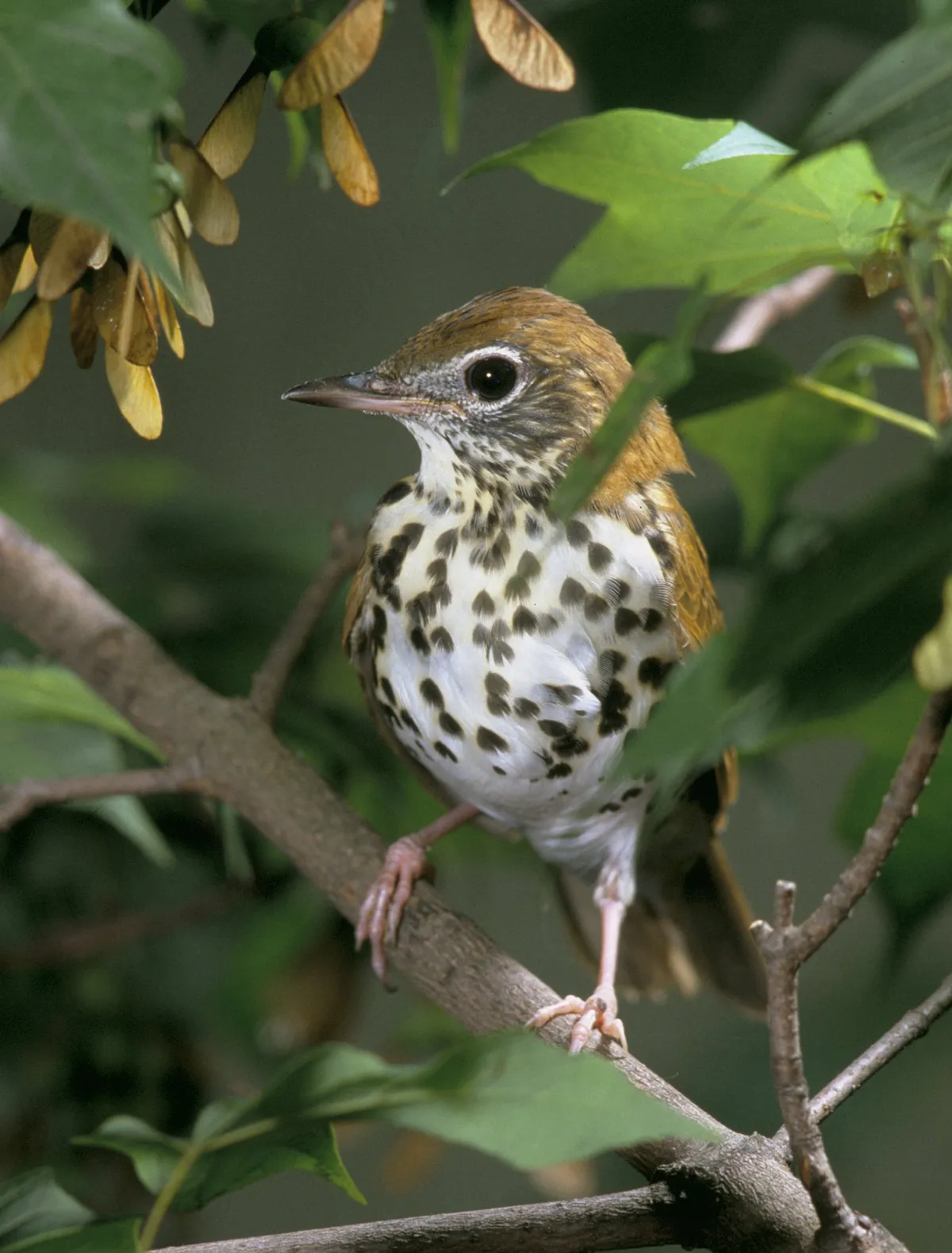
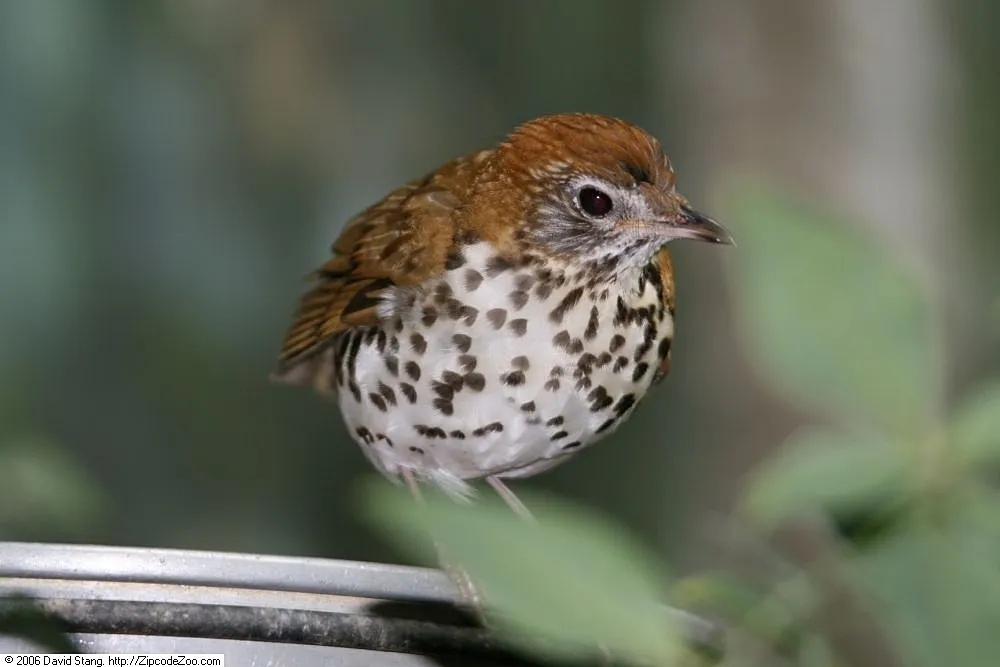
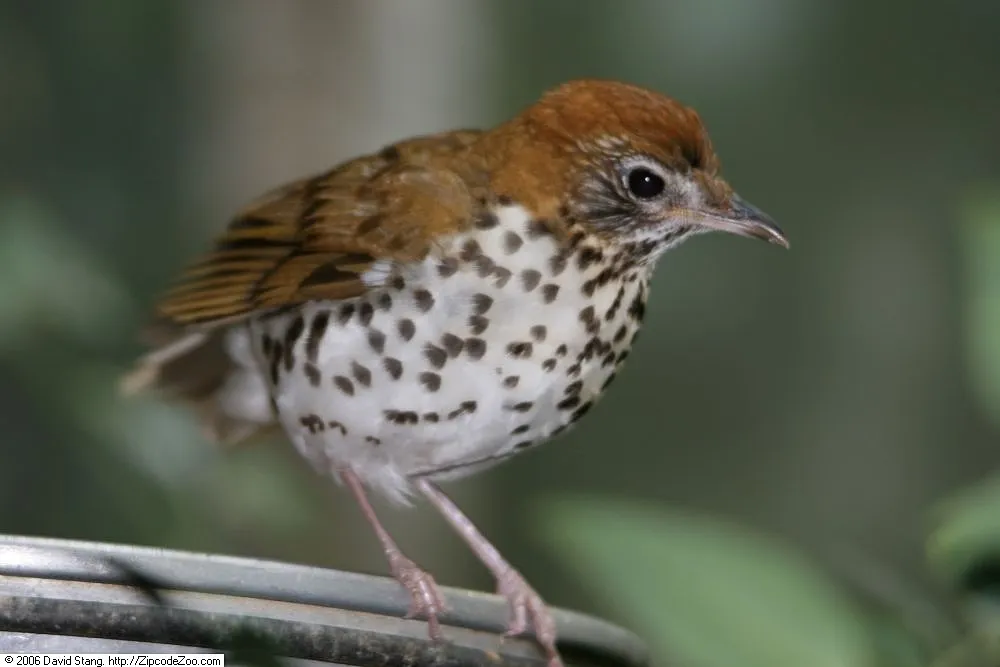
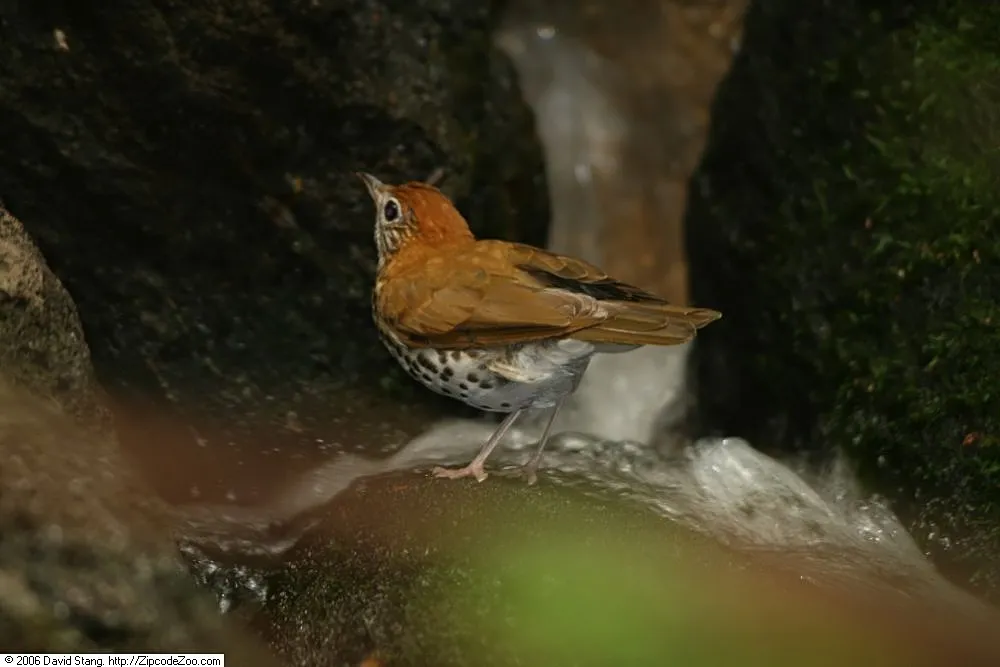
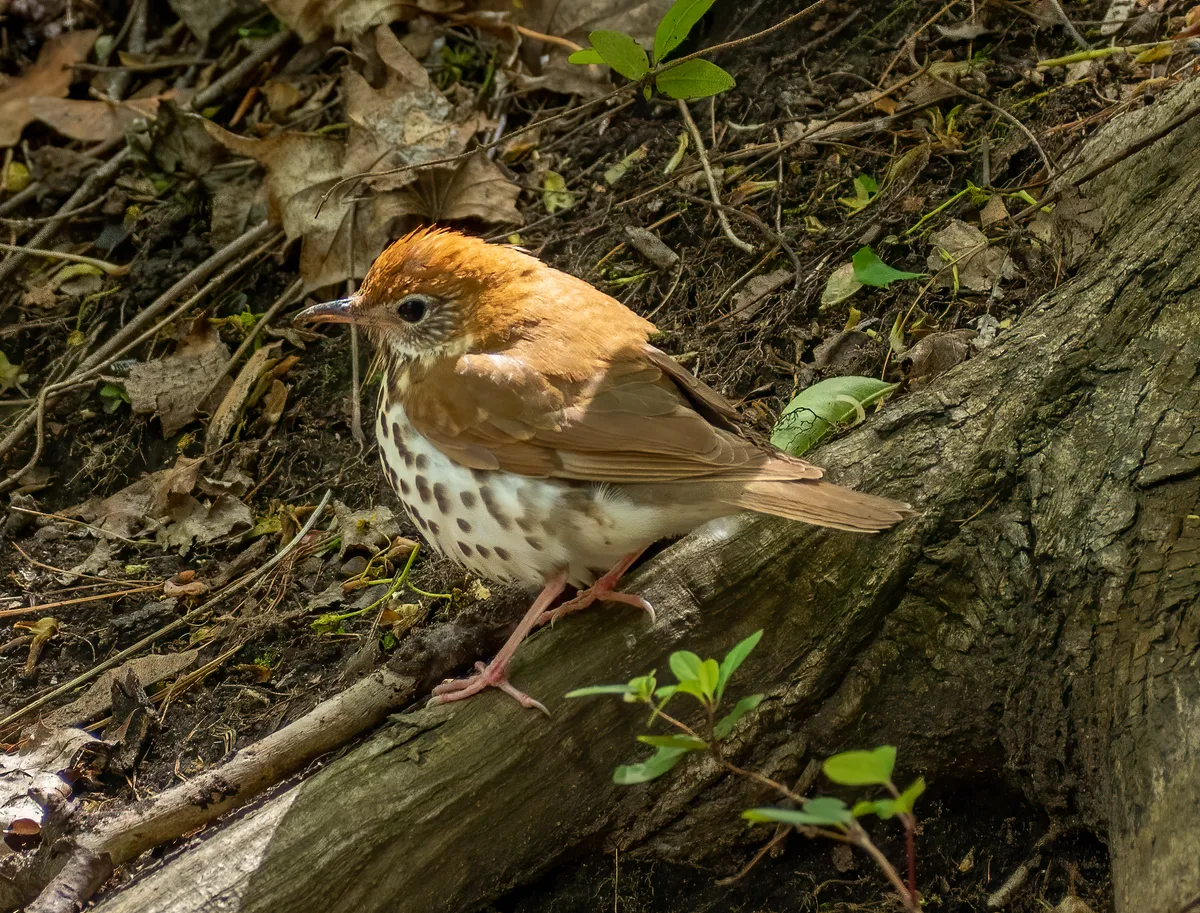
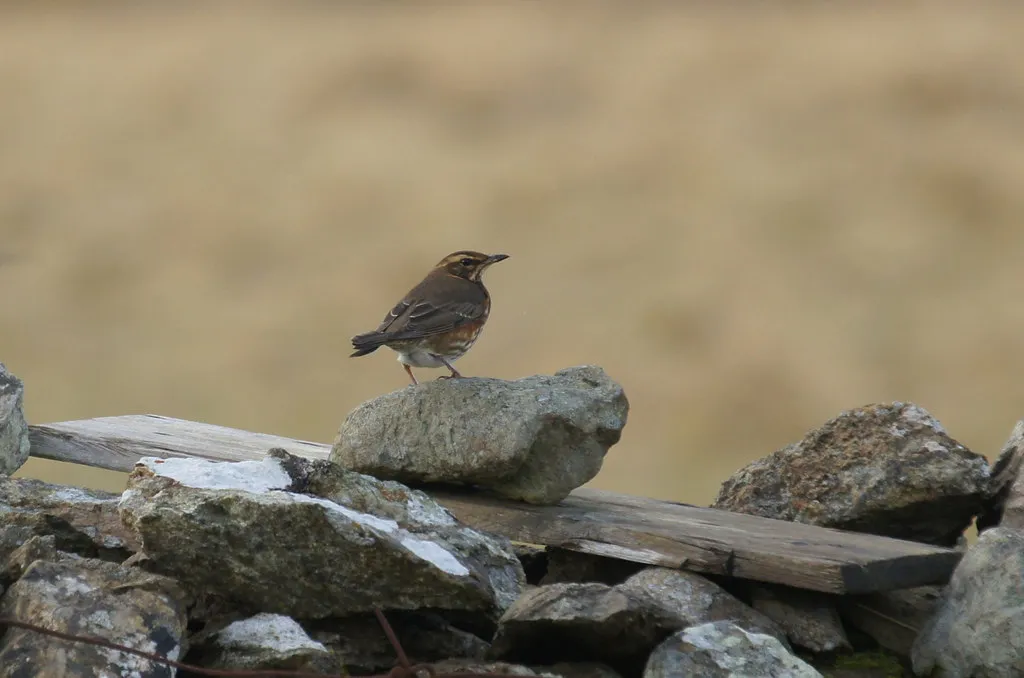
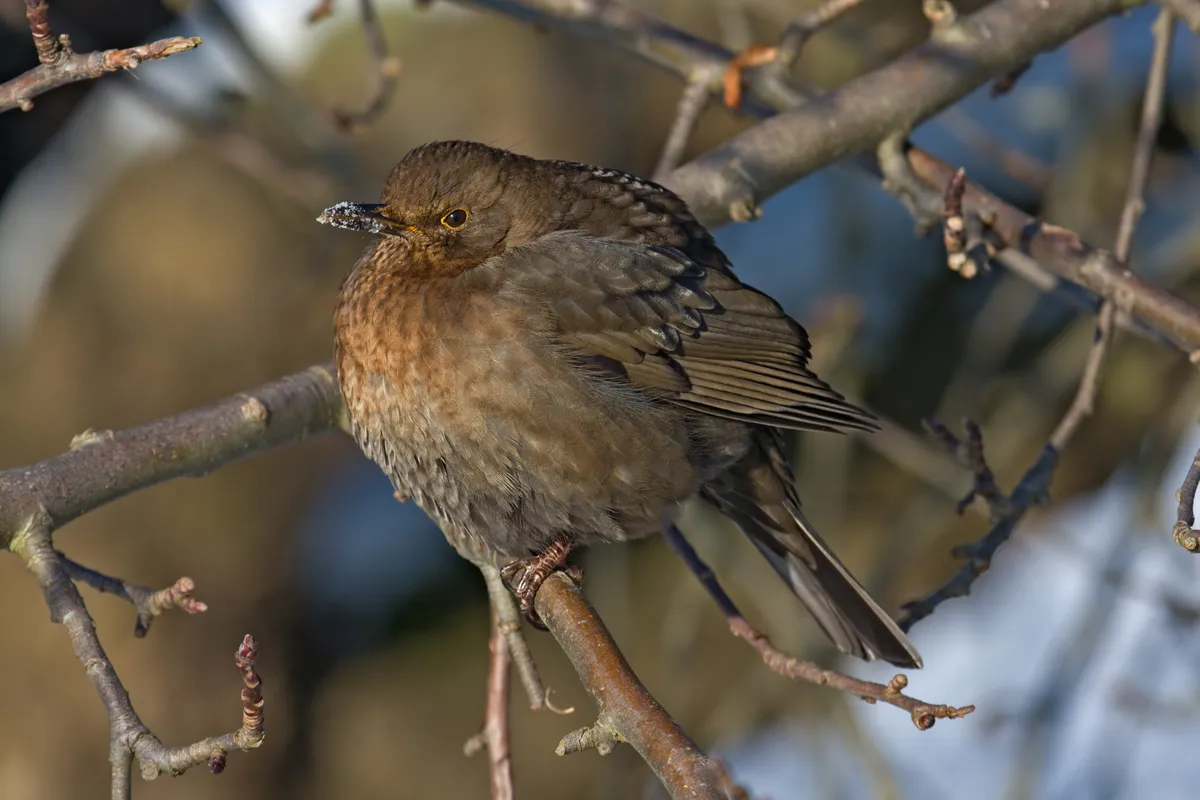
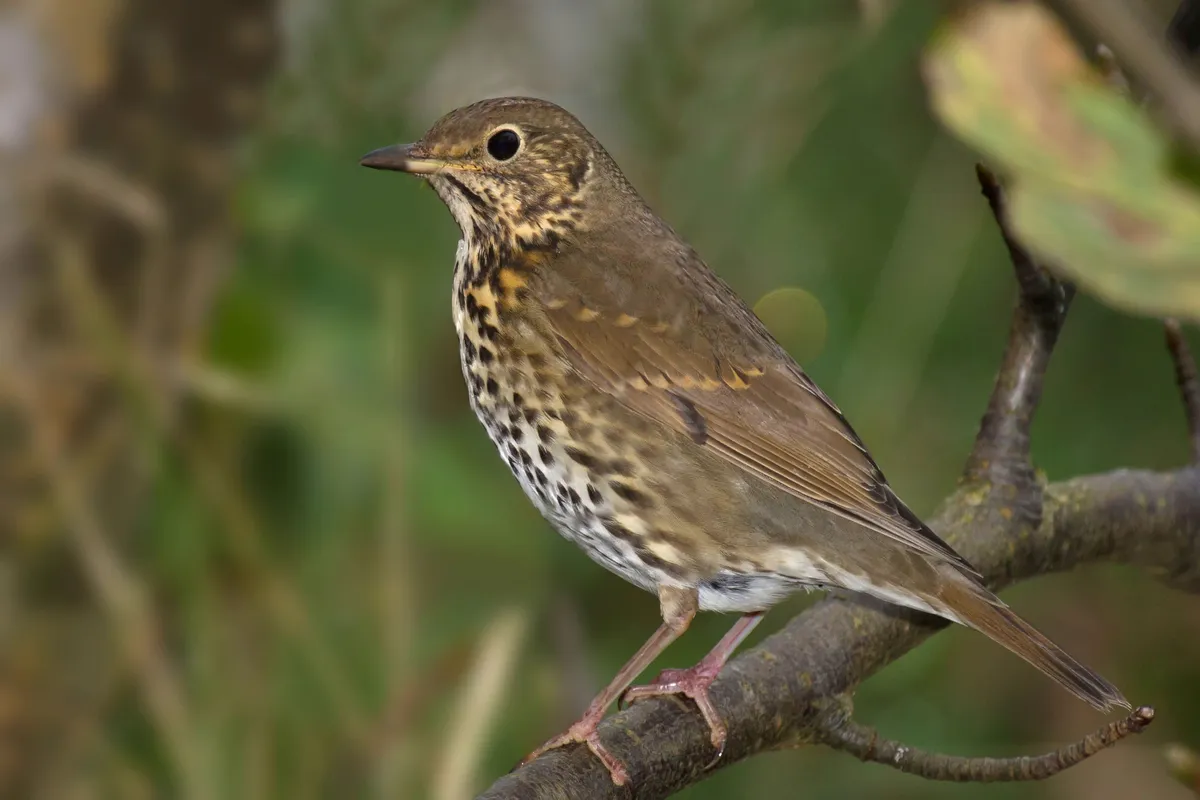
A medium-sized migratory songbird native to North America, known for its distinctive, flute-like song and brown-and-white spotted plumage. Primarily found in deciduous and mixed woodlands across eastern United States and southern Canada during breeding season.
Image Gallery
ADSENSE SLOT
Ecology & Habitat
Habitat
Dense deciduous and mixed forest understories, preferring moist woodland areas with rich undergrowth, typically at elevations between 50-1,500 meters. Breeds in eastern North American forests from southeastern Canada to central United States.
Ecological Role
Critical seed disperser and insect population controller; integral to forest ecosystem dynamics. Serves as prey for various predators and indicator species for forest habitat health.
Morphology
SKIN COATWarm brown upperparts with distinctive white breast heavily spotted with dark brown/black markings. Soft, dense plumage providing thermal regulation.
LIMBS WINGSRelatively long legs for ground foraging, wings rounded and suited for short, quick flights through dense forest understory.
HEAD SENSORYLarge dark eyes, short conical beak adapted for foraging insects and consuming berries. Excellent auditory capabilities for complex song production.
BODY STRUCTURECompact passerine bird, approximately 18-22 cm in length, weighing 45-65 grams. Robust build with rounded body shape.