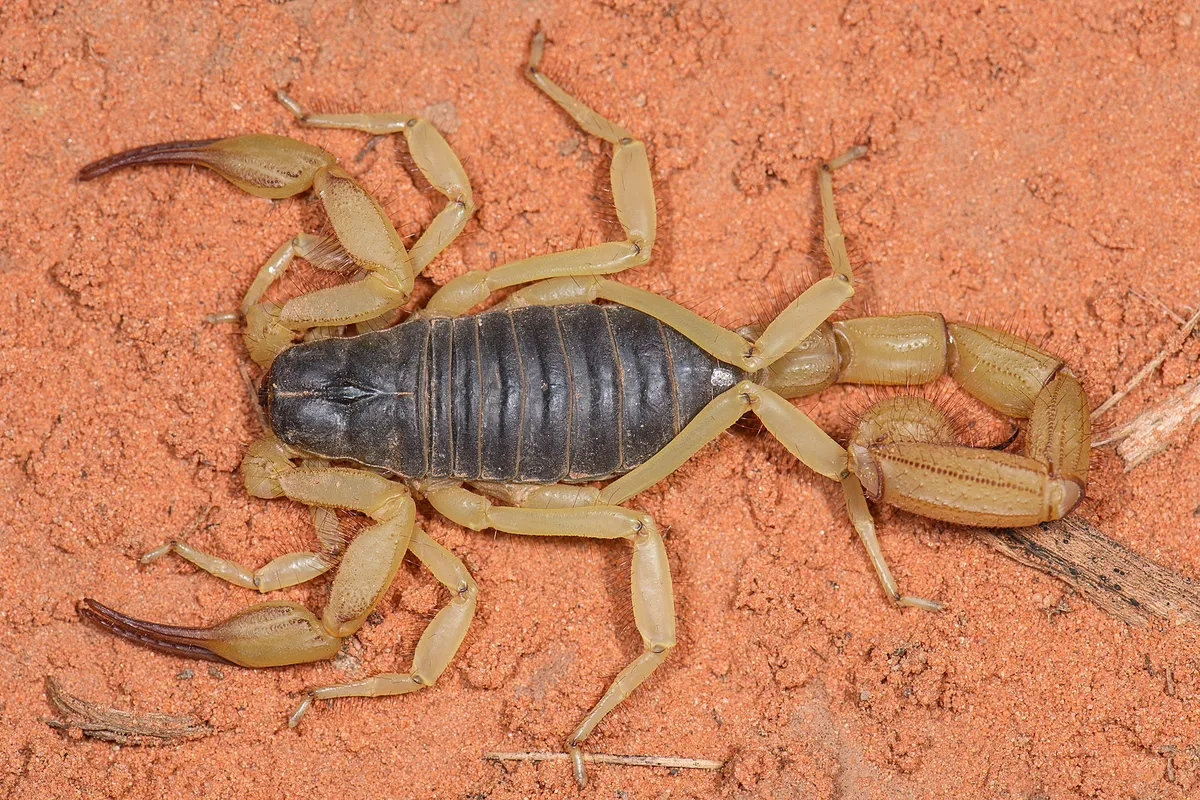
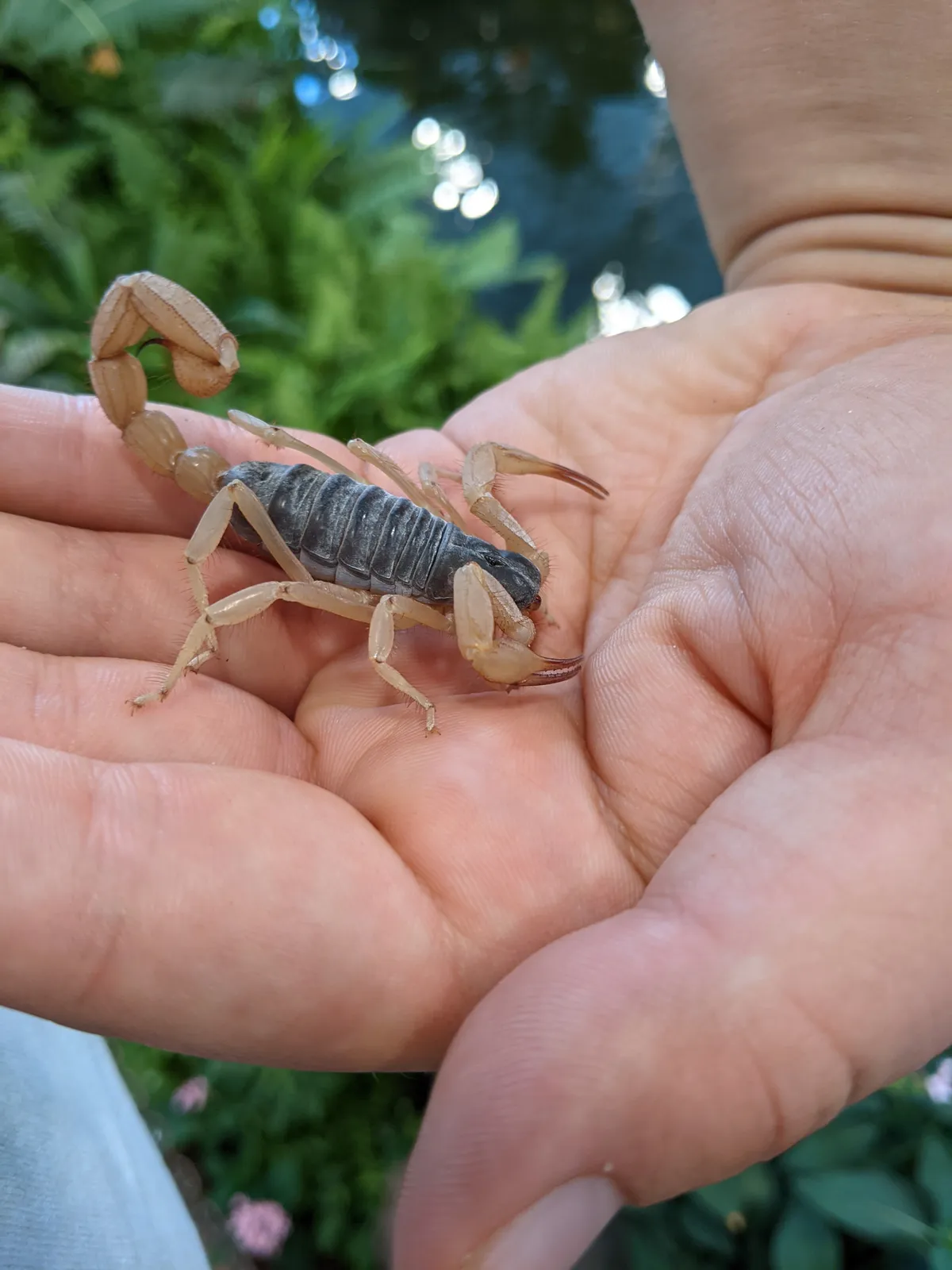
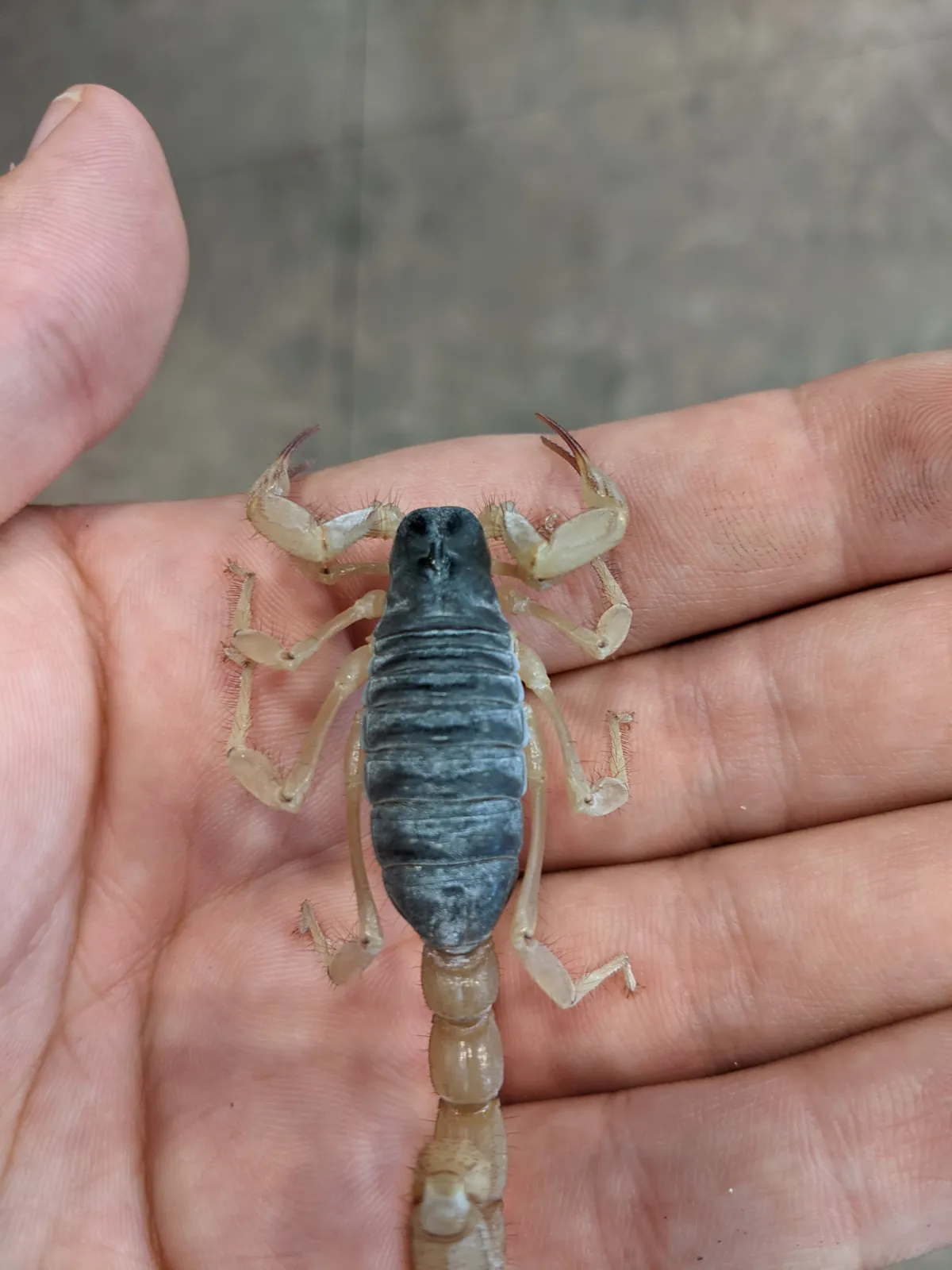
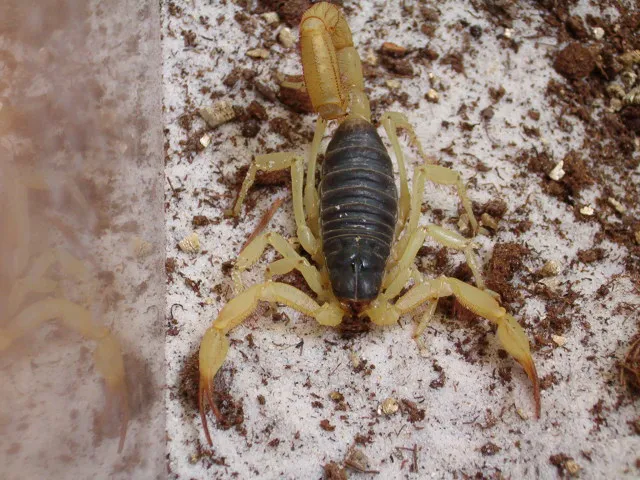
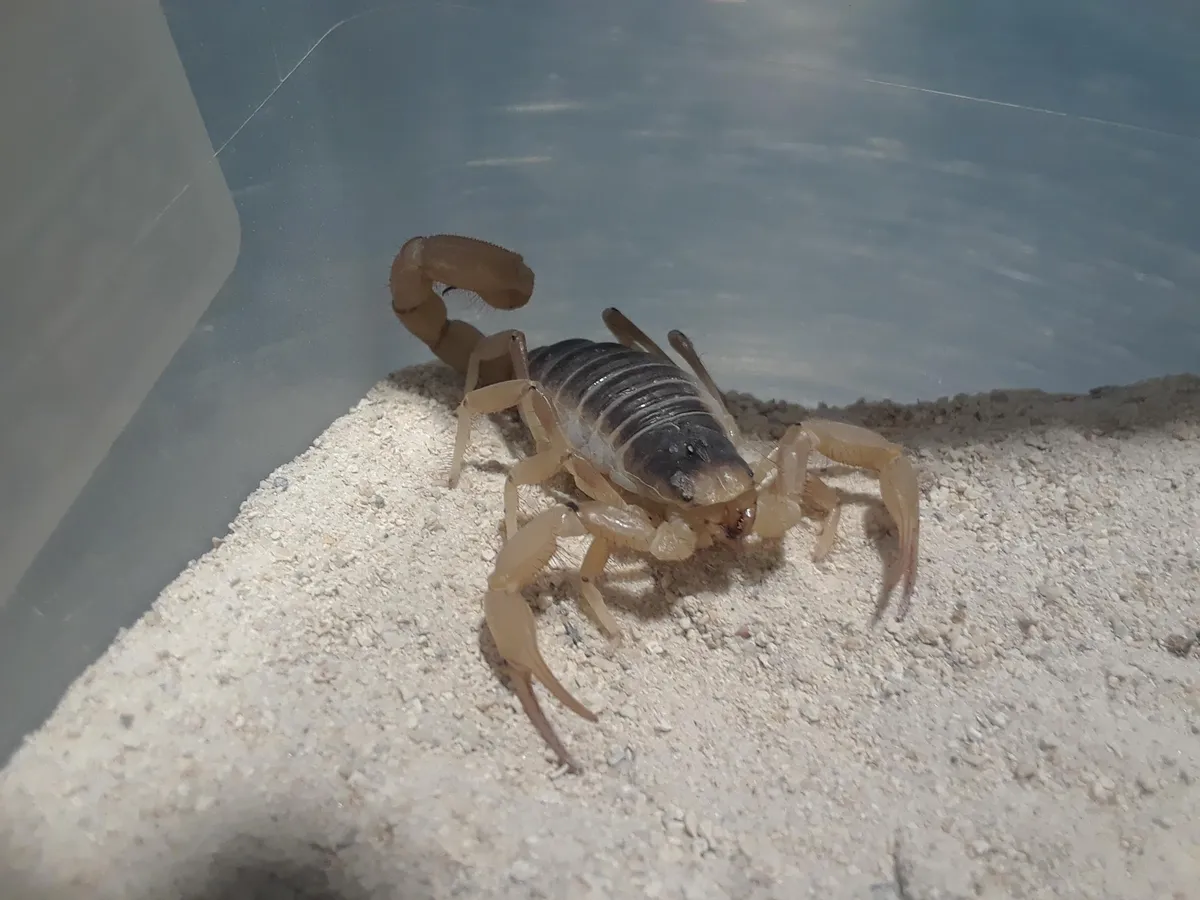
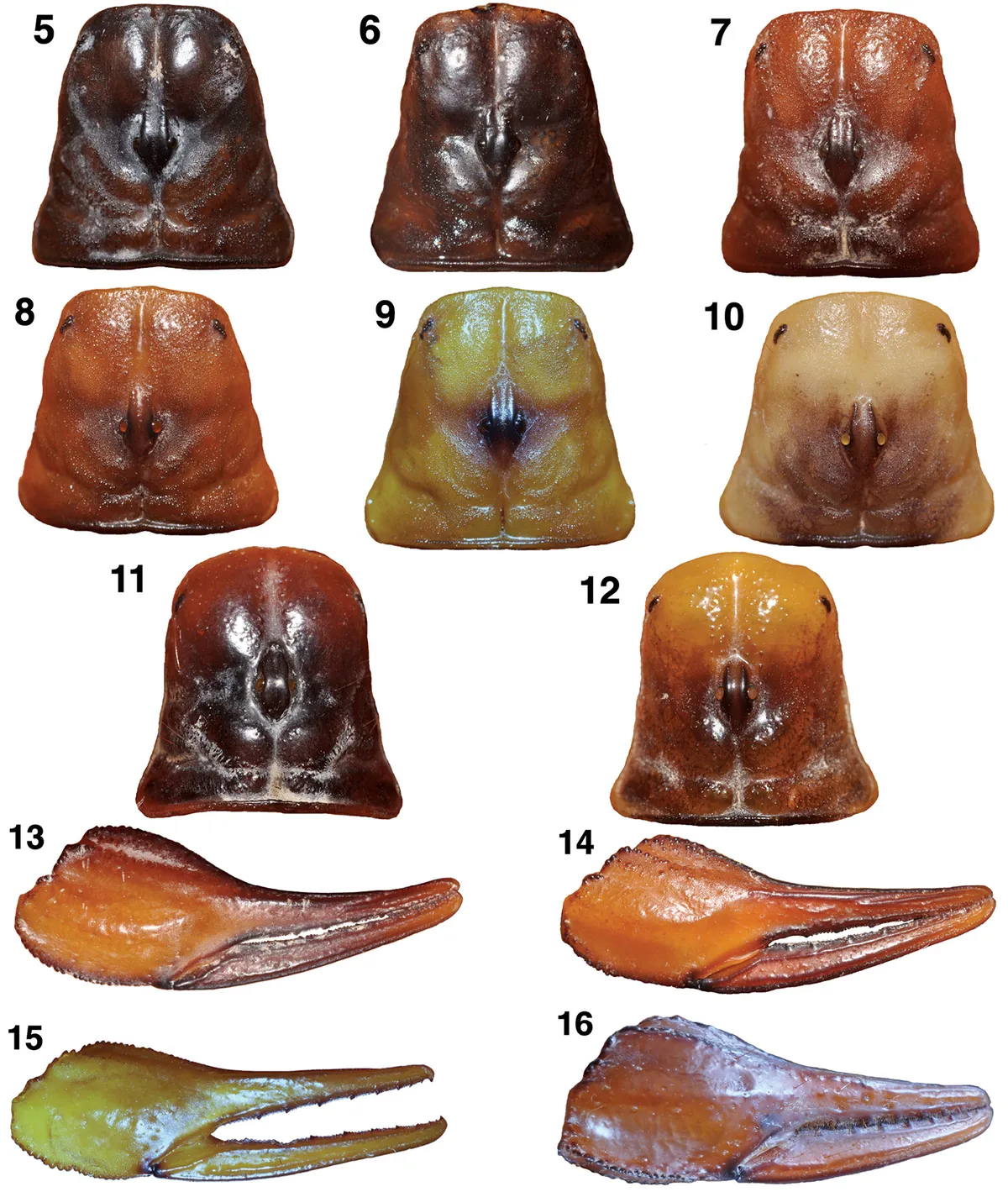
A large desert scorpion native to southwestern United States and northwestern Mexico, characterized by its robust body and dense hair coverage.
Image Gallery
ADSENSE SLOT
Ecology & Habitat
Habitat
Arid and semi-arid desert environments, including rocky areas, sand dunes, and sparse vegetation zones in Arizona, California, and Sonora, typically at elevations between 0-1,500 meters.
Ecological Role
Important predator in desert ecosystems, controlling insect populations and serving as prey for larger desert predators like birds and mammals.
Morphology
SKIN COATDense covering of hair-like setae, providing thermal regulation and sensory perception
LIMBS WINGSEight legs with sharp tarsal claws, adapted for traversing rocky and sandy terrain
HEAD SENSORYPossess multiple sensory hairs (setae), pedipalps with large chelae for prey manipulation, and metasoma with venomous telson
BODY STRUCTURELarge scorpion species, averaging 10-12 cm in total length, with robust exoskeleton and dark brown to black coloration
Data Source: TaxonHub Database
Image Credit: Marshal Hedin