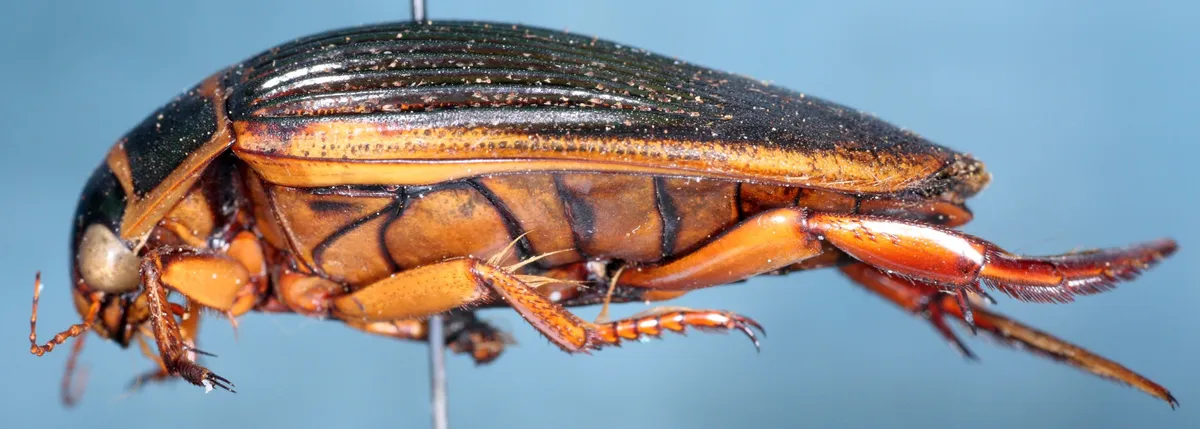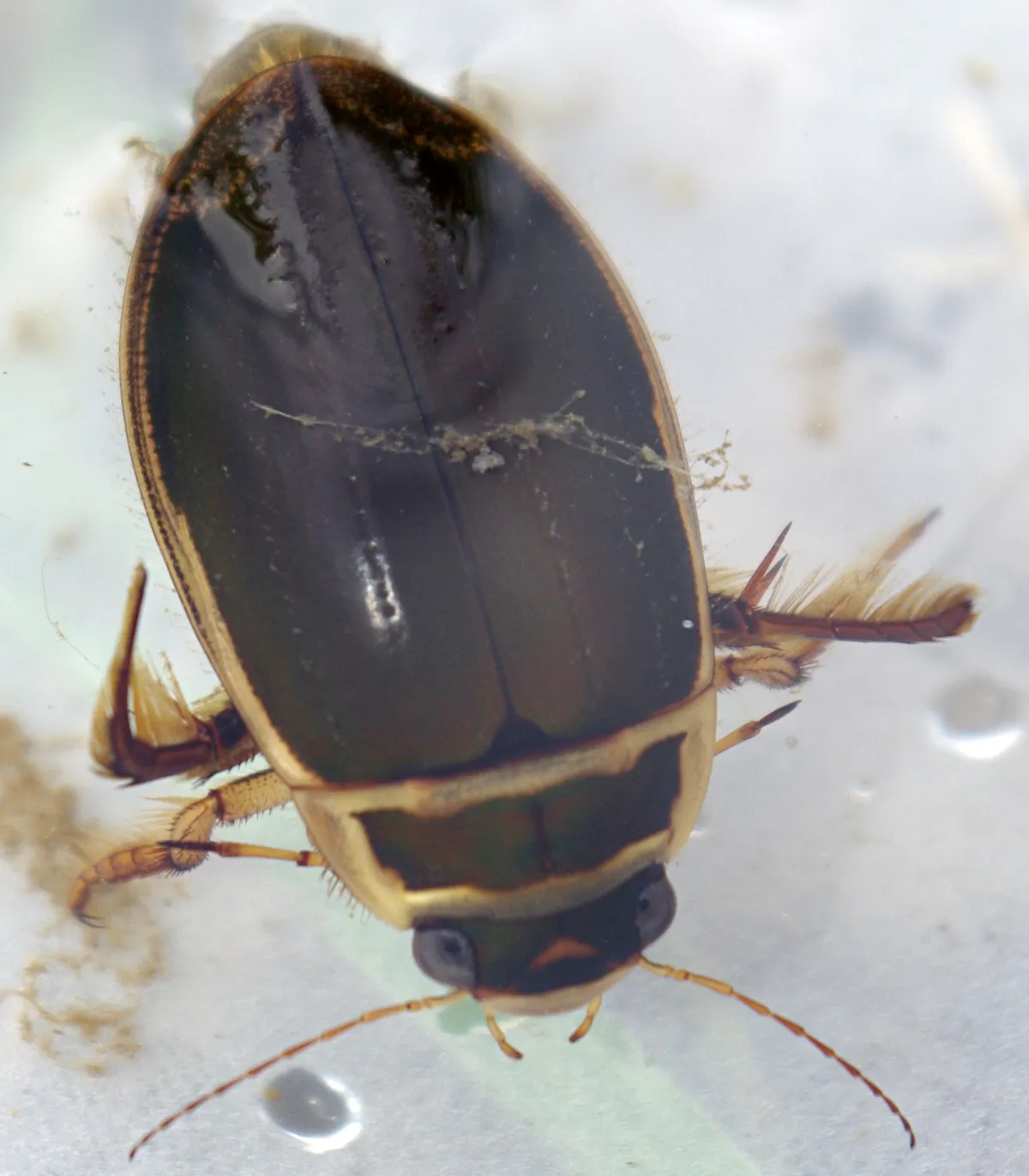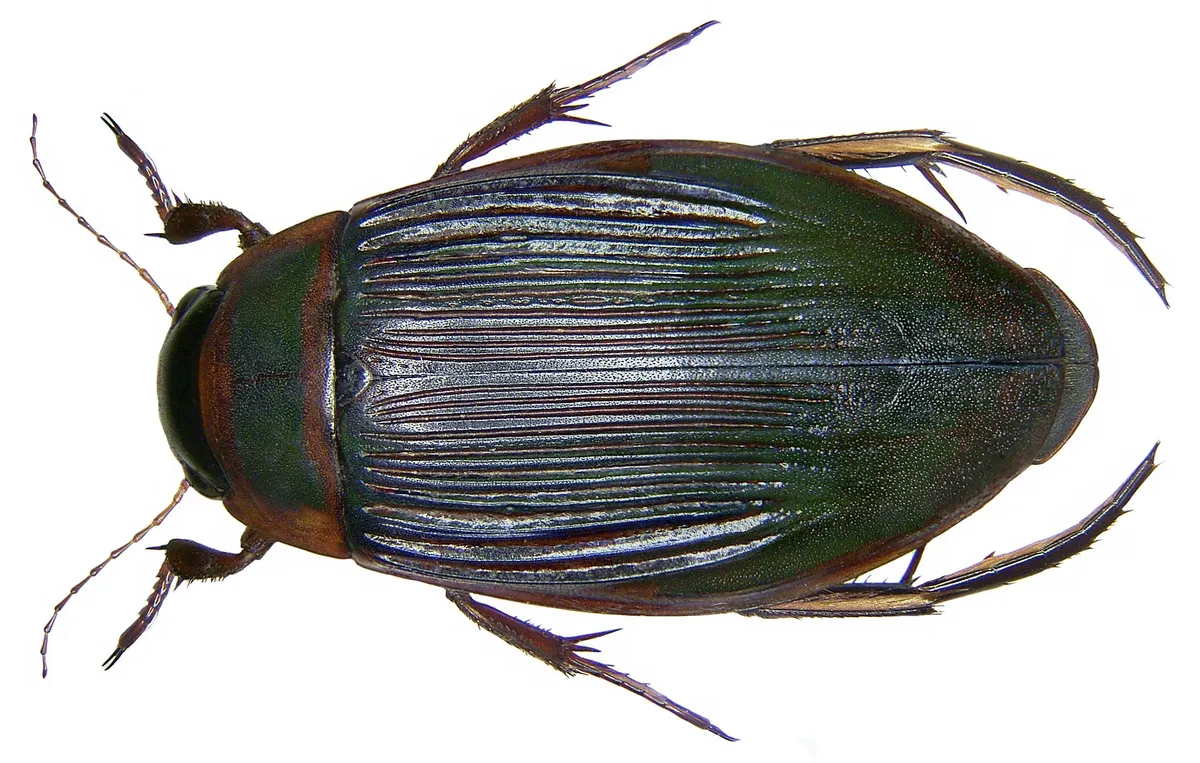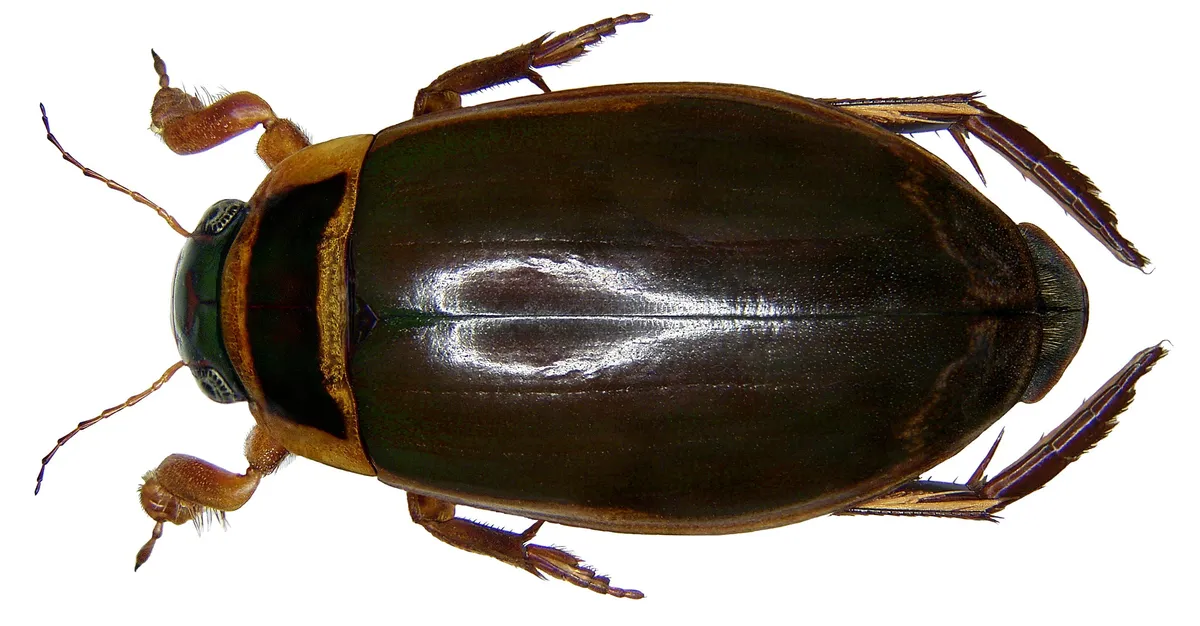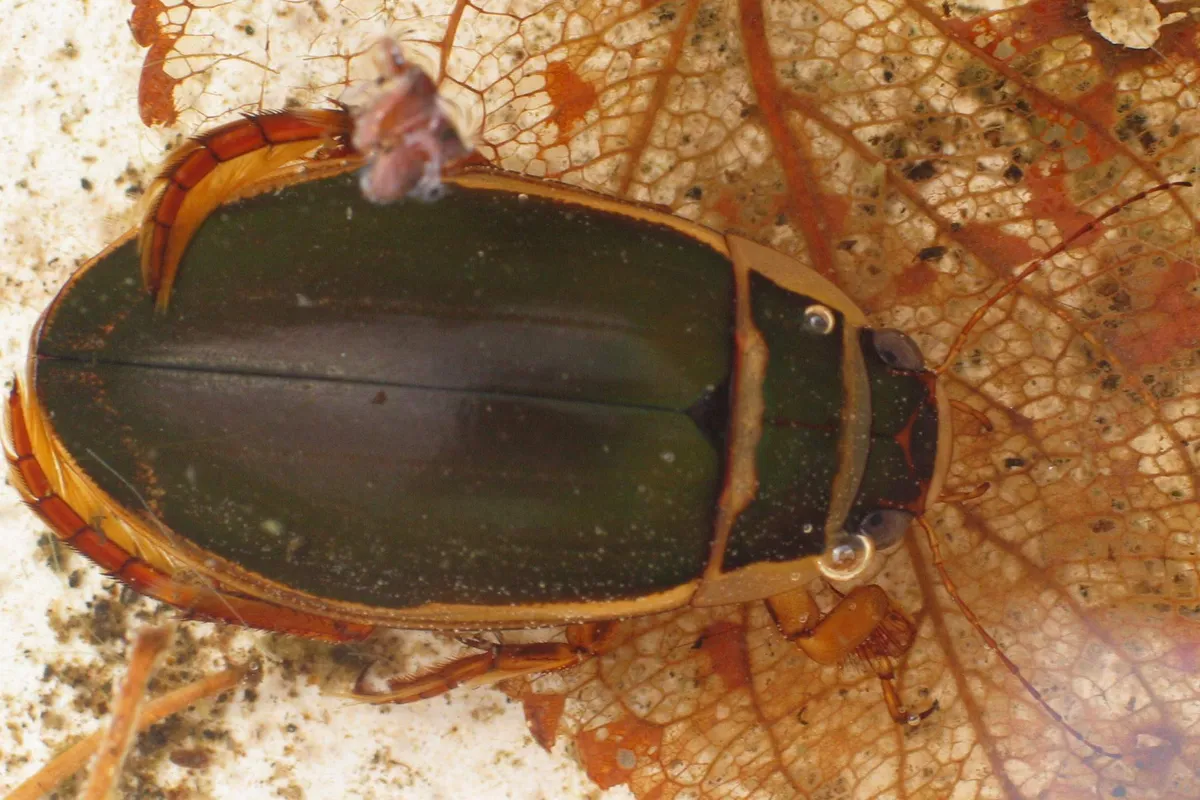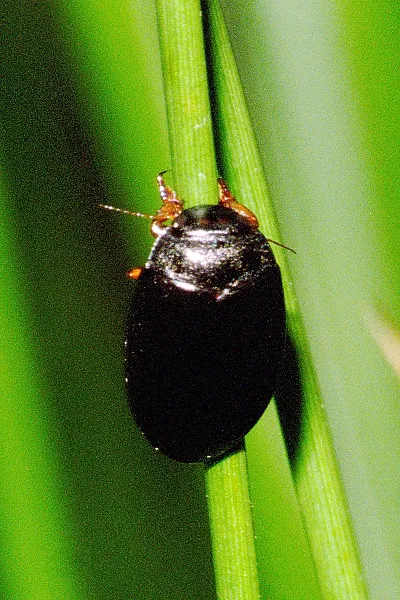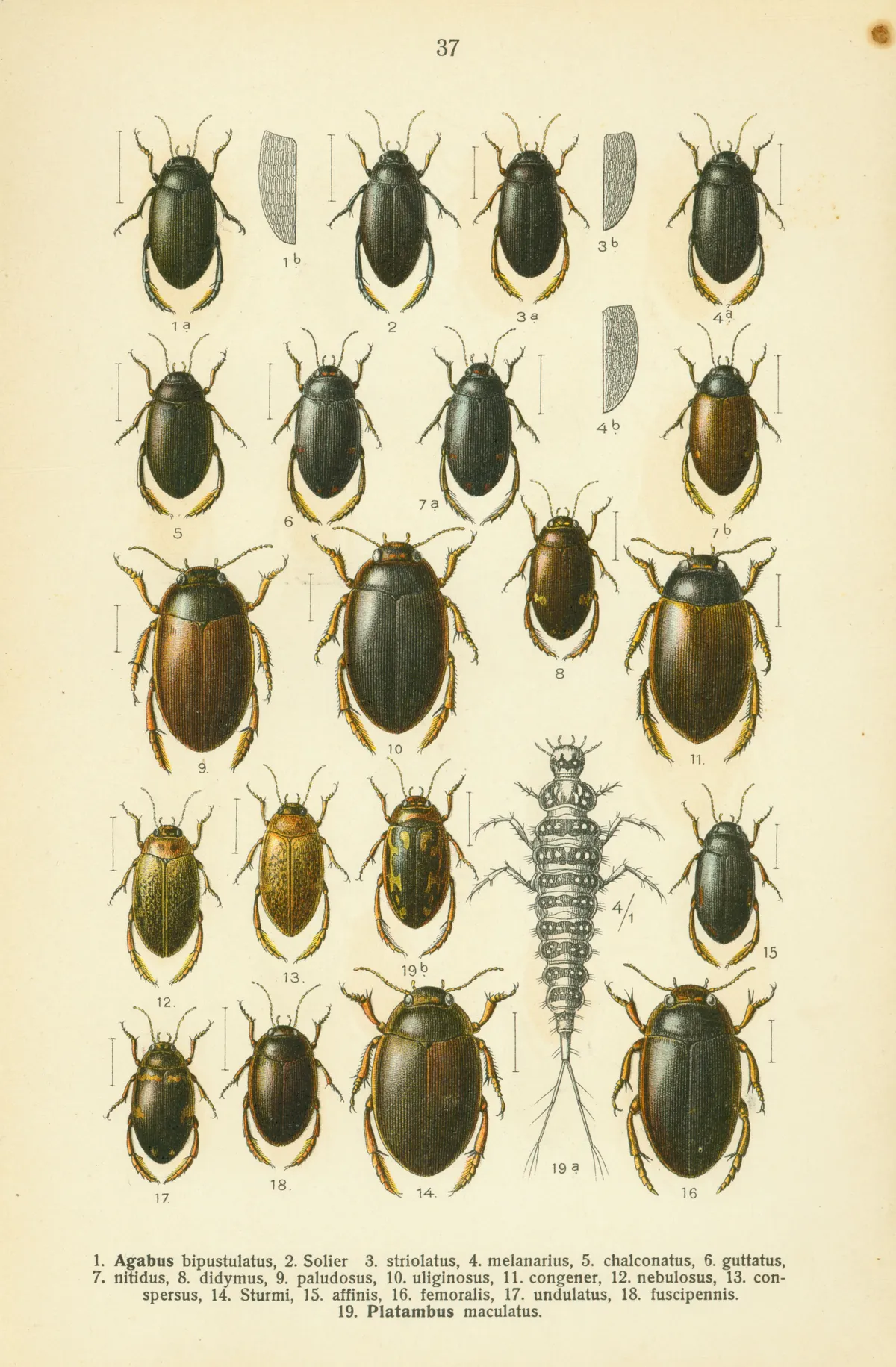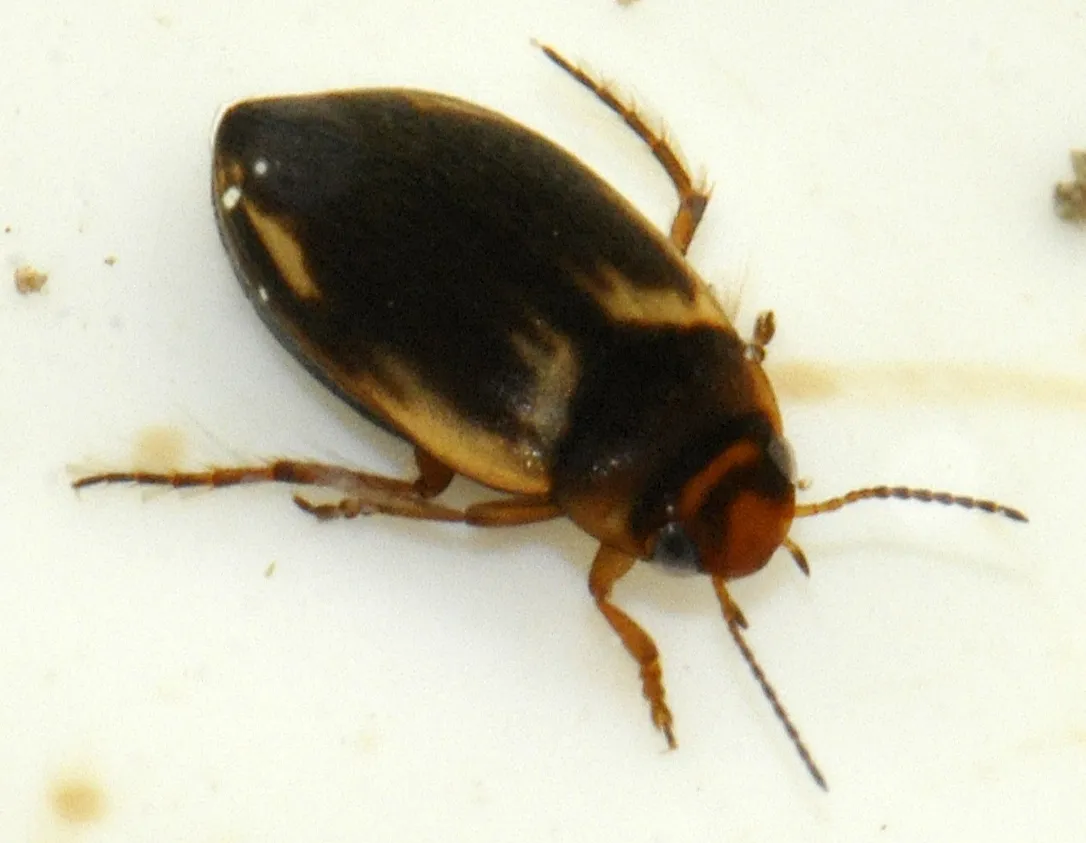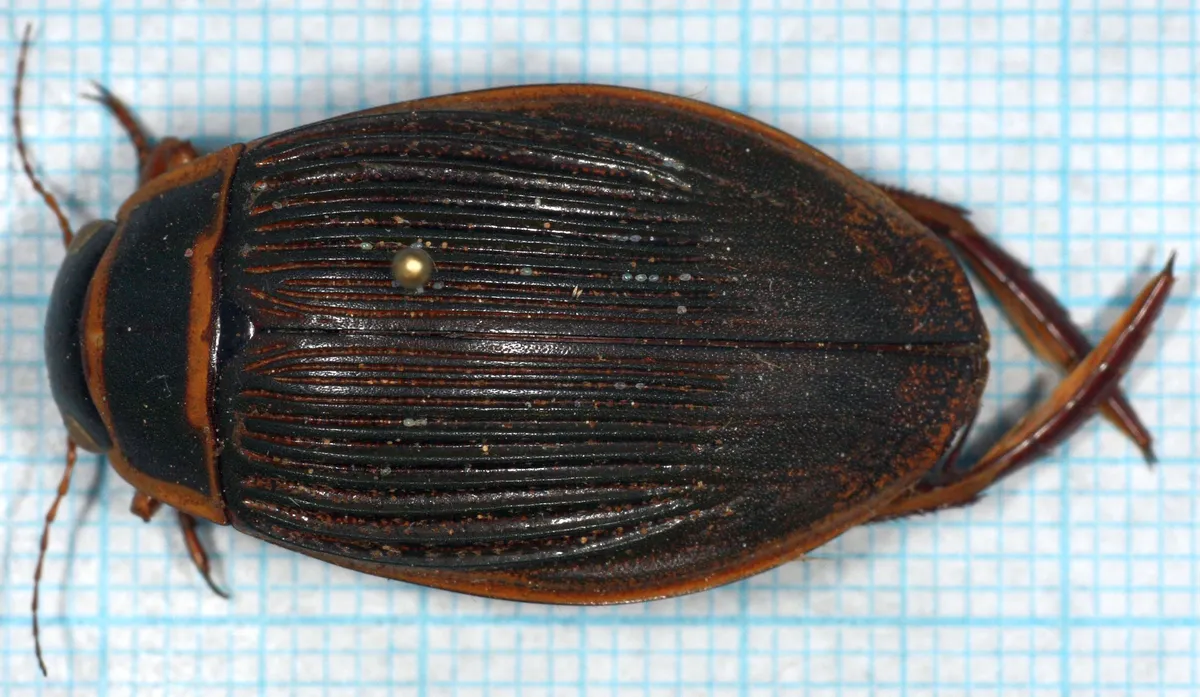
Large predatory aquatic beetle found in freshwater habitats across Europe, characterized by powerful swimming capabilities and robust exoskeleton
ADSENSE SLOT
Ecology & Habitat
Habitat
Freshwater ecosystems including ponds, lakes, slow-moving streams, and wetlands with abundant vegetation and rich aquatic invertebrate populations
Ecological Role
Key predator in aquatic food webs, controlling populations of smaller invertebrates and serving as prey for fish, amphibians, and birds
Morphology
-
SKIN COAT
Hard chitinous exoskeleton with hydrophobic surface, dark brown to black coloration with yellowish margin
-
LIMBS WINGS
Posterior pair of legs modified as powerful swimming paddles with fringed edges, capable of rapid underwater propulsion
-
HEAD SENSORY
Large compound eyes, sensitive antennae for detecting prey and environmental cues, powerful mandibles for predation
-
BODY STRUCTURE
Oval-shaped, robust body measuring 27-35 mm in length, adapted for aquatic locomotion with streamlined design
Data Source: TaxonHub Database
Image Credit: Magnefl
ADSENSE VERTICAL
Related Species in Dytiscidae