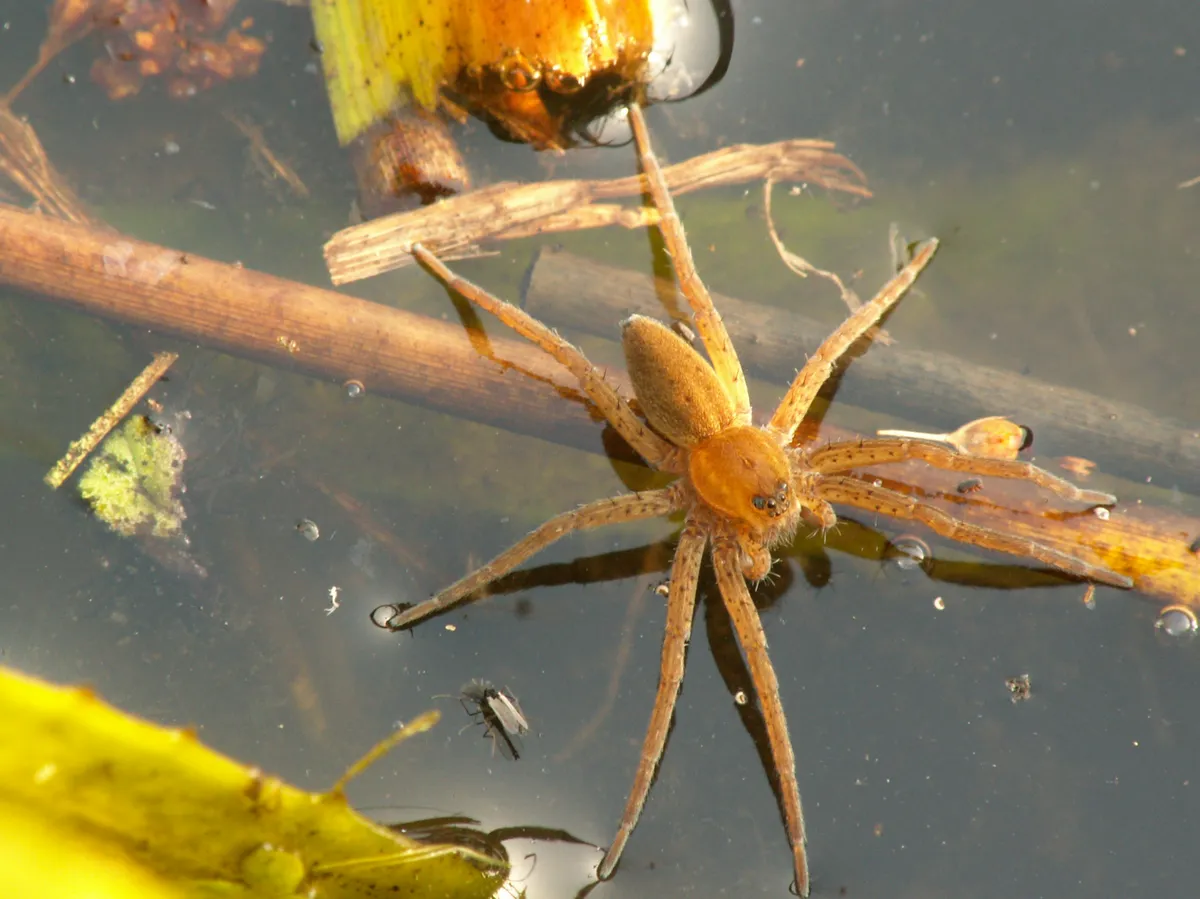
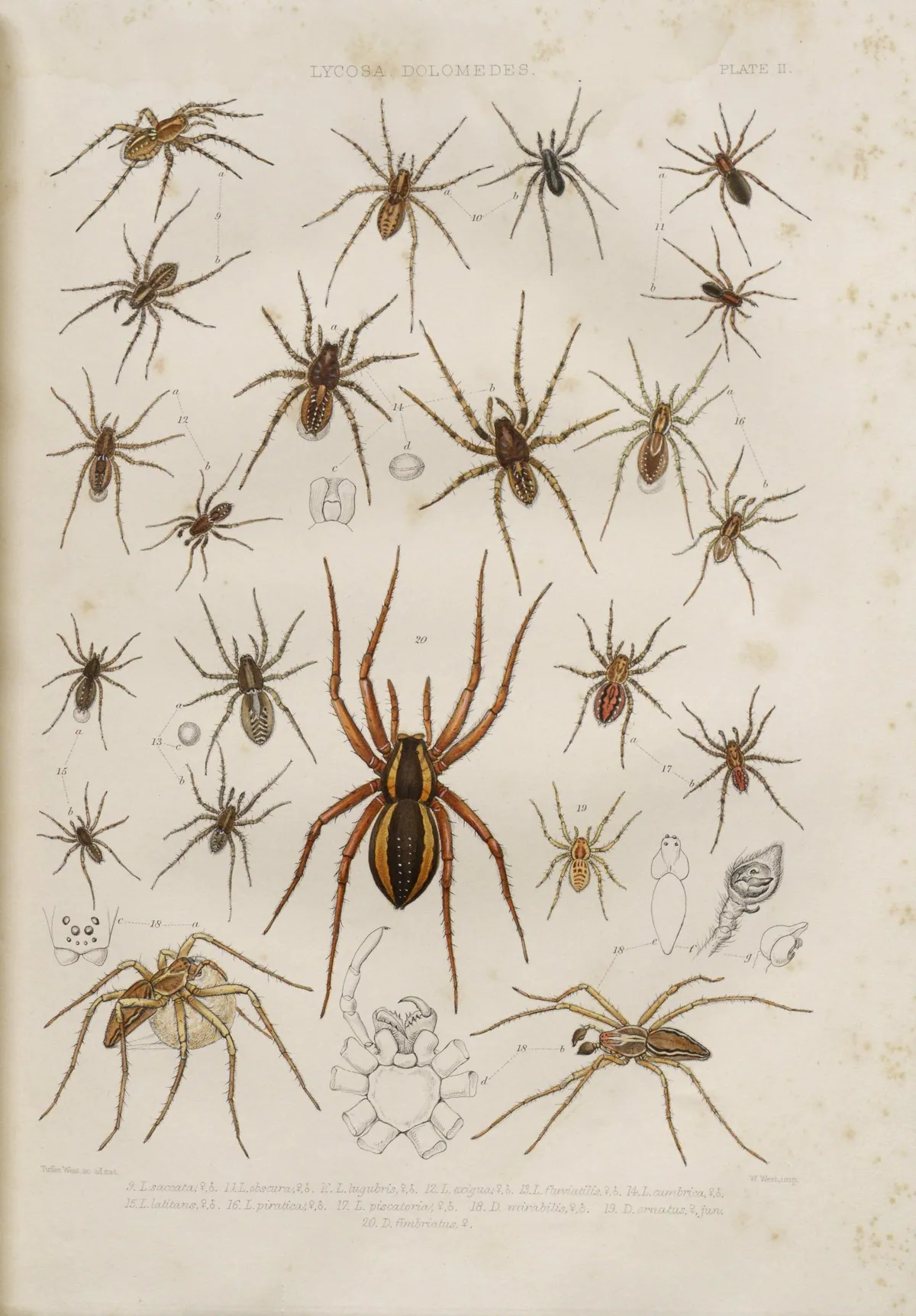
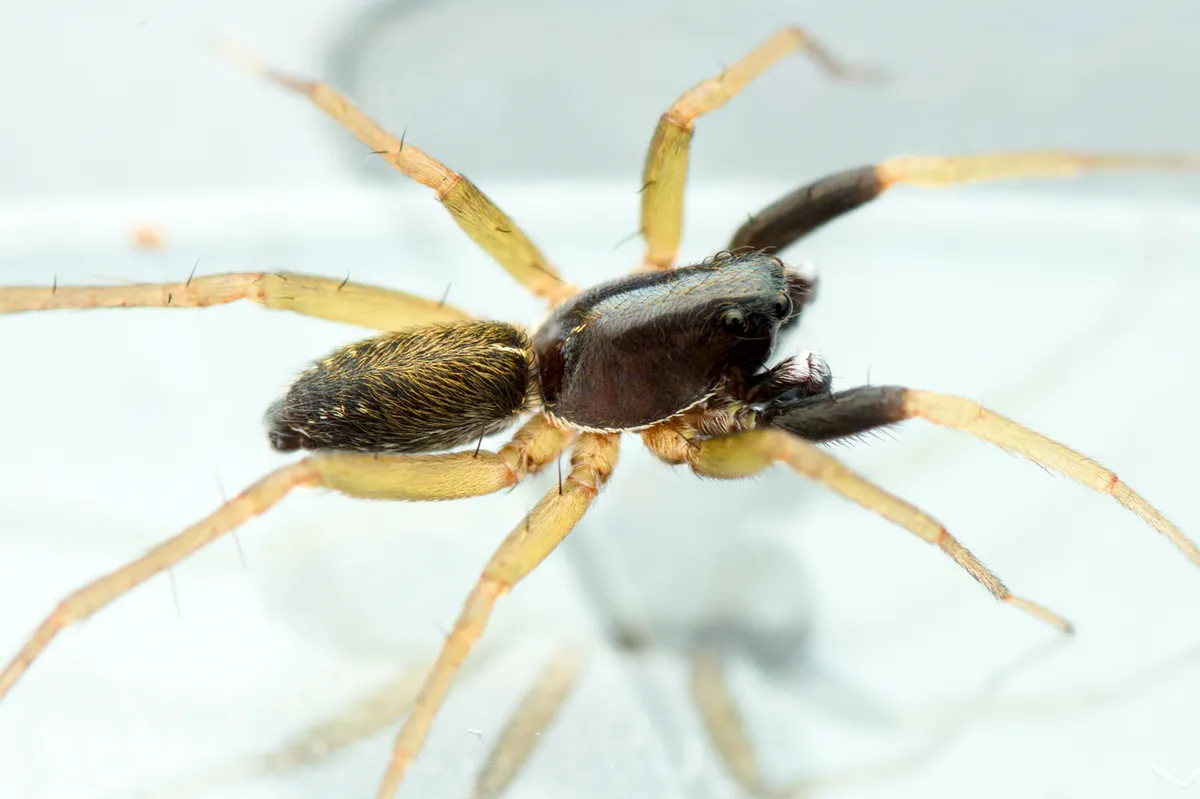
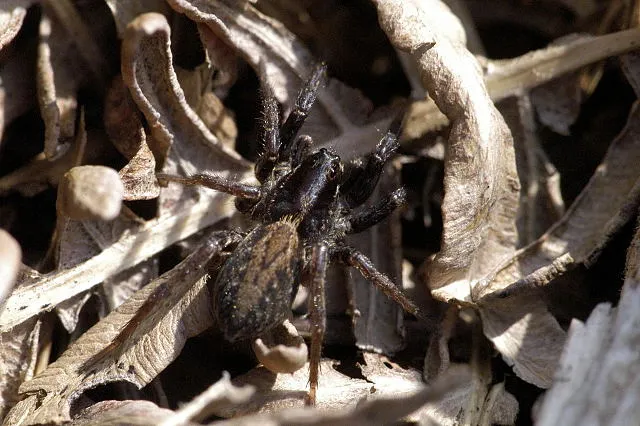
A wolf spider species native to Europe, characterized by distinctive spiny pedipalps and typical lycosid hunting behaviors. Medium-sized wolf spider with robust physiology adapted to ground-dwelling predatory lifestyle.
ADSENSE SLOT
Ecology & Habitat
Habitat
Terrestrial environments including grasslands, forest floors, heathlands, and low-vegetation areas across temperate European regions. Prefers moist, dark microhabitats with abundant ground cover.
Ecological Role
Crucial predator in ground ecosystems, controlling insect populations and serving as prey for larger predators. Contributes to invertebrate population dynamics and food web stability.
Morphology
SKIN COATThick exoskeleton with dense setae providing protection and sensory input
LIMBS WINGSEight legs adapted for rapid ground movement, strong chelicerae for prey capture, spiny pedipalps used in mating rituals and sensory perception.
HEAD SENSORYLarge anterior eyes providing excellent spatial awareness, specialized sensory hairs for detecting ground vibrations and prey movement.
BODY STRUCTURERobust body length 10-15 mm, dark brown/black coloration with complex camouflage patterns. Compact, muscular build typical of active hunting wolf spiders.
Data Source: TaxonHub Database
Image Credit: Piet Spaans