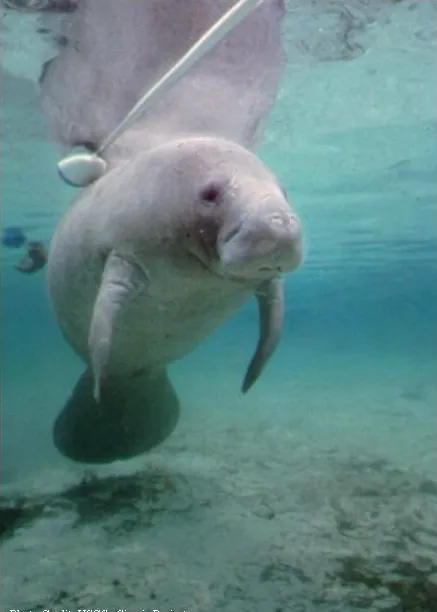
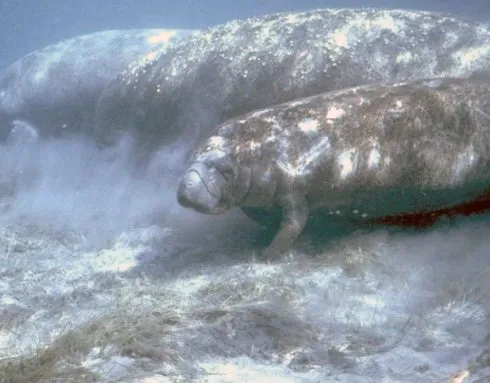
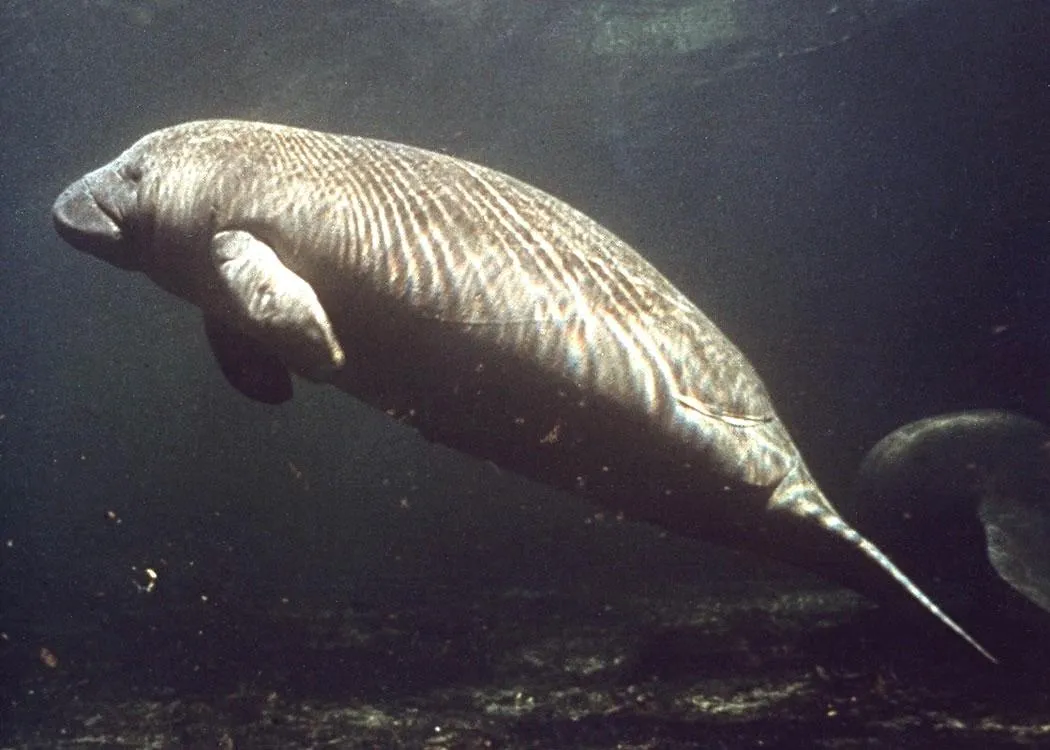
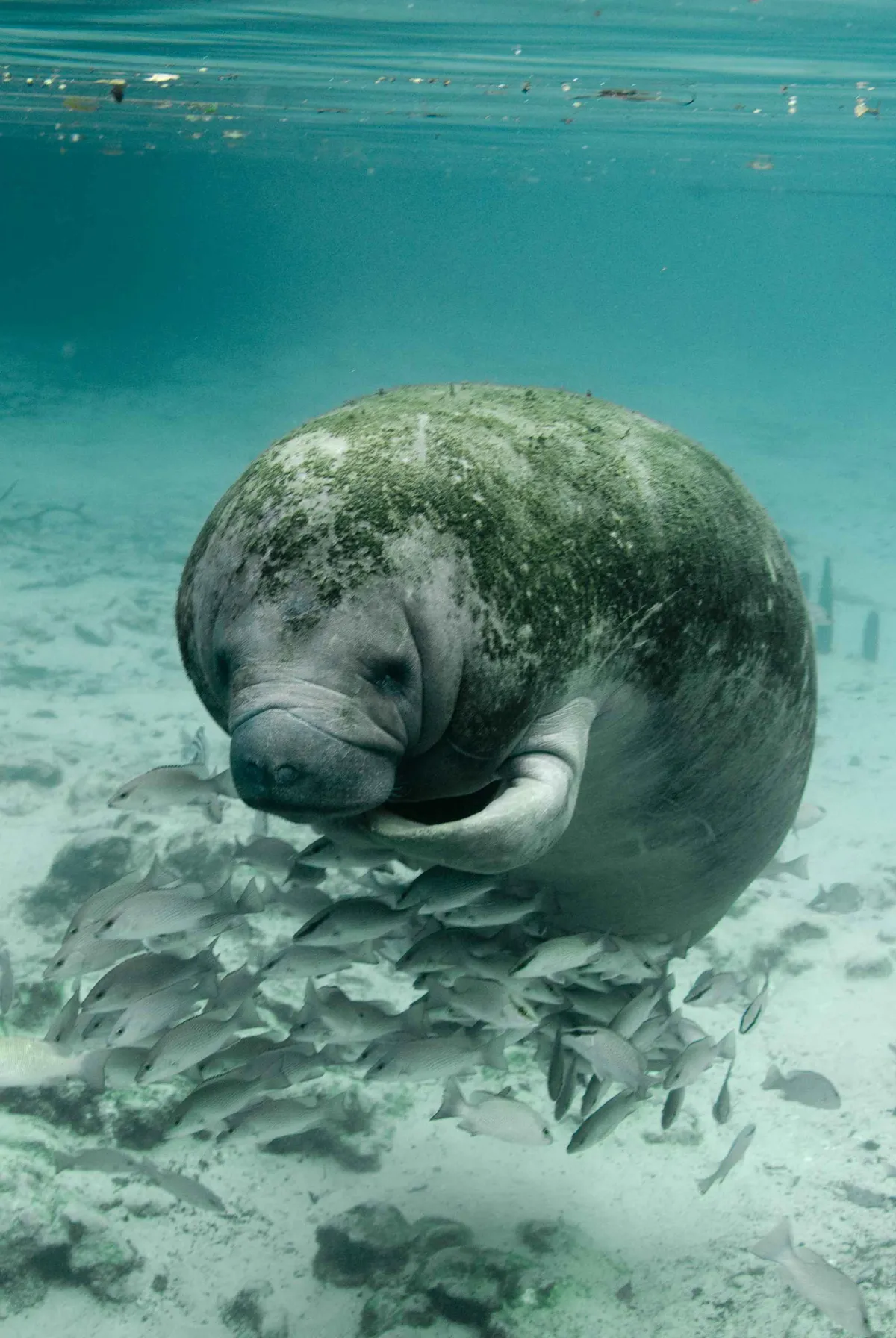
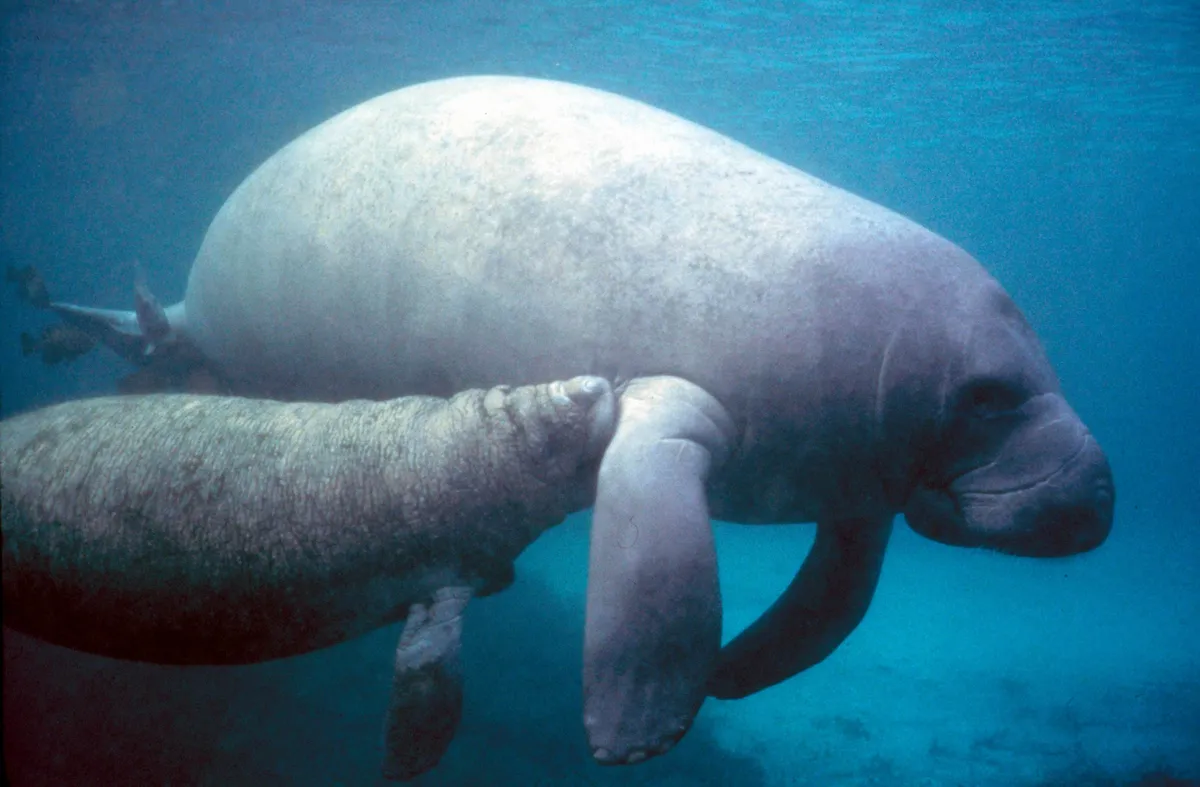
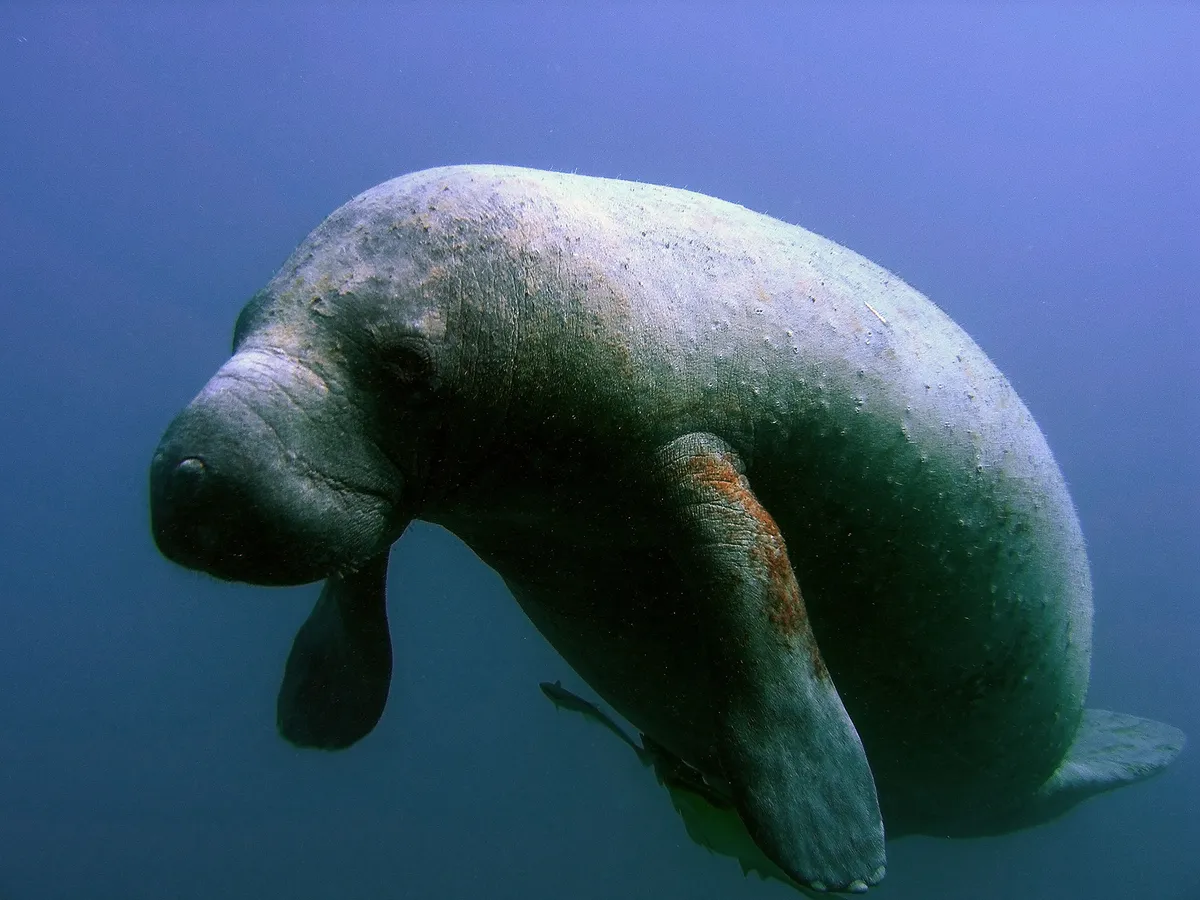
Large, herbivorous marine mammal native to coastal waters of the southeastern United States, Caribbean Sea, and northern South America. Characterized by their rotund body, paddle-like tail, and gentle demeanor.
Image Gallery
ADSENSE SLOT
Ecology & Habitat
Habitat
Shallow, warm coastal marine environments, estuaries, rivers, and lagoons with abundant aquatic vegetation. Primarily found in tropical and subtropical regions of the Atlantic Ocean.
Ecological Role
Critical ecosystem engineers that maintain aquatic vegetation balance, serve as indicators of ecosystem health, and contribute to nutrient cycling in coastal marine environments.
LIMBS WINGSPaddle-like forelimbs used for maneuvering, no external hind limbs. Broad, spatulate tail for propulsion and steering.
HEAD SENSORYSmall eyes, large nostrils with muscular lips, sensitive vibrissae (whiskers) for tactile sensing, excellent underwater spatial awareness.
BODY STRUCTURELarge, robust body with average adult length of 3.0-4.5 meters, weighing 400-1,500 kg. Torpedo-shaped body adapted for aquatic locomotion.