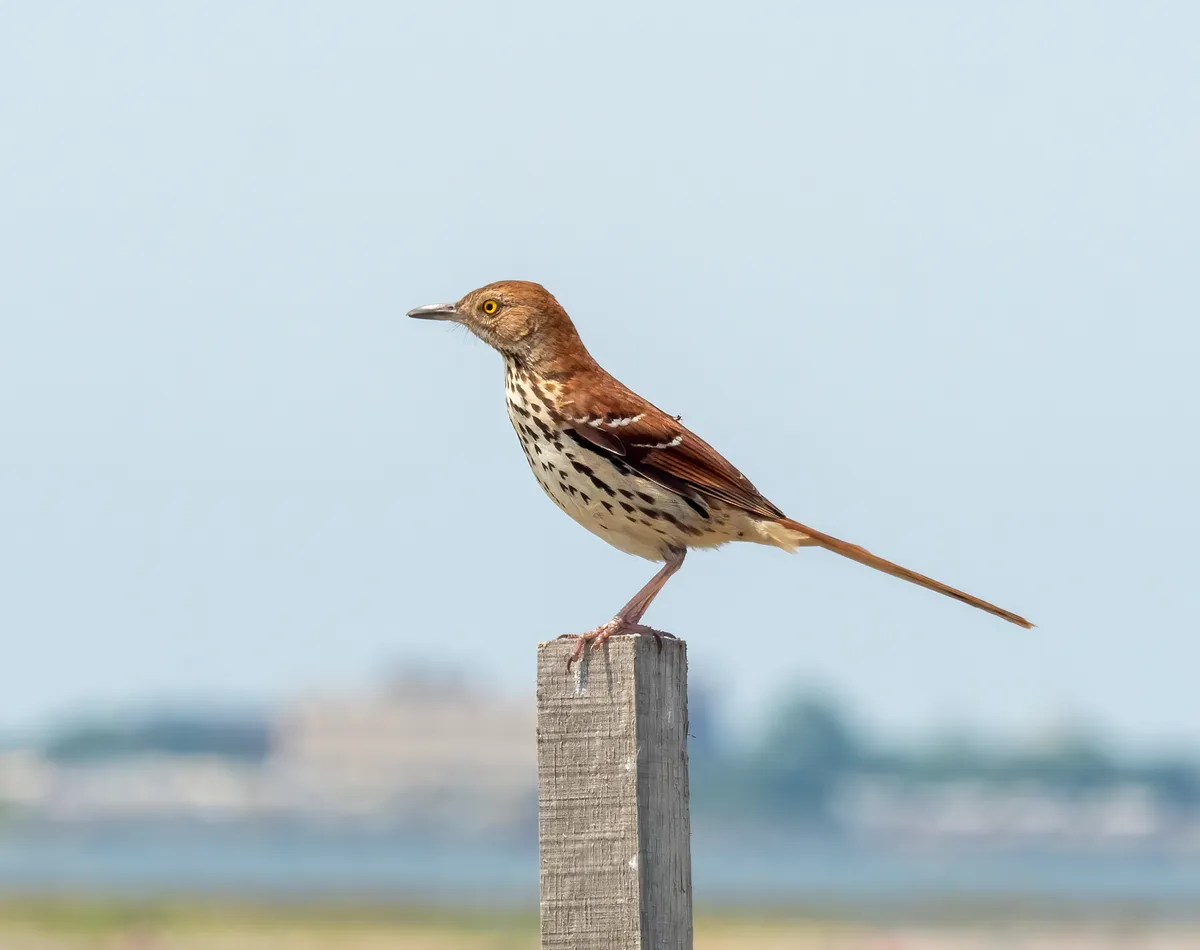
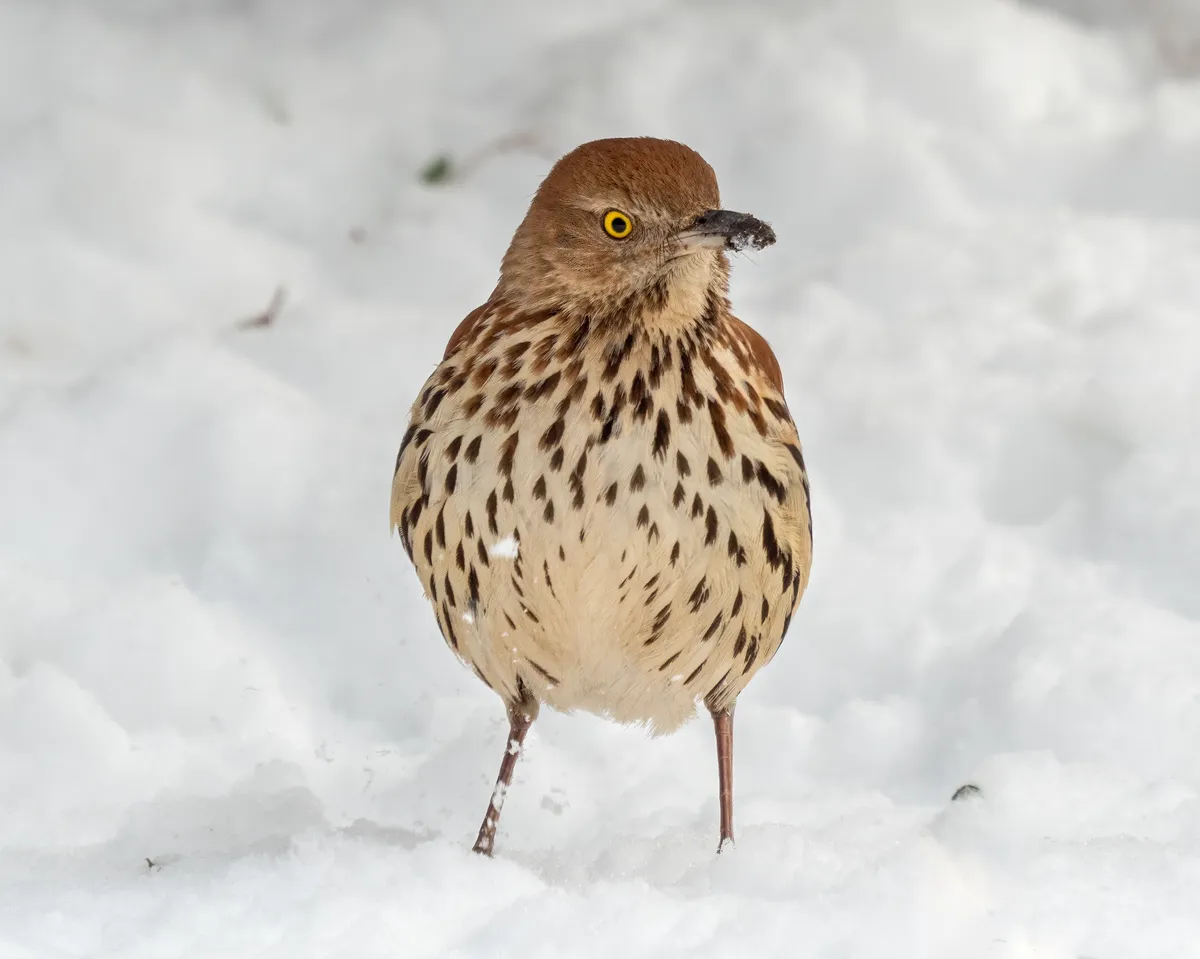
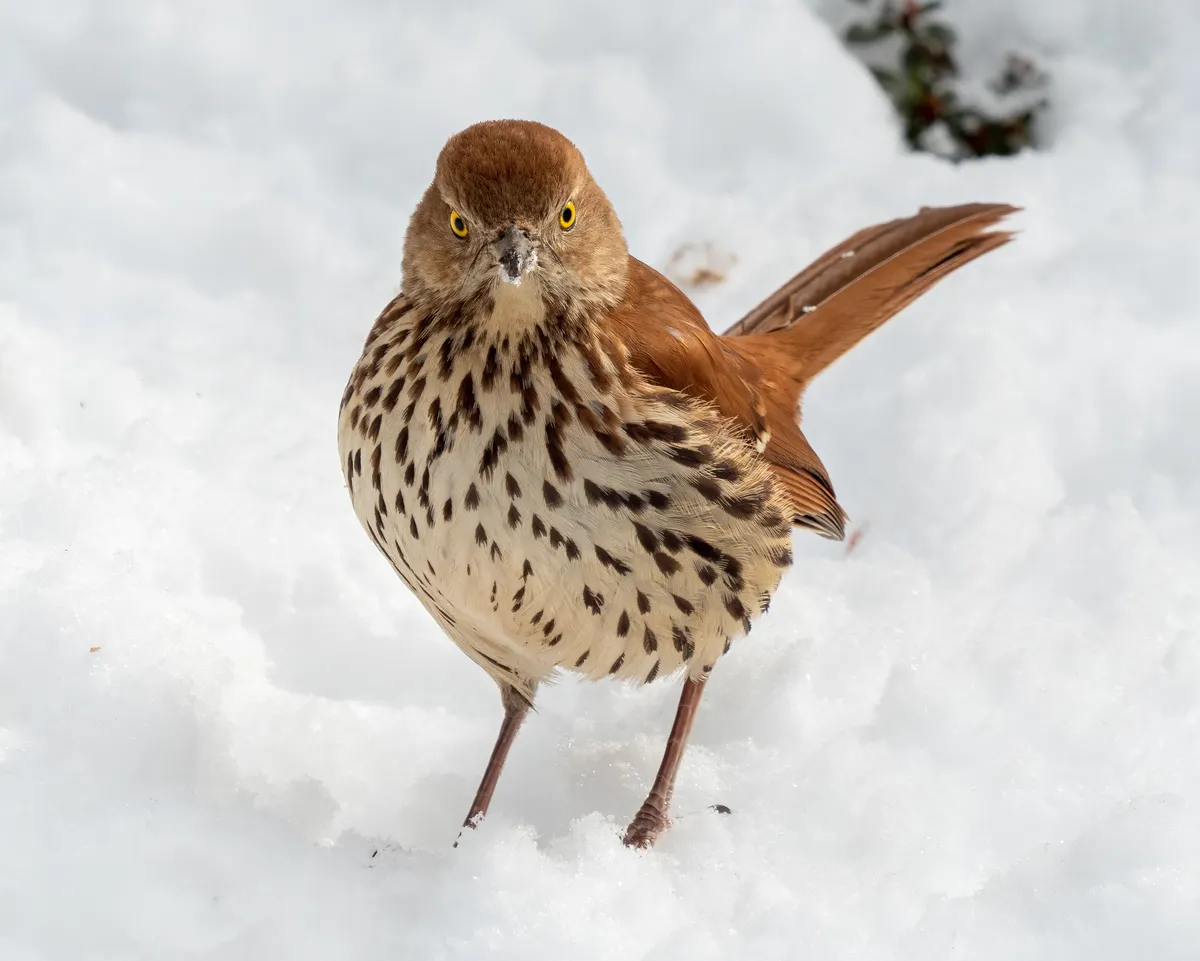
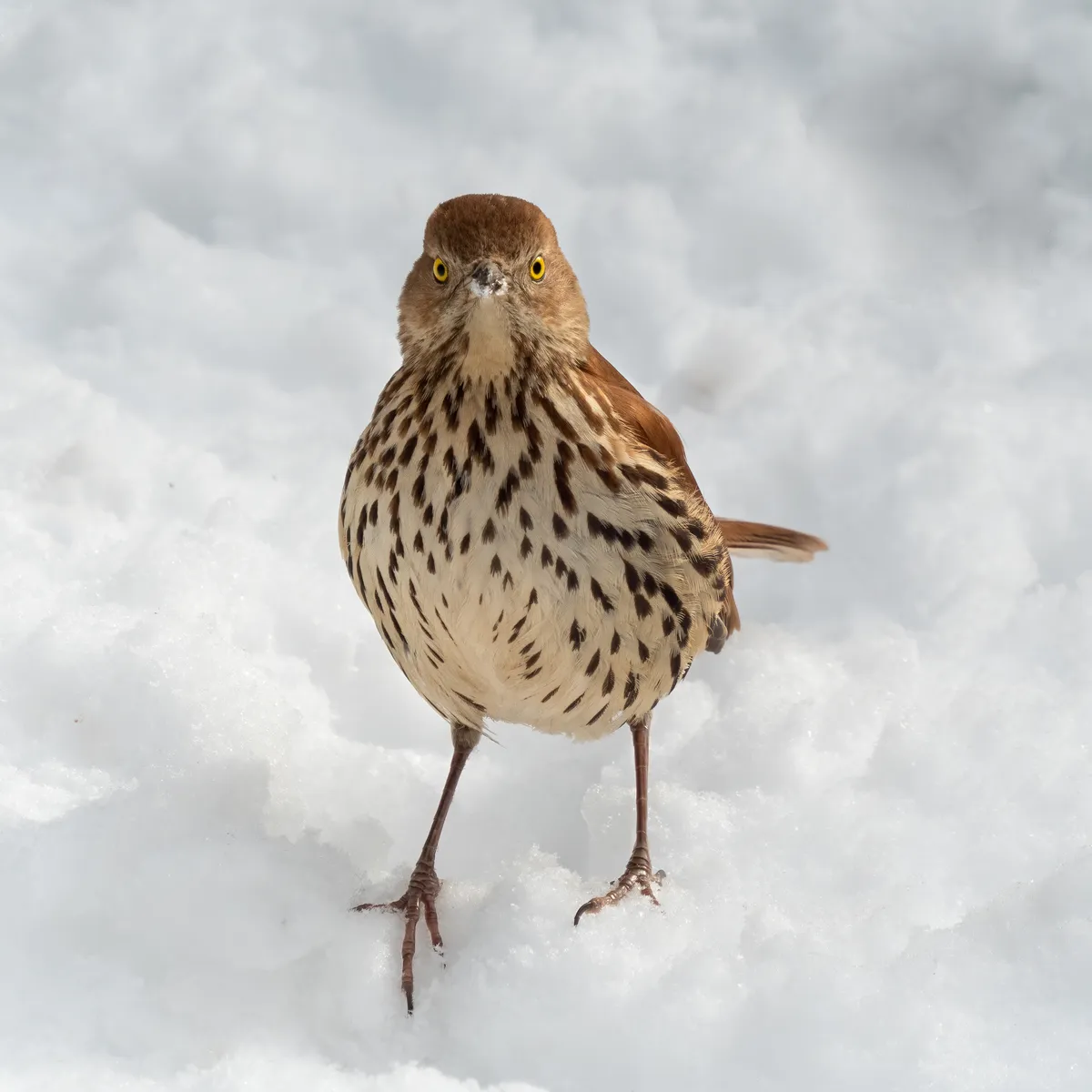
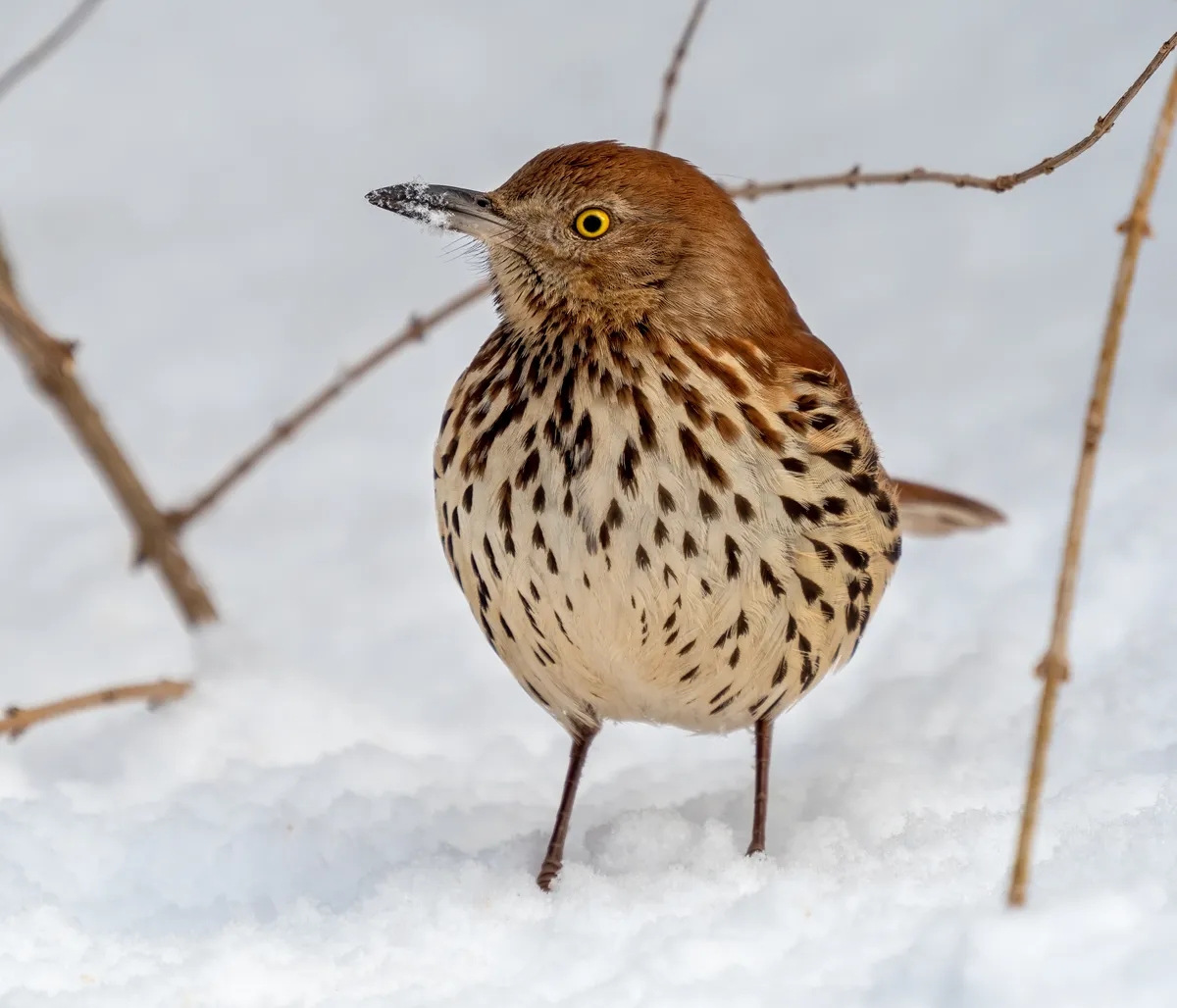
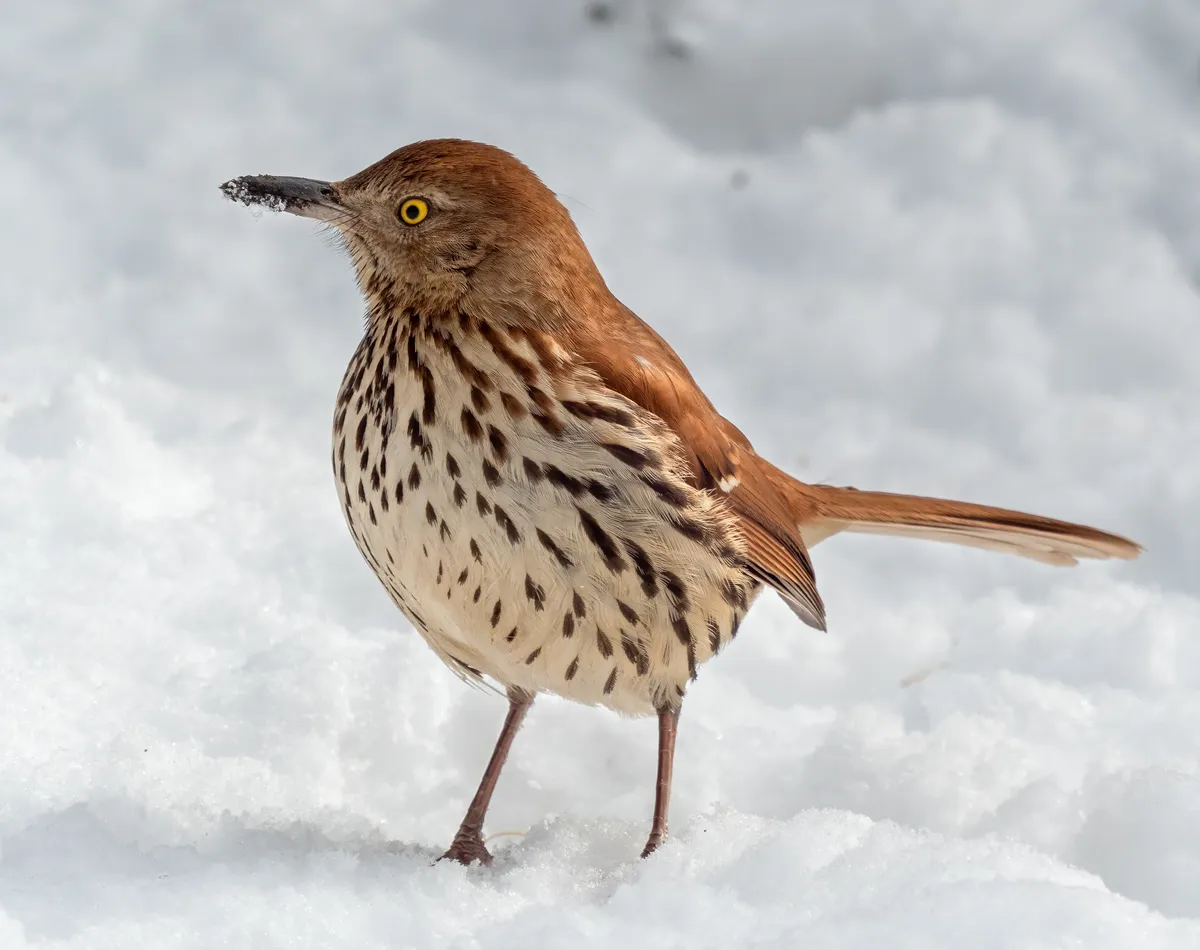
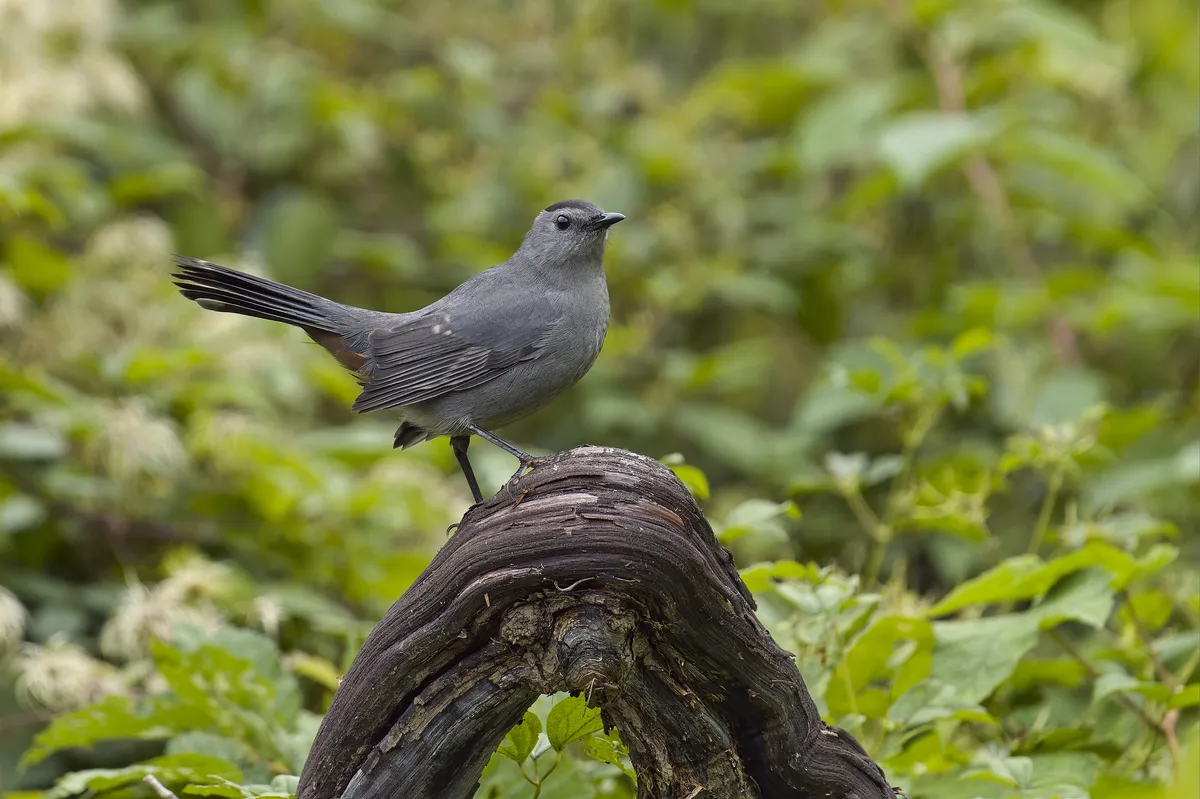
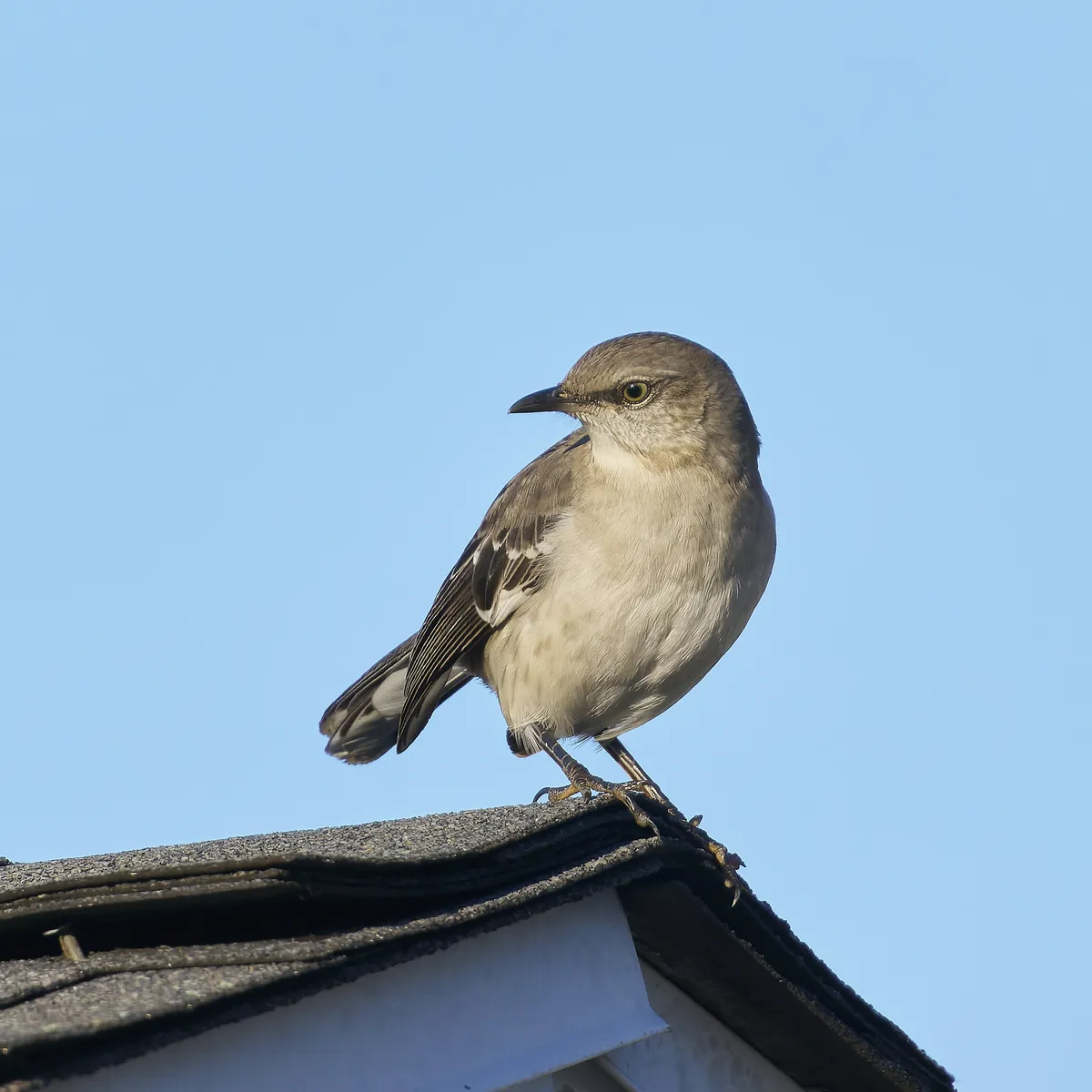
A large, robust songbird native to North America, characterized by its rusty-brown plumage and long, curved tail. Known for its complex vocal repertoire and ground-foraging behavior.
Image Gallery
ADSENSE SLOT
Ecology & Habitat
Habitat
Woodland edges, shrublands, dense thickets, and forest margins across eastern and central United States and southern Canada. Prefers areas with dense undergrowth and mixed vegetation.
Ecological Role
Critical seed disperser and insect predator. Helps control insect populations and contributes to seed distribution in woodland ecosystems.
Morphology
SKIN COATRusty-brown upperparts, streaked white and brown underparts, distinctive two-toned plumage with gray-brown wings
LIMBS WINGSStrong legs for ground foraging, wings rounded and short for quick, agile movements through dense vegetation.
HEAD SENSORYLarge yellow eyes, strong pointed beak adapted for probing ground litter. Excellent hearing and visual acuity for detecting prey and predators.
BODY STRUCTUREMedium-sized songbird, approximately 23-30 cm in length, weighing 60-90 g. Elongated, muscular body with a notably long, slightly curved tail.
Data Source: TaxonHub Database
Image Credit: Rhododendrites