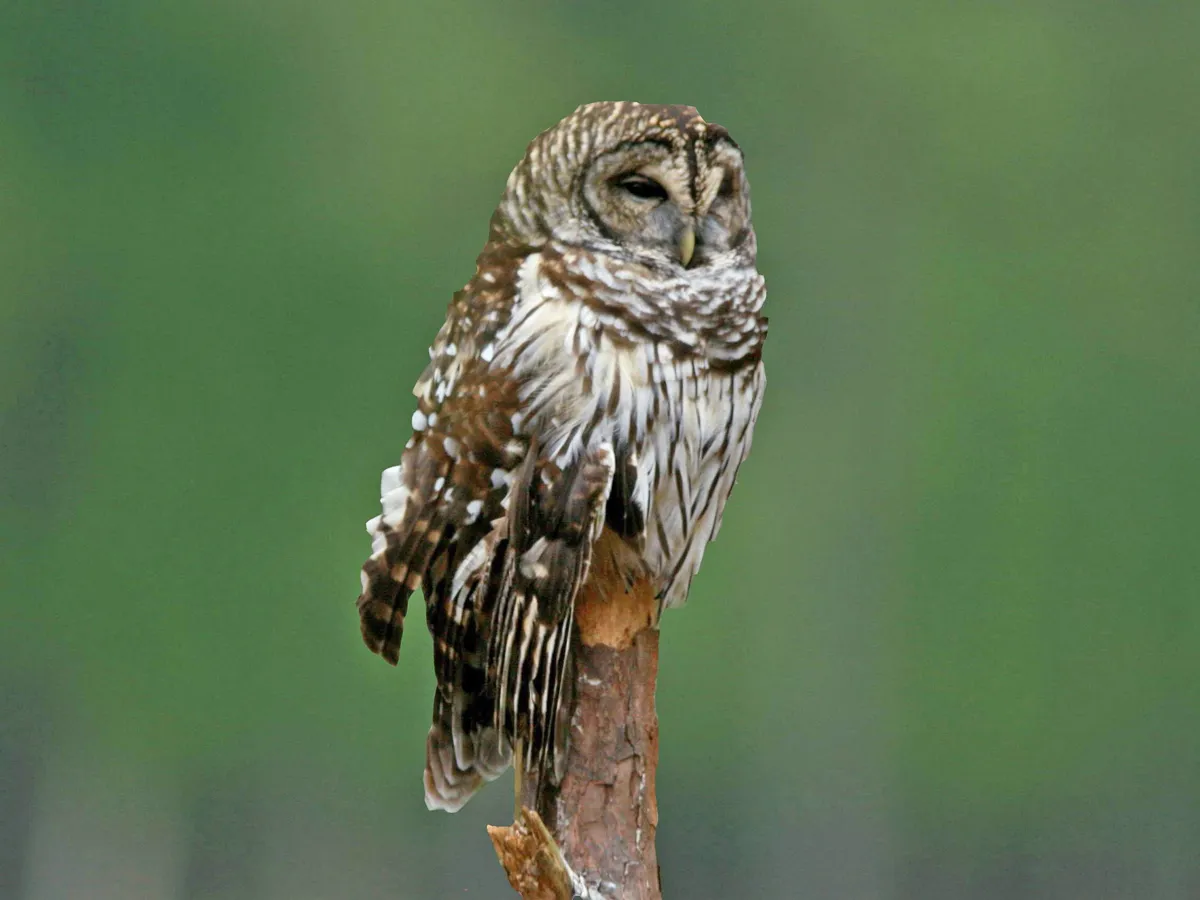
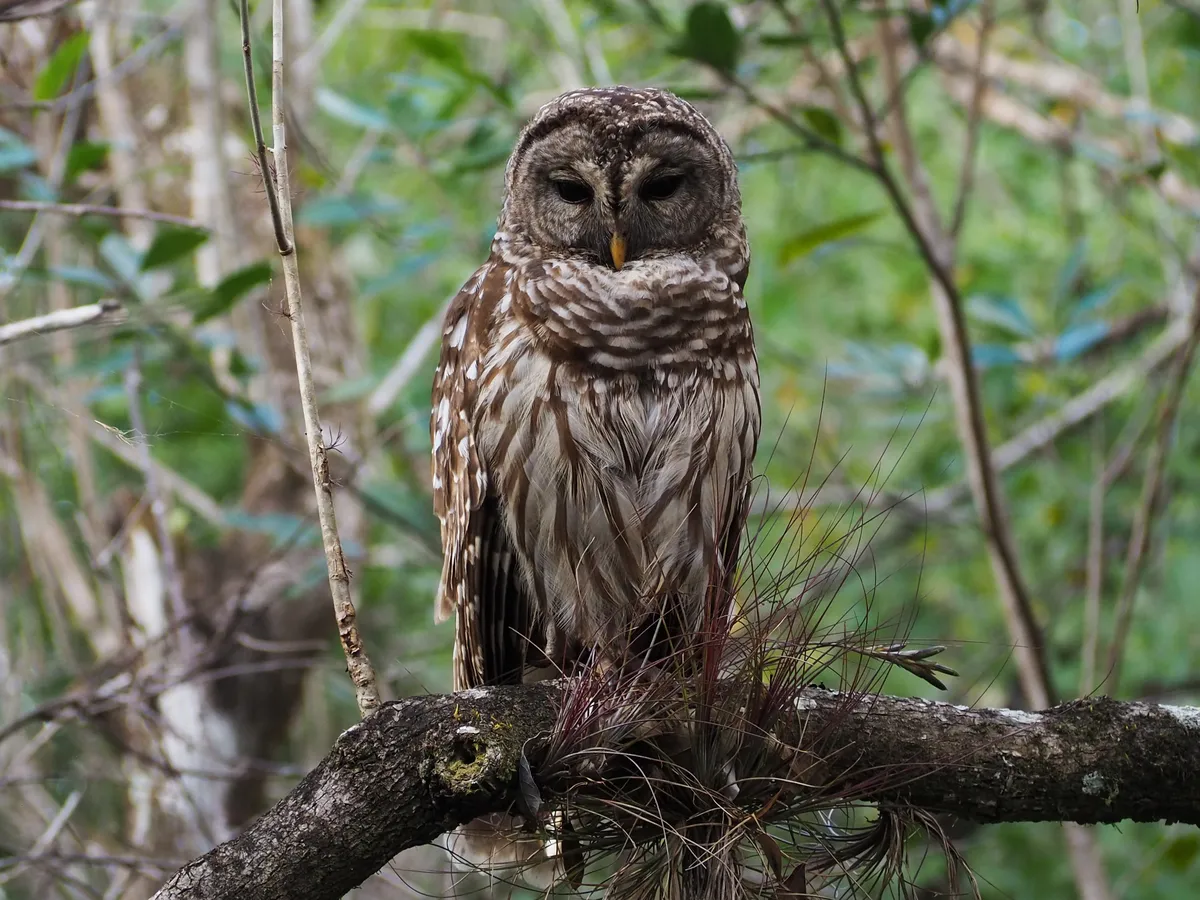
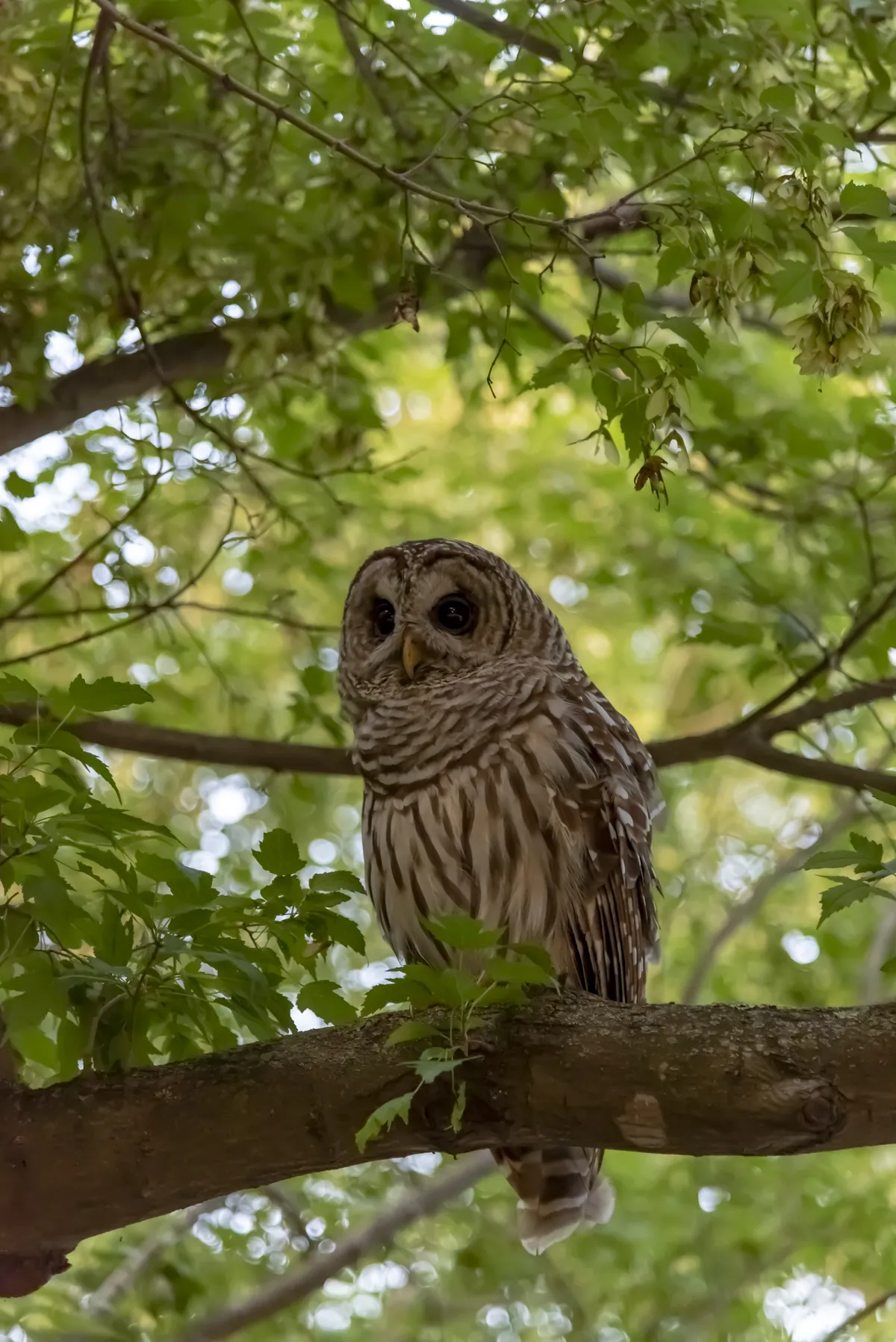
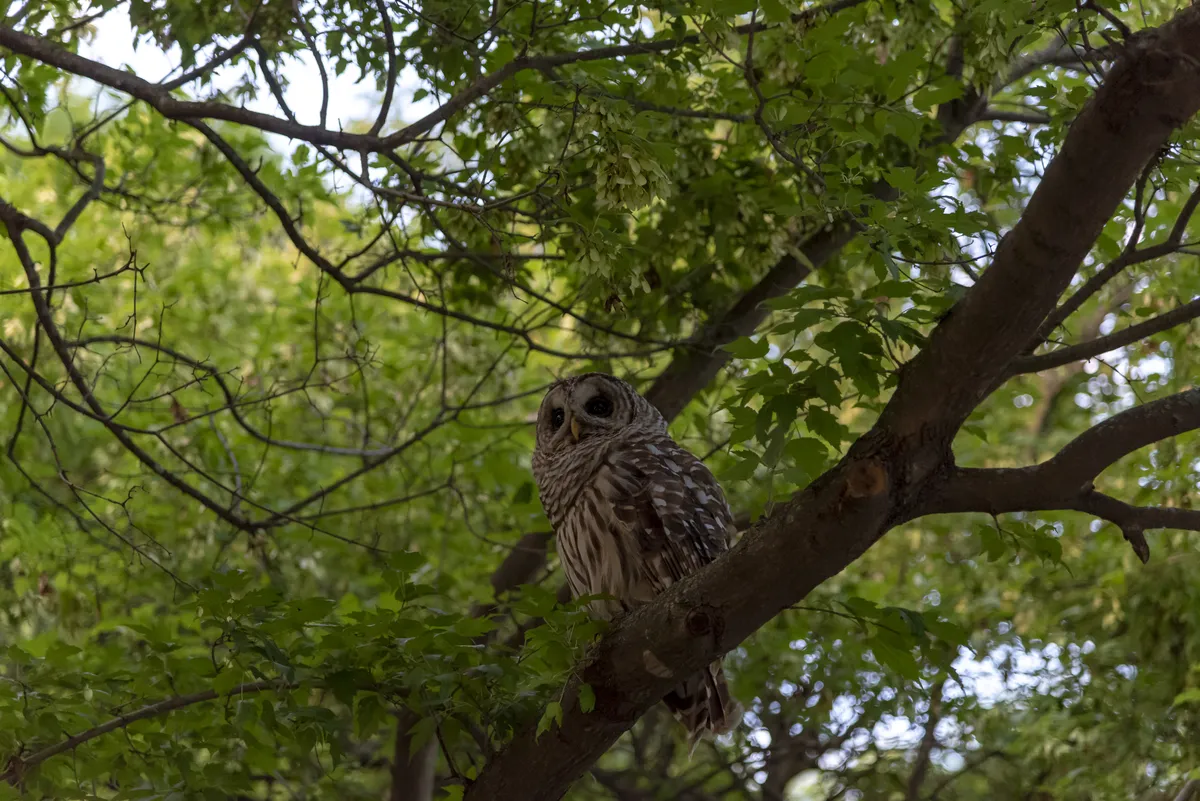
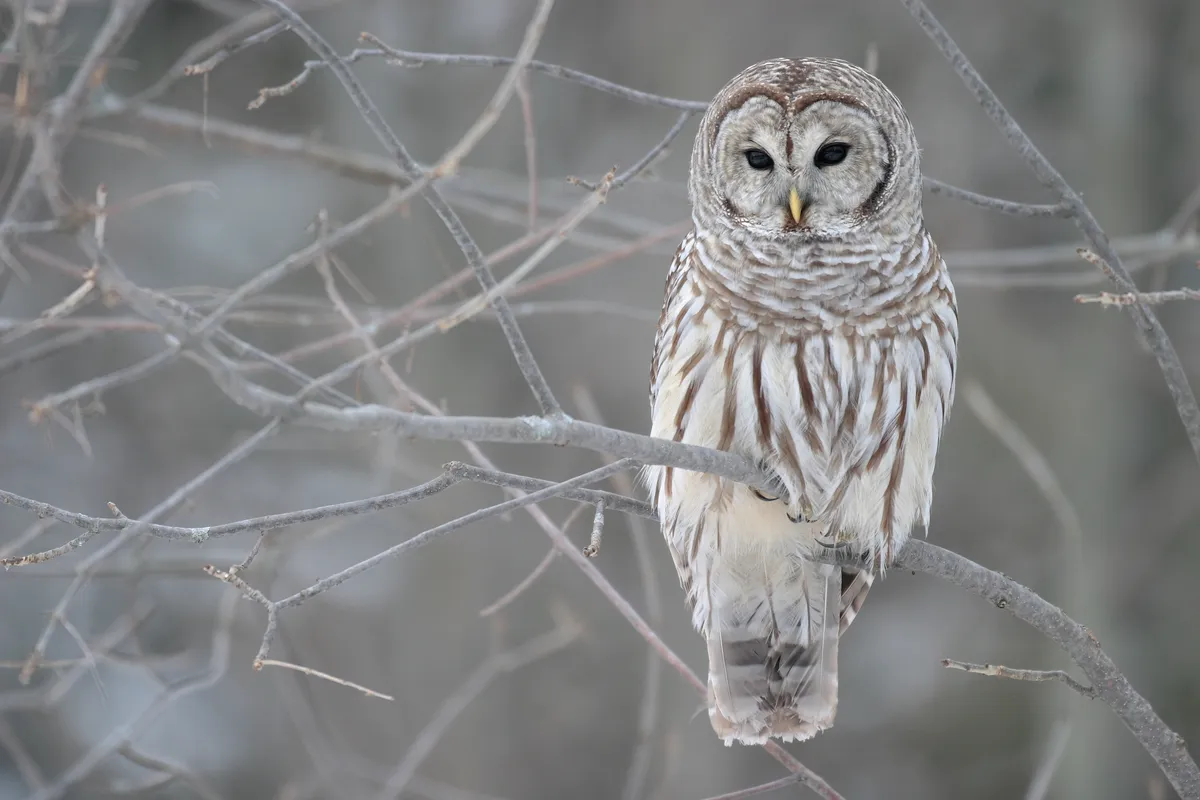
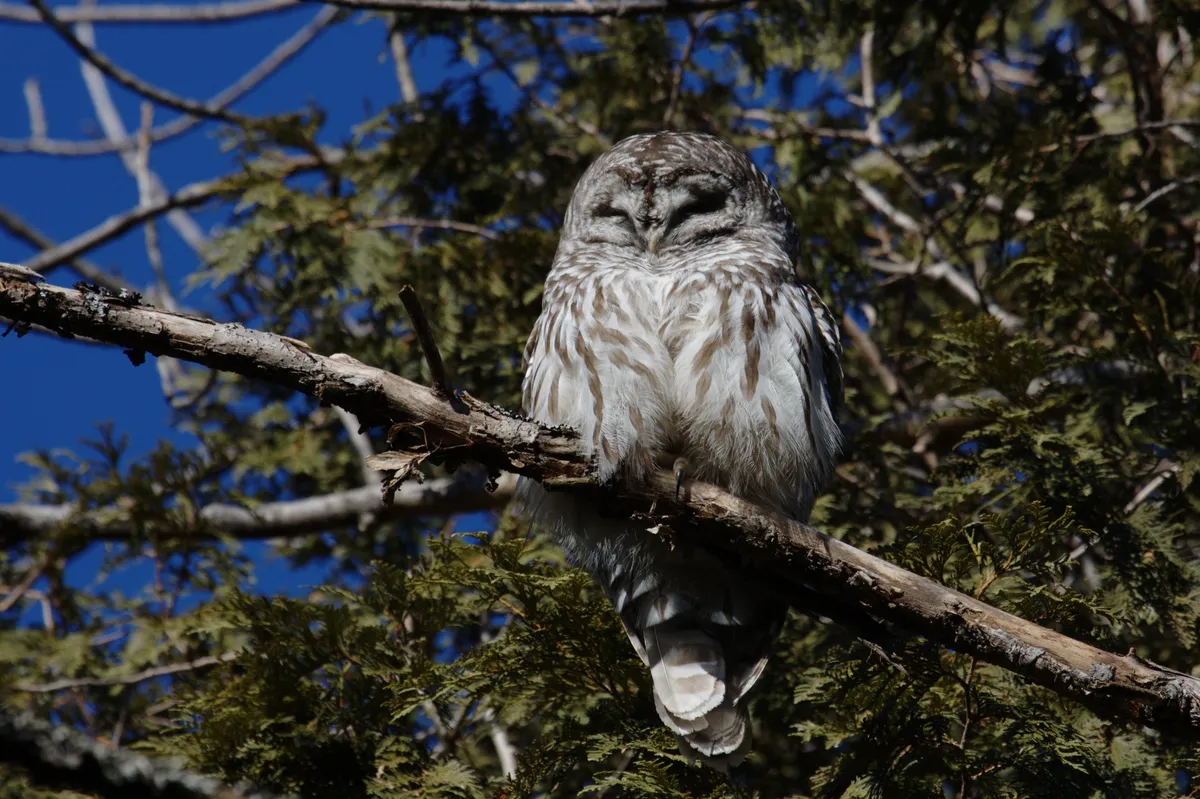
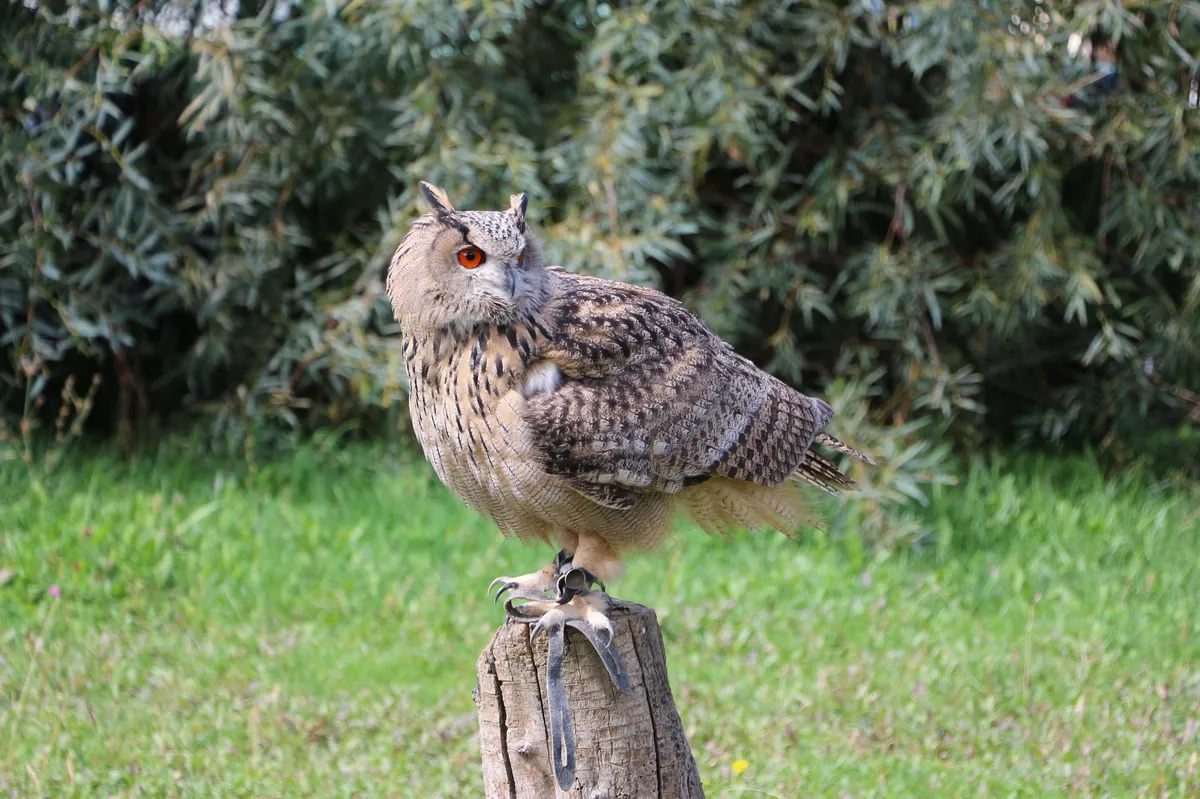
A large woodland owl native to eastern North America, characterized by its distinctive brown and white barred plumage and distinctive hooting call.
Image Gallery
ADSENSE SLOT
Ecology & Habitat
Habitat
Dense deciduous and mixed forests, particularly in mature woodlands with large trees, riparian zones, and areas with complex canopy structures across eastern United States and southeastern Canada.
Ecological Role
Key predator in forest ecosystems, controlling populations of small mammals, controlling rodent populations, and serving as an important indicator species for forest health.
Morphology
SKIN COATBrown and white horizontal barring across entire body, providing excellent camouflage in forest environments
LIMBS WINGSBroad, rounded wings for silent flight, powerful talons for hunting, legs fully feathered
HEAD SENSORYLarge rounded head, dark brown eyes, minimal ear tufts, excellent nocturnal vision with binocular adaptation
BODY STRUCTUREMedium-large owl, averaging 40-63 cm in length, with a wingspan of 96-125 cm, weighing approximately 500-1050 grams
Data Source: TaxonHub Database
Image Credit: http://carolinabirds.org/)