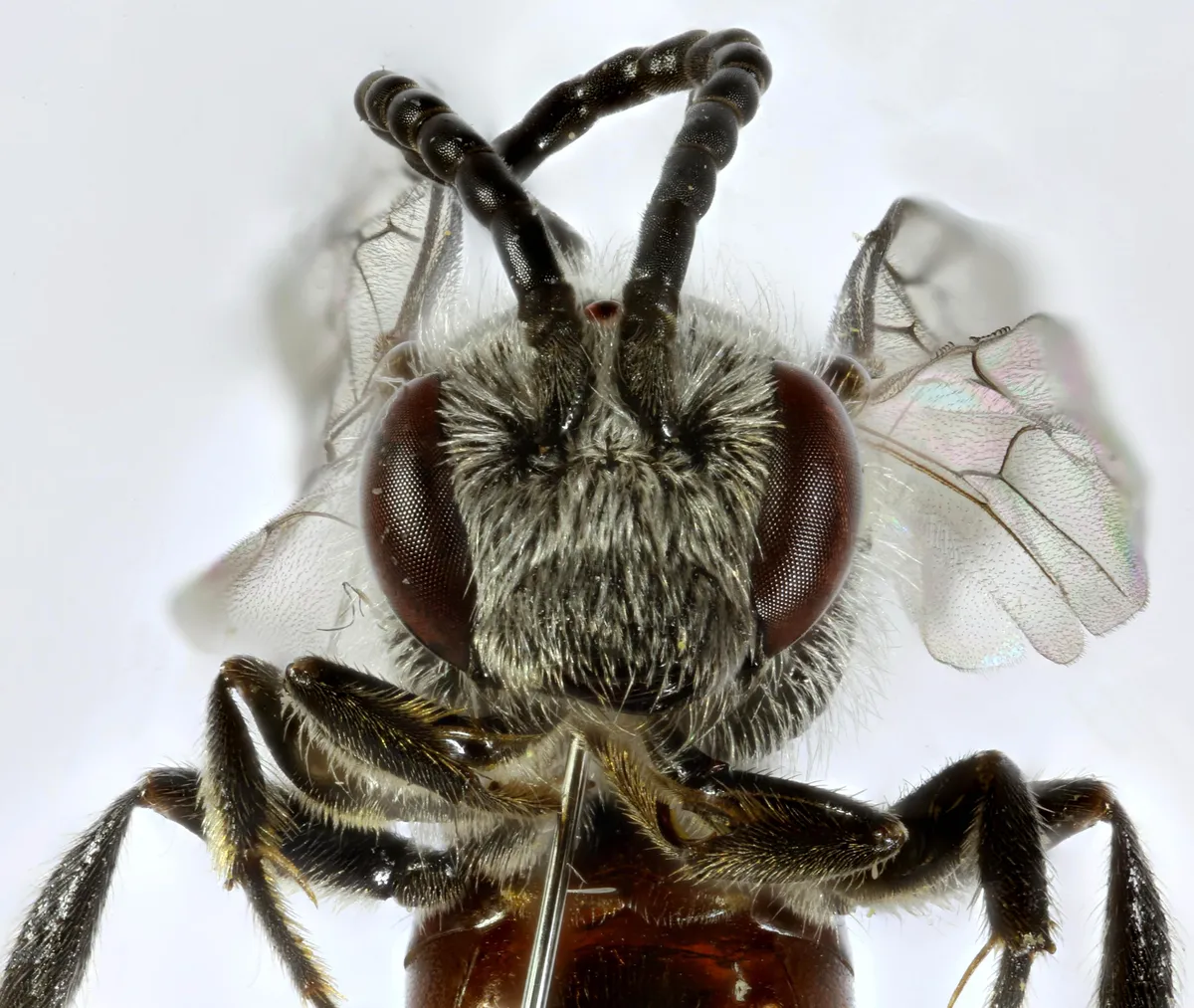
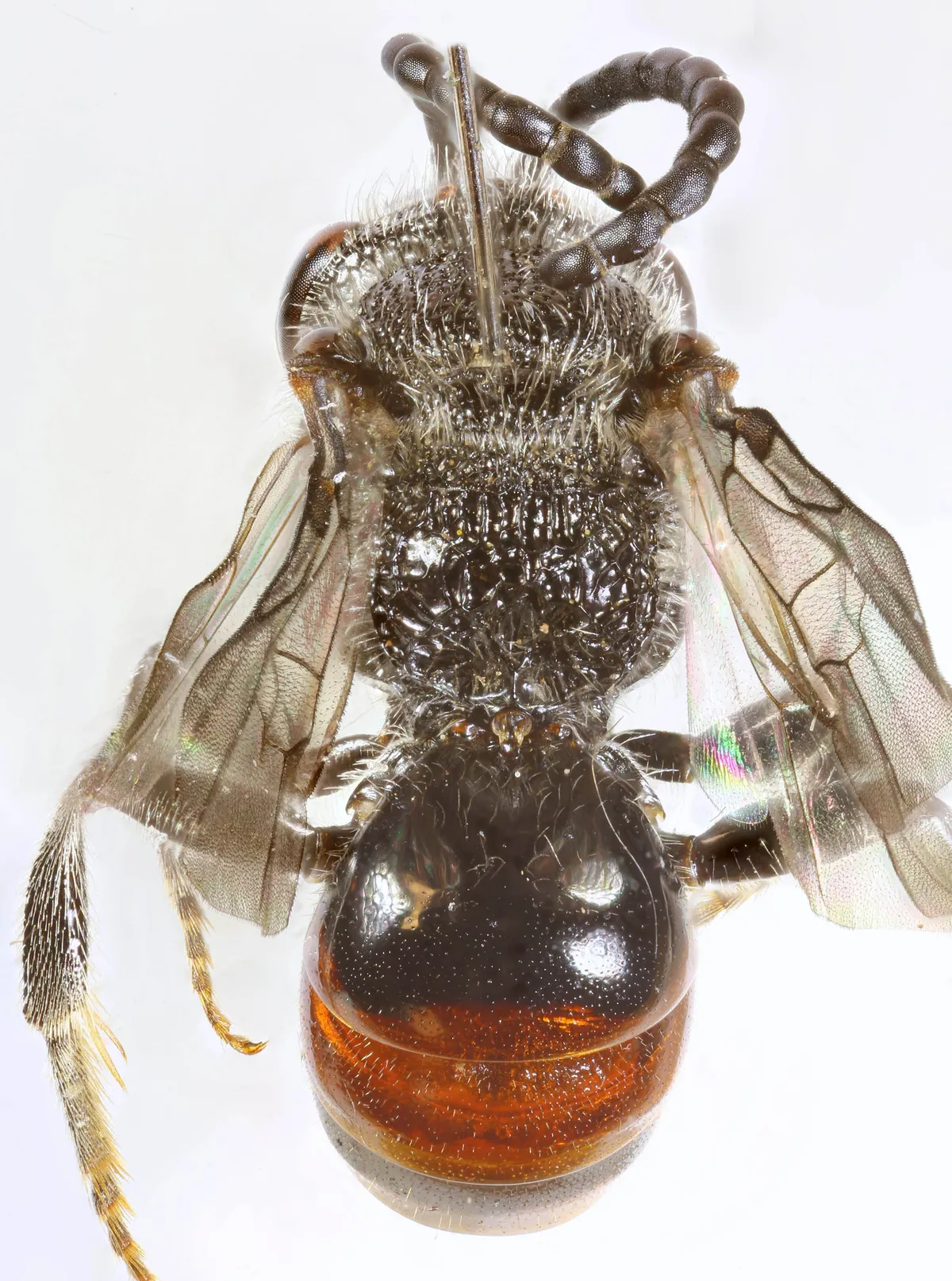
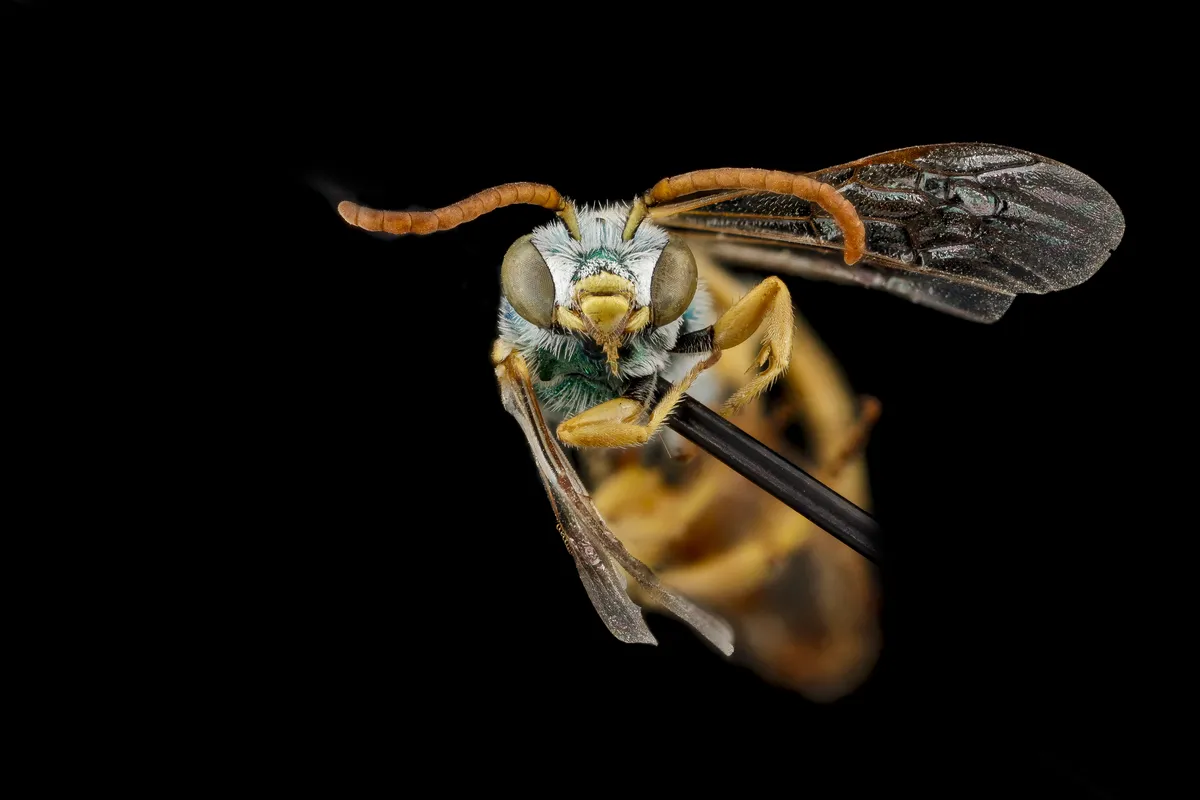
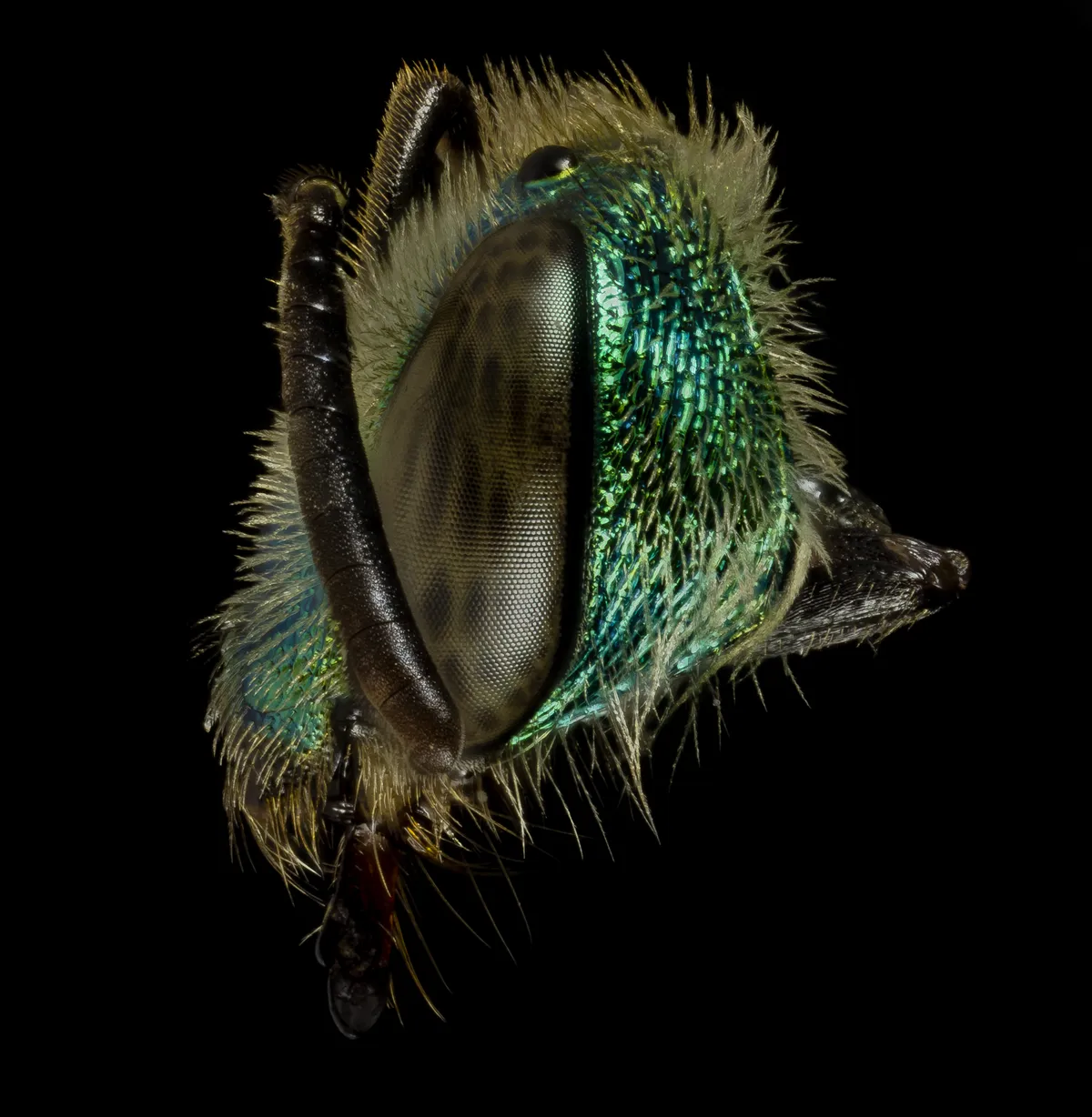
A small parasitic bee species within the Sphecodes genus, characterized by specialized cleptoparasitic behavior in halictid bee nests.
Image Gallery
ADSENSE SLOT
Ecology & Habitat
Habitat
Temperate and sub-temperate European grasslands, meadows, and open woodland environments with abundant flowering plants and host bee populations
Ecological Role
Plays a critical role in bee ecosystem dynamics through specialized parasitic interactions, influencing host bee population structures and genetic diversity
Morphology
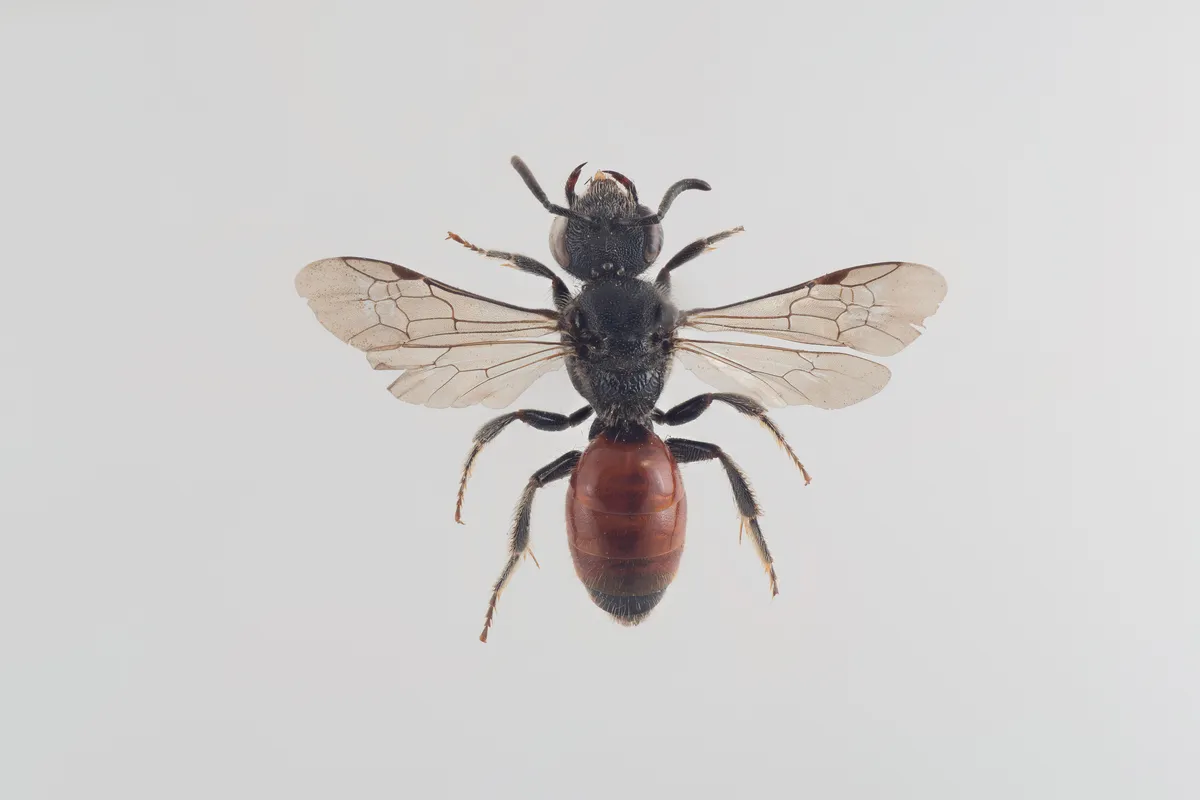
SKIN COATSparse pubescence, metallic reddish-black integument with minimal hair coverage
LIMBS WINGSRobust legs adapted for entering host nests, transparent membranous wings for efficient flight
HEAD SENSORYWell-developed compound eyes, sensitive antennae for host nest detection and communication
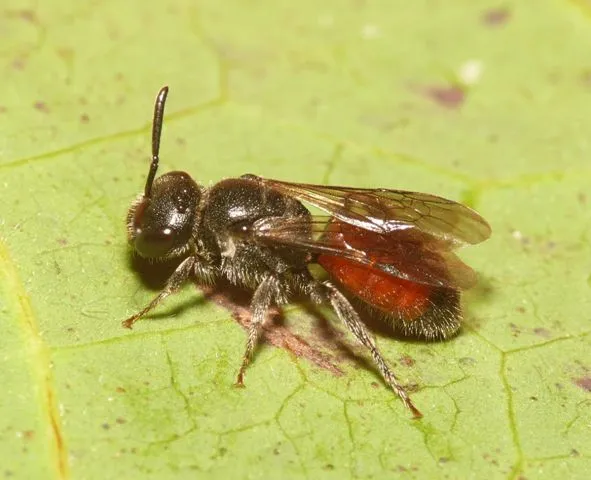
BODY STRUCTURESmall bee, approximately 6-8 mm in length, with compact exoskeleton and distinctive blood-red coloration on abdomen
Data Source: TaxonHub Database
Image Credit: https://doi.org/10.3897/zookeys.792.28042