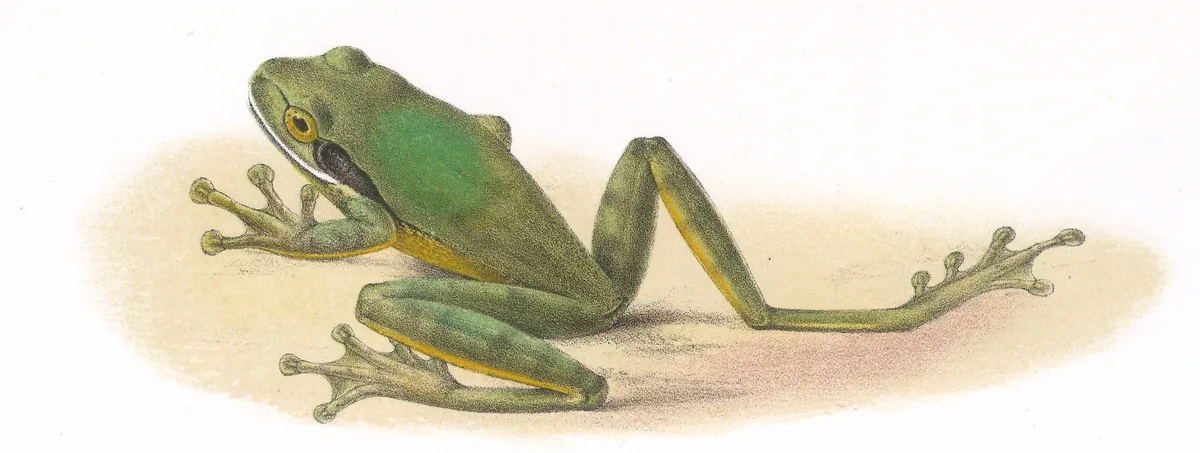
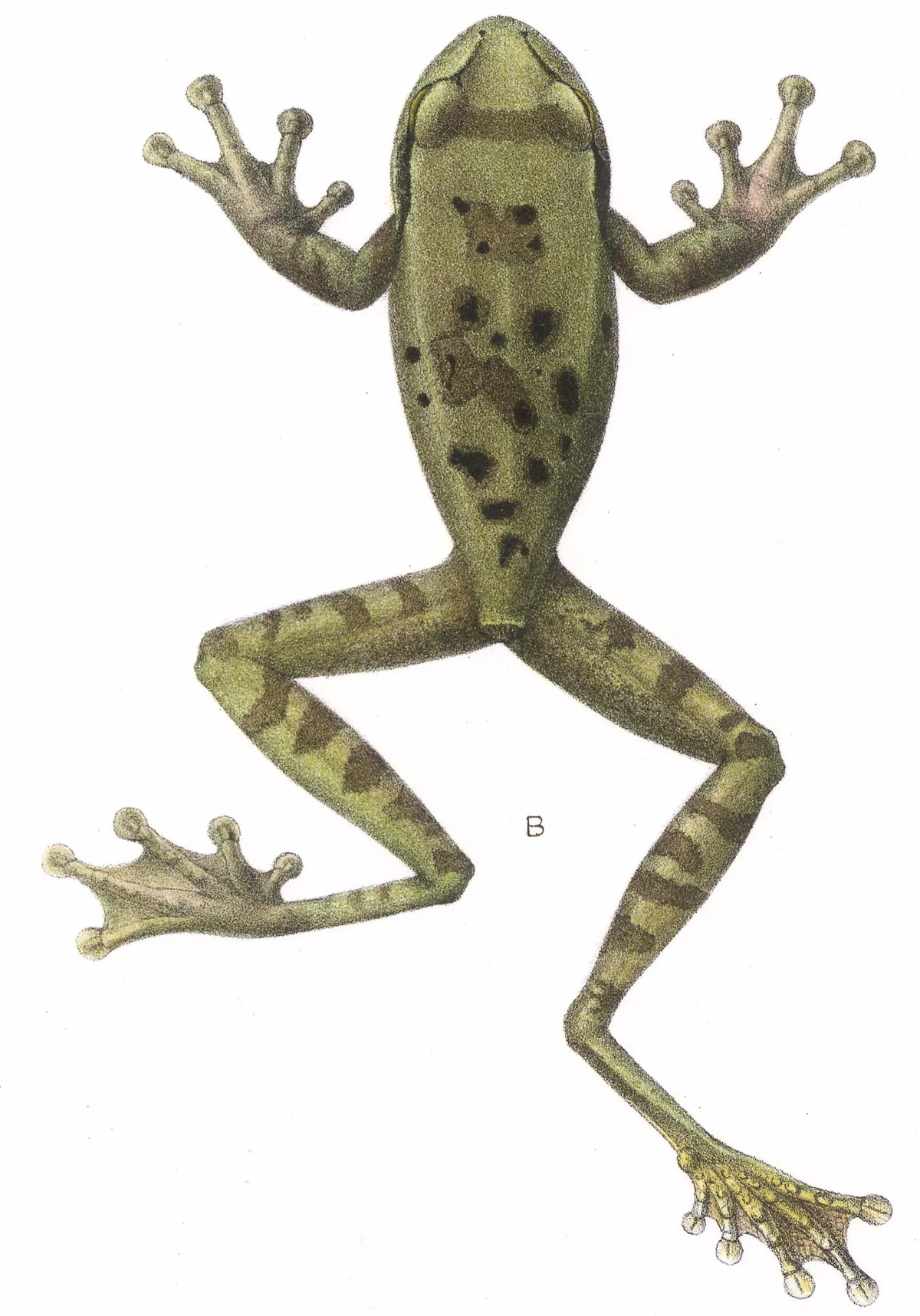
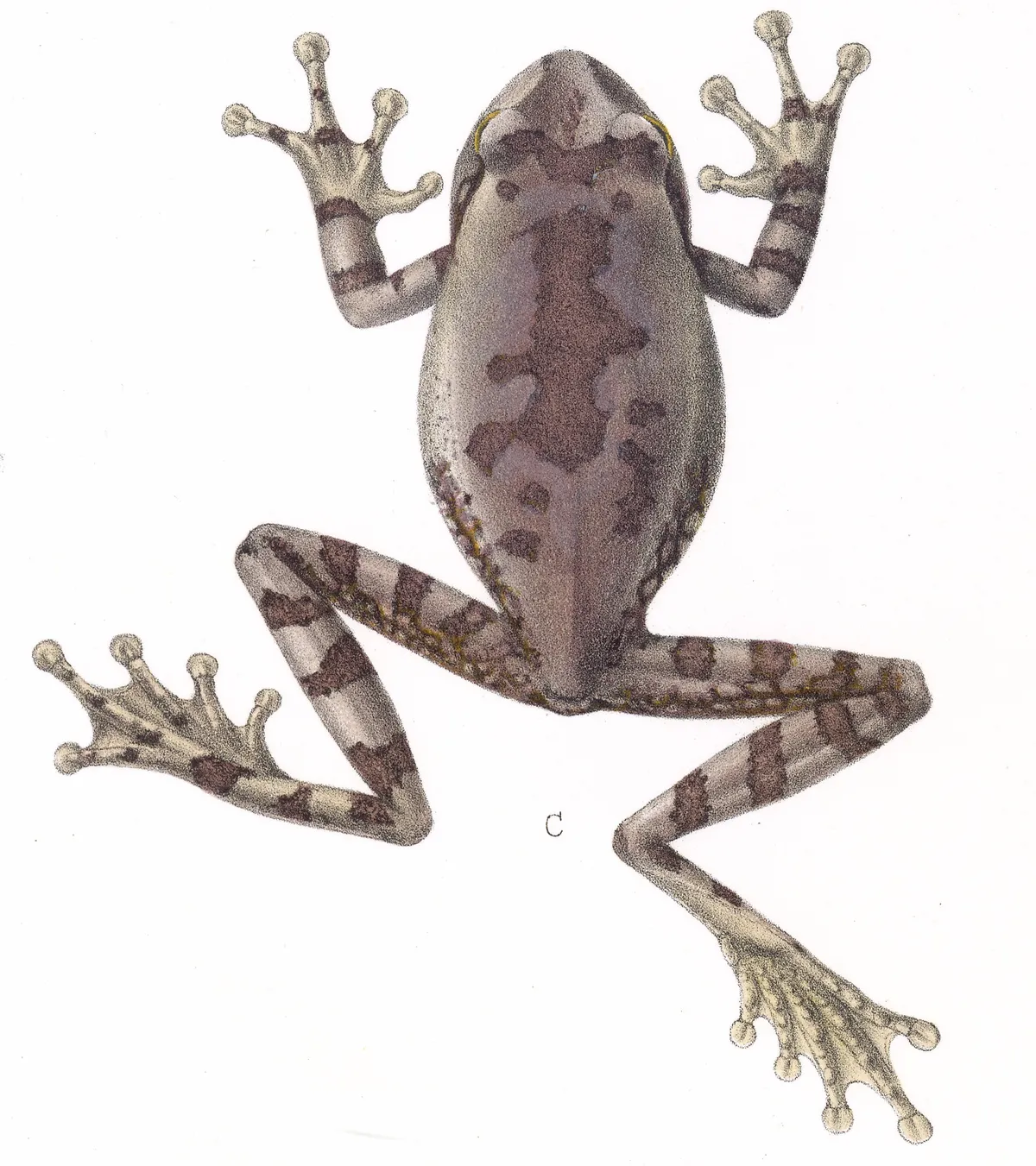
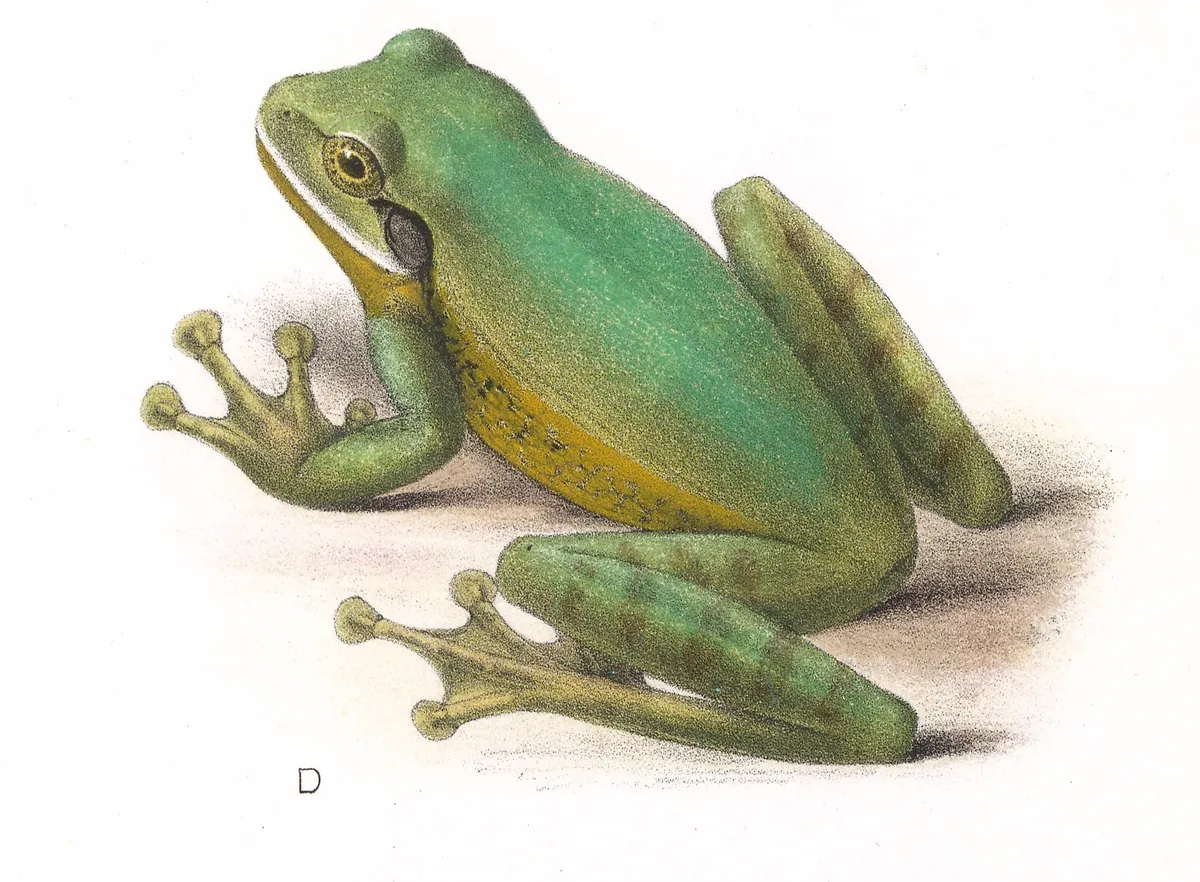
A tree frog species endemic to Central America, characterized by its distinctive coloration and nocturnal behavior. Belongs to the Hylidae family of arboreal amphibians.
Image Gallery
ADSENSE SLOT
Ecology & Habitat
Habitat
Tropical and subtropical forests, ranging from lowland rainforests to mid-elevation mountain forests in regions of Nicaragua, Costa Rica, and Panama. Typically found near water sources and in humid forest understories.
Ecological Role
Plays a crucial role in forest ecosystem food webs as both predator of small invertebrates and prey for larger vertebrates. Indicator species for forest health and biodiversity.
Morphology
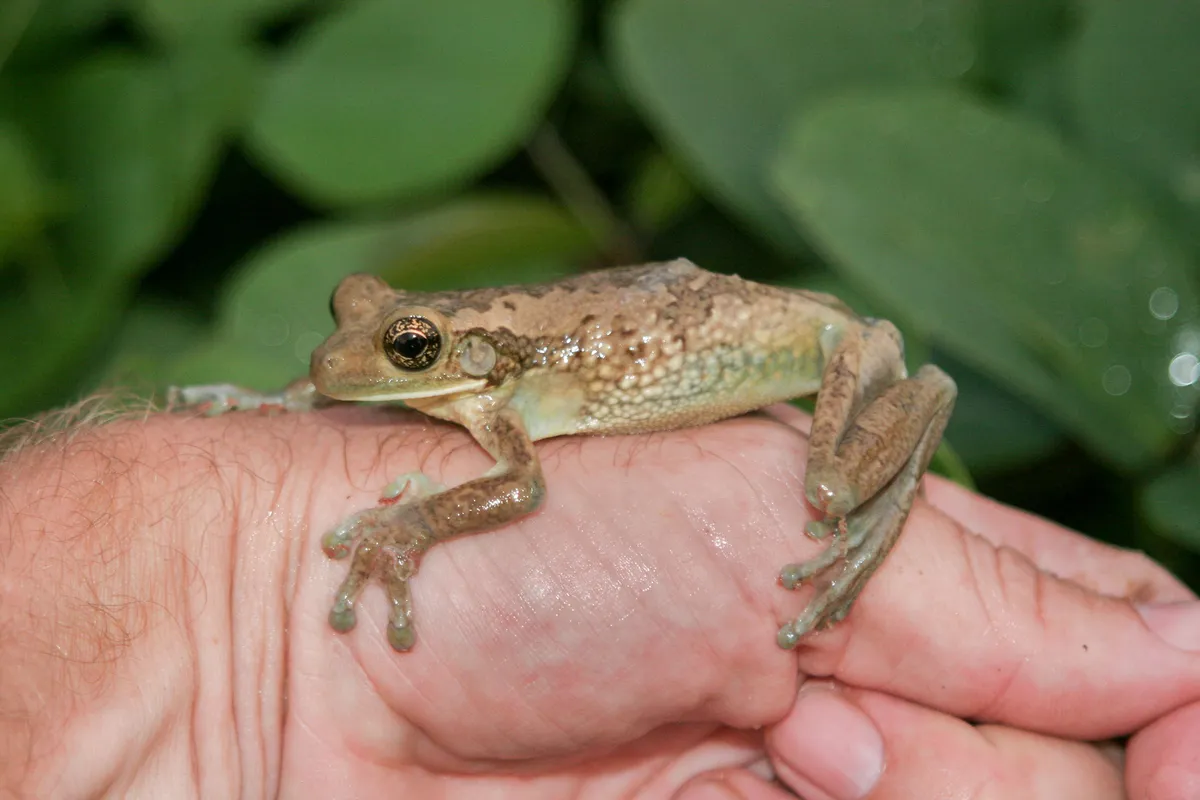
SKIN COATSmooth, moist skin with variable coloration ranging from brown to grayish-green. Capable of subtle color changes for camouflage.
LIMBS WINGSStrong, muscular limbs with adhesive toe discs. Hind limbs longer and more powerful for jumping and climbing.
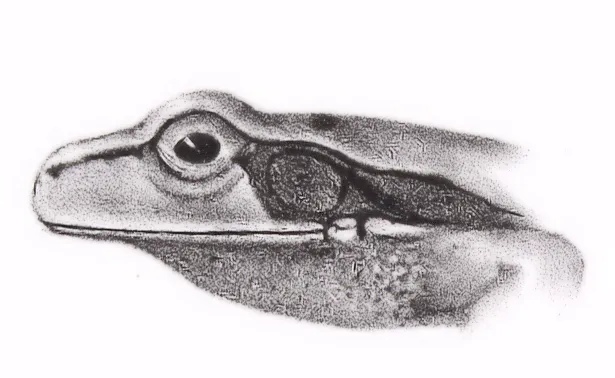
HEAD SENSORYLarge, prominent eyes with horizontal pupils. Well-developed tympanum for sound detection. Broad head with short snout.
BODY STRUCTUREMedium-sized tree frog, approximately 45-65 mm in body length. Robust build with specialized toe pads for arboreal climbing.
Data Source: TaxonHub Database
Image Credit: Albert Günther