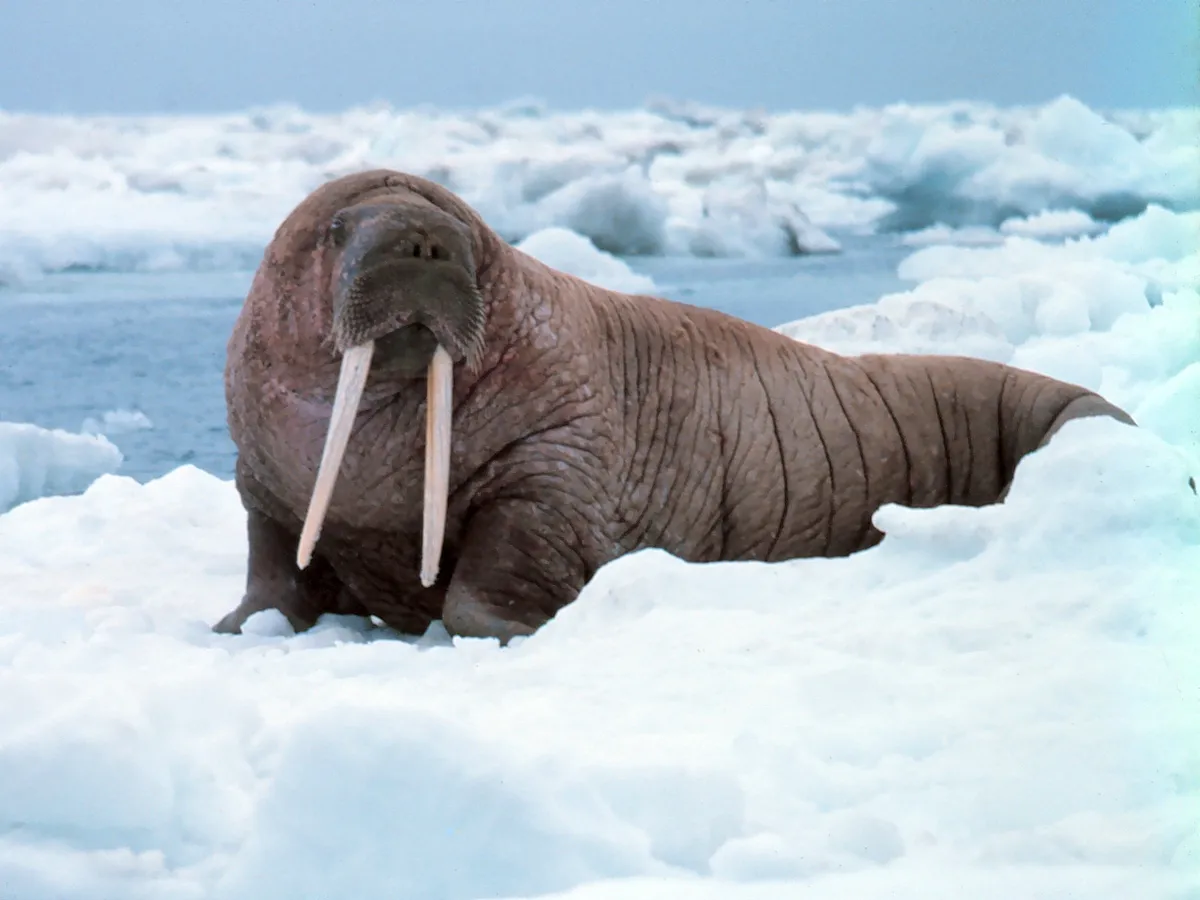
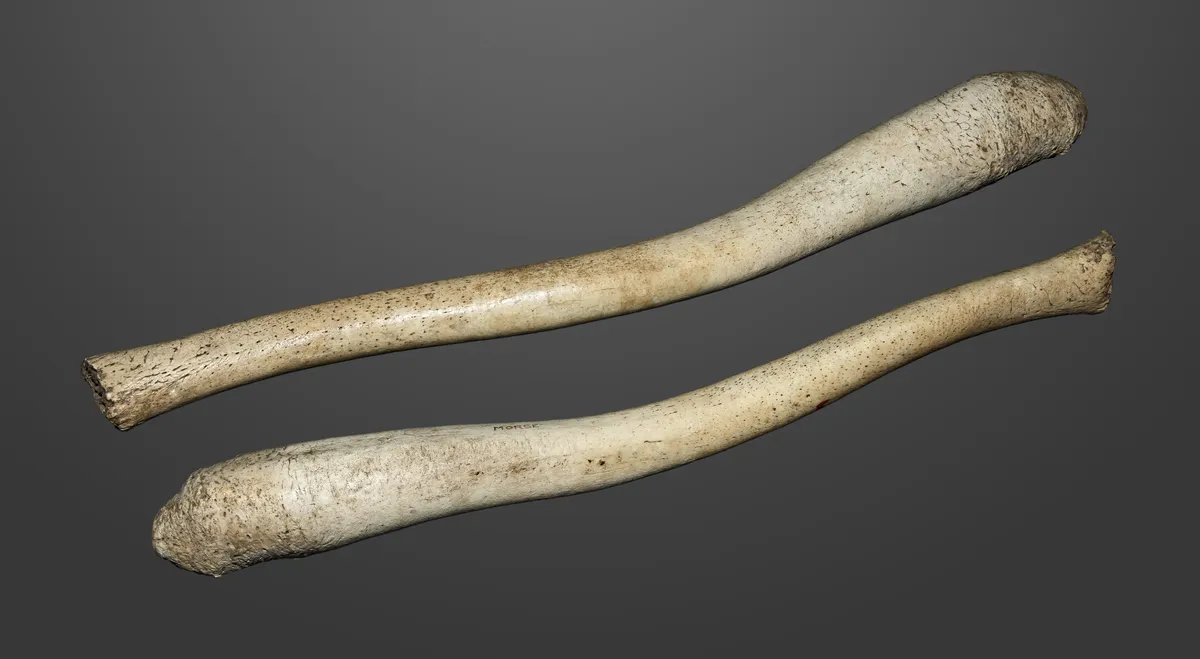
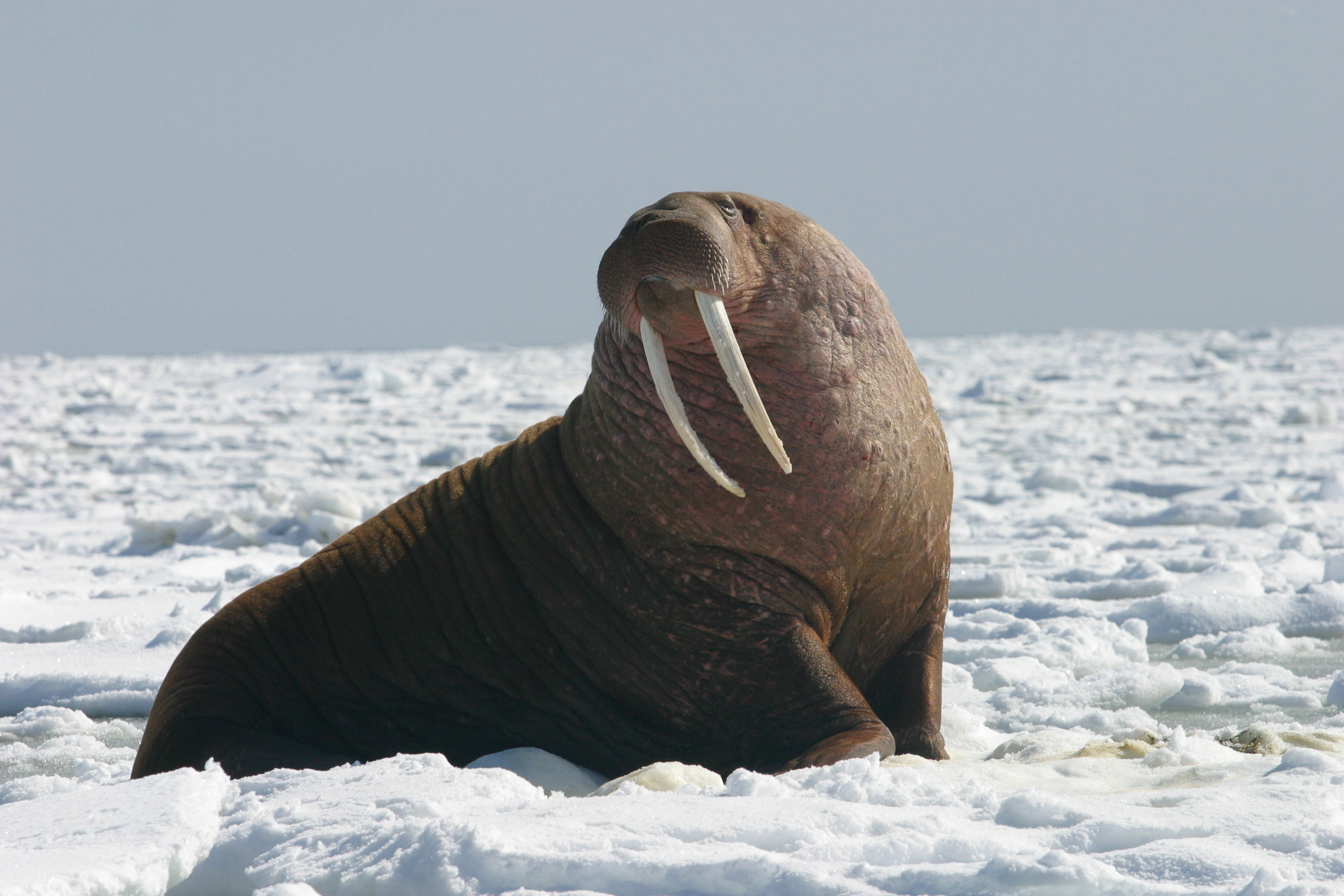
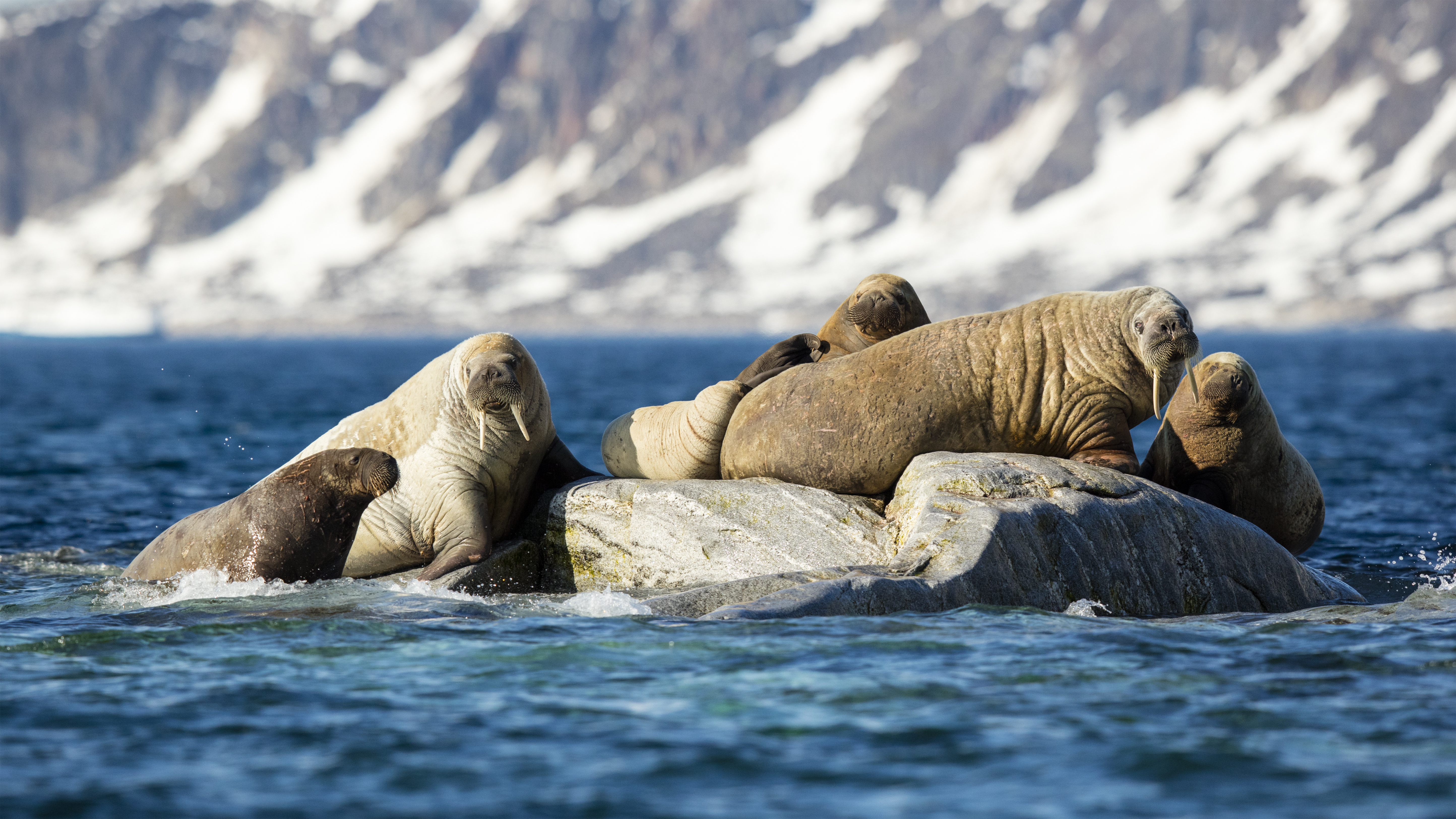
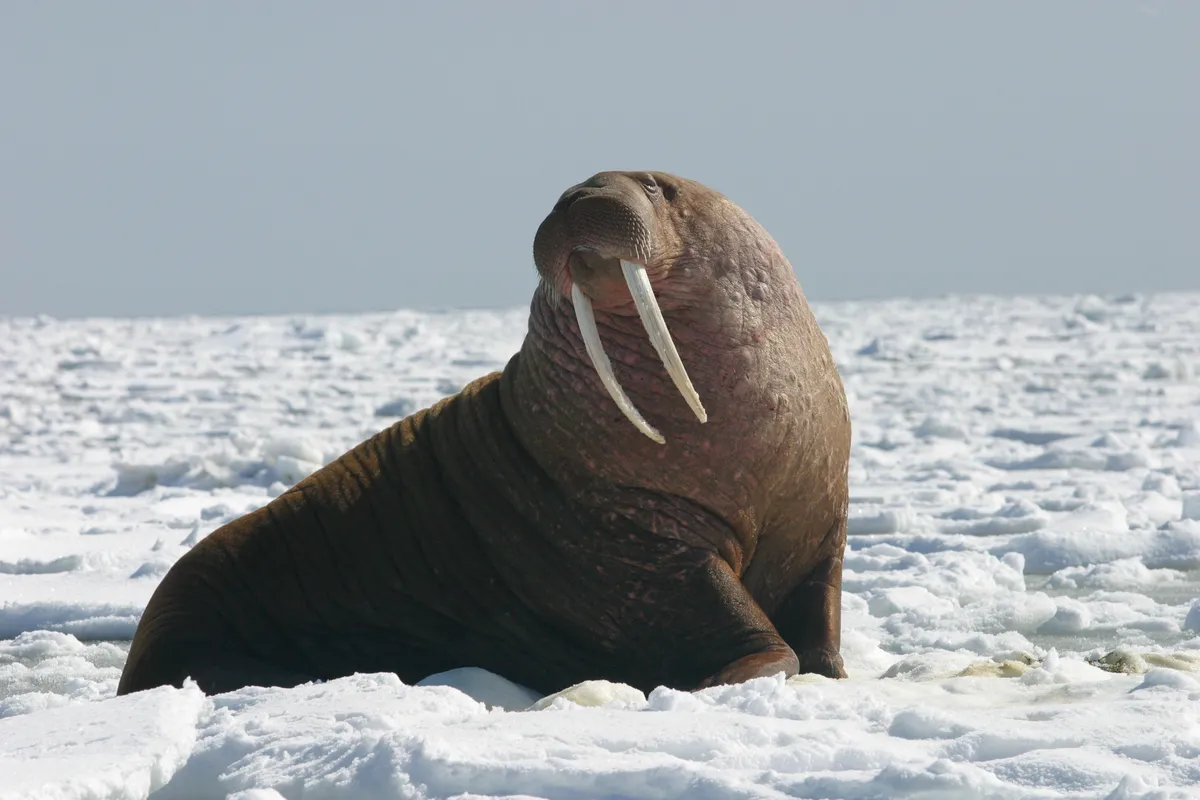
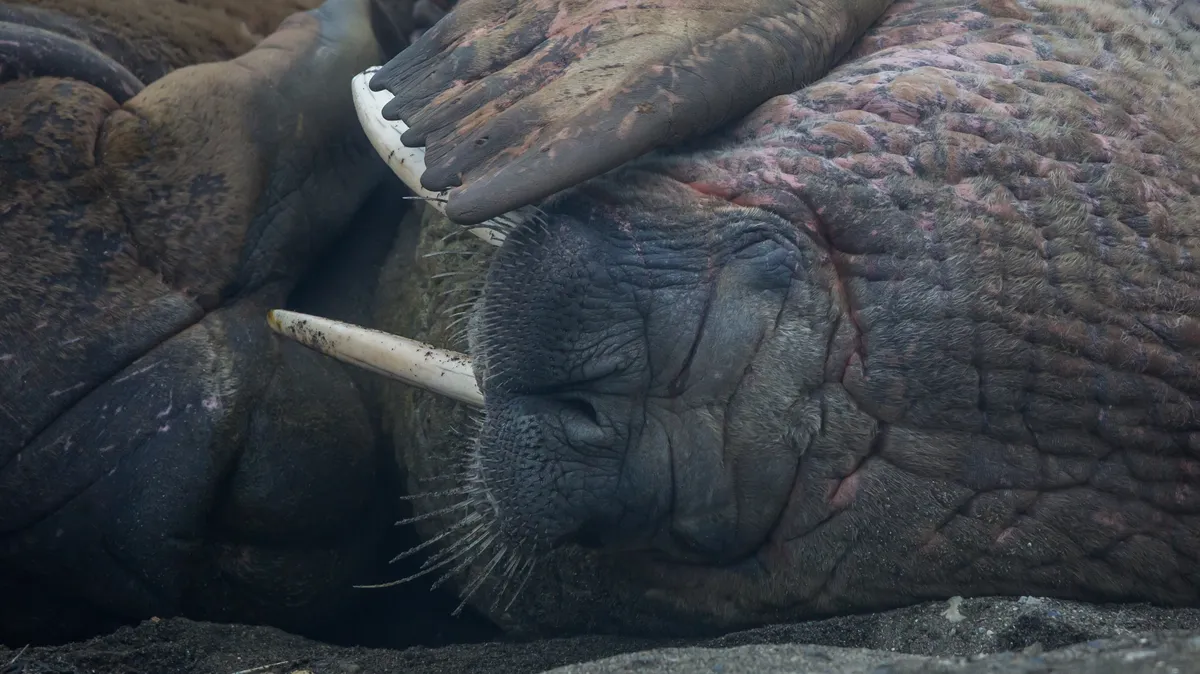
Large marine mammal characterized by prominent tusks, found in Arctic and subarctic marine environments, with thick blubber layer for thermal insulation and survival in extreme cold conditions.
Image Gallery
ADSENSE SLOT
Ecology & Habitat
Habitat
Shallow continental shelf waters of the Arctic Ocean, including coastal regions of Alaska, Canada, Greenland, and northern Russia, preferring sea ice platforms for resting and breeding
Ecological Role
Key apex predator in Arctic marine ecosystems, controlling populations of benthic invertebrates, contributing to marine food web dynamics, and serving as important indicator species for climate change impacts
Morphology
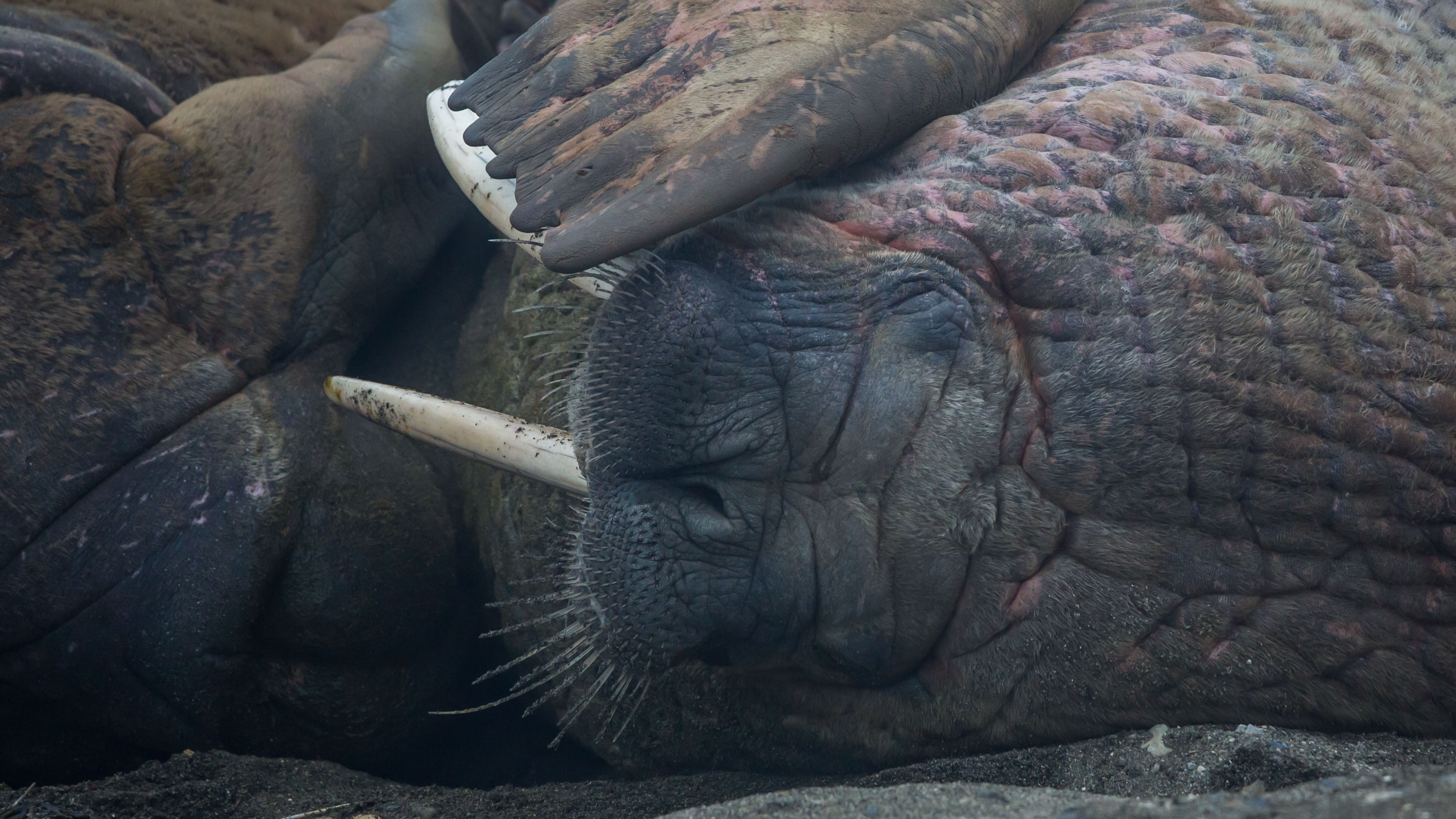
SKIN COATThick, wrinkled skin with dense layer of blubber up to 15 cm thick, providing thermal insulation in Arctic waters
LIMBS WINGSRobust flippers for swimming, ability to rotate hind limbs for locomotion on land and ice, powerful muscular structure
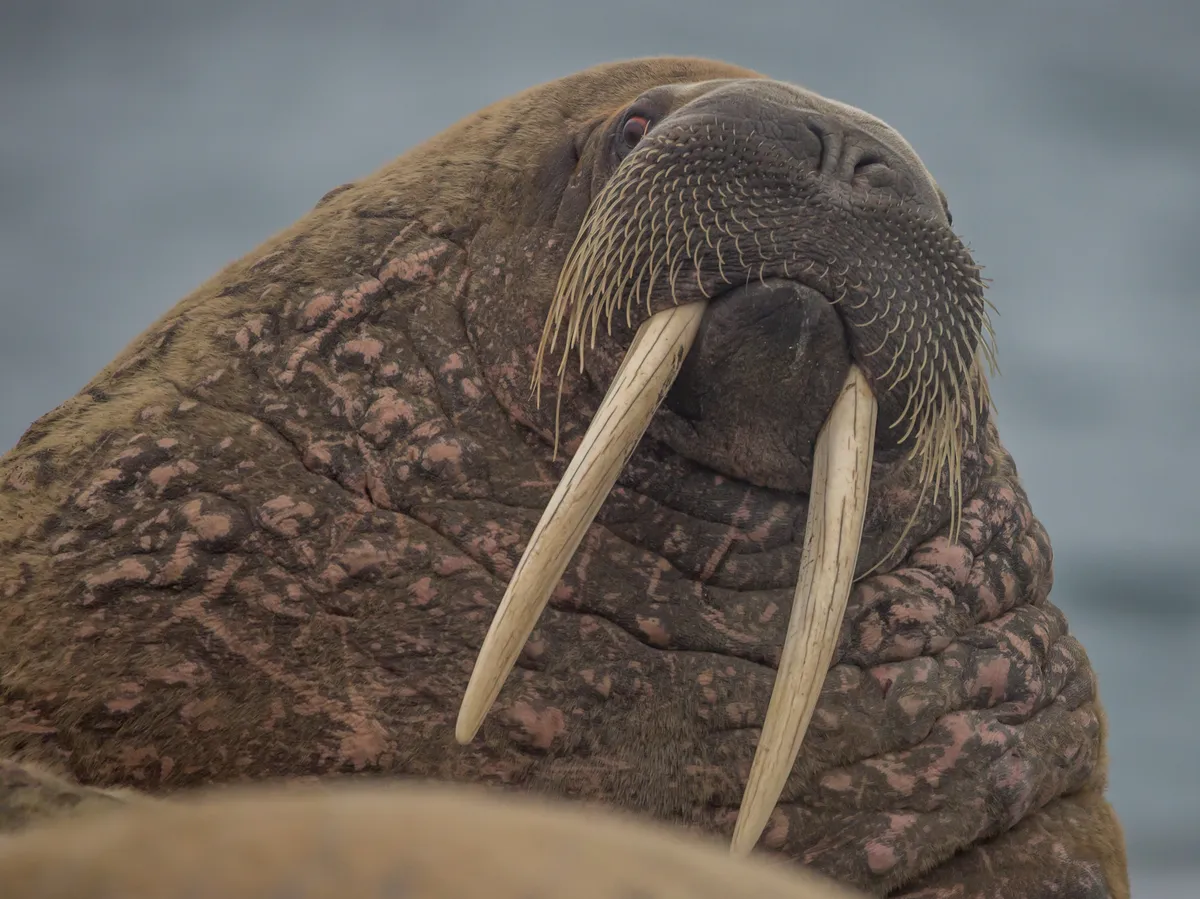
HEAD SENSORYLarge, broad head with distinctive long ivory tusks, sensitive vibrissae (whiskers) for detecting prey on ocean floor, keen hearing and vision
BODY STRUCTUREMassive, robust body weighing 800-1,900 kg, length 2.3-3.6 meters, streamlined for marine environment
Data Source: TaxonHub Database
Image Credit: Captain Budd Christman, NOAA Corps