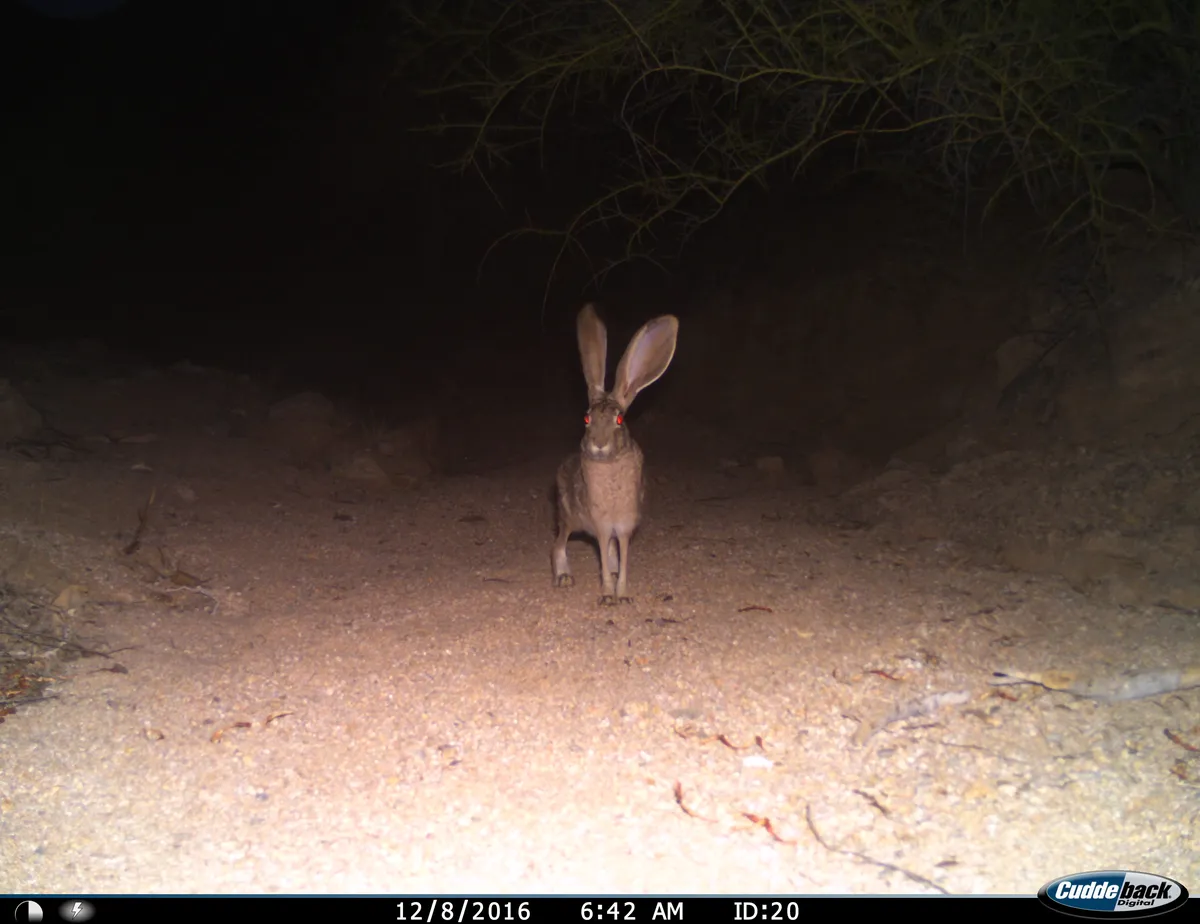
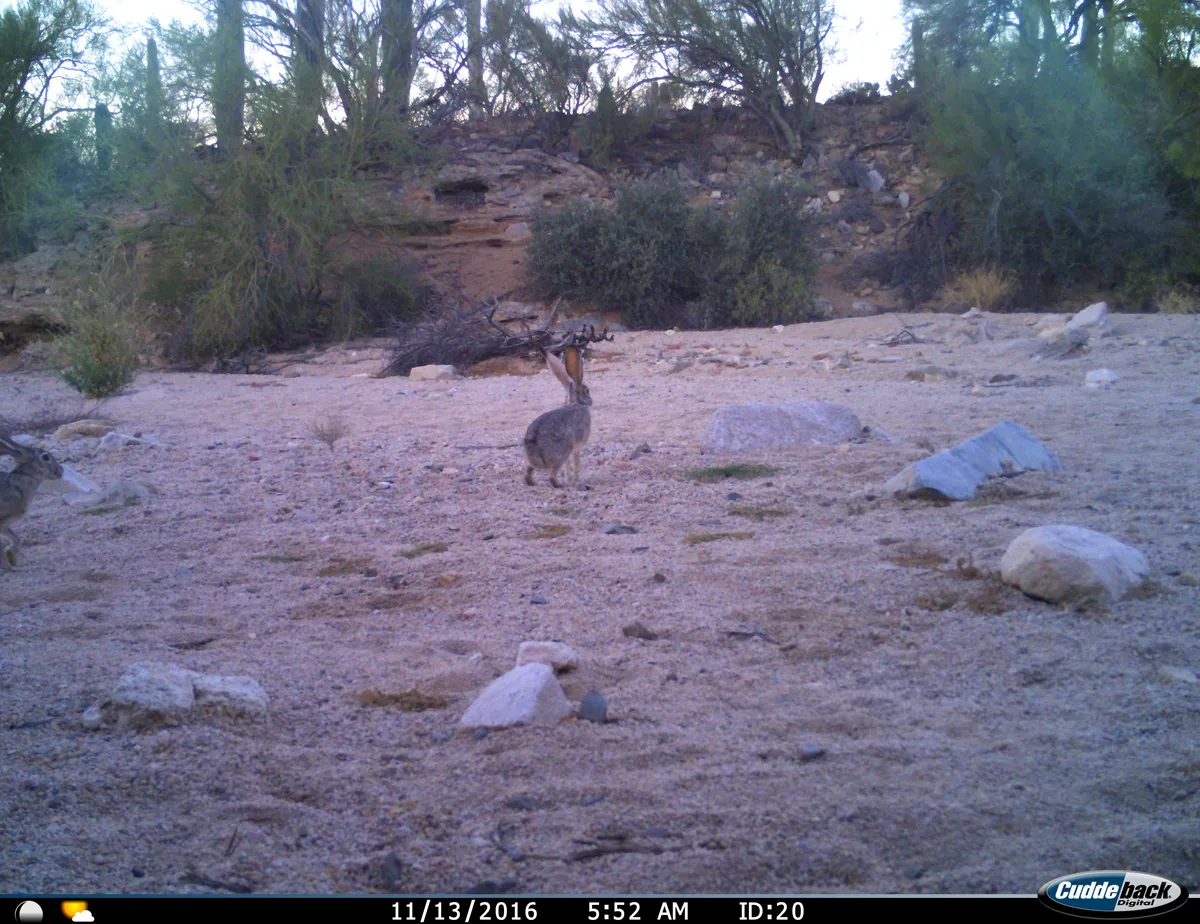
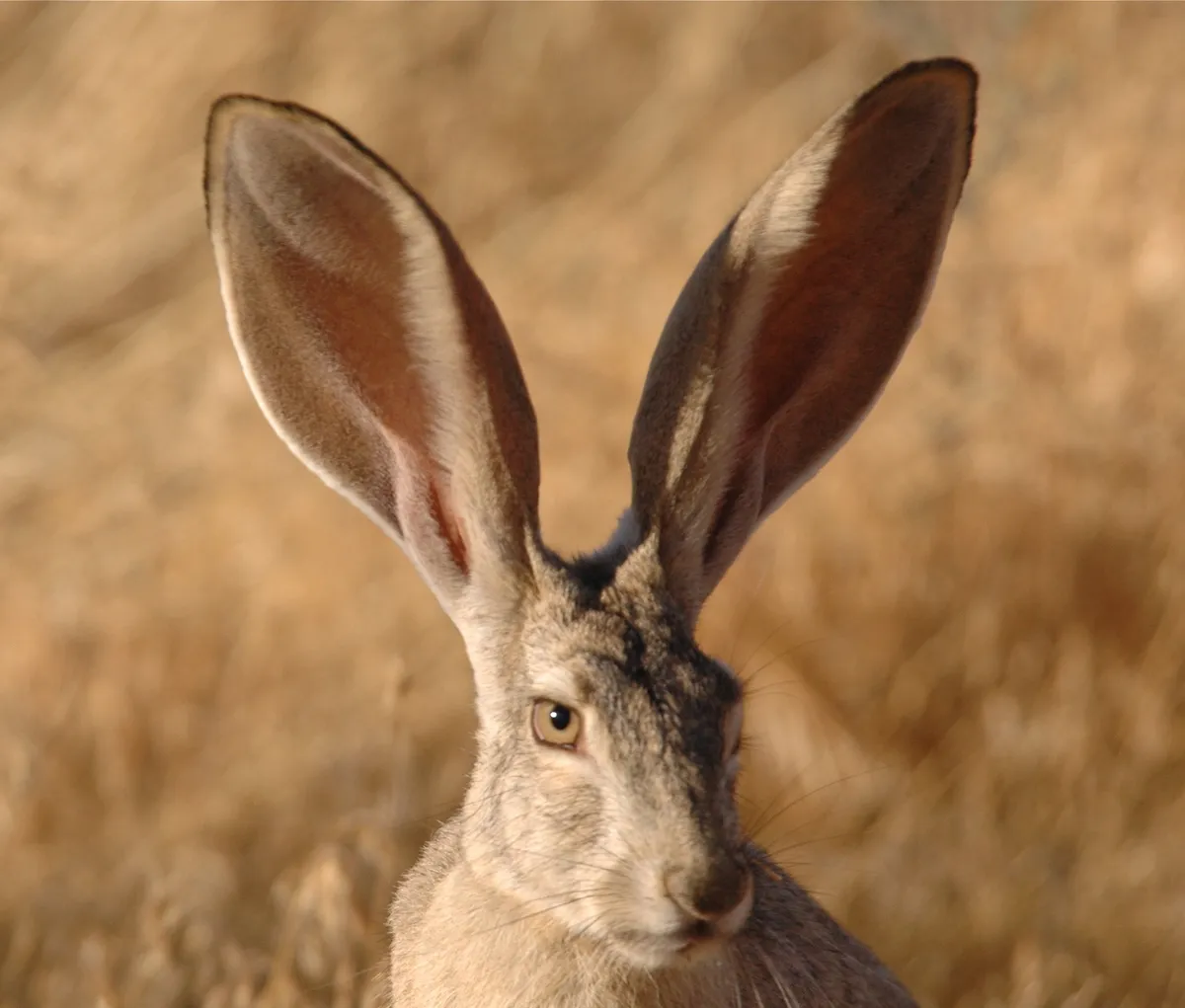
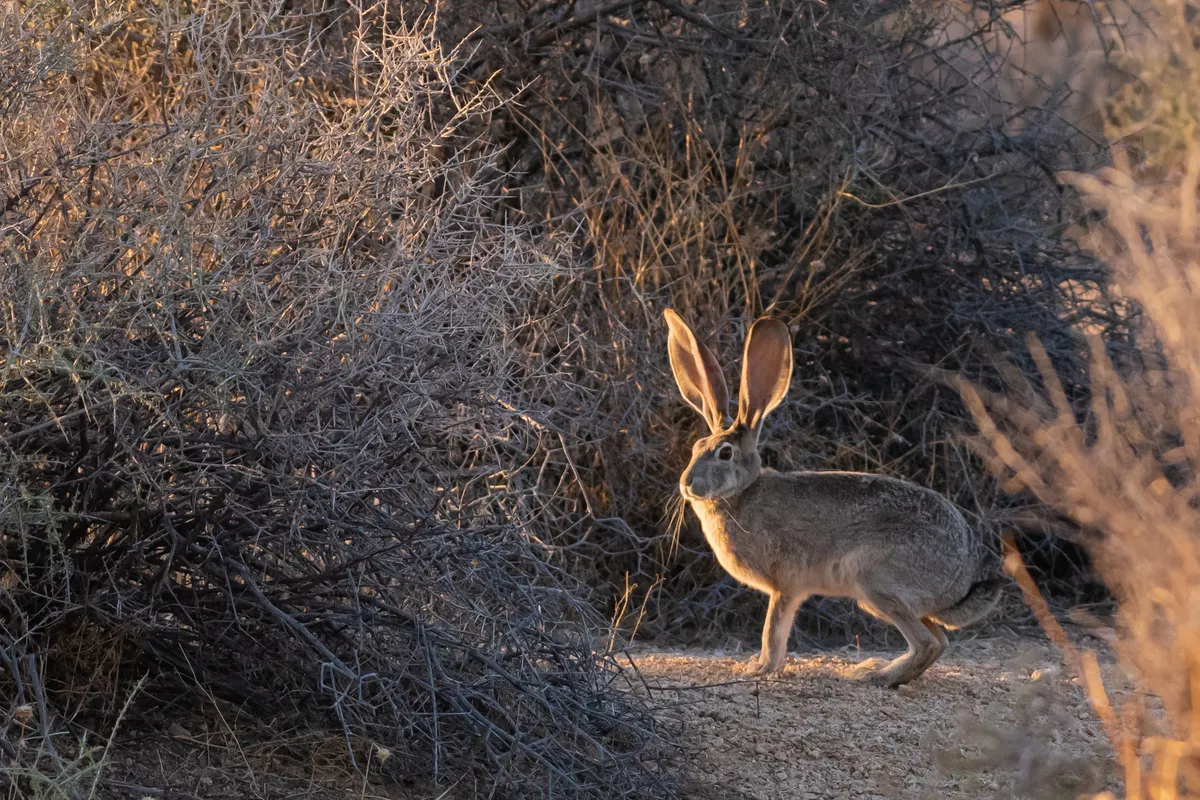
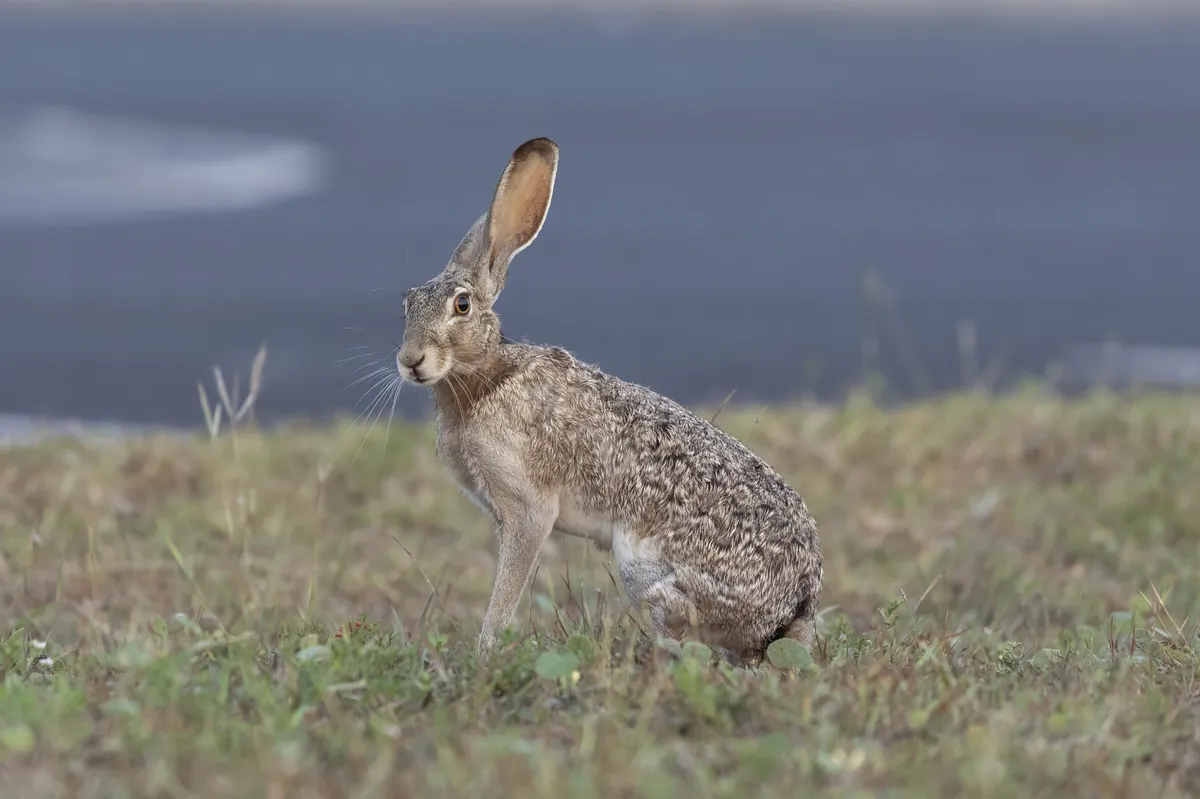
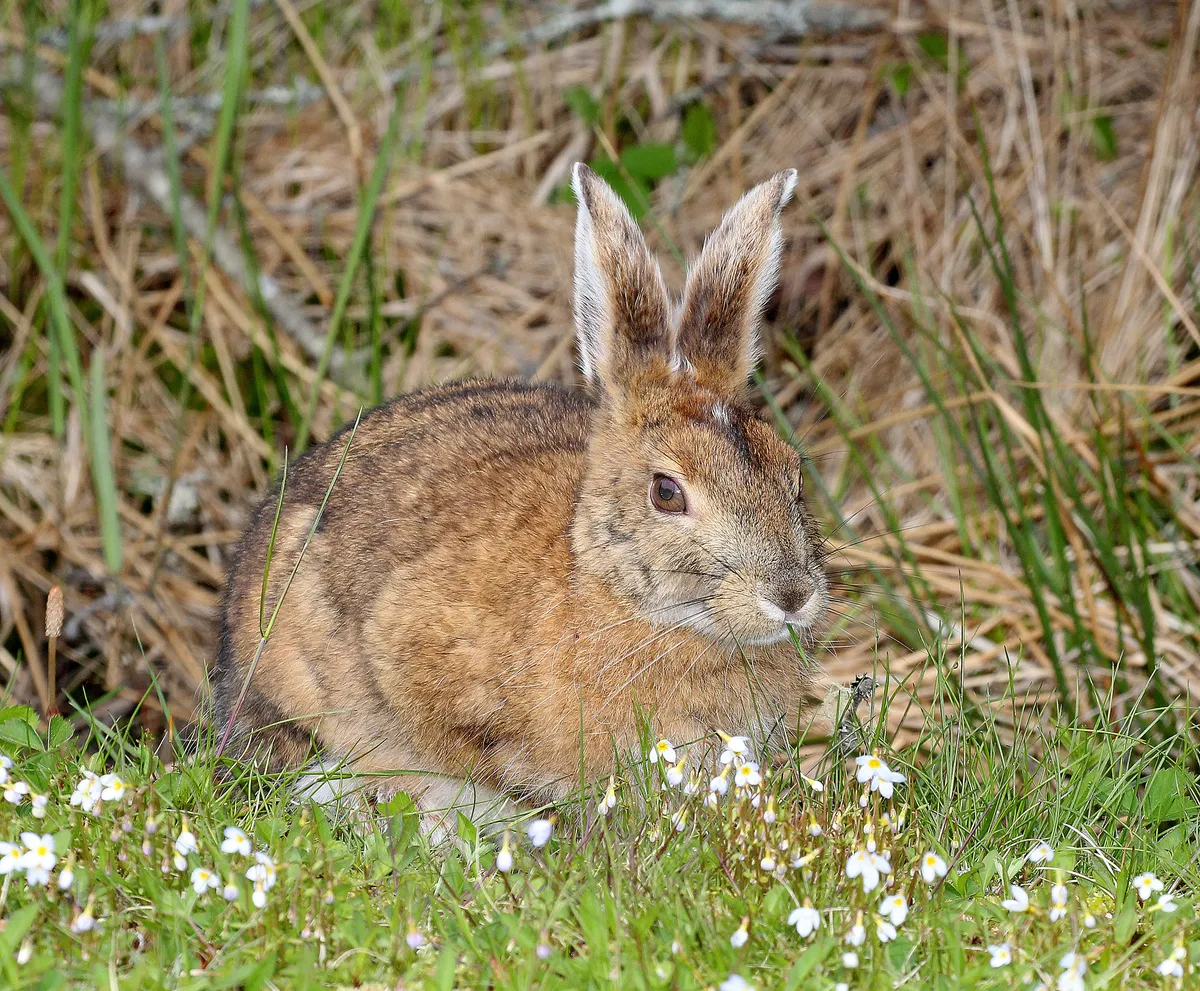
A large North American hare species native to western regions of the United States and Mexico, characterized by distinctive long ears and powerful hind limbs for rapid locomotion across arid and semi-arid landscapes.
Image Gallery
ADSENSE SLOT
Ecology & Habitat
Habitat
Primarily inhabits desert scrublands, grasslands, prairies, and agricultural margins in western United States from Washington to California and extending into northern Mexico, thriving in elevations between 0-2,500 meters above sea level.
Ecological Role
Critical herbivore in desert and grassland ecosystems, serving as prey for predators like coyotes, raptors, and bobcats while controlling vegetation through grazing and supporting complex food web dynamics.
Morphology
SKIN COATDense brownish-gray fur with black-tipped ears, providing camouflage and temperature regulation in arid environments
LIMBS WINGSRobust hind limbs significantly longer than forelimbs, enabling high-speed escape locomotion up to 55 km/h
HEAD SENSORYLarge protruding eyes positioned laterally, providing nearly 360-degree peripheral vision, acute hearing through prominent ears
BODY STRUCTURELarge lagomorph, body length 47-64 cm, weight 1.5-2.7 kg, with elongated ears (8-10 cm) and powerful muscular hind limbs adapted for rapid sprinting
Data Source: TaxonHub Database
Image Credit: SaguaroNPS