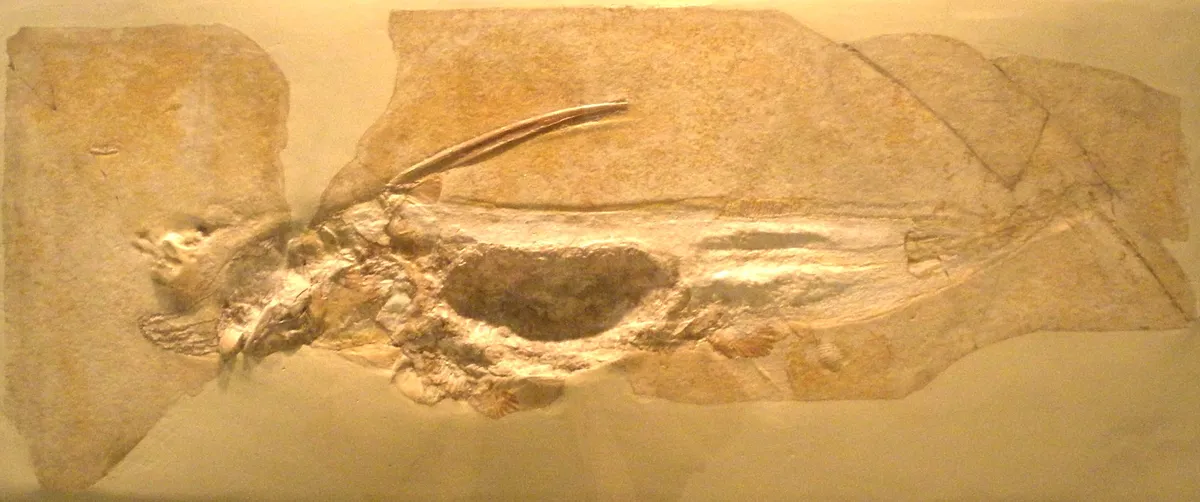
An extinct species of Holocephali (ratfish) from the Mesozoic era, specifically the Late Cretaceous period. This prehistoric marine cartilaginous fish was part of the Chimaeriformes order and belonged to the Callorhinchidae family.
ADSENSE SLOT
Ecology & Habitat
Habitat
Marine environments, predominantly in shallow to moderate-depth marine ecosystems during the Late Cretaceous period (approximately 100-66 million years ago). Likely inhabited coastal and continental shelf regions.
Ecological Role
As a prehistoric marine predator, Ischyodus thurmanni played a crucial role in marine food webs, contributing to ecosystem balance and evolutionary processes of marine vertebrate lineages.
Morphology
- SKIN COAT Covered in placoid scales (dermal denticles), providing hydrodynamic protection and reducing water resistance during swimming.
- LIMBS WINGS Possessed paired pectoral and pelvic fins for precise underwater navigation and maneuverability. Powerful caudal fin for efficient swimming.
- HEAD SENSORY Likely possessed electroreceptive sensory system for detecting prey, characteristic of holocephalan fishes. Robust cranial structure with specialized dental plates for crushing hard-shelled prey.
- BODY STRUCTURE Elongated cartilaginous body typical of chimaera species, with streamlined hydrodynamic form adapted for marine predation. Estimated body length between 0.5-1.2 meters.
Data Source: TaxonHub Database
Image Credit: Wikimedia Commons
Image Credit: Wikimedia Commons
ADSENSE VERTICAL