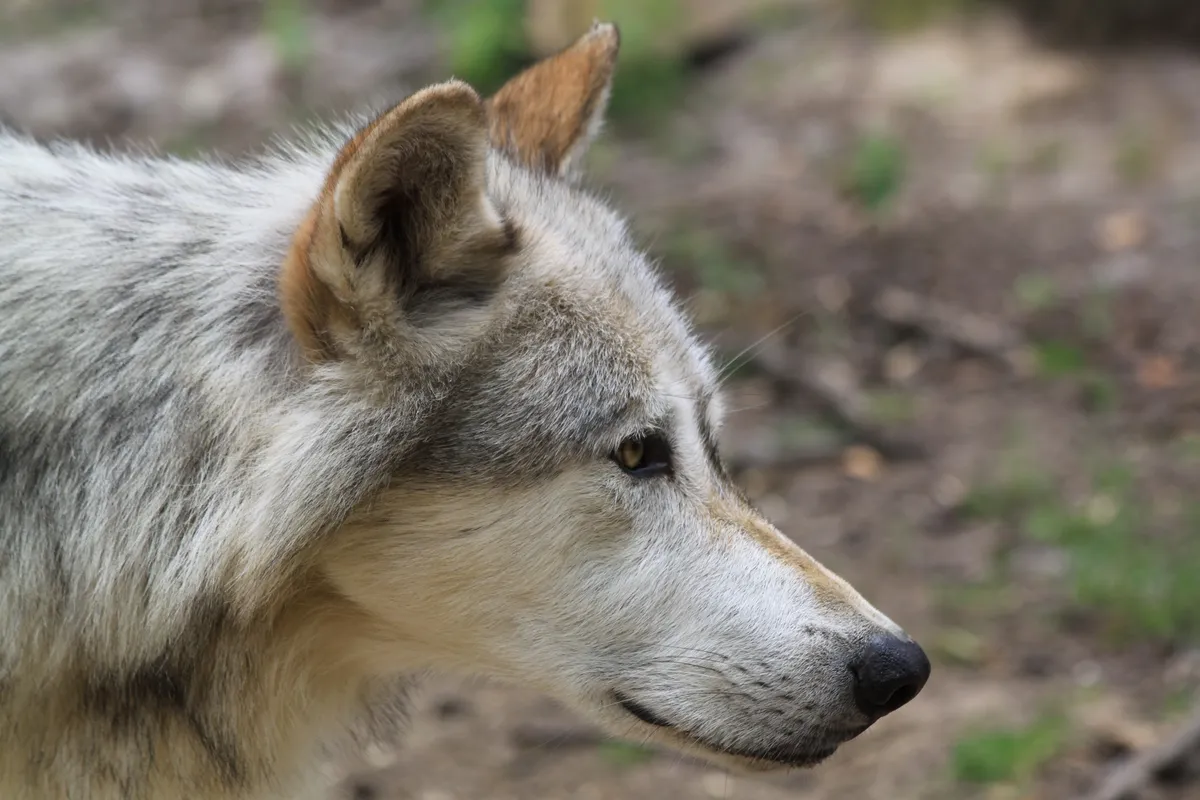
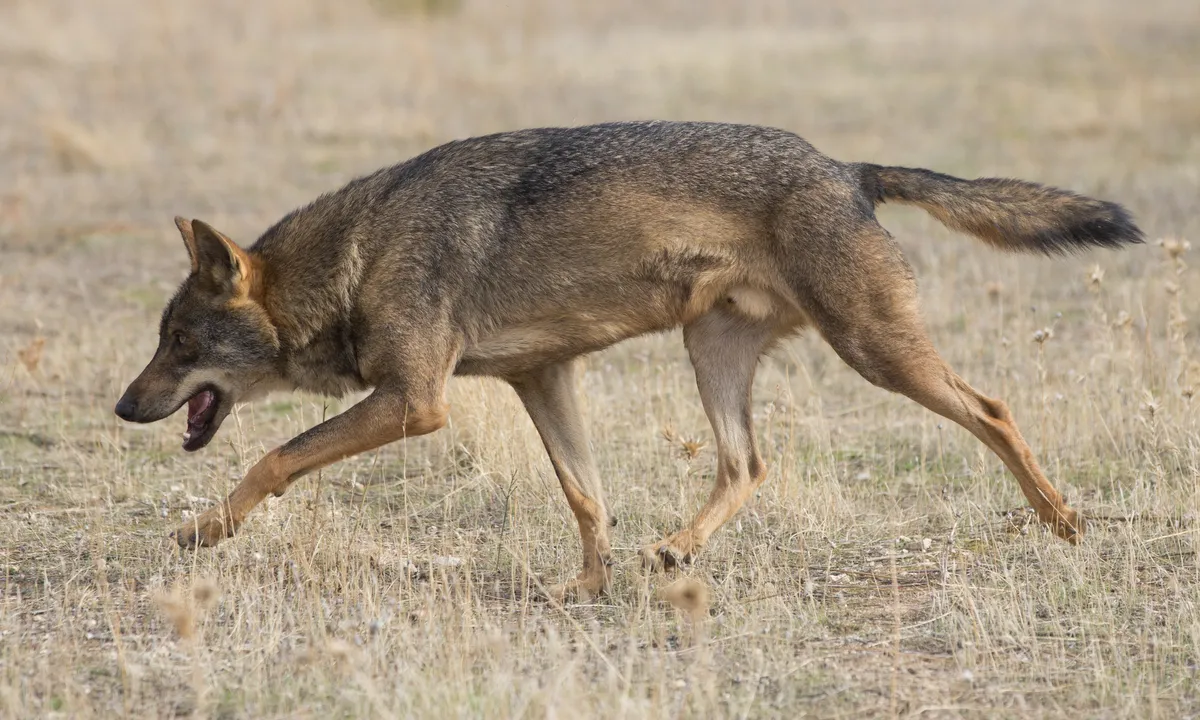
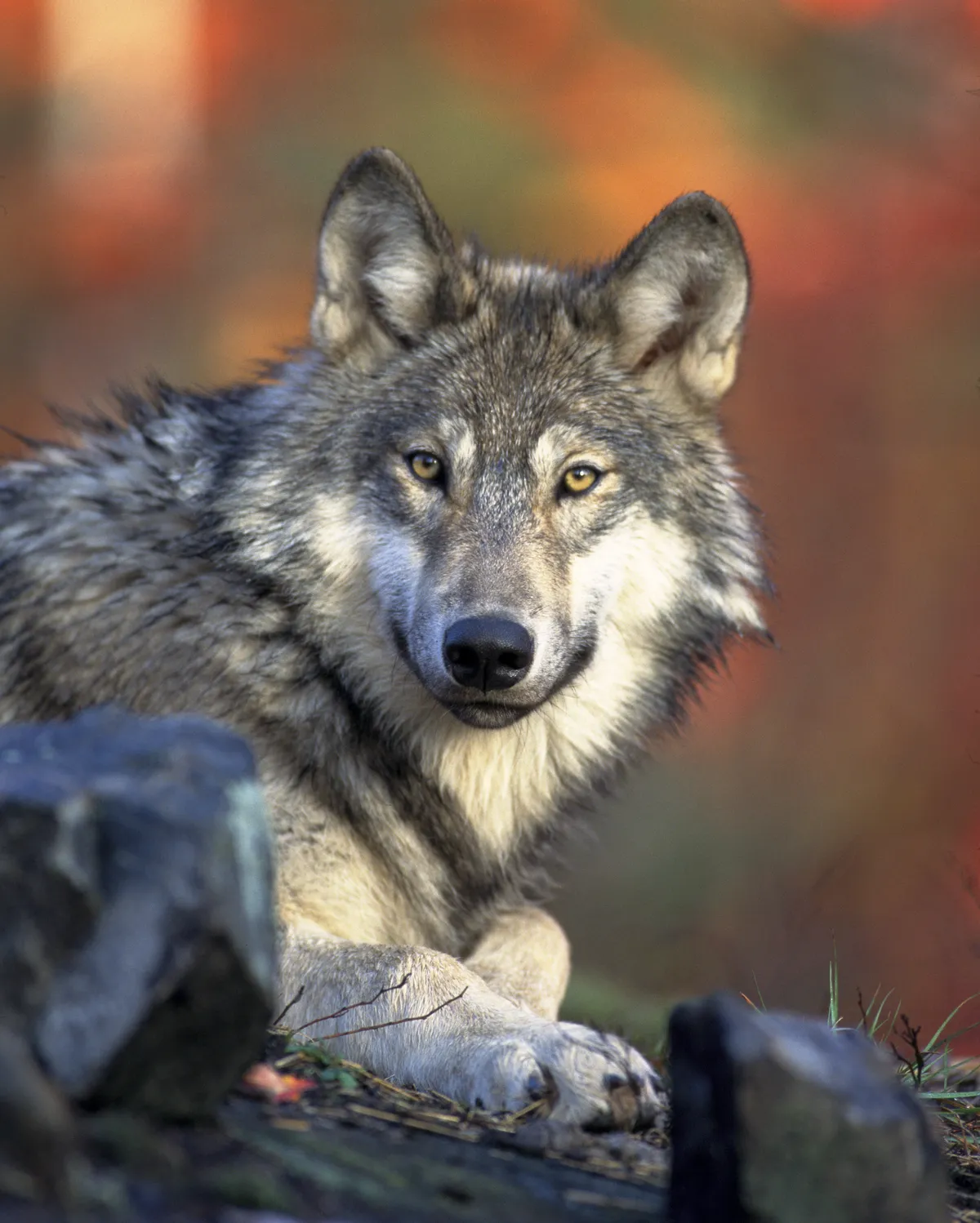
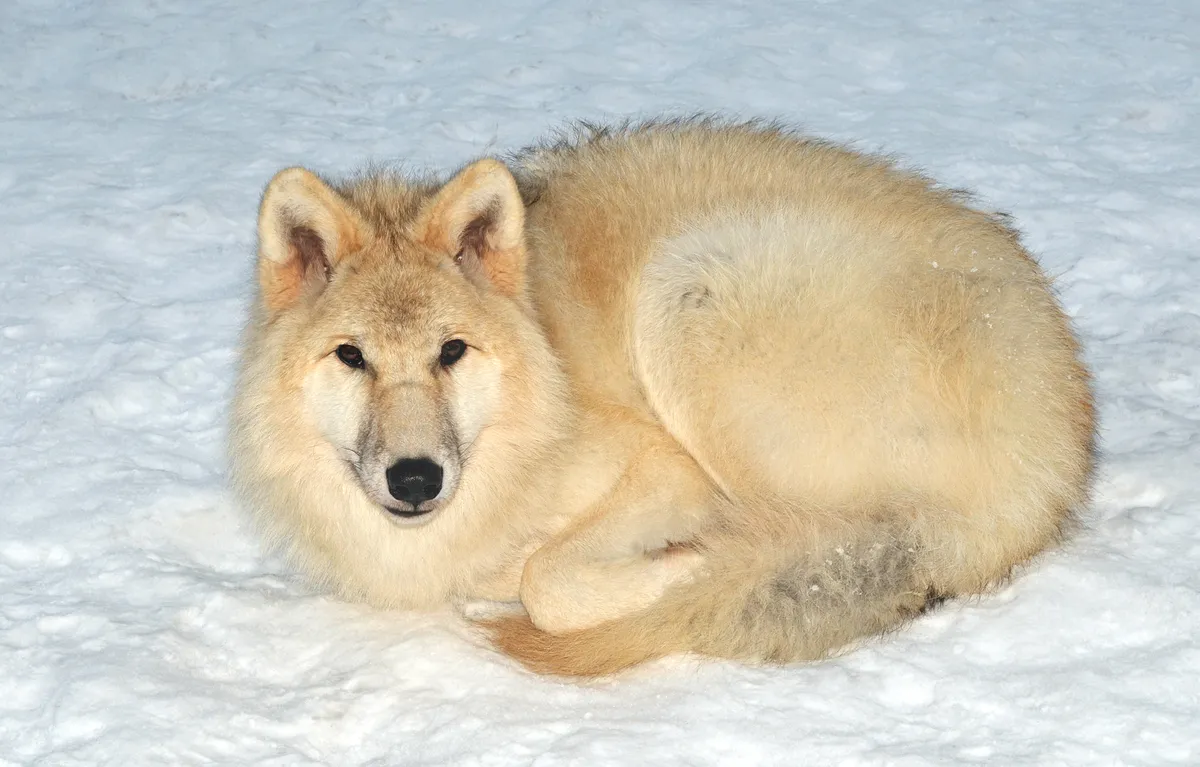
Large canine predator native to Eurasia and North America, representing the ancestral species of domestic dogs. Highly social and intelligent pack animals with complex hierarchical social structures.
Image Gallery
ADSENSE SLOT
Ecology & Habitat
Habitat
Diverse ecosystems including boreal forests, tundra, grasslands, mountains, and temperate woodlands across northern hemispheric regions
Ecological Role
Apex predator that regulates prey populations, maintains ecosystem balance, and influences prey species' behavior and distribution
Morphology
SKIN COATDense double-layered fur coat, variable coloration including gray, black, white, and brown, providing thermal regulation and camouflage
LIMBS WINGSStrong limbs adapted for endurance running, digitigrade locomotion, specialized for long-distance tracking and pursuit hunting
HEAD SENSORYLarge cranial capacity, acute hearing and olfactory senses, powerful jaw structure with 42 teeth specialized for hunting and meat consumption
BODY STRUCTURELarge carnivorous mammal, average body length 1-1.6 m, weight 30-80 kg, muscular build with robust skeletal frame
Data Source: TaxonHub Database
Image Credit: : Jim Clark