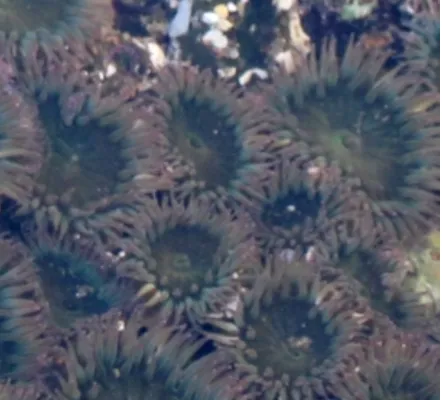
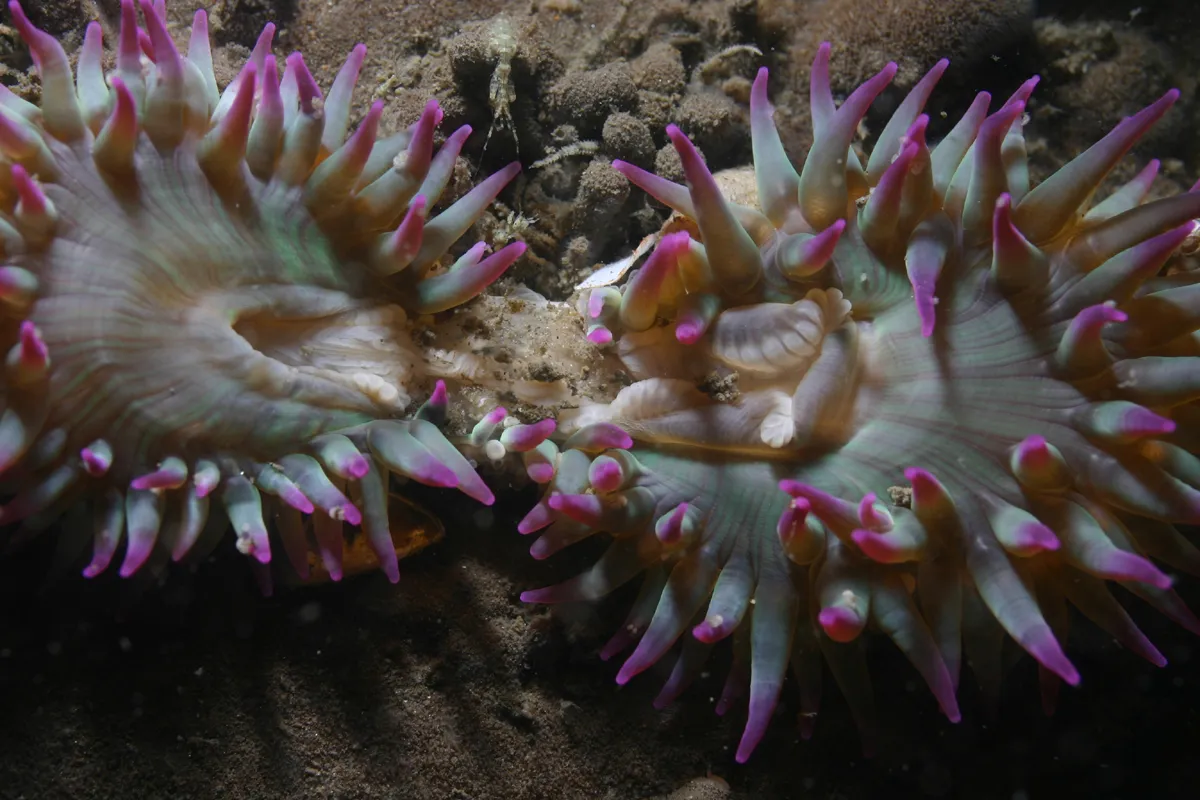
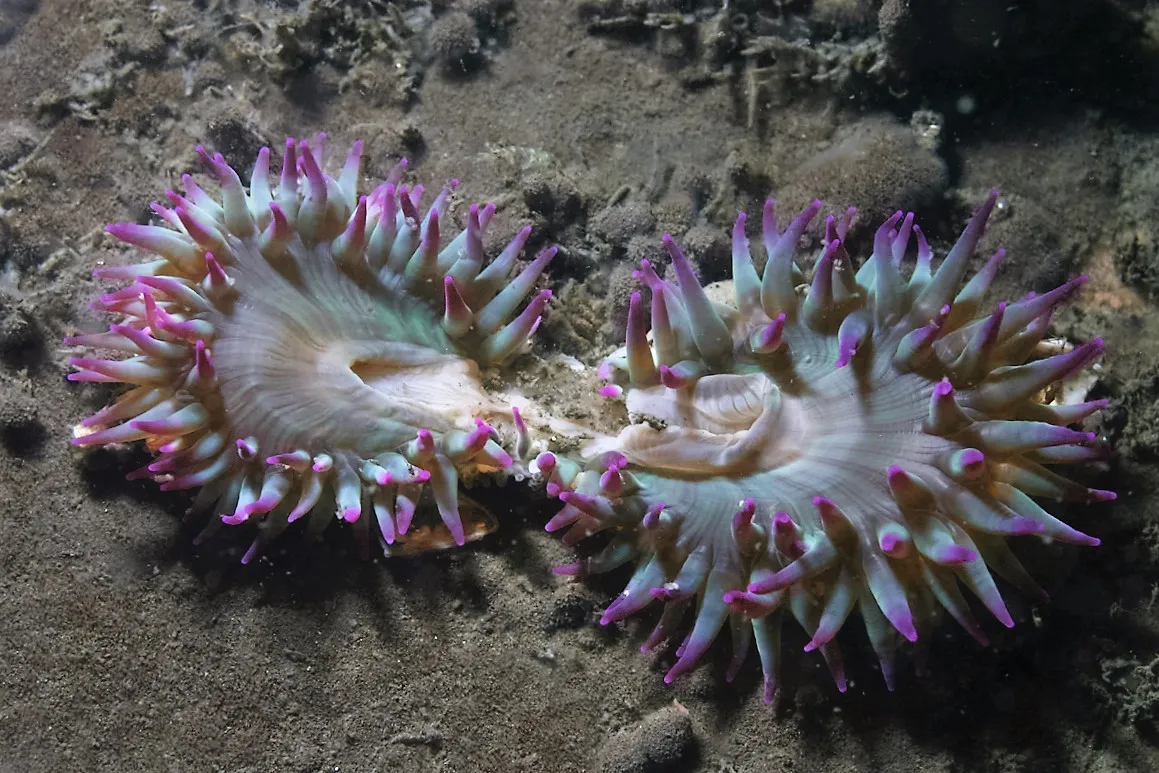
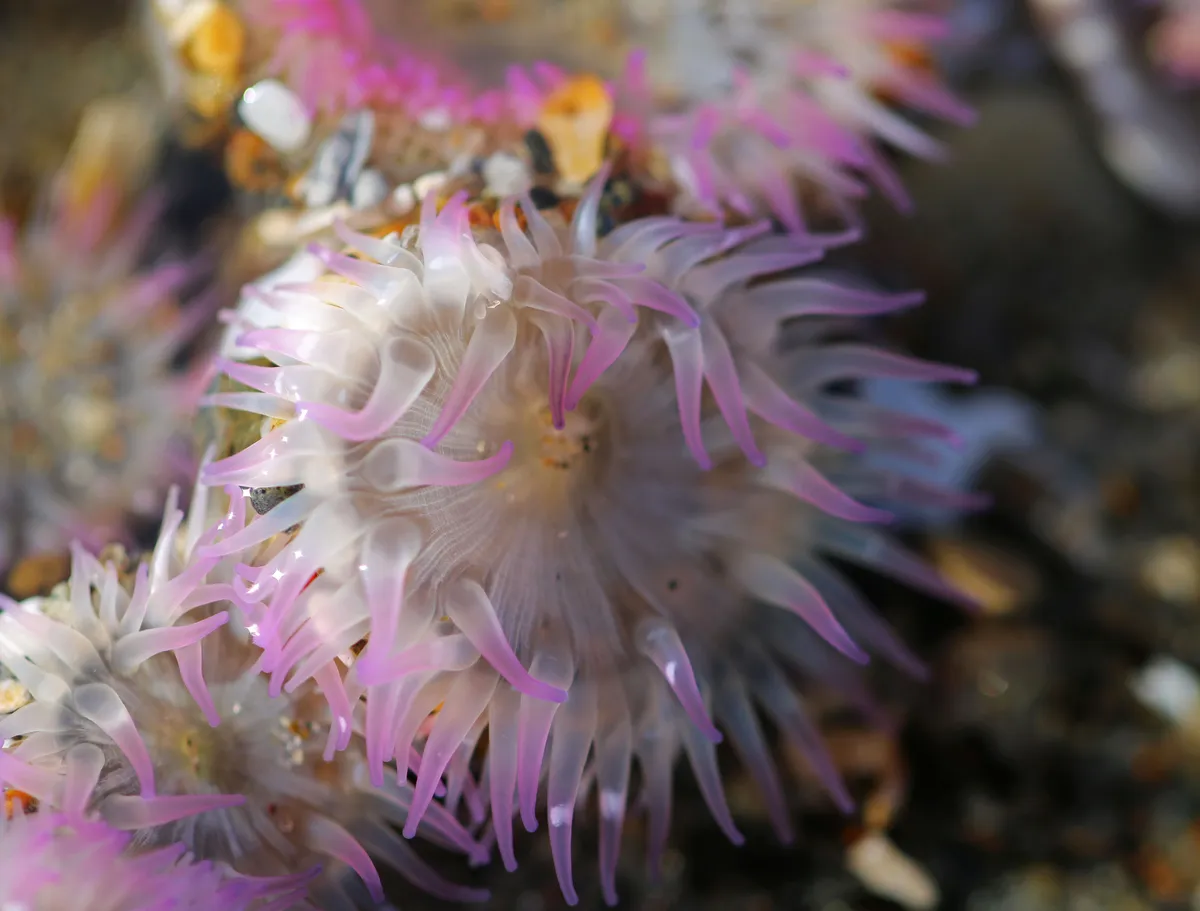
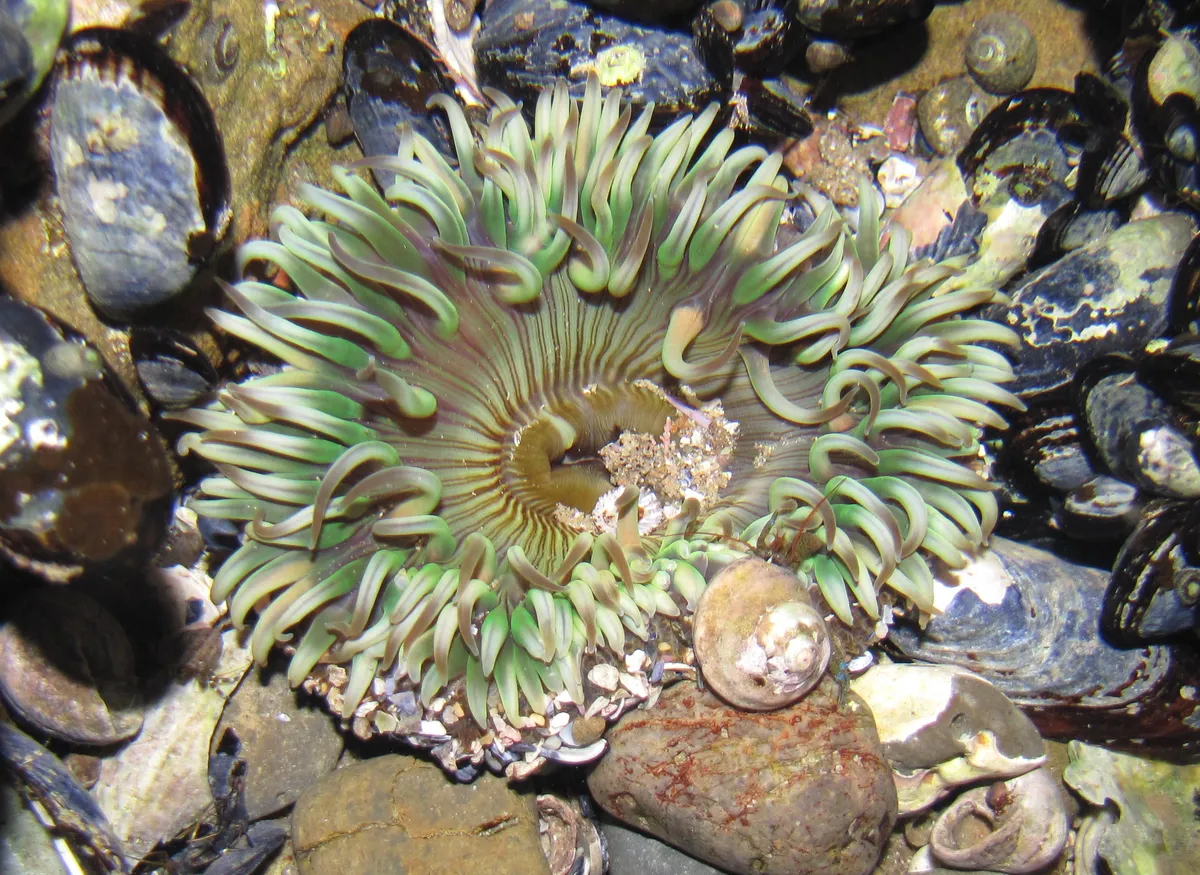
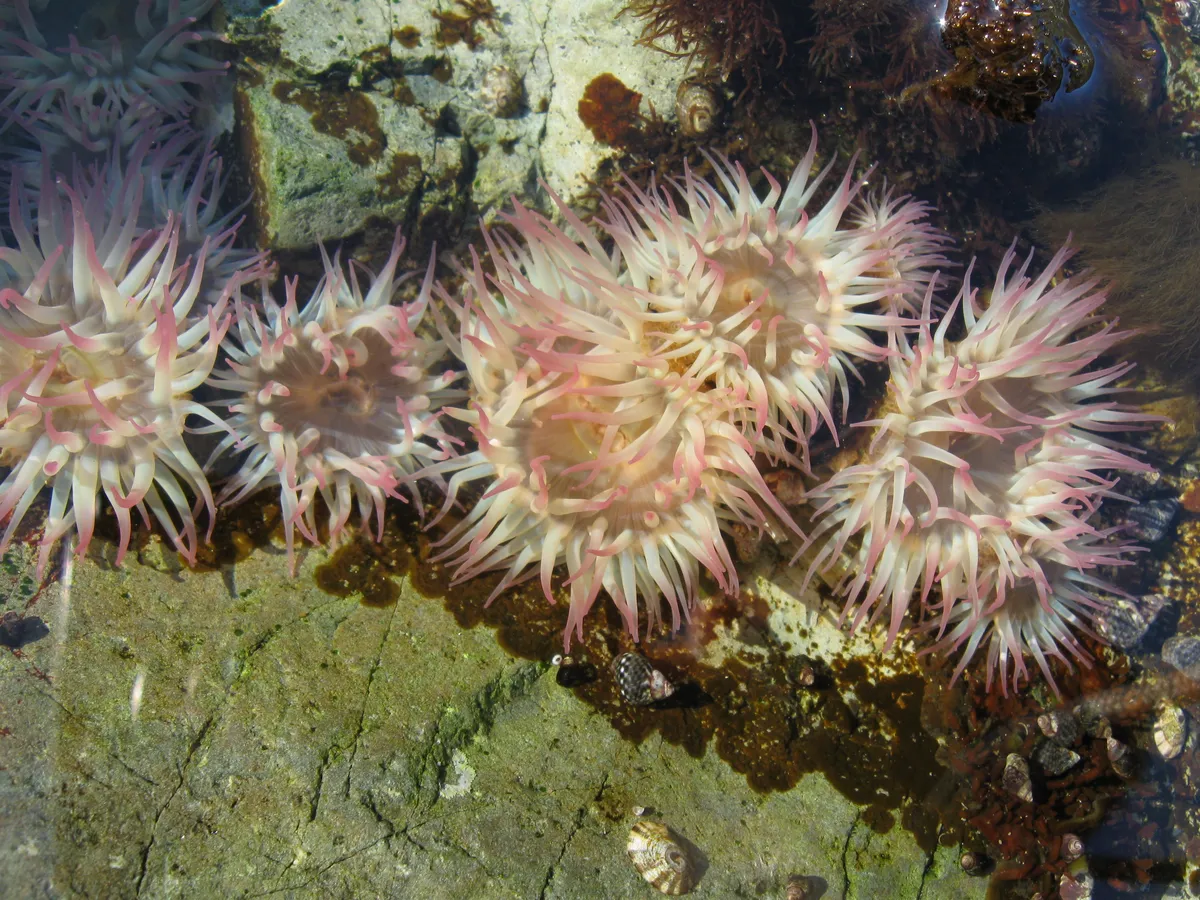
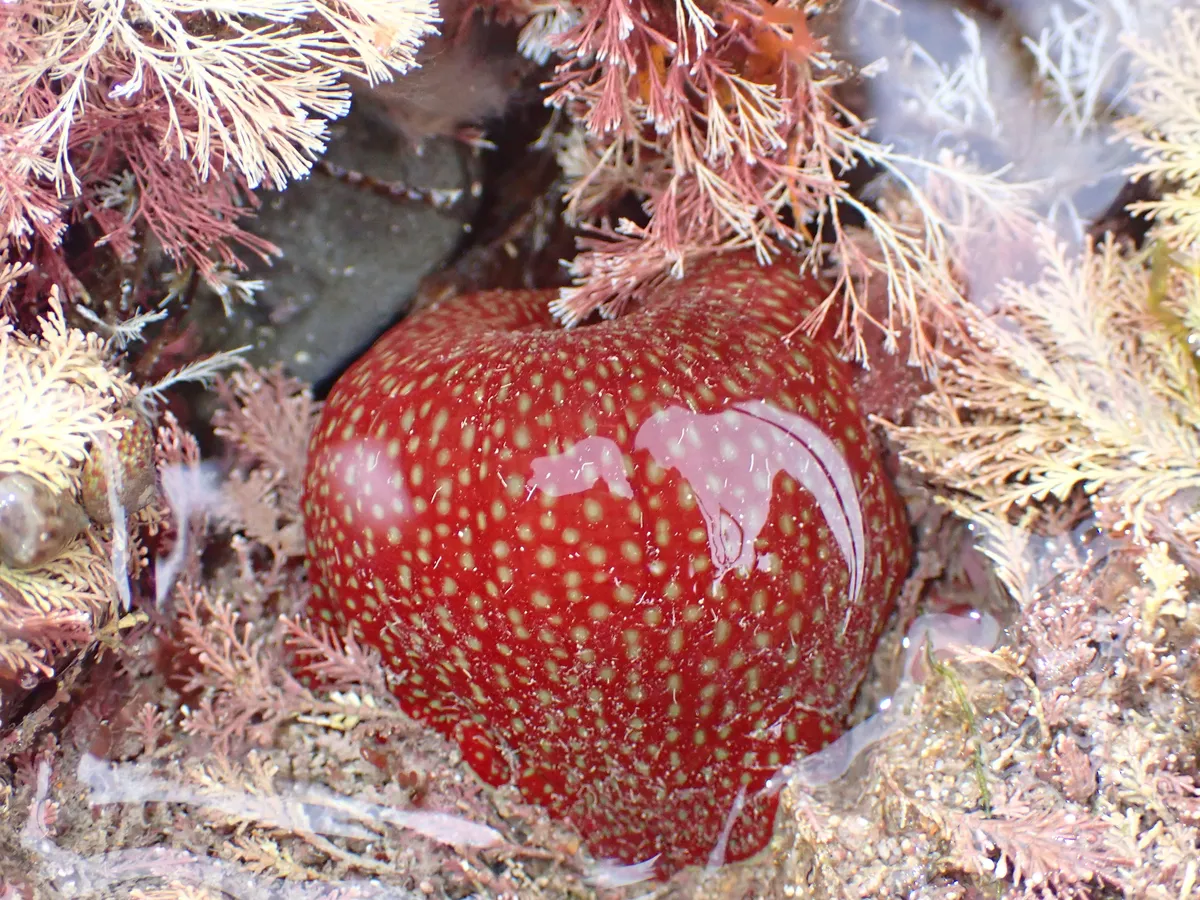
A marine cnidarian species characterized by its ability to form clonal aggregations and reproduce asexually through pedal laceration and longitudinal fission.
Image Gallery
ADSENSE SLOT
Ecology & Habitat
Habitat
Intertidal zones along the Pacific Coast of North America, ranging from Alaska to Baja California, typically found on rocky substrates in wave-exposed and protected coastal environments
Ecological Role
Critical component of rocky intertidal ecosystems, providing habitat and food for various marine invertebrates, and serving as a primary space competitor in coastal marine communities
LIMBS WINGSMultiple tapering tentacles surrounding oral disc, varying in color from pale green to white or brown
HEAD SENSORYRadially arranged tentacles with numerous cnidocytes for capturing prey and defense
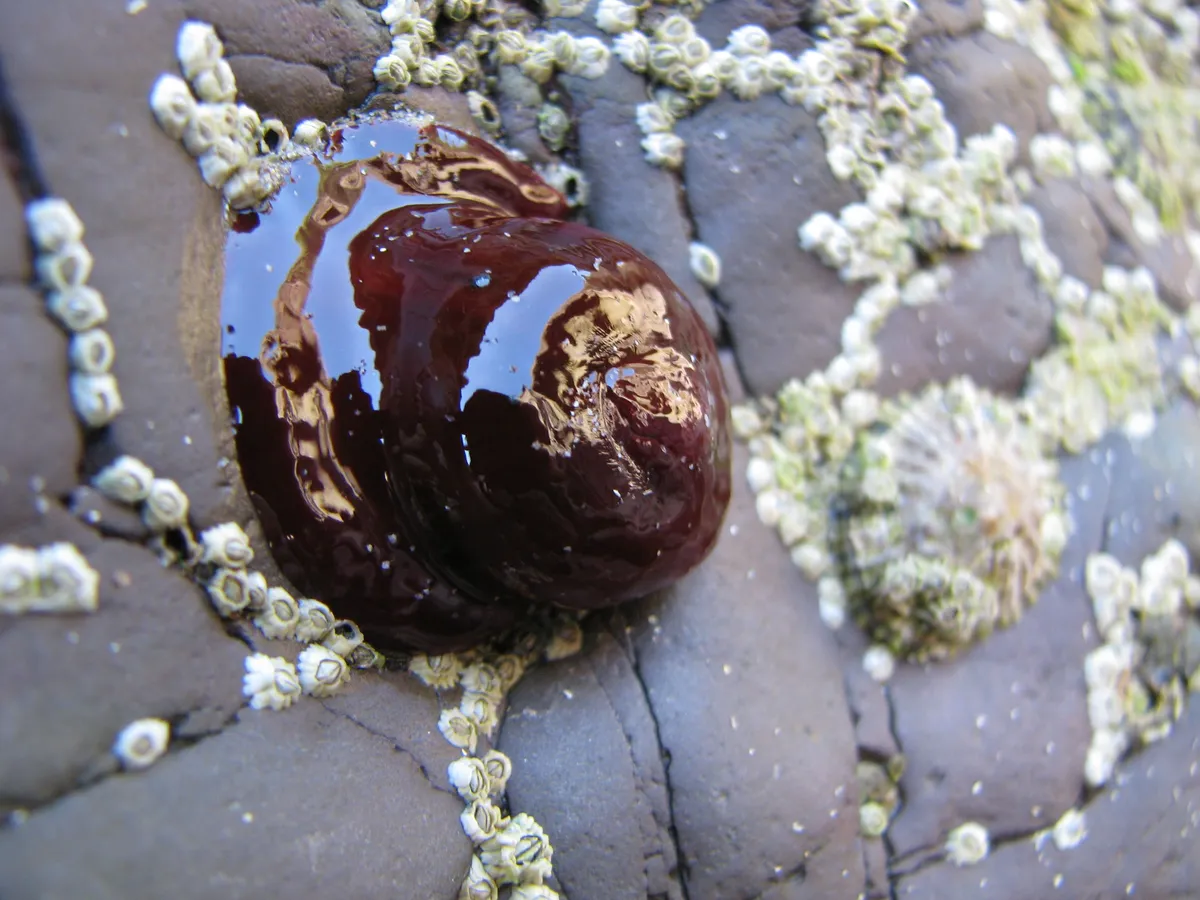
BODY STRUCTURECylindrical soft-bodied cnidarian with a central column and surrounding tentacles, typically 5-10 cm in total length, capable of expanding and contracting
Data Source: TaxonHub Database
Image Credit: NPS Photo